
Boiler Replacement Quotes for Chelwood (BS39)
Water hardness varies a fair bit across this part of Somerset, and it has a real effect on how boiler replacement quote is specified — from filter choice to how a system is protected against scale over its working life. We take that into account on site rather than fitting the same components everywhere. Gas Safe registered, OFTEC registered, based at 24 Bristol Road, Radstock BA3 3EE. Planning constraints are usually light here, so external work is checked first. Mains gas covers much of the area, with off-grid pockets, which changes the appliance shortlist. In Chelwood itself (BS39, Somerset) that usually means stone cottages and modern infill, roughly 6 miles from the workshop.
Boiler Replacement Quote — what you actually get
- Free written specification
- Conversions (regular → combi) costed honestly
- Smart controls (Nest, Hive, Tado) priced in
- Clean, tidy, dust-sheeted installs
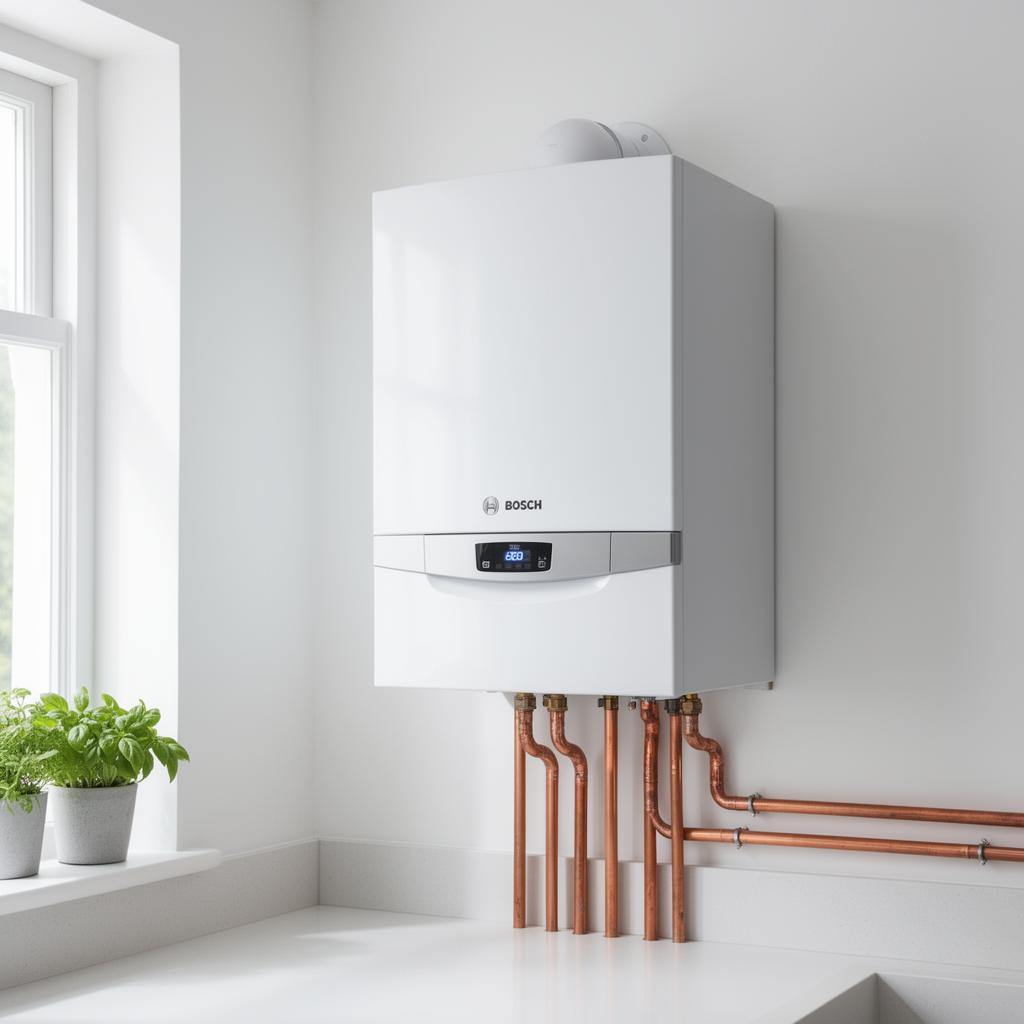
This area has a genuine mix of mains gas and oil-fired properties, sometimes on the same street, depending on when the gas network reached that particular row of houses. It's worth confirming which fuel your property is actually on and whether a fuel switch is realistic before assuming either option is off the table. Being registered for both Gas Safe and OFTEC work means we can look at the honest options for your specific property rather than steering you toward whichever fuel we happen to be set up for. Most of what we open up here is stone cottages and modern infill, which dictates flue routes and pipe sizing. homes alongside small commercial and agricultural premises make up most enquiries from this postcode. Boiler replacements in Chelwood are shaped by the property stock here — stone cottages and modern infill. We plan flue, condensate and controls around the building before we put a number on the page.
Neighbouring Somerset areas we serve
We cover Chelwood alongside Compton Dando (BS39), Bishop Sutton (BS39), Publow (BS39), Marksbury (BA2) — so spares, follow-ups and annual visits are easy to schedule together.
Local conditions we plan around in BS39
This area has a genuine mix of mains gas and oil-fired properties, sometimes on the same street, depending on when the gas network reached that particular row of houses. It's worth confirming which fuel your property is actually on and whether a fuel switch is realistic before assuming either option is off the table. Being registered for both Gas Safe and OFTEC work means we can look at the honest options for your specific property rather than steering you toward whichever fuel we happen to be set up for. Most of what we open up here is stone cottages and modern infill, which dictates flue routes and pipe sizing. homes alongside small commercial and agricultural premises make up most enquiries from this postcode. Boiler replacements in Chelwood are shaped by the property stock here — stone cottages and modern infill. We plan flue, condensate and controls around the building before we put a number on the page.
What backs up a Chelwood quote
We don't ask for money up front. Pay on completion when the system is signed off.
We're 24 Bristol Rd, Radstock — you'll deal with the same team for any aftercare.
Boiler, controls, flue, warranty terms, flush spec — all in writing before you commit.
Free, no-pressure 20-minute visit — measured up properly so the price is fixed, not estimated.
Why we visit before quoting — Chelwood
- Confirm gas supply pipe size to the meter
- Plan flue route within building regs
- Check radiator sizing for the heat load
- Look at hot-water demand vs combi capacity
- Spot anything that'll affect the day-of price
Common queries, answered honestly
- Is a magnetic filter really necessary, or is it an upsell?
- It's a genuine manufacturer requirement, not an add-on we invent — most boiler warranties are conditional on a system filter being fitted, particularly on hard water. The filter catches magnetite sludge and debris circulating in the system before it reaches the boiler's heat exchanger, which is what actually causes blockages and noise over time.
- What's actually checked during an annual boiler service?
- A service includes a visual and functional check of the boiler's casing and controls, flue gas analysis to confirm safe and efficient combustion, checking the flame picture and pressure, inspecting seals and condensate, and testing safety devices. It's a safety check as much as a performance one, and it's what keeps most manufacturer warranties valid.
- Can your van get down our lane, or do we need to arrange something?
- Most village lanes we work on are manageable in our vehicles, but if it's single-track, has a low bridge, or turning is tight, mention it when you book so we bring the right size van and allow extra time. It's rarely a reason to turn a job down, just something we plan around.
- What is condensate and why does its routing matter?
- Condensate is the mildly acidic water produced by a modern condensing boiler as it extracts extra heat from the flue gases, and it needs a route to an internal drain or, less ideally, an external soakaway. In colder or more exposed locations an external condensate pipe can freeze and shut the boiler down, so internal routing is worth prioritising where the layout allows it.
- What does "commissioning" a boiler actually involve?
- Commissioning is setting the boiler up correctly for the property rather than just switching it on: checking gas or oil pressure and flow rates, setting flow temperatures, testing safety devices, balancing the system, and completing the manufacturer's Benchmark checklist. Skipping this properly is one of the most common reasons warranty claims get refused later.
- My oil tank is old — does it need replacing alongside the boiler?
- Not automatically, but we check the tank's age, material, and condition as part of any oil boiler quote. Steel tanks corrode from the inside and plastic tanks degrade with UV exposure over time; if we find cracking, rust weeping, or a missing bund we'll flag it, because a failed tank is a pollution and insurance risk, not just a heating one.
Coverage detail for BS39
- County
- Somerset
- Postcode district
- BS39
- Settlement type
- village
- Nearest classified road
- A37
- Distance from our base
- 6 miles (Radstock, BA3)
- Typical building stock
- stone cottages and modern infill
- Water hardness
- hard water
- Fuel availability
- mains gas with off-grid pockets
- Customer mix
- homes alongside small commercial and agricultural premises
- Nearby areas covered
- Compton Dando, Bishop Sutton, Publow, Marksbury
Technical notes for this job type
Pumped-oil versus gravity feed: does it matter?
Older oil systems sometimes still rely on gravity feed, where the tank sits higher than the burner and oil flows down to it under its own weight; a pumped system uses the burner's internal pump to draw oil up from a tank at any level, including below the boiler. Gravity feed limits where a tank can be sited and is more prone to airlocks if the line runs dry, while a pumped system is more flexible on tank position but needs the pipe run and lift height kept within the burner pump's rated capacity — usually no more than a few metres of lift and a set maximum run length. When we replace an oil boiler we check which type the existing tank and pipework support before assuming a straight swap, because a tank sited for gravity feed may need repositioning or a different pump to suit a modern burner.
Radiator sizing after lowering the flow temperature
Running a boiler at a lower flow temperature — typically 55°C or below rather than the old default of 70-80°C — improves condensing efficiency measurably, but it also reduces the heat output of every radiator in the house, because a radiator's output falls roughly with the square of the temperature difference to the room. Radiators sized correctly for a 75°C flow can end up unable to heat the room properly at 55°C unless they're upsized or supplemented. We check each radiator against the lower design flow temperature before recommending it, and where a room falls short we look at whether a larger single panel, a double panel, or an additional radiator on that circuit closes the gap, rather than pushing the flow temperature back up and giving away the efficiency gain.
Why hard water shortens boiler life around Chelwood
The limestone geology under Somerset gives Chelwood hard water, which drops calcium carbonate out of solution as soon as it's heated. Inside a combi's plate heat exchanger the gaps between plates are only a millimetre or two wide, so scale narrows the waterways long before it's visible anywhere else in the system. The first symptom is usually a hot tap that runs warm rather than hot, or a boiler that fires more often for the same demand. Left unchecked, scale insulates the exchanger from the burner, forces flue gases hotter, and can crack the exchanger from thermal stress. A scale reducer fitted on the mains feed, sized to the property's flow rate, is cheaper to install once than to replace a heat exchanger twice.
What a proper heating quote should include
A quote worth relying on states the specific boiler or equipment model, the labour and materials it covers, whether a system flush and magnetic filter are included, what happens to old equipment removal and disposal, and what's excluded — an unexpected gas pipe upsizing or asbestos-containing material discovered during removal, for example, which can't always be known before work starts. It should also state who's completing the Gas Safe or OFTEC notification and Benchmark commissioning record, since that's the paperwork that protects both the manufacturer's guarantee and the property's compliance history when it's sold. A vague one-line quote makes comparing genuinely different offers difficult, because two prices that look similar can cover very different scopes of actual work.
- Specific make and model, not just "combi boiler"
- Flush and magnetic filter stated as included or excluded
- Old equipment removal and disposal covered
- Notification and Benchmark record responsibility stated
Chimney liners for boilers using an existing flue
Where an older boiler used the property's original brick or stone chimney as its flue route, a replacement condensing boiler usually can't use the same masonry flue unlined, because the flue gases are cooler and wetter and will attack unprotected brickwork and mortar over time. A correctly specified stainless steel liner, sized to the boiler manufacturer's flue length and diameter tables, carries the flue gases safely and lets the existing chimney be reused rather than needing a new wall or roof penetration — often the only realistic option on a listed or solid-wall property in Chelwood where an external flue run isn't permitted. The liner has to be inspected and swept as part of ongoing servicing exactly as an open-fire flue would be, which is easy to overlook once it's hidden inside the chimney.
What different boiler noises usually mean
A kettling or rumbling sound from a boiler is most often scale or sludge build-up on the heat exchanger causing localised boiling as water is trapped and overheated in restricted channels — the heating equivalent of a kettle furring up. A banging or knocking sound in pipework, sometimes called water hammer, is usually caused by a valve closing too quickly or trapped air rather than the boiler itself. A whining or humming sound tends to point to the circulating pump, either from wear or from air in the system reducing lubrication at the bearing. Diagnosing correctly from the noise alone isn't reliable enough to act on without checking system pressure, inhibitor condition and the pump directly, but the noise itself is a useful first indicator of which of those to check first.
Chasing pipework into lime plaster and stone walls
Solid stone or cob walls finished in lime plaster, common in the older parts of Chelwood, behave very differently to modern plasterboard when a pipe run needs chasing in. Lime plaster is softer and more porous than gypsum, so cutting a neat, consistent chase without blowing the surface needs a slower hand and finer disc than a stud-wall job, and any repair has to be made good in a lime-based skim rather than modern filler, which can trap moisture behind it and cause the patch to fail. On solid stone we sometimes surface-mount pipework in painted conduit instead of chasing, particularly where the wall is a significant structural thickness and chasing would weaken it. Knowing which approach a wall needs before starting avoids expensive plaster damage.
Condensate soakaways where there's no convenient drain
Properties without a nearby internal waste connection or external gully for the boiler's condensate — common on rural plots around Chelwood where the nearest drain run is a long way from the boiler's location — sometimes need a dedicated condensate soakaway instead. This is a small pit filled with granular material that the condensate, which is mildly acidic, can disperse into gradually rather than running to a drain at all. Sizing and siting it correctly matters: it needs to be far enough from foundations and sited where the local ground can actually absorb the modest but steady volume a boiler produces, particularly over a long heating season. Where ground conditions make a soakaway unreliable, running a longer insulated pipe to a proper drainage connection is usually the safer long-term choice even though it's more work to install.
How a condensing boiler recovers extra heat
A condensing boiler passes flue gases through a secondary heat exchanger before they leave the flue, extracting additional heat by condensing water vapour in the exhaust back into liquid, which is expelled as the mildly acidic condensate water down the drain. This is why every condensing boiler needs a condensate drainage route as part of its installation, unlike older non-condensing boilers, which simply vented hot dry gas straight out. The efficiency benefit only fully materialises when the boiler is actually condensing regularly, which needs a return water temperature low enough — generally below 55°C — for water vapour to condense in the first place. A condensing boiler run permanently at a high flow temperature can spend much of its time not actually condensing, which is one of the main reasons flow temperature settings matter as much as the boiler model chosen.
Your next move in BS39
Correct sizing matters more than most people realise for boiler replacement quote: an undersized system struggles to keep up, and an oversized one costs more to run and buy than it needs to. We size against the property's actual heat loss and hot water demand, not a rule of thumb. Call 07516 118198 and we will confirm a visit slot for BS39. Nearest neighbours on our round are Compton Dando, Bishop Sutton, Publow. Our van runs the A37 to reach you, 6 miles out from the Radstock workshop.
Related help for Chelwood
- New Boiler Cost in ChelwoodHonest, area-specific pricing guidance for a new combi, system or oil boiler — with no obligation site visit.
- Emergency Boiler Repair in ChelwoodSame-week (often same-day) no-heat and no-hot-water call-outs for gas and oil boilers.
- Landlord Gas Safety Certificate (CP12) in ChelwoodAnnual CP12 inspections for landlords and letting agents — digital certificate the same day.
- Oil Boiler Service Cost in ChelwoodWhat an OFTEC registered oil boiler service costs locally, what is included, and what a tank inspection adds.
- Oil Boiler Repair in ChelwoodOil boiler lockouts, sooting and no heat call outs for homes off the mains gas grid, diagnosed before parts are quoted.
- Boiler Service Cost in ChelwoodAnnual gas boiler service pricing, what the check covers, and how a landlord certificate can be combined in one visit.
- Boiler Installation in ChelwoodNew combi, system and regular boiler installations for gas and oil homes — fixed prices, manufacturer warranties.
- Gas Boiler Installation in ChelwoodGas Safe registered installations and upgrades for mains gas homes across Bath, Radstock and Wells.
New Worcester boiler with a 10 year guarantee*
Free no-obligation quotes for installation, servicing & repairs across BA & BS postcodes.