
Boiler Replacement Quote, New Boiler Quote, Stratton-on-the-Fosse — No Obligation
Some properties make boiler replacement quote straightforward; others need a bit more thought about parking, access to the boiler cupboard, or how equipment gets in and out. We factor that into the visit rather than discovering it on the day. Working from 24 Bristol Road, Radstock BA3 3EE across the Radstock, Bath and Mendip area, we're Gas Safe registered and OFTEC registered, so both mains gas and oil-fired work is covered under one roof. Water here is very hard limestone water, so scale protection is specified accordingly. Our van runs the A367 to reach you, 4 miles out from the Radstock workshop. In Stratton-on-the-Fosse itself (BA3, Somerset) that usually means stone cottages and downside estate properties, roughly 4 miles from the workshop.
Boiler Replacement Quote — what you actually get
- Free written specification
- Conversions (regular → combi) costed honestly
- Smart controls (Nest, Hive, Tado) priced in
- Clean, tidy, dust-sheeted installs
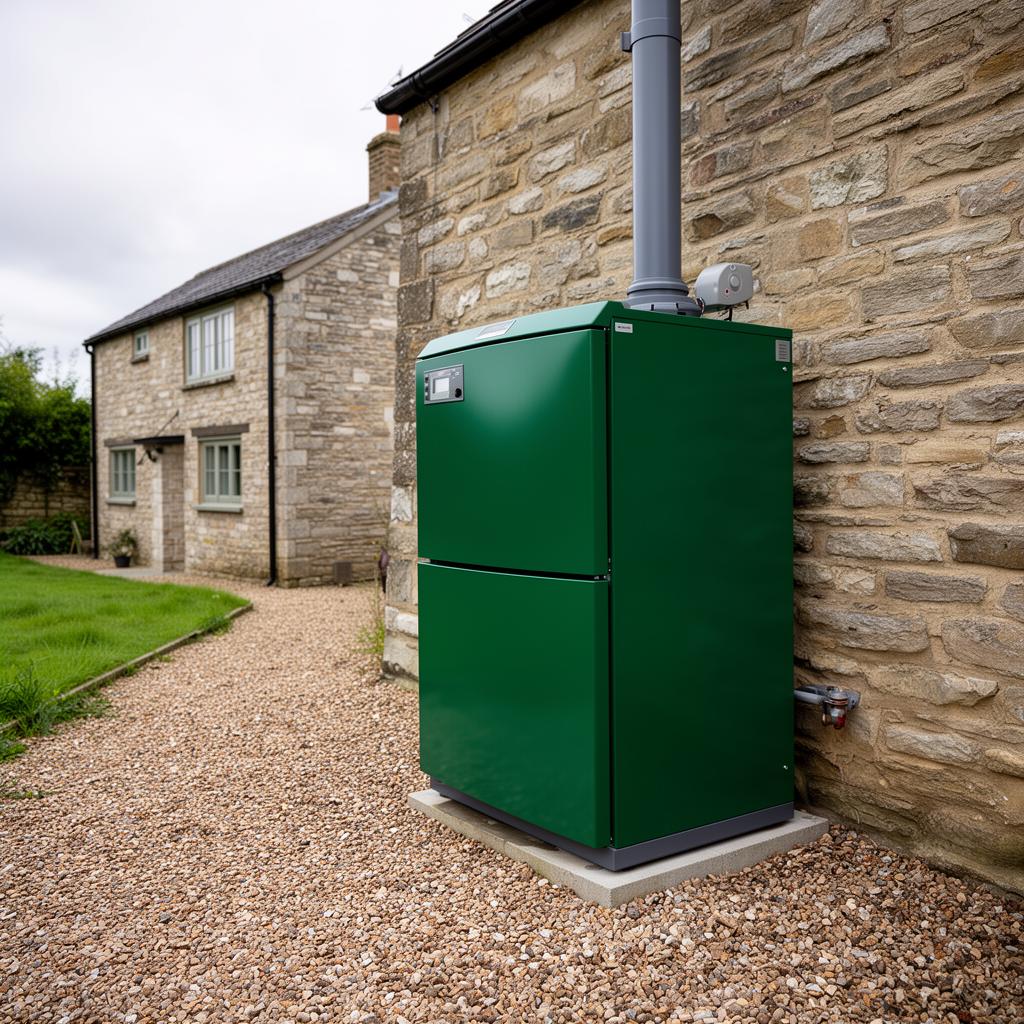
Water here runs off carboniferous limestone and Jurassic oolite, which makes it very hard by national standards. Hard water accelerates scale build-up inside heat exchangers, cylinders and pipework, which shortens the working life of components that aren't protected against it. On jobs in this area we factor scale protection into the specification rather than treating it as an optional extra, because the difference between a protected and unprotected system shows up within a few years, not decades. It's a genuine local variable, not generic sales advice, and it applies whether the property is on mains gas or oil. Mains gas covers much of the area, with off-grid pockets, which changes the appliance shortlist. Water here is very hard limestone water, so scale protection is specified accordingly. Boiler replacements in Stratton-on-the-Fosse are shaped by the property stock here — stone cottages and downside estate properties. We plan flue, condensate and controls around the building before we put a number on the page.
Proof, paperwork and accountability
Boiler, controls, flue, warranty terms, flush spec — all in writing before you commit.
Free, no-pressure 20-minute visit — measured up properly so the price is fixed, not estimated.
We don't ask for money up front. Pay on completion when the system is signed off.
We're 24 Bristol Rd, Radstock — you'll deal with the same team for any aftercare.
Stratton-on-the-Fosse: stock, water and fuel supply
Water here runs off carboniferous limestone and Jurassic oolite, which makes it very hard by national standards. Hard water accelerates scale build-up inside heat exchangers, cylinders and pipework, which shortens the working life of components that aren't protected against it. On jobs in this area we factor scale protection into the specification rather than treating it as an optional extra, because the difference between a protected and unprotected system shows up within a few years, not decades. It's a genuine local variable, not generic sales advice, and it applies whether the property is on mains gas or oil. Mains gas covers much of the area, with off-grid pockets, which changes the appliance shortlist. Water here is very hard limestone water, so scale protection is specified accordingly. Boiler replacements in Stratton-on-the-Fosse are shaped by the property stock here — stone cottages and downside estate properties. We plan flue, condensate and controls around the building before we put a number on the page.
Why we visit before quoting — Stratton-on-the-Fosse
- Confirm gas supply pipe size to the meter
- Plan flue route within building regs
- Check radiator sizing for the heat load
- Look at hot-water demand vs combi capacity
- Spot anything that'll affect the day-of price
Nearby villages and neighbourhoods
We cover Stratton-on-the-Fosse alongside Holcombe (BA3), Chilcompton (BA3), Oakhill (BA3), Coleford (BA3) — so spares, follow-ups and annual visits are easy to schedule together.
Questions before you book
- Who actually carries out the work?
- A Gas Safe and, where relevant, OFTEC registered engineer from our own small team carries out the job — we don't sub the install out to a third party after quoting. You deal with the same people from survey through to commissioning and any aftercare calls.
- We run a holiday let — do the same gas safety rules apply as a standard rental?
- Yes, holiday lets fall under the same landlord gas safety duty as any other let property — an annual CP12 from a Gas Safe registered engineer is required, and it's worth timing the visit for a gap between bookings rather than trying to fit it around guests, which we're happy to help plan around.
- Is it worth upgrading the heating controls when we replace the boiler?
- Where the existing controls are an old mechanical timer and single room thermostat, replacing them alongside the boiler with weather compensation or a modern programmable thermostat usually improves comfort and efficiency more than the boiler swap alone. It's not compulsory, but it's often the single best-value addition to a new install.
- Is oil more expensive to run than mains gas?
- Oil and gas prices both move with the wholesale market and neither is fixed, so a blanket answer isn't honest. What we can say is that a modern condensing oil boiler, correctly sized and commissioned, will run considerably more efficiently than an old non-condensing model — that efficiency gap usually matters more than the fuel choice itself.
- How do you decide whether to repair or replace a boiler?
- We weigh the age of the boiler, whether parts are still made for it, how many faults it's had recently, and its running efficiency against a like-for-like or upgraded replacement. If a straightforward part fixes it and the boiler's otherwise sound, we'll say so rather than push a new install you don't need.
- What does your Stratton-on-the-Fosse quote actually include?
- Boiler model, controls, flue, warranty terms, flush spec, payment terms and estimated install duration. No vague "from £X" lines.
Area data we work from
- County
- Somerset
- Postcode district
- BA3
- Settlement type
- village
- Nearest classified road
- A367
- Distance from our base
- 4 miles (Radstock, BA3)
- Typical building stock
- stone cottages and Downside estate properties
- Water hardness
- very hard limestone water
- Fuel availability
- mains gas with off-grid pockets
- Customer mix
- homes alongside small commercial and agricultural premises
- Nearby areas covered
- Holcombe, Chilcompton, Oakhill, Coleford
The parts of the job people rarely mention
Why very hard limestone water shortens boiler life around Stratton-on-the-Fosse
The limestone geology under Somerset gives Stratton-on-the-Fosse very hard limestone water, which drops calcium carbonate out of solution as soon as it's heated. Inside a combi's plate heat exchanger the gaps between plates are only a millimetre or two wide, so scale narrows the waterways long before it's visible anywhere else in the system. The first symptom is usually a hot tap that runs warm rather than hot, or a boiler that fires more often for the same demand. Left unchecked, scale insulates the exchanger from the burner, forces flue gases hotter, and can crack the exchanger from thermal stress. A scale reducer fitted on the mains feed, sized to the property's flow rate, is cheaper to install once than to replace a heat exchanger twice.
Single-pipe circuits in older stone cottages
A lot of the stone cottages and farmhouses around Stratton-on-the-Fosse were plumbed decades ago on a single-pipe gravity circuit, where each radiator draws from and returns to the same loop rather than having its own flow and return. It works, but radiators furthest from the boiler receive water that's already cooled after giving up heat to the ones before it, so the far end of the house is always the coldest. Converting to a two-pipe layout means new pipe runs, which in a stone cottage often means chasing lime plaster or lifting flagstones — not a trivial job. Where a full rewire of the pipework isn't wanted, we sometimes improve balance instead by oversizing the radiators nearest the end of the run and fitting TRVs to hold back the ones nearest the boiler.
Chasing pipework into lime plaster and stone walls
Solid stone or cob walls finished in lime plaster, common in the older parts of Stratton-on-the-Fosse, behave very differently to modern plasterboard when a pipe run needs chasing in. Lime plaster is softer and more porous than gypsum, so cutting a neat, consistent chase without blowing the surface needs a slower hand and finer disc than a stud-wall job, and any repair has to be made good in a lime-based skim rather than modern filler, which can trap moisture behind it and cause the patch to fail. On solid stone we sometimes surface-mount pipework in painted conduit instead of chasing, particularly where the wall is a significant structural thickness and chasing would weaken it. Knowing which approach a wall needs before starting avoids expensive plaster damage.
Pumped-oil versus gravity feed: does it matter?
Older oil systems sometimes still rely on gravity feed, where the tank sits higher than the burner and oil flows down to it under its own weight; a pumped system uses the burner's internal pump to draw oil up from a tank at any level, including below the boiler. Gravity feed limits where a tank can be sited and is more prone to airlocks if the line runs dry, while a pumped system is more flexible on tank position but needs the pipe run and lift height kept within the burner pump's rated capacity — usually no more than a few metres of lift and a set maximum run length. When we replace an oil boiler we check which type the existing tank and pipework support before assuming a straight swap, because a tank sited for gravity feed may need repositioning or a different pump to suit a modern burner.
Common boiler fault codes and what usually causes them
Most modern boilers display a fault code on the control panel when they lock out, and while the exact code differs between manufacturers, the underlying causes cluster into a small number of categories: low system pressure (often from a small leak or after bleeding radiators), ignition failure (a worn electrode, gas supply issue, or blocked condensate causing a safety shutdown), or a failed sensor reporting an implausible temperature reading. A condensate blockage or freeze specifically tends to show a distinct code from a genuine ignition fault, which is why checking the external condensate pipe for ice before calling out an engineer in a cold snap can sometimes resolve the issue without a visit at all. We ask for the exact fault code and any recent history — a bled radiator, a cold snap, a recent service — before attending, since it often narrows down the likely cause before we arrive.
Nozzle replacement and baffle cleaning on oil burners
An oil burner's nozzle atomises fuel into a fine spray for combustion, and it wears from constant fuel flow at pressure, gradually changing the spray pattern away from the burner manufacturer's specification even before it visibly fails. A worn nozzle burns less cleanly, producing more soot that coats the heat exchanger's baffles, and a sooted heat exchanger loses efficiency in the same way scale does on a gas boiler's plates. Standard practice on an annual oil service is to replace the nozzle as a matter of course, rather than wait for a fault, and to remove and clean the baffles so the heat exchanger surfaces are exposed to combustion heat properly again. Skipping nozzle replacement to save a service visit's minor parts cost is a false economy against the fuel wasted by a poorly atomising burner.
Your next move in BA3
Once we've seen the property, you'll get a written quote for boiler replacement quote that sets out exactly what's included — the equipment, the work, and what happens if anything unexpected turns up once we're on site. That gives you something concrete to compare against any other quotes you're getting. Send the appliance make, model and any fault code and you get a straight answer, not a sales script. Access is lane access, so parking, spoil removal and delivery timing get planned in advance. Most of what we open up here is stone cottages and downside estate properties, which dictates flue routes and pipe sizing.
Related help for Stratton-on-the-Fosse
- New Boiler Cost in Stratton-on-the-FosseHonest, area-specific pricing guidance for a new combi, system or oil boiler — with no obligation site visit.
- Emergency Boiler Repair in Stratton-on-the-FosseSame-week (often same-day) no-heat and no-hot-water call-outs for gas and oil boilers.
- Landlord Gas Safety Certificate (CP12) in Stratton-on-the-FosseAnnual CP12 inspections for landlords and letting agents — digital certificate the same day.
- Oil Boiler Service Cost in Stratton-on-the-FosseWhat an OFTEC registered oil boiler service costs locally, what is included, and what a tank inspection adds.
- Oil Boiler Repair in Stratton-on-the-FosseOil boiler lockouts, sooting and no heat call outs for homes off the mains gas grid, diagnosed before parts are quoted.
- Boiler Service Cost in Stratton-on-the-FosseAnnual gas boiler service pricing, what the check covers, and how a landlord certificate can be combined in one visit.
- Boiler Installation in Stratton-on-the-FosseNew combi, system and regular boiler installations for gas and oil homes — fixed prices, manufacturer warranties.
- Gas Boiler Installation in Stratton-on-the-FosseGas Safe registered installations and upgrades for mains gas homes across Bath, Radstock and Wells.
New Worcester boiler with a 10 year guarantee*
Free no-obligation quotes for installation, servicing & repairs across BA & BS postcodes.