
Landlord Gas Safety Certificate (CP12), Hinton Blewett CP12 Inspections for Landlords
Landlord Gas Safety Certificate (CP12) covers a range of jobs, from straightforward like-for-like swaps to full system redesigns with new pipework, controls and hot water storage. The right approach depends on boiler location, flue length, pump speed, radiator sizing and how the property loses heat. As a Gas Safe and OFTEC registered firm and a Worcester Bosch Accredited Installer working out of Radstock, we specify each install against the building rather than fitting a standard package regardless of fit. Typical era of build is mixed-cottage, which affects existing pipework and system cleanliness. Planning constraints are usually light here, so external work is checked first. In Hinton Blewett itself (BS39, Somerset) that usually means stone cottages, roughly 5 miles from the workshop.
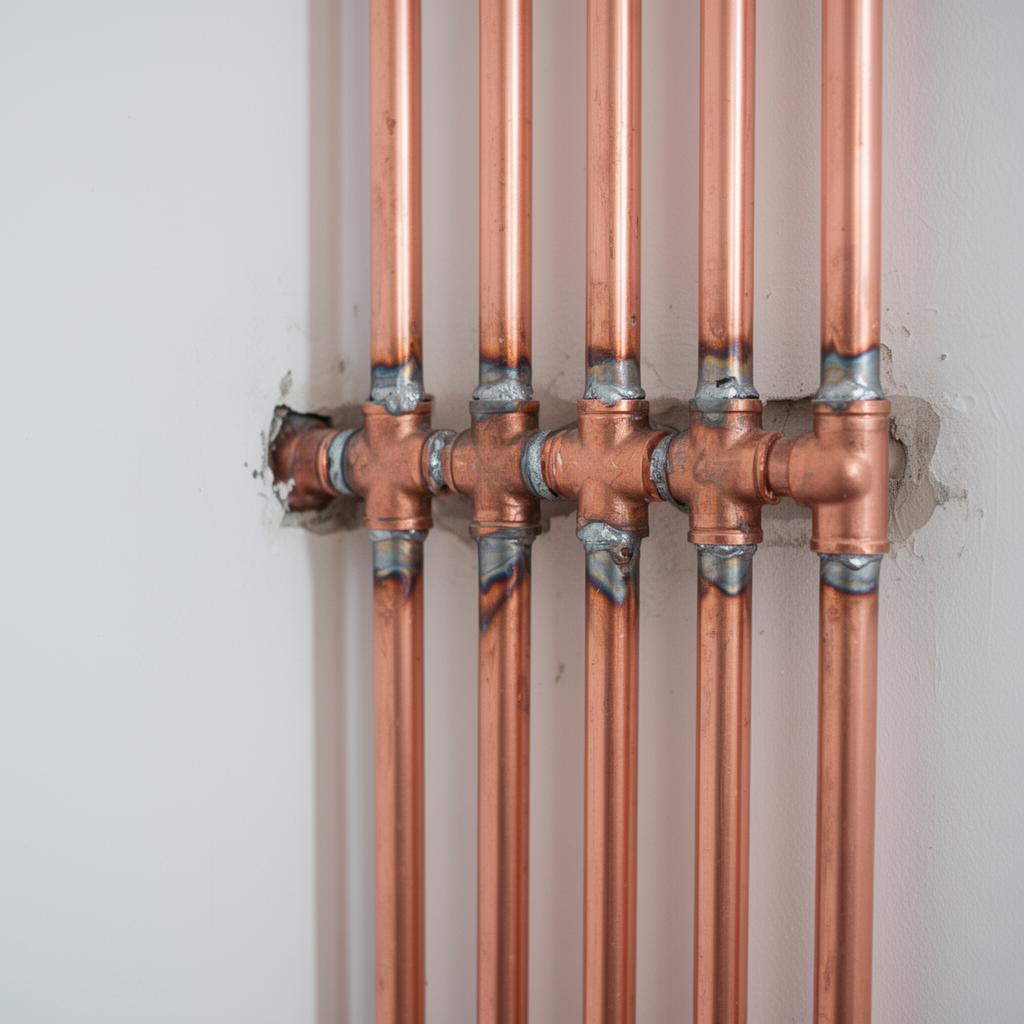
Hilltop and ridge properties in this area are more exposed to wind, which can affect flue performance and, in older systems, pipework runs that lose more heat than an equivalent property in a sheltered spot. It's a genuine factor in how a system should be specified and insulated, not a cosmetic detail. We take exposure into account when sizing radiators and specifying pipe insulation on properties in these more exposed locations. Most of what we open up here is stone cottages, which dictates flue routes and pipe sizing. Access is lane access, so parking, spoil removal and delivery timing get planned in advance. Hinton Blewett (BS39) has a healthy private-rental sector, particularly across stone cottages. We service a number of letting-agent portfolios across the area and keep the certification cycle running so renewals never slip.
Qualifications behind the work
Certificate emailed before we leave the property — copy direct to tenant if preferred.
Direct billing to the letting agent, single engineer across the portfolio.
Notified, certified, fully insured — your statutory obligations covered properly.
Rolling 30-day reminders across every property — no missed renewals.
Neighbouring Somerset areas we serve
We cover Hinton Blewett alongside Bishop Sutton (BS39), East Harptree (BS40), Litton (BA3), Chewton Mendip (BA3) — so spares, follow-ups and annual visits are easy to schedule together.
Your legal duties (summary) — Hinton Blewett
- Annual gas safety check by a Gas Safe engineer
- Record (CP12) issued within 28 days
- Tenant copy within 28 days, new tenants before move-in
- Records kept for 2 years
- Action any defects identified — we'll quote in writing
What the buildings in Hinton Blewett change about the job
Hilltop and ridge properties in this area are more exposed to wind, which can affect flue performance and, in older systems, pipework runs that lose more heat than an equivalent property in a sheltered spot. It's a genuine factor in how a system should be specified and insulated, not a cosmetic detail. We take exposure into account when sizing radiators and specifying pipe insulation on properties in these more exposed locations. Most of what we open up here is stone cottages, which dictates flue routes and pipe sizing. Access is lane access, so parking, spoil removal and delivery timing get planned in advance. Hinton Blewett (BS39) has a healthy private-rental sector, particularly across stone cottages. We service a number of letting-agent portfolios across the area and keep the certification cycle running so renewals never slip.
Hinton Blewett questions we get asked
- What's an unvented cylinder and does it need special installation rules?
- An unvented cylinder stores mains-pressure hot water without a cold water tank in the loft, giving strong pressure at every outlet. Building Regulations require it to be fitted and commissioned by someone holding a specific unvented cylinder qualification (which we hold), including fitting the correct safety valves, because an incorrectly installed unvented cylinder is a pressure vessel hazard.
- Stone cottages seem to lose heat fast — does that change what boiler we need?
- Solid stone walls and older windows do increase heat loss compared to cavity-wall construction, so we size the boiler and radiators around a proper heat loss calculation for the property rather than just matching what's there already. Getting this right matters more in a cottage than a modern house, where an undersized system will never quite keep up.
- Can you look over a quote I've already had from another company?
- Yes, this comes up often. Send or bring in the other written quote and we'll go through the spec — boiler size, controls, cylinder if included, and what's actually listed for parts and labour — and tell you plainly whether it looks right for the property, oversized, or missing something we'd expect to see.
- Do I need to do anything to activate my boiler's warranty?
- As a Worcester Bosch Accredited Installer we register qualifying Worcester installs on your behalf, which is what unlocks the extended guarantee (up to 10 years* on qualifying installs) rather than the standard shorter term. For other brands we still register the installation; keep the confirmation with your other paperwork in case you need it.
- Is a boiler install a noisy, disruptive job?
- There's unavoidable noise — drilling for the flue, pipework, sometimes moving a cylinder — but a straightforward swap is usually done within a working day with the mess kept to the immediate work area. We dust-sheet the route in and out and clear away pipe offcuts and old parts before we leave.
- How quickly is the CP12 certificate issued?
- Same day, emailed as a digital PDF, with a copy direct to your tenant if you prefer.
Hinton Blewett coverage and distances
- County
- Somerset
- Postcode district
- BS39
- Settlement type
- village
- Nearest classified road
- unclassified
- Distance from our base
- 5 miles (Radstock, BA3)
- Typical building stock
- stone cottages
- Water hardness
- hard water
- Fuel availability
- mains gas with off-grid pockets
- Customer mix
- homes alongside small commercial and agricultural premises
- Nearby areas covered
- Bishop Sutton, East Harptree, Litton, Chewton Mendip
Technical notes for this job type
Low-loss headers on larger or multi-zone systems
On a system with several heating zones or a boiler oversized relative to any single zone's flow requirement, a low-loss header hydraulically separates the boiler's primary circuit from the secondary zone circuits, so each side can run its own pump and flow rate without one interfering with the other. Without it, a zone valve closing on a multi-zone system can starve the boiler of flow or force excessive pump pressure through the remaining open zones. It's most relevant on larger properties or ones with commercial premises attached, where several distinct heating circuits — perhaps a shop unit and a flat above — share one heat source. Getting the header sized to the boiler's actual flow rate, not just fitted as standard, is what makes it work rather than just adding another connection.
Condensate soakaways where there's no convenient drain
Properties without a nearby internal waste connection or external gully for the boiler's condensate — common on rural plots around Hinton Blewett where the nearest drain run is a long way from the boiler's location — sometimes need a dedicated condensate soakaway instead. This is a small pit filled with granular material that the condensate, which is mildly acidic, can disperse into gradually rather than running to a drain at all. Sizing and siting it correctly matters: it needs to be far enough from foundations and sited where the local ground can actually absorb the modest but steady volume a boiler produces, particularly over a long heating season. Where ground conditions make a soakaway unreliable, running a longer insulated pipe to a proper drainage connection is usually the safer long-term choice even though it's more work to install.
Why hard water shortens boiler life around Hinton Blewett
The limestone geology under Somerset gives Hinton Blewett hard water, which drops calcium carbonate out of solution as soon as it's heated. Inside a combi's plate heat exchanger the gaps between plates are only a millimetre or two wide, so scale narrows the waterways long before it's visible anywhere else in the system. The first symptom is usually a hot tap that runs warm rather than hot, or a boiler that fires more often for the same demand. Left unchecked, scale insulates the exchanger from the burner, forces flue gases hotter, and can crack the exchanger from thermal stress. A scale reducer fitted on the mains feed, sized to the property's flow rate, is cheaper to install once than to replace a heat exchanger twice.
How a condensing boiler recovers extra heat
A condensing boiler passes flue gases through a secondary heat exchanger before they leave the flue, extracting additional heat by condensing water vapour in the exhaust back into liquid, which is expelled as the mildly acidic condensate water down the drain. This is why every condensing boiler needs a condensate drainage route as part of its installation, unlike older non-condensing boilers, which simply vented hot dry gas straight out. The efficiency benefit only fully materialises when the boiler is actually condensing regularly, which needs a return water temperature low enough — generally below 55°C — for water vapour to condense in the first place. A condensing boiler run permanently at a high flow temperature can spend much of its time not actually condensing, which is one of the main reasons flow temperature settings matter as much as the boiler model chosen.
Electronic and physical scale reducers compared
In hard water areas like Hinton Blewett, a scale reducer fitted on the boiler's cold feed protects the heat exchanger without the ongoing salt and drainage requirements of a full water softener. Physical scale reducers use a polyphosphate or template-assisted crystallisation cartridge that alters how calcium carbonate crystallises so it's less likely to adhere to hot surfaces; electronic and electromagnetic devices claim a similar effect without a cartridge to replace, though the evidence base for electronic types is weaker and more inconsistent than for physical media. Manufacturers including Worcester Bosch now specify a scale reducer or softener as a condition of extended guarantees in hard water areas, so the choice affects warranty validity as well as long-term performance, not just descale frequency.
Extra wind exposure on hilltop properties and what it means for heating
Elevated sites around Hinton Blewett lose heat faster through infiltration in windy weather than a sheltered valley property of identical construction, because wind pressure drives more cold air through gaps around doors, windows and loft hatches. This shows up as a heating system working harder to maintain the same internal temperature on a windy but not especially cold day than a still, colder one — a pattern that can look like an underperforming boiler when the real cause is draught infiltration. It also affects flue performance: an exposed terminal position can experience more downdraught, which is one reason correct terminal siting and, where needed, terminal guards matter more on hilltop sites than sheltered ones. We factor exposure into heat loss assumptions on elevated properties rather than using a flat regional design temperature.
Condensate pipe freezing on exposed elevations
Properties on the higher ground around Hinton Blewett catch more wind chill than the valley floor, and an external condensate pipe on a north or east-facing wall is the most common cause of a boiler lockout in a cold snap. The pipe carries mildly acidic waste water from the flue; if it's routed externally in 21.5mm pipe rather than run internally and lagged, or dropped into an internal soil stack, it freezes solid and the boiler senses a blockage and shuts down for safety. Building Regulations guidance favours an internal run with a trapped connection to the waste system wherever the layout allows it. Where an external run is unavoidable we use 32mm insulated pipe with a minimal fall, which resists freezing far better than the standard diameter.
What a landlord gas safety record actually checks
A landlord gas safety record (still commonly called a CP12) requires an annual check of every gas appliance, flue and installation pipework in a rented property, carried out by a Gas Safe registered engineer and recorded on a certificate issued to the tenant within 28 days and kept by the landlord for at least two years. The check covers appliance operating pressure, safety device function, ventilation adequacy, flue performance and visual condition, and any appliance found "at risk" or "immediately dangerous" is classified and, where necessary, disconnected on the spot rather than left for a follow-up visit. Landlords with property across homes alongside small commercial and agricultural premises areas like Hinton Blewett have a legal duty to arrange this before a new tenancy starts and annually thereafter, and failure to do so is a criminal offence, not just a lease breach.
- Required before a tenancy starts and annually thereafter
- Certificate given to tenant within 28 days of the check
- Records kept by the landlord for at least 2 years
- "At risk" or "dangerous" appliances can be disconnected immediately
Booking work in Hinton Blewett
If you're not in a rush, arranging landlord gas safety certificate (cp12) outside the depths of winter usually means more flexibility on scheduling and a calmer job overall. If you are in a rush because something's already failed, tell us that when you call so we can prioritise accordingly within our normal working hours. Photos of the existing setup speed up pricing for village properties like these. Most of what we open up here is stone cottages, which dictates flue routes and pipe sizing. Access is lane access, so parking, spoil removal and delivery timing get planned in advance.
Related help for Hinton Blewett
- New Boiler Cost in Hinton BlewettHonest, area-specific pricing guidance for a new combi, system or oil boiler — with no obligation site visit.
- Emergency Boiler Repair in Hinton BlewettSame-week (often same-day) no-heat and no-hot-water call-outs for gas and oil boilers.
- Boiler Replacement Quote in Hinton BlewettFree, no-obligation site visits and written specifications for old boiler replacements.
- Oil Boiler Service Cost in Hinton BlewettWhat an OFTEC registered oil boiler service costs locally, what is included, and what a tank inspection adds.
- Oil Boiler Repair in Hinton BlewettOil boiler lockouts, sooting and no heat call outs for homes off the mains gas grid, diagnosed before parts are quoted.
- Boiler Service Cost in Hinton BlewettAnnual gas boiler service pricing, what the check covers, and how a landlord certificate can be combined in one visit.
- Boiler Installation in Hinton BlewettNew combi, system and regular boiler installations for gas and oil homes — fixed prices, manufacturer warranties.
- Gas Boiler Installation in Hinton BlewettGas Safe registered installations and upgrades for mains gas homes across Bath, Radstock and Wells.
New Worcester boiler with a 10 year guarantee*
Free no-obligation quotes for installation, servicing & repairs across BA & BS postcodes.