
Oil Boiler Repair, Emergency Boiler Repair in Hallatrow
Deciding on oil boiler repair usually comes down to a few questions: repair or replace, which fuel, which brand, and who to trust with the work. We can't answer all of those without seeing the property, but we can give you a written, itemised quote once we have, so you're comparing like with like against other tradespeople. We're Gas Safe registered, OFTEC registered and a Worcester Bosch Accredited Installer, working from 24 Bristol Road, Radstock BA3 3EE. homes alongside small commercial and agricultural premises make up most enquiries from this postcode. Terrain is level, which matters for condensate runs and tank siting. In Hallatrow itself (BS39, Somerset) that usually means stone cottages and modern estates, roughly 4 miles from the workshop.
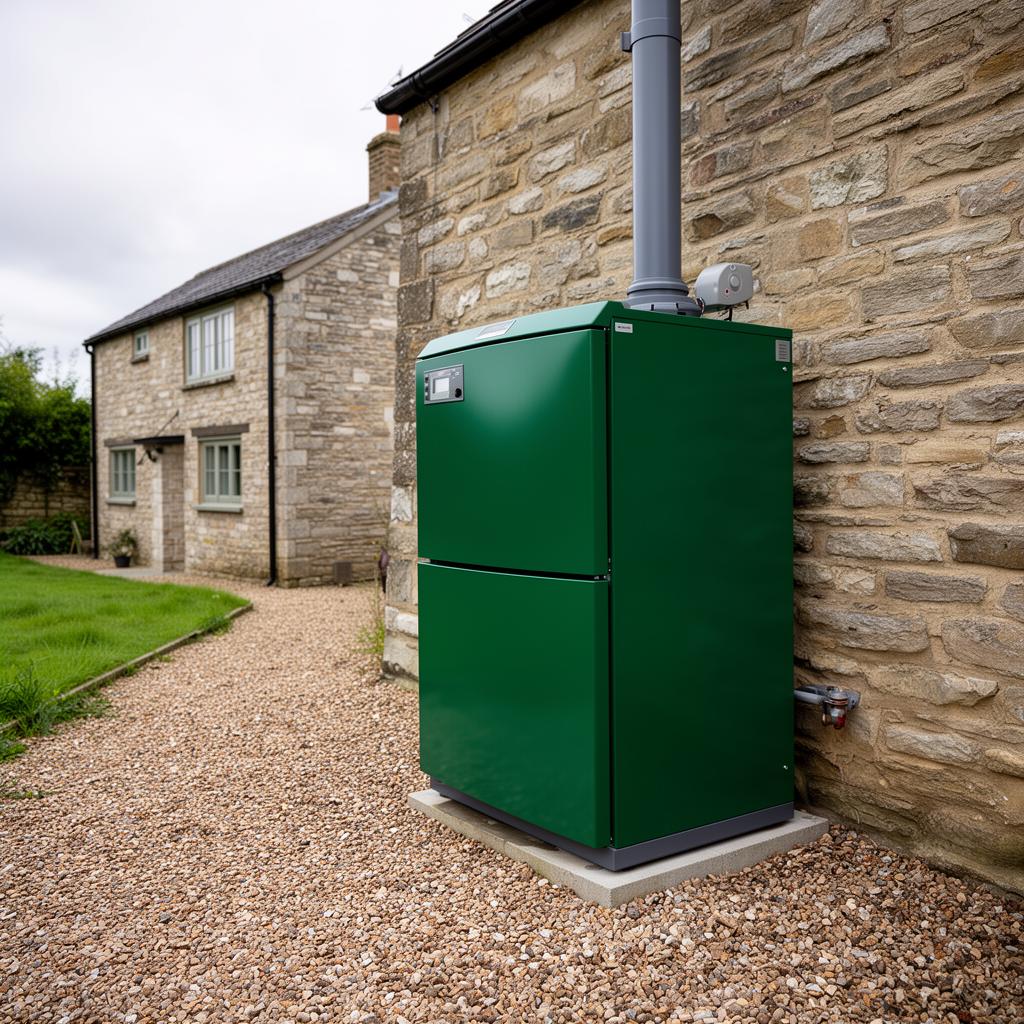
The water supply in this part of the Chew Valley and surrounding area is hard, sitting between the very hard limestone water closer to Bath and the moderately hard supply further out. It's still enough to affect scale build-up over time, particularly in hot water cylinders and combi heat exchangers. We take that into account when specifying protection for a new system rather than assuming the same setup that works on a soft-water supply elsewhere in the country will perform the same way here. Water here is hard water, so scale protection is specified accordingly. homes alongside small commercial and agricultural premises make up most enquiries from this postcode. Hallatrow sits roughly 4 miles from our Radstock base via the A39. We're on the road across BS39 every day, so emergency response is genuinely local — not a third-party engineer dispatched from the other side of the county.
Neighbouring Somerset areas we serve
We cover Hallatrow alongside Paulton (BS39), High Littleton (BS39), Farrington Gurney (BS39), Clutton (BS39) — so spares, follow-ups and annual visits are easy to schedule together.
Local conditions we plan around in BS39
The water supply in this part of the Chew Valley and surrounding area is hard, sitting between the very hard limestone water closer to Bath and the moderately hard supply further out. It's still enough to affect scale build-up over time, particularly in hot water cylinders and combi heat exchangers. We take that into account when specifying protection for a new system rather than assuming the same setup that works on a soft-water supply elsewhere in the country will perform the same way here. Water here is hard water, so scale protection is specified accordingly. homes alongside small commercial and agricultural premises make up most enquiries from this postcode. Hallatrow sits roughly 4 miles from our Radstock base via the A39. We're on the road across BS39 every day, so emergency response is genuinely local — not a third-party engineer dispatched from the other side of the county.
Common faults we see — Hallatrow
- No heat / no hot water — diverter valve, PCB
- Pressure dropping — expansion vessel, leak
- Boiler locked out — fan, sensor, PCB
- Cold radiators — pump, sludge, valves
- Frozen condensate (winter) — quick thaw + insulate
- Hot water only — thermostat or motorised valve
What backs up a Hallatrow quote
Diverter valves, expansion vessels, pumps, common PCBs — first-visit fixes are the norm.
We never swap parts blindly. You'll see the fault confirmed before any spare goes in.
Oil boilers and tanks covered — we don't bounce oil-fired call-outs to another firm.
Every gas job notified to Building Control. Photo-evidenced repairs where relevant.
Oil Boiler Repair FAQs for BS39
- How does LPG heating differ from mains gas day to day?
- An LPG boiler works the same way as a mains gas one day to day, but the gas is stored in a tank or cylinders on site and topped up by a supplier rather than piped in continuously. That means keeping an eye on tank levels and arranging deliveries, but appliance choice, controls, and servicing requirements are otherwise very similar.
- Is it worth upgrading the heating controls when we replace the boiler?
- Where the existing controls are an old mechanical timer and single room thermostat, replacing them alongside the boiler with weather compensation or a modern programmable thermostat usually improves comfort and efficiency more than the boiler swap alone. It's not compulsory, but it's often the single best-value addition to a new install.
- Is oil more expensive to run than mains gas?
- Oil and gas prices both move with the wholesale market and neither is fixed, so a blanket answer isn't honest. What we can say is that a modern condensing oil boiler, correctly sized and commissioned, will run considerably more efficiently than an old non-condensing model — that efficiency gap usually matters more than the fuel choice itself.
- What's a CP12 and do I need one as a landlord?
- A CP12 (Landlord Gas Safety Record) confirms every gas appliance in a rented property has passed an annual safety check by a Gas Safe registered engineer. It's a legal requirement before letting and at each renewal, a copy has to go to tenants, and it needs to be renewed every 12 months without a gap.
- What paperwork do I get once the job's finished?
- You'll get a Benchmark commissioning checklist for the boiler, a building notice or Building Control completion certificate for notifiable work, manufacturer warranty registration confirmation, and a Gas Safe (or OFTEC) record of the work. Keep these together — they're what a future buyer's solicitor or a warranty claim will ask for.
- Where can a new boiler actually be sited in the property?
- A combi is usually fitted in a kitchen cupboard, utility room, loft, or garage as long as flue clearances to windows, doors, and boundaries are met. A system or regular boiler with a cylinder needs a bit more room and usually stays close to its current position unless you're relocating the whole system, which is a bigger job.
Coverage detail for BS39
- County
- Somerset
- Postcode district
- BS39
- Settlement type
- village
- Nearest classified road
- A39
- Distance from our base
- 4 miles (Radstock, BA3)
- Typical building stock
- stone cottages and modern estates
- Water hardness
- hard water
- Fuel availability
- mains gas with off-grid pockets
- Customer mix
- homes alongside small commercial and agricultural premises
- Nearby areas covered
- Paulton, High Littleton, Farrington Gurney, Clutton
Things we check around Hallatrow
Single-pipe circuits in older stone cottages
A lot of the stone cottages and farmhouses around Hallatrow were plumbed decades ago on a single-pipe gravity circuit, where each radiator draws from and returns to the same loop rather than having its own flow and return. It works, but radiators furthest from the boiler receive water that's already cooled after giving up heat to the ones before it, so the far end of the house is always the coldest. Converting to a two-pipe layout means new pipe runs, which in a stone cottage often means chasing lime plaster or lifting flagstones — not a trivial job. Where a full rewire of the pipework isn't wanted, we sometimes improve balance instead by oversizing the radiators nearest the end of the run and fitting TRVs to hold back the ones nearest the boiler.
Why hard water shortens boiler life around Hallatrow
The limestone geology under Somerset gives Hallatrow hard water, which drops calcium carbonate out of solution as soon as it's heated. Inside a combi's plate heat exchanger the gaps between plates are only a millimetre or two wide, so scale narrows the waterways long before it's visible anywhere else in the system. The first symptom is usually a hot tap that runs warm rather than hot, or a boiler that fires more often for the same demand. Left unchecked, scale insulates the exchanger from the burner, forces flue gases hotter, and can crack the exchanger from thermal stress. A scale reducer fitted on the mains feed, sized to the property's flow rate, is cheaper to install once than to replace a heat exchanger twice.
What a proper heating quote should include
A quote worth relying on states the specific boiler or equipment model, the labour and materials it covers, whether a system flush and magnetic filter are included, what happens to old equipment removal and disposal, and what's excluded — an unexpected gas pipe upsizing or asbestos-containing material discovered during removal, for example, which can't always be known before work starts. It should also state who's completing the Gas Safe or OFTEC notification and Benchmark commissioning record, since that's the paperwork that protects both the manufacturer's guarantee and the property's compliance history when it's sold. A vague one-line quote makes comparing genuinely different offers difficult, because two prices that look similar can cover very different scopes of actual work.
- Specific make and model, not just "combi boiler"
- Flush and magnetic filter stated as included or excluded
- Old equipment removal and disposal covered
- Notification and Benchmark record responsibility stated
Low-loss headers on larger or multi-zone systems
On a system with several heating zones or a boiler oversized relative to any single zone's flow requirement, a low-loss header hydraulically separates the boiler's primary circuit from the secondary zone circuits, so each side can run its own pump and flow rate without one interfering with the other. Without it, a zone valve closing on a multi-zone system can starve the boiler of flow or force excessive pump pressure through the remaining open zones. It's most relevant on larger properties or ones with commercial premises attached, where several distinct heating circuits — perhaps a shop unit and a flat above — share one heat source. Getting the header sized to the boiler's actual flow rate, not just fitted as standard, is what makes it work rather than just adding another connection.
Chimney liners for boilers using an existing flue
Where an older boiler used the property's original brick or stone chimney as its flue route, a replacement condensing boiler usually can't use the same masonry flue unlined, because the flue gases are cooler and wetter and will attack unprotected brickwork and mortar over time. A correctly specified stainless steel liner, sized to the boiler manufacturer's flue length and diameter tables, carries the flue gases safely and lets the existing chimney be reused rather than needing a new wall or roof penetration — often the only realistic option on a listed or solid-wall property in Hallatrow where an external flue run isn't permitted. The liner has to be inspected and swept as part of ongoing servicing exactly as an open-fire flue would be, which is easy to overlook once it's hidden inside the chimney.
What different boiler noises usually mean
A kettling or rumbling sound from a boiler is most often scale or sludge build-up on the heat exchanger causing localised boiling as water is trapped and overheated in restricted channels — the heating equivalent of a kettle furring up. A banging or knocking sound in pipework, sometimes called water hammer, is usually caused by a valve closing too quickly or trapped air rather than the boiler itself. A whining or humming sound tends to point to the circulating pump, either from wear or from air in the system reducing lubrication at the bearing. Diagnosing correctly from the noise alone isn't reliable enough to act on without checking system pressure, inhibitor condition and the pump directly, but the noise itself is a useful first indicator of which of those to check first.
Electronic and physical scale reducers compared
In hard water areas like Hallatrow, a scale reducer fitted on the boiler's cold feed protects the heat exchanger without the ongoing salt and drainage requirements of a full water softener. Physical scale reducers use a polyphosphate or template-assisted crystallisation cartridge that alters how calcium carbonate crystallises so it's less likely to adhere to hot surfaces; electronic and electromagnetic devices claim a similar effect without a cartridge to replace, though the evidence base for electronic types is weaker and more inconsistent than for physical media. Manufacturers including Worcester Bosch now specify a scale reducer or softener as a condition of extended guarantees in hard water areas, so the choice affects warranty validity as well as long-term performance, not just descale frequency.
Where to go from here
Finishing oil boiler repair isn't the end of the relationship — if something doesn't feel right once the system's been running for a while, get in touch and we'll come back and look at it. Annual servicing afterwards keeps the guarantee valid and the system running as it should. We can usually pair the visit with other work in Paulton to keep the trip efficient. Water here is hard water, so scale protection is specified accordingly. Planning constraints are usually light here, so external work is checked first.
Related help for Hallatrow
- New Boiler Cost in HallatrowHonest, area-specific pricing guidance for a new combi, system or oil boiler — with no obligation site visit.
- Emergency Boiler Repair in HallatrowSame-week (often same-day) no-heat and no-hot-water call-outs for gas and oil boilers.
- Landlord Gas Safety Certificate (CP12) in HallatrowAnnual CP12 inspections for landlords and letting agents — digital certificate the same day.
- Boiler Replacement Quote in HallatrowFree, no-obligation site visits and written specifications for old boiler replacements.
- Oil Boiler Service Cost in HallatrowWhat an OFTEC registered oil boiler service costs locally, what is included, and what a tank inspection adds.
- Boiler Service Cost in HallatrowAnnual gas boiler service pricing, what the check covers, and how a landlord certificate can be combined in one visit.
- Boiler Installation in HallatrowNew combi, system and regular boiler installations for gas and oil homes — fixed prices, manufacturer warranties.
- Gas Boiler Installation in HallatrowGas Safe registered installations and upgrades for mains gas homes across Bath, Radstock and Wells.
New Worcester boiler with a 10 year guarantee*
Free no-obligation quotes for installation, servicing & repairs across BA & BS postcodes.