
Boiler Installation in Butcombe
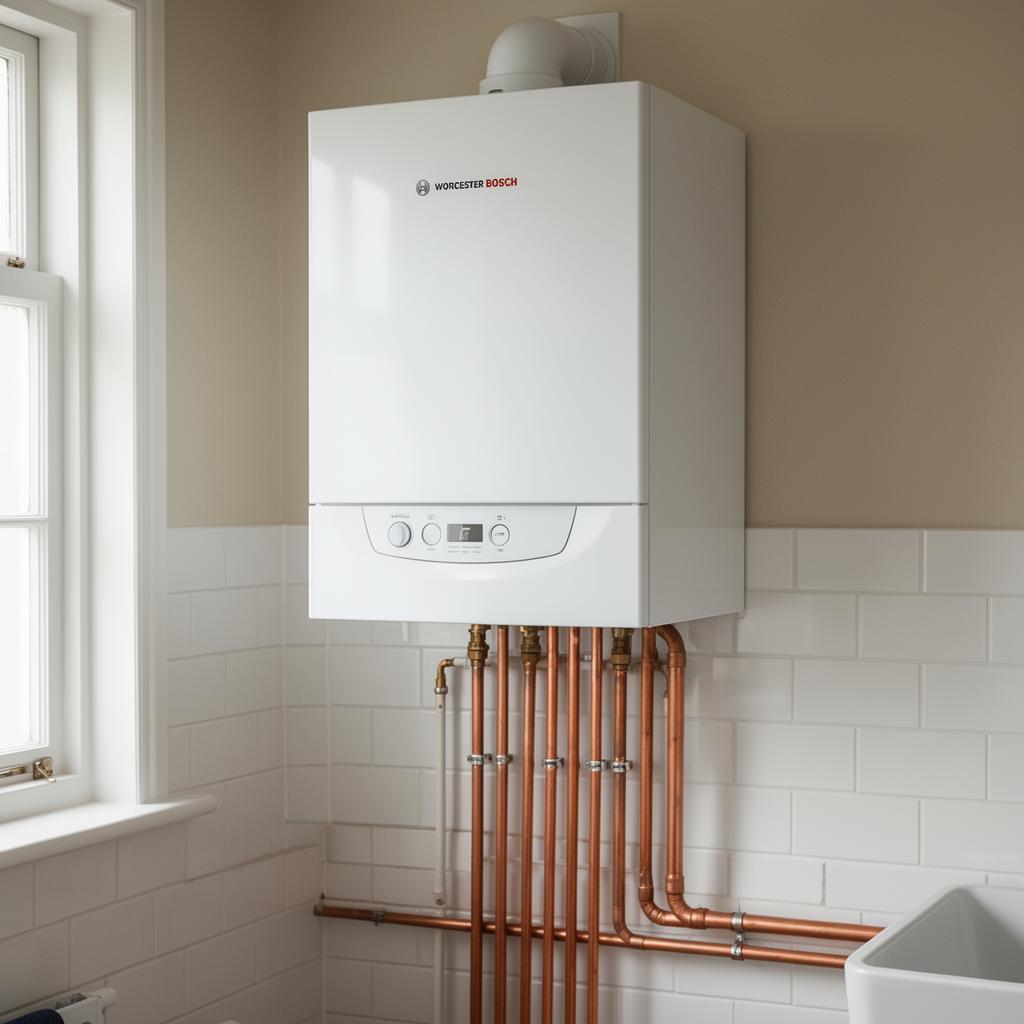
Getting quotes for boiler installation can feel like a gamble when you don't know the trade. You want someone who turns up when they say they will, explains what they're doing, and leaves you with a system you understand. That's the standard we work to from 24 Bristol Road, Radstock BA3 3EE. We're Gas Safe registered, OFTEC registered and a Worcester Bosch Accredited Installer, so the paperwork and the workmanship both hold up to scrutiny. Nearest neighbours on our round are Blagdon, Wrington, Winford. Typical era of build is mixed-cottage, which affects existing pipework and system cleanliness. In Butcombe itself (BS40, North Somerset) that usually means stone cottages, roughly 10 miles from the workshop.
Nearby villages and neighbourhoods
Beyond Butcombe we're frequently on jobs in Blagdon (BS40), Wrington (BS40), Winford (BS40) and Burrington (BS40) — so spares, follow-ups and annual services are straightforward.
Proof, paperwork and accountability
No verbal-only quotes. You'll get the boiler model, controls and warranty in writing before we book.
Oil boilers, oil tanks and pipework — fully certified for off-grid installs and replacements.
362+ verified reviews from real customers across BA and BS postcodes.
Qualifies your install for the full 10-year manufacturer guarantee* on supported models.
What you get, start to finish
- Combi, system & regular boilers
- Like-for-like swaps in a single day
- Worcester, Vaillant, Ideal, Grant & more
- Up to 10-year manufacturer warranties
- Free written quote, no obligation
- Local aftercare from a 10-mile base
How North Somerset building stock shapes the spec
Stone cottages and farmhouses around here were mostly built long before central heating existed, so pipework and boiler locations have usually been retrofitted at some point, sometimes more than once. Thick stone walls, uneven floor levels and low ceilings can all affect where a boiler or cylinder can practically go, and older stonework doesn't always take fixings the way modern block or brick does. We work around those constraints on site rather than assuming a straightforward install. homes alongside small commercial and agricultural premises make up most enquiries from this postcode. Water here is hard water, so scale protection is specified accordingly. Butcombe is roughly 10 miles from our Radstock base via the unclassified. Typical property stock here: stone cottages. A meaningful share of properties around Butcombe are off the gas grid, so oil boiler installs and tank swaps make up a fair part of what we do locally. When we quote boiler installation here we factor in flue routing, condensate fall and gas-supply pipe sizing before the price is fixed.
Common queries, answered honestly
- My oil tank is old — does it need replacing alongside the boiler?
- Not automatically, but we check the tank's age, material, and condition as part of any oil boiler quote. Steel tanks corrode from the inside and plastic tanks degrade with UV exposure over time; if we find cracking, rust weeping, or a missing bund we'll flag it, because a failed tank is a pollution and insurance risk, not just a heating one.
- Is it worth upgrading the heating controls when we replace the boiler?
- Where the existing controls are an old mechanical timer and single room thermostat, replacing them alongside the boiler with weather compensation or a modern programmable thermostat usually improves comfort and efficiency more than the boiler swap alone. It's not compulsory, but it's often the single best-value addition to a new install.
- How much longer does a full conversion take compared to a straight boiler swap?
- A straight like-for-like swap in the same location is typically a single working day. Converting boiler type (for example back boiler to combi, or oil to LPG), relocating the boiler, or adding a new cylinder usually needs one to two extra days for additional pipework, flue routing, and electrical work, which we'll scope out at survey.
- Do I need to do anything to activate my boiler's warranty?
- As a Worcester Bosch Accredited Installer we register qualifying Worcester installs on your behalf, which is what unlocks the extended guarantee (up to 10 years* on qualifying installs) rather than the standard shorter term. For other brands we still register the installation; keep the confirmation with your other paperwork in case you need it.
- How do you decide whether to repair or replace a boiler?
- We weigh the age of the boiler, whether parts are still made for it, how many faults it's had recently, and its running efficiency against a like-for-like or upgraded replacement. If a straightforward part fixes it and the boiler's otherwise sound, we'll say so rather than push a new install you don't need.
- Where can a new boiler actually be sited in the property?
- A combi is usually fitted in a kitchen cupboard, utility room, loft, or garage as long as flue clearances to windows, doors, and boundaries are met. A system or regular boiler with a cylinder needs a bit more room and usually stays close to its current position unless you're relocating the whole system, which is a bigger job.
Where to go from here
If you're still deciding whether boiler installation is the right move for your property, a site visit and honest conversation costs you nothing but time. We'll tell you if we think repair is a better option than replacement, or if the job is more or less involved than you expected. Gas work is signed off Gas Safe; oil work is signed off OFTEC. Nearest neighbours on our round are Blagdon, Wrington, Winford. Planning constraints are usually light here, so external work is checked first.
The factual picture in Butcombe
- County
- North Somerset
- Postcode district
- BS40
- Settlement type
- village
- Nearest classified road
- unclassified
- Distance from our base
- 10 miles (Radstock, BA3)
- Typical building stock
- stone cottages
- Water hardness
- hard water
- Fuel availability
- mains gas with off-grid pockets
- Customer mix
- homes alongside small commercial and agricultural premises
- Nearby areas covered
- Blagdon, Wrington, Winford, Burrington
Technical notes for this job type
Why a boiler needs a permanently live electrical supply
A boiler's electrical supply has to be permanently live, taken from a fused spur rather than switched off a light circuit or any switch a homeowner might turn off without realising it isolates the boiler along with it. This matters for frost protection especially — a boiler's internal frost thermostat can only bring the system on to prevent freezing if it has power at the time, so a supply that's accidentally switched off overnight defeats frost protection entirely, even though everything else about the installation is correct. We check the existing electrical supply on every boiler swap and, where it's taken from an inappropriate circuit, correct it as part of the installation rather than leaving a known risk in place because it wasn't part of the original job description.
Heating where a home sits alongside commercial premises
Properties around Butcombe that combine living accommodation with an attached shop, workshop or other commercial space often need heating designed as genuinely separate zones with independent controls, since a shop's occupied hours and heating demand rarely match the flat or house above it. Where the two shared a single ageing system, splitting them onto separate zone valves — or, on a larger scale, separate boilers — stops one side subsidising or interfering with the other's heating schedule. Commercial space also sometimes falls under different servicing and safety-record obligations than the residential side, depending on how it's used, so it's worth establishing which parts of the building fall under which regime before assuming a single annual service covers everything.
Common boiler fault codes and what usually causes them
Most modern boilers display a fault code on the control panel when they lock out, and while the exact code differs between manufacturers, the underlying causes cluster into a small number of categories: low system pressure (often from a small leak or after bleeding radiators), ignition failure (a worn electrode, gas supply issue, or blocked condensate causing a safety shutdown), or a failed sensor reporting an implausible temperature reading. A condensate blockage or freeze specifically tends to show a distinct code from a genuine ignition fault, which is why checking the external condensate pipe for ice before calling out an engineer in a cold snap can sometimes resolve the issue without a visit at all. We ask for the exact fault code and any recent history — a bled radiator, a cold snap, a recent service — before attending, since it often narrows down the likely cause before we arrive.
Wood-burning stoves with a back boiler alongside a main boiler
Some older rural properties around Butcombe run a wood-burning stove with a back boiler feeding heat into the same central heating circuit as an oil or gas boiler, usually through a thermal store or a cylinder with two coils. Getting this combination to work safely means the stove's back boiler circuit has its own means of dissipating heat if the pump fails or a valve closes while the stove is still burning — a stove can't simply be switched off the way a boiler can if its heat has nowhere to go, so a gravity-fed safety circuit or heat leak radiator is normally required. It's a more involved design than a single-boiler system and needs planning at the point either appliance is replaced, not treated as an afterthought once the new boiler is already fitted.
Pumped-oil versus gravity feed: does it matter?
Older oil systems sometimes still rely on gravity feed, where the tank sits higher than the burner and oil flows down to it under its own weight; a pumped system uses the burner's internal pump to draw oil up from a tank at any level, including below the boiler. Gravity feed limits where a tank can be sited and is more prone to airlocks if the line runs dry, while a pumped system is more flexible on tank position but needs the pipe run and lift height kept within the burner pump's rated capacity — usually no more than a few metres of lift and a set maximum run length. When we replace an oil boiler we check which type the existing tank and pipework support before assuming a straight swap, because a tank sited for gravity feed may need repositioning or a different pump to suit a modern burner.
The case for turning your flow temperature down
Most combi boilers leave the factory set to a flow temperature around 75-80°C, which is far higher than needed for most homes and well above the point where a condensing boiler achieves its best efficiency. Condensing boilers recover extra heat by condensing water vapour out of the flue gases, and that only happens efficiently when the return water temperature is below roughly 55°C — a target easier to hit with a lower flow setting. Dropping the flow temperature to 60°C or lower, and checking radiators can still heat the coldest rooms adequately at that setting, typically improves gas consumption noticeably over a heating season. The setting itself takes minutes to change on the boiler's control panel or app, but it's only worth doing after checking radiator sizing can cope, which is why we check both together rather than adjusting the boiler alone.
Single-pipe circuits in older stone cottages
A lot of the stone cottages and farmhouses around Butcombe were plumbed decades ago on a single-pipe gravity circuit, where each radiator draws from and returns to the same loop rather than having its own flow and return. It works, but radiators furthest from the boiler receive water that's already cooled after giving up heat to the ones before it, so the far end of the house is always the coldest. Converting to a two-pipe layout means new pipe runs, which in a stone cottage often means chasing lime plaster or lifting flagstones — not a trivial job. Where a full rewire of the pipework isn't wanted, we sometimes improve balance instead by oversizing the radiators nearest the end of the run and fitting TRVs to hold back the ones nearest the boiler.
Other boiler services in Butcombe
- Gas Boiler Installation in ButcombeGas Safe registered installations and upgrades for mains gas homes across Bath, Radstock and Wells.
- Oil Boiler Installation in ButcombeOFTEC-trained oil boiler specialist for rural homes off the gas grid — tank and boiler replacements.
- Boiler Servicing in ButcombeAnnual boiler services to keep your warranty valid and your home safe, efficient and warm.
- Maintenance & Repair in ButcombeDiagnostics, repairs and breakdown call-outs for gas and oil boilers across BA and BS postcodes.
- Landlord Gas Safety Certificates in ButcombeAnnual CP12 landlord gas safety records issued on the day, for single lets, HMOs, holiday lets and whole portfolios.
- Oil Boiler Servicing in ButcombeOFTEC registered annual servicing for oil boilers, including nozzle, electrode, filter and smoke test work on off grid homes.
- Oil Boiler Repairs in ButcombeOil boiler breakdown repairs across rural Somerset, from lockouts and sooting to pump, photocell and control faults.
- Oil Tank Replacement in ButcombeBunded oil tank replacement and relocation with base preparation, new supply line and OFTEC paperwork on completion.
New Worcester boiler with a 10 year guarantee*
Free no-obligation quotes for installation, servicing & repairs across BA & BS postcodes.