
Chilcompton Boiler Installation
We treat boiler installation as work that has to meet the same standard whether it's a small job or a full system replacement: correct registration, proper commissioning, and documentation you can keep. Gas Safe registered, OFTEC registered and a Worcester Bosch Accredited Installer, based at 24 Bristol Road, Radstock BA3 3EE, that's the baseline we work to on every job, not an upsell. Our van runs the A37 to reach you, 3 miles out from the Radstock workshop. Terrain is level, which matters for condensate runs and tank siting. In Chilcompton itself (BA3, Somerset) that usually means stone cottages and modern estates, roughly 3 miles from the workshop.
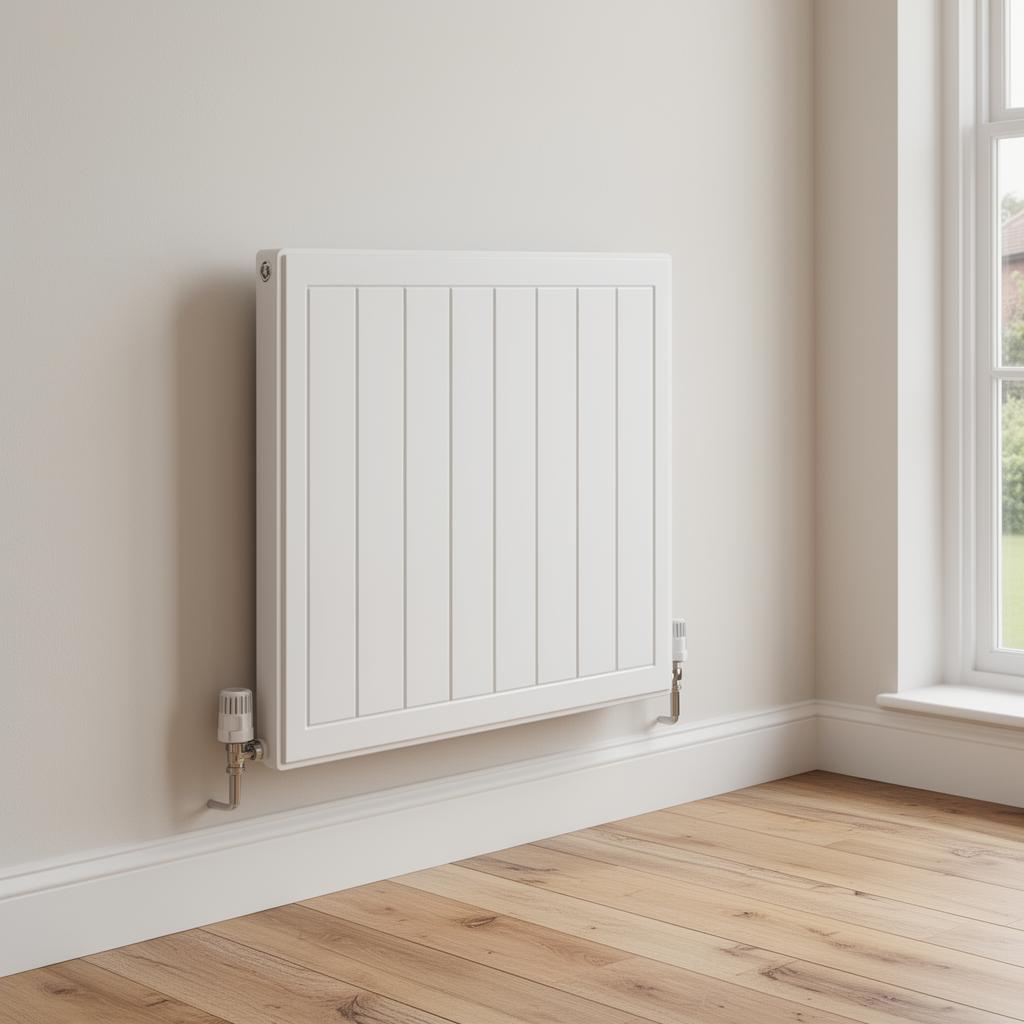
Chilcompton: stock, water and fuel supply
Village lanes around here are sometimes narrow enough that arranging a specific arrival time matters more than it would on a wider suburban road, particularly if a new boiler, cylinder or radiators need to be carried some distance from where a van can park. We ask about this when scheduling the survey so the job itself isn't held up by something that could have been sorted in advance. Water here is very hard limestone water, so scale protection is specified accordingly. Most of what we open up here is stone cottages and modern estates, which dictates flue routes and pipe sizing. Chilcompton is roughly 3 miles from our Radstock base via the A37. Typical property stock here: stone cottages and modern estates. Chilcompton sits in the Somerset BA3 postcode and is part of our weekly run, so local response is quick. When we quote boiler installation here we factor in flue routing, condensate fall and gas-supply pipe sizing before the price is fixed.
Neighbouring Somerset areas we serve
Beyond Chilcompton we're frequently on jobs in Midsomer Norton (BA3), Stratton-on-the-Fosse (BA3), Holcombe (BA3) and Oakhill (BA3) — so spares, follow-ups and annual services are straightforward.
Registrations and how work is signed off
Based at 24 Bristol Rd, Radstock — every job is run by the team that quoted it.
362+ verified reviews from real customers across BA and BS postcodes.
Oil boilers, oil tanks and pipework — fully certified for off-grid installs and replacements.
Reg. 549918 — every gas job notified to Building Control and a CP12 issued where required.
What you get, start to finish
- Combi, system & regular boilers
- Like-for-like swaps in a single day
- Worcester, Vaillant, Ideal, Grant & more
- Up to 10-year manufacturer warranties
- Free written quote, no obligation
- Local aftercare from a 3-mile base
Boiler Installation FAQs for BA3
- What support do I get after the install is finished?
- Once commissioning's complete we talk you through the controls, leave the paperwork, and register the manufacturer warranty on your behalf. If anything doesn't feel right in the first few weeks — a fault code, an odd noise, a control setting you're unsure of — call us during office hours and we'll talk it through or come back out.
- Is a magnetic filter really necessary, or is it an upsell?
- It's a genuine manufacturer requirement, not an add-on we invent — most boiler warranties are conditional on a system filter being fitted, particularly on hard water. The filter catches magnetite sludge and debris circulating in the system before it reaches the boiler's heat exchanger, which is what actually causes blockages and noise over time.
- Where can a new boiler actually be sited in the property?
- A combi is usually fitted in a kitchen cupboard, utility room, loft, or garage as long as flue clearances to windows, doors, and boundaries are met. A system or regular boiler with a cylinder needs a bit more room and usually stays close to its current position unless you're relocating the whole system, which is a bigger job.
- How do you decide whether to repair or replace a boiler?
- We weigh the age of the boiler, whether parts are still made for it, how many faults it's had recently, and its running efficiency against a like-for-like or upgraded replacement. If a straightforward part fixes it and the boiler's otherwise sound, we'll say so rather than push a new install you don't need.
- Does the hard water around Chilcompton cause problems for boilers?
- The limestone geology around Chilcompton gives very hard water, and scale build-up inside heat exchangers and pipework is one of the most common causes of boilers losing efficiency or breaking down early in this area. We routinely fit a scale reducer or filter on new installs here and would strongly recommend one on any hard-water property.
- Is there mains gas across Chilcompton?
- Most of Chilcompton is on mains gas, though pockets towards Midsomer Norton and Stratton-on-the-Fosse can be off-grid. We'll confirm what's at the property as part of the survey.
Next step for Chilcompton
Part of what a written quote for boiler installation gives you is clarity on scope: exactly which pipework, controls and components are included, and which aren't. That clarity is what prevents disputes later, and it's standard practice on every job we quote for. Gas work is signed off Gas Safe; oil work is signed off OFTEC. Water here is very hard limestone water, so scale protection is specified accordingly. homes alongside small commercial and agricultural premises make up most enquiries from this postcode.
Chilcompton at a glance
- County
- Somerset
- Postcode district
- BA3
- Settlement type
- village
- Nearest classified road
- A37
- Distance from our base
- 3 miles (Radstock, BA3)
- Typical building stock
- stone cottages and modern estates
- Water hardness
- very hard limestone water
- Fuel availability
- mains gas with off-grid pockets
- Customer mix
- homes alongside small commercial and agricultural premises
- Nearby areas covered
- Midsomer Norton, Stratton-on-the-Fosse, Holcombe, Oakhill
Things we check around Chilcompton
The case for turning your flow temperature down
Most combi boilers leave the factory set to a flow temperature around 75-80°C, which is far higher than needed for most homes and well above the point where a condensing boiler achieves its best efficiency. Condensing boilers recover extra heat by condensing water vapour out of the flue gases, and that only happens efficiently when the return water temperature is below roughly 55°C — a target easier to hit with a lower flow setting. Dropping the flow temperature to 60°C or lower, and checking radiators can still heat the coldest rooms adequately at that setting, typically improves gas consumption noticeably over a heating season. The setting itself takes minutes to change on the boiler's control panel or app, but it's only worth doing after checking radiator sizing can cope, which is why we check both together rather than adjusting the boiler alone.
Nozzle replacement and baffle cleaning on oil burners
An oil burner's nozzle atomises fuel into a fine spray for combustion, and it wears from constant fuel flow at pressure, gradually changing the spray pattern away from the burner manufacturer's specification even before it visibly fails. A worn nozzle burns less cleanly, producing more soot that coats the heat exchanger's baffles, and a sooted heat exchanger loses efficiency in the same way scale does on a gas boiler's plates. Standard practice on an annual oil service is to replace the nozzle as a matter of course, rather than wait for a fault, and to remove and clean the baffles so the heat exchanger surfaces are exposed to combustion heat properly again. Skipping nozzle replacement to save a service visit's minor parts cost is a false economy against the fuel wasted by a poorly atomising burner.
Chilcompton's A37 corridor and what it means for scheduling
Properties along or near the A37 corridor around Chilcompton are generally straightforward to reach without the access constraints of side lanes or unclassified roads further off the main network, which helps with scheduling deliveries of boilers, cylinders or oil tanks to a fixed slot. It doesn't change the technical requirements of the job itself, but predictable access does mean less contingency time needs building into a visit, and it makes coordinating a delivery with an installation date more reliable than on a property with a difficult final approach. We still confirm any specific parking or loading restriction on the immediate street before a job, since a fast main road doesn't guarantee easy stopping right outside the property.
Why a boiler needs a permanently live electrical supply
A boiler's electrical supply has to be permanently live, taken from a fused spur rather than switched off a light circuit or any switch a homeowner might turn off without realising it isolates the boiler along with it. This matters for frost protection especially — a boiler's internal frost thermostat can only bring the system on to prevent freezing if it has power at the time, so a supply that's accidentally switched off overnight defeats frost protection entirely, even though everything else about the installation is correct. We check the existing electrical supply on every boiler swap and, where it's taken from an inappropriate circuit, correct it as part of the installation rather than leaving a known risk in place because it wasn't part of the original job description.
What OpenTherm controls actually change
A standard on/off thermostat tells the boiler to fire at full output until the room reaches temperature, then switches it off completely — a crude control strategy that causes temperature overshoot and more burner cycling than necessary. An OpenTherm-compatible thermostat instead communicates continuously with a compatible boiler, asking for a modulated flow temperature based on how far the room is from target, so the boiler runs at a lower, steadier output for longer rather than firing at full power in short bursts. The efficiency gain depends on the boiler actually supporting OpenTherm modulation, which not every combi does even where the wiring terminals are compatible. We check the boiler's own specification against the thermostat's control protocol before recommending an upgrade, since fitting an OpenTherm stat on a boiler that ignores the modulation signal wastes the thermostat's main feature.
Low-loss headers on larger or multi-zone systems
On a system with several heating zones or a boiler oversized relative to any single zone's flow requirement, a low-loss header hydraulically separates the boiler's primary circuit from the secondary zone circuits, so each side can run its own pump and flow rate without one interfering with the other. Without it, a zone valve closing on a multi-zone system can starve the boiler of flow or force excessive pump pressure through the remaining open zones. It's most relevant on larger properties or ones with commercial premises attached, where several distinct heating circuits — perhaps a shop unit and a flat above — share one heat source. Getting the header sized to the boiler's actual flow rate, not just fitted as standard, is what makes it work rather than just adding another connection.
Commissioning checklist and the Benchmark record
Every new boiler installation comes with a Benchmark commissioning checklist that has to be completed and signed at the point of installation — recording gas or oil pressure readings, flue gas analysis results, system flush confirmation and control settings. It's not paperwork for its own sake: manufacturers require a fully completed Benchmark record as a condition of the boiler's guarantee, and an incomplete or missing record is one of the most common reasons a warranty claim gets refused later. We complete and hand over the Benchmark log, along with the Gas Safe or OFTEC notification, on the day of installation rather than promising to send it on, specifically so the paperwork exists from day one if it's ever needed.
Electronic and physical scale reducers compared
In very hard limestone water areas like Chilcompton, a scale reducer fitted on the boiler's cold feed protects the heat exchanger without the ongoing salt and drainage requirements of a full water softener. Physical scale reducers use a polyphosphate or template-assisted crystallisation cartridge that alters how calcium carbonate crystallises so it's less likely to adhere to hot surfaces; electronic and electromagnetic devices claim a similar effect without a cartridge to replace, though the evidence base for electronic types is weaker and more inconsistent than for physical media. Manufacturers including Worcester Bosch now specify a scale reducer or softener as a condition of extended guarantees in hard water areas, so the choice affects warranty validity as well as long-term performance, not just descale frequency.
Other boiler services in Chilcompton
- Gas Boiler Installation in ChilcomptonGas Safe registered installations and upgrades for mains gas homes across Bath, Radstock and Wells.
- Oil Boiler Installation in ChilcomptonOFTEC-trained oil boiler specialist for rural homes off the gas grid — tank and boiler replacements.
- Boiler Servicing in ChilcomptonAnnual boiler services to keep your warranty valid and your home safe, efficient and warm.
- Maintenance & Repair in ChilcomptonDiagnostics, repairs and breakdown call-outs for gas and oil boilers across BA and BS postcodes.
- Landlord Gas Safety Certificates in ChilcomptonAnnual CP12 landlord gas safety records issued on the day, for single lets, HMOs, holiday lets and whole portfolios.
- Oil Boiler Servicing in ChilcomptonOFTEC registered annual servicing for oil boilers, including nozzle, electrode, filter and smoke test work on off grid homes.
- Oil Boiler Repairs in ChilcomptonOil boiler breakdown repairs across rural Somerset, from lockouts and sooting to pump, photocell and control faults.
- Oil Tank Replacement in ChilcomptonBunded oil tank replacement and relocation with base preparation, new supply line and OFTEC paperwork on completion.
New Worcester boiler with a 10 year guarantee*
Free no-obligation quotes for installation, servicing & repairs across BA & BS postcodes.