
Boiler Installation — Wanstrow (BA4)
Getting quotes for boiler installation can feel like a gamble when you don't know the trade. You want someone who turns up when they say they will, explains what they're doing, and leaves you with a system you understand. That's the standard we work to from 24 Bristol Road, Radstock BA3 3EE. We're Gas Safe registered, OFTEC registered and a Worcester Bosch Accredited Installer, so the paperwork and the workmanship both hold up to scrutiny. Typical era of build is mixed-cottage, which affects existing pipework and system cleanliness. Most of what we open up here is stone village homes, which dictates flue routes and pipe sizing. In Wanstrow itself (BA4, Somerset) that usually means stone village homes, roughly 9 miles from the workshop.
What backs up a Wanstrow quote
No verbal-only quotes. You'll get the boiler model, controls and warranty in writing before we book.
Qualifies your install for the full 10-year manufacturer guarantee* on supported models.
Reg. 549918 — every gas job notified to Building Control and a CP12 issued where required.
Oil boilers, oil tanks and pipework — fully certified for off-grid installs and replacements.
Local conditions we plan around in BA4
This area has a genuine mix of mains gas and oil-fired properties, sometimes on the same street, depending on when the gas network reached that particular row of houses. It's worth confirming which fuel your property is actually on and whether a fuel switch is realistic before assuming either option is off the table. Being registered for both Gas Safe and OFTEC work means we can look at the honest options for your specific property rather than steering you toward whichever fuel we happen to be set up for. Mains gas covers much of the area, with off-grid pockets, which changes the appliance shortlist. Planning constraints are usually light here, so external work is checked first. Wanstrow is roughly 9 miles from our Radstock base via the A359. Typical property stock here: stone village homes. A meaningful share of properties around Wanstrow are off the gas grid, so oil boiler installs and tank swaps make up a fair part of what we do locally. When we quote boiler installation here we factor in flue routing, condensate fall and gas-supply pipe sizing before the price is fixed.
Scope of work, itemised
- Combi, system & regular boilers
- Like-for-like swaps in a single day
- Worcester, Vaillant, Ideal, Grant & more
- Up to 10-year manufacturer warranties
- Free written quote, no obligation
- Local aftercare from a 9-mile base
Within reach of the A359
Beyond Wanstrow we're frequently on jobs in Nunney (BA11), Trudoxhill (BA11), Frome (BA11) and Cranmore (BA4) — so spares, follow-ups and annual services are straightforward.
Straight answers for Wanstrow homeowners
- Do you cover Wanstrow?
- Yes. Wanstrow is 9 miles from our workshop at 24 Bristol Road, Radstock BA3 3EE, reached via the A359, and it's a regular part of our working area. We're Gas Safe and OFTEC registered, so we cover both mains gas and oil work out here without treating it as a special trip.
- What's actually checked during an annual boiler service?
- A service includes a visual and functional check of the boiler's casing and controls, flue gas analysis to confirm safe and efficient combustion, checking the flame picture and pressure, inspecting seals and condensate, and testing safety devices. It's a safety check as much as a performance one, and it's what keeps most manufacturer warranties valid.
- What paperwork do I get once the job's finished?
- You'll get a Benchmark commissioning checklist for the boiler, a building notice or Building Control completion certificate for notifiable work, manufacturer warranty registration confirmation, and a Gas Safe (or OFTEC) record of the work. Keep these together — they're what a future buyer's solicitor or a warranty claim will ask for.
- What does "commissioning" a boiler actually involve?
- Commissioning is setting the boiler up correctly for the property rather than just switching it on: checking gas or oil pressure and flow rates, setting flow temperatures, testing safety devices, balancing the system, and completing the manufacturer's Benchmark checklist. Skipping this properly is one of the most common reasons warranty claims get refused later.
- What if a part for my existing boiler isn't available anymore?
- Manufacturers stop stocking parts for discontinued models after a number of years, and once that happens a repair simply isn't possible even if the fault itself is minor. We'll confirm parts availability with the manufacturer before quoting a repair, and if it's a dead end we'll explain your replacement options honestly.
- Who actually carries out the work?
- A Gas Safe and, where relevant, OFTEC registered engineer from our own small team carries out the job — we don't sub the install out to a third party after quoting. You deal with the same people from survey through to commissioning and any aftercare calls.
How to get this priced
Part of what a written quote for boiler installation gives you is clarity on scope: exactly which pipework, controls and components are included, and which aren't. That clarity is what prevents disputes later, and it's standard practice on every job we quote for. Call 07516 118198 and we will confirm a visit slot for BA4. Terrain is level, which matters for condensate runs and tank siting. Water here is moderately hard water, so scale protection is specified accordingly.
Local reference data
- County
- Somerset
- Postcode district
- BA4
- Settlement type
- village
- Nearest classified road
- A359
- Distance from our base
- 9 miles (Radstock, BA3)
- Typical building stock
- stone village homes
- Water hardness
- moderately hard water
- Fuel availability
- mains gas with off-grid pockets
- Customer mix
- homes alongside small commercial and agricultural premises
- Nearby areas covered
- Nunney, Trudoxhill, Frome, Cranmore
The parts of the job people rarely mention
Oil tank de-sludging: why it's not optional
Oil sitting in a tank for years accumulates water from condensation and fine sediment that settles at the bottom, and over time this forms a sludge layer that can be drawn into the fuel line, particularly when the tank is nearly empty and the outlet pulls from lower in the tank than usual. Sludge blocks fine oil filters and burner nozzles, which shows up as burner lockouts or a boiler that won't fire cleanly rather than as an obvious tank problem. De-sludging drains and cleans the tank base without necessarily removing the whole tank, and it's worth doing when a tank is inherited with a property, before switching to a new boiler, or if lockouts recur despite the filter and nozzle being replaced. It's a preventative job that's cheaper done on schedule than after a burner failure it caused.
Village lane access and van positioning for larger jobs
Village lanes around Wanstrow are often single-track or tight two-way roads without dedicated off-street loading space, which affects how a larger job like a full system installation or an oil tank replacement is planned — the van needs somewhere to park close enough for repeated trips carrying equipment without blocking the lane for through traffic or farm vehicles. On a job involving a full radiator or pipework replacement, materials sometimes need staging over more than one visit rather than delivered all at once if there's nowhere secure to leave them on-site between visits. We check lane width and passing places when scheduling larger jobs in village locations, and plan van access and parking as part of the job rather than as an afterthought on the day.
Single-pipe circuits in older stone cottages
A lot of the stone cottages and farmhouses around Wanstrow were plumbed decades ago on a single-pipe gravity circuit, where each radiator draws from and returns to the same loop rather than having its own flow and return. It works, but radiators furthest from the boiler receive water that's already cooled after giving up heat to the ones before it, so the far end of the house is always the coldest. Converting to a two-pipe layout means new pipe runs, which in a stone cottage often means chasing lime plaster or lifting flagstones — not a trivial job. Where a full rewire of the pipework isn't wanted, we sometimes improve balance instead by oversizing the radiators nearest the end of the run and fitting TRVs to hold back the ones nearest the boiler.
Common boiler fault codes and what usually causes them
Most modern boilers display a fault code on the control panel when they lock out, and while the exact code differs between manufacturers, the underlying causes cluster into a small number of categories: low system pressure (often from a small leak or after bleeding radiators), ignition failure (a worn electrode, gas supply issue, or blocked condensate causing a safety shutdown), or a failed sensor reporting an implausible temperature reading. A condensate blockage or freeze specifically tends to show a distinct code from a genuine ignition fault, which is why checking the external condensate pipe for ice before calling out an engineer in a cold snap can sometimes resolve the issue without a visit at all. We ask for the exact fault code and any recent history — a bled radiator, a cold snap, a recent service — before attending, since it often narrows down the likely cause before we arrive.
Commissioning checklist and the Benchmark record
Every new boiler installation comes with a Benchmark commissioning checklist that has to be completed and signed at the point of installation — recording gas or oil pressure readings, flue gas analysis results, system flush confirmation and control settings. It's not paperwork for its own sake: manufacturers require a fully completed Benchmark record as a condition of the boiler's guarantee, and an incomplete or missing record is one of the most common reasons a warranty claim gets refused later. We complete and hand over the Benchmark log, along with the Gas Safe or OFTEC notification, on the day of installation rather than promising to send it on, specifically so the paperwork exists from day one if it's ever needed.
Wood-burning stoves with a back boiler alongside a main boiler
Some older rural properties around Wanstrow run a wood-burning stove with a back boiler feeding heat into the same central heating circuit as an oil or gas boiler, usually through a thermal store or a cylinder with two coils. Getting this combination to work safely means the stove's back boiler circuit has its own means of dissipating heat if the pump fails or a valve closes while the stove is still burning — a stove can't simply be switched off the way a boiler can if its heat has nowhere to go, so a gravity-fed safety circuit or heat leak radiator is normally required. It's a more involved design than a single-boiler system and needs planning at the point either appliance is replaced, not treated as an afterthought once the new boiler is already fitted.
Radiator sizing after lowering the flow temperature
Running a boiler at a lower flow temperature — typically 55°C or below rather than the old default of 70-80°C — improves condensing efficiency measurably, but it also reduces the heat output of every radiator in the house, because a radiator's output falls roughly with the square of the temperature difference to the room. Radiators sized correctly for a 75°C flow can end up unable to heat the room properly at 55°C unless they're upsized or supplemented. We check each radiator against the lower design flow temperature before recommending it, and where a room falls short we look at whether a larger single panel, a double panel, or an additional radiator on that circuit closes the gap, rather than pushing the flow temperature back up and giving away the efficiency gain.
Wanstrow's A359 corridor and what it means for scheduling
Properties along or near the A359 corridor around Wanstrow are generally straightforward to reach without the access constraints of side lanes or unclassified roads further off the main network, which helps with scheduling deliveries of boilers, cylinders or oil tanks to a fixed slot. It doesn't change the technical requirements of the job itself, but predictable access does mean less contingency time needs building into a visit, and it makes coordinating a delivery with an installation date more reliable than on a property with a difficult final approach. We still confirm any specific parking or loading restriction on the immediate street before a job, since a fast main road doesn't guarantee easy stopping right outside the property.
How a condensing boiler recovers extra heat
A condensing boiler passes flue gases through a secondary heat exchanger before they leave the flue, extracting additional heat by condensing water vapour in the exhaust back into liquid, which is expelled as the mildly acidic condensate water down the drain. This is why every condensing boiler needs a condensate drainage route as part of its installation, unlike older non-condensing boilers, which simply vented hot dry gas straight out. The efficiency benefit only fully materialises when the boiler is actually condensing regularly, which needs a return water temperature low enough — generally below 55°C — for water vapour to condense in the first place. A condensing boiler run permanently at a high flow temperature can spend much of its time not actually condensing, which is one of the main reasons flow temperature settings matter as much as the boiler model chosen.
Other boiler services in Wanstrow
- Gas Boiler Installation in WanstrowGas Safe registered installations and upgrades for mains gas homes across Bath, Radstock and Wells.
- Oil Boiler Installation in WanstrowOFTEC-trained oil boiler specialist for rural homes off the gas grid — tank and boiler replacements.
- Boiler Servicing in WanstrowAnnual boiler services to keep your warranty valid and your home safe, efficient and warm.
- Maintenance & Repair in WanstrowDiagnostics, repairs and breakdown call-outs for gas and oil boilers across BA and BS postcodes.
- Landlord Gas Safety Certificates in WanstrowAnnual CP12 landlord gas safety records issued on the day, for single lets, HMOs, holiday lets and whole portfolios.
- Oil Boiler Servicing in WanstrowOFTEC registered annual servicing for oil boilers, including nozzle, electrode, filter and smoke test work on off grid homes.
- Oil Boiler Repairs in WanstrowOil boiler breakdown repairs across rural Somerset, from lockouts and sooting to pump, photocell and control faults.
- Oil Tank Replacement in WanstrowBunded oil tank replacement and relocation with base preparation, new supply line and OFTEC paperwork on completion.
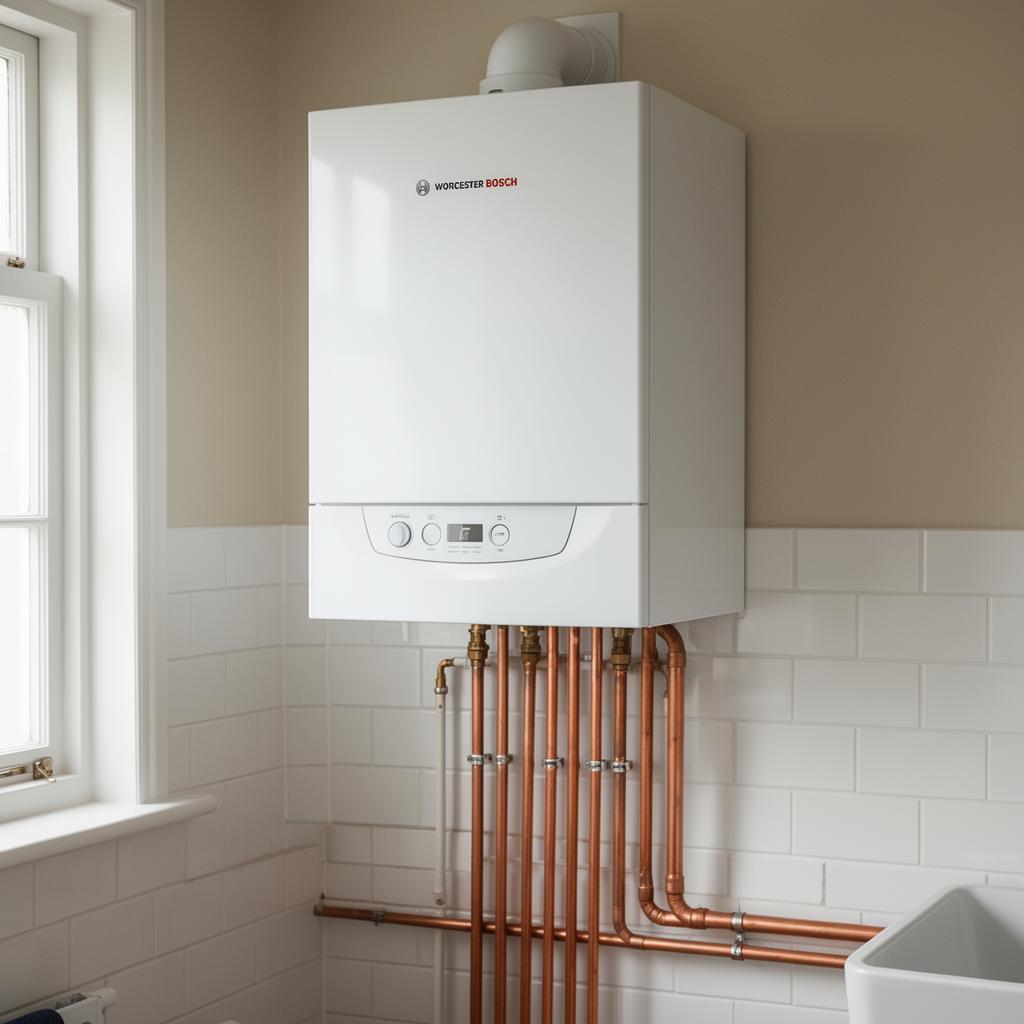
New Worcester boiler with a 10 year guarantee*
Free no-obligation quotes for installation, servicing & repairs across BA & BS postcodes.