
Boiler Installers in Westfield
Some properties make boiler installation straightforward; others need a bit more thought about parking, access to the boiler cupboard, or how equipment gets in and out. We factor that into the visit rather than discovering it on the day. Working from 24 Bristol Road, Radstock BA3 3EE across the Radstock, Bath and Mendip area, we're Gas Safe registered and OFTEC registered, so both mains gas and oil-fired work is covered under one roof. Access is open suburban, so parking, spoil removal and delivery timing get planned in advance. Water here is very hard limestone water, so scale protection is specified accordingly. In Westfield itself (BA3, Somerset) that usually means post-war estates and modern infill, roughly 1 miles from the workshop.
Proof, paperwork and accountability
Reg. 549918 — every gas job notified to Building Control and a CP12 issued where required.
No verbal-only quotes. You'll get the boiler model, controls and warranty in writing before we book.
362+ verified reviews from real customers across BA and BS postcodes.
Oil boilers, oil tanks and pipework — fully certified for off-grid installs and replacements.
Site realities in and around Westfield
Newer estate housing and modern flats in this area tend to have simpler, better-insulated fabric and pipework laid out to current standards, which usually makes installation and servicing more predictable. The main things worth checking are whether the original system was sized correctly for the property as sold, and whether flats or apartments have any shared flue or communal system considerations that affect what work is possible. We check those details before quoting rather than assuming every modern property is identical. a mix of owner-occupied and rented homes make up most enquiries from this postcode. Mains gas is available across most streets, which changes the appliance shortlist. Westfield is roughly 1 miles from our Radstock base via the A362. Typical property stock here: post-war estates and modern infill. Mains gas covers most of Westfield, so the usual choice is between a modern combi or a system boiler with a cylinder — we'll size it correctly for the home, not just swap like-for-like. When we quote boiler installation here we factor in flue routing, condensate fall and gas-supply pipe sizing before the price is fixed.
What you get, start to finish
- Combi, system & regular boilers
- Like-for-like swaps in a single day
- Worcester, Vaillant, Ideal, Grant & more
- Up to 10-year manufacturer warranties
- Free written quote, no obligation
- Local aftercare from a 1-mile base
Within reach of the A362
Beyond Westfield we're frequently on jobs in Radstock (BA3), Midsomer Norton (BA3), Welton (BA3) and Clandown (BA3) — so spares, follow-ups and annual services are straightforward.
Westfield questions we get asked
- What's actually checked during an annual boiler service?
- A service includes a visual and functional check of the boiler's casing and controls, flue gas analysis to confirm safe and efficient combustion, checking the flame picture and pressure, inspecting seals and condensate, and testing safety devices. It's a safety check as much as a performance one, and it's what keeps most manufacturer warranties valid.
- What are your opening hours, and can you help out of hours?
- Our published hours are Monday to Friday, 8:30am to 5pm, and that's when the phones are answered and jobs are booked. We're honest that we don't run a round-the-clock emergency line, so if you're planning ahead, call during those hours on 07516 118198 and we'll get you booked in.
- How often should a boiler actually be serviced?
- Once a year is the standard recommendation from every manufacturer, and most warranty terms make it a condition rather than a suggestion — miss a year and a claim can be refused even if the fault is unrelated. Landlords have a separate legal duty to have gas appliances checked annually regardless of warranty terms.
- What actually happens on install day?
- The engineer isolates the gas or oil supply and water, removes the old boiler, fits and pressure-tests the new one, connects the flue and condensate, and commissions the system. For a straight swap this is usually one day; a conversion, relocation, or cylinder change can run into a second depending on the pipework involved.
- Is a magnetic filter really necessary, or is it an upsell?
- It's a genuine manufacturer requirement, not an add-on we invent — most boiler warranties are conditional on a system filter being fitted, particularly on hard water. The filter catches magnetite sludge and debris circulating in the system before it reaches the boiler's heat exchanger, which is what actually causes blockages and noise over time.
- Will the new boiler work properly with our existing radiators?
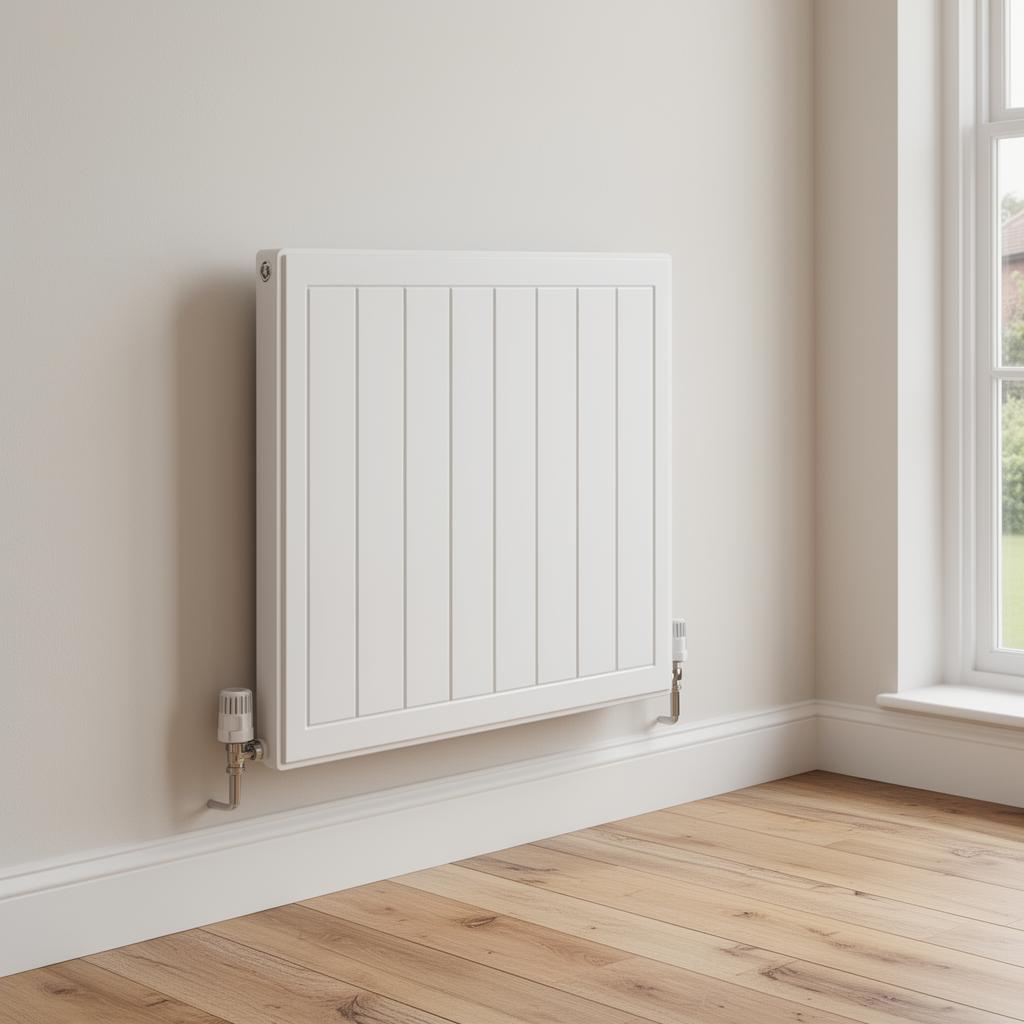
- Not always without checking. Modern condensing boilers run most efficiently at lower flow temperatures, and radiators originally sized for an old, hotter-running boiler can end up struggling to heat a room adequately at those lower temperatures. We check radiator sizing against a heat loss calculation and flag any that are undersized for the room before installing.
Where to go from here
Not every enquiry about boiler installation needs a full replacement — sometimes a repair, a service, or a smaller fix solves the problem. We'll tell you which applies once we've had a proper look, rather than recommending the largest job by default. Gas work is signed off Gas Safe; oil work is signed off OFTEC. Most of what we open up here is post-war estates and modern infill, which dictates flue routes and pipe sizing. Typical era of build is modern, which affects existing pipework and system cleanliness.
Coverage detail for BA3
- County
- Somerset
- Postcode district
- BA3
- Settlement type
- town
- Nearest classified road
- A362
- Distance from our base
- 1 miles (Radstock, BA3)
- Typical building stock
- post-war estates and modern infill
- Water hardness
- very hard limestone water
- Fuel availability
- mains gas across most of the area
- Customer mix
- a mix of owner-occupied and rented homes
- Nearby areas covered
- Radstock, Midsomer Norton, Welton, Clandown
Technical notes for this job type
Why very hard limestone water shortens boiler life around Westfield
The limestone geology under Somerset gives Westfield very hard limestone water, which drops calcium carbonate out of solution as soon as it's heated. Inside a combi's plate heat exchanger the gaps between plates are only a millimetre or two wide, so scale narrows the waterways long before it's visible anywhere else in the system. The first symptom is usually a hot tap that runs warm rather than hot, or a boiler that fires more often for the same demand. Left unchecked, scale insulates the exchanger from the burner, forces flue gases hotter, and can crack the exchanger from thermal stress. A scale reducer fitted on the mains feed, sized to the property's flow rate, is cheaper to install once than to replace a heat exchanger twice.
Weather compensation: matching flow temperature to outdoor conditions
Weather compensation uses an external sensor to adjust the boiler's flow temperature automatically as outdoor temperature changes, running a lower flow temperature on a mild day and a higher one on a cold one, rather than the fixed flow temperature most boilers are left on permanently. Because condensing boiler efficiency is highest at lower flow and return temperatures, weather compensation keeps the system closer to peak efficiency across the heating season instead of only on the coldest days it was set up for. It needs a compensation curve set to suit the specific building's heat loss characteristics — the same curve on a well-insulated modern semi and a solid-wall Victorian terrace won't give the same comfort result. We set the curve empirically over the first heating season rather than leaving factory defaults in place.
Radiator sizing after lowering the flow temperature
Running a boiler at a lower flow temperature — typically 55°C or below rather than the old default of 70-80°C — improves condensing efficiency measurably, but it also reduces the heat output of every radiator in the house, because a radiator's output falls roughly with the square of the temperature difference to the room. Radiators sized correctly for a 75°C flow can end up unable to heat the room properly at 55°C unless they're upsized or supplemented. We check each radiator against the lower design flow temperature before recommending it, and where a room falls short we look at whether a larger single panel, a double panel, or an additional radiator on that circuit closes the gap, rather than pushing the flow temperature back up and giving away the efficiency gain.
What a proper heating quote should include
A quote worth relying on states the specific boiler or equipment model, the labour and materials it covers, whether a system flush and magnetic filter are included, what happens to old equipment removal and disposal, and what's excluded — an unexpected gas pipe upsizing or asbestos-containing material discovered during removal, for example, which can't always be known before work starts. It should also state who's completing the Gas Safe or OFTEC notification and Benchmark commissioning record, since that's the paperwork that protects both the manufacturer's guarantee and the property's compliance history when it's sold. A vague one-line quote makes comparing genuinely different offers difficult, because two prices that look similar can cover very different scopes of actual work.
- Specific make and model, not just "combi boiler"
- Flush and magnetic filter stated as included or excluded
- Old equipment removal and disposal covered
- Notification and Benchmark record responsibility stated
The case for turning your flow temperature down
Most combi boilers leave the factory set to a flow temperature around 75-80°C, which is far higher than needed for most homes and well above the point where a condensing boiler achieves its best efficiency. Condensing boilers recover extra heat by condensing water vapour out of the flue gases, and that only happens efficiently when the return water temperature is below roughly 55°C — a target easier to hit with a lower flow setting. Dropping the flow temperature to 60°C or lower, and checking radiators can still heat the coldest rooms adequately at that setting, typically improves gas consumption noticeably over a heating season. The setting itself takes minutes to change on the boiler's control panel or app, but it's only worth doing after checking radiator sizing can cope, which is why we check both together rather than adjusting the boiler alone.
Why a boiler needs a permanently live electrical supply
A boiler's electrical supply has to be permanently live, taken from a fused spur rather than switched off a light circuit or any switch a homeowner might turn off without realising it isolates the boiler along with it. This matters for frost protection especially — a boiler's internal frost thermostat can only bring the system on to prevent freezing if it has power at the time, so a supply that's accidentally switched off overnight defeats frost protection entirely, even though everything else about the installation is correct. We check the existing electrical supply on every boiler swap and, where it's taken from an inappropriate circuit, correct it as part of the installation rather than leaving a known risk in place because it wasn't part of the original job description.
Nozzle replacement and baffle cleaning on oil burners
An oil burner's nozzle atomises fuel into a fine spray for combustion, and it wears from constant fuel flow at pressure, gradually changing the spray pattern away from the burner manufacturer's specification even before it visibly fails. A worn nozzle burns less cleanly, producing more soot that coats the heat exchanger's baffles, and a sooted heat exchanger loses efficiency in the same way scale does on a gas boiler's plates. Standard practice on an annual oil service is to replace the nozzle as a matter of course, rather than wait for a fault, and to remove and clean the baffles so the heat exchanger surfaces are exposed to combustion heat properly again. Skipping nozzle replacement to save a service visit's minor parts cost is a false economy against the fuel wasted by a poorly atomising burner.
Other boiler services in Westfield
- Gas Boiler Installation in WestfieldGas Safe registered installations and upgrades for mains gas homes across Bath, Radstock and Wells.
- Oil Boiler Installation in WestfieldOFTEC-trained oil boiler specialist for rural homes off the gas grid — tank and boiler replacements.
- Boiler Servicing in WestfieldAnnual boiler services to keep your warranty valid and your home safe, efficient and warm.
- Maintenance & Repair in WestfieldDiagnostics, repairs and breakdown call-outs for gas and oil boilers across BA and BS postcodes.
- Landlord Gas Safety Certificates in WestfieldAnnual CP12 landlord gas safety records issued on the day, for single lets, HMOs, holiday lets and whole portfolios.
- Oil Boiler Servicing in WestfieldOFTEC registered annual servicing for oil boilers, including nozzle, electrode, filter and smoke test work on off grid homes.
- Oil Boiler Repairs in WestfieldOil boiler breakdown repairs across rural Somerset, from lockouts and sooting to pump, photocell and control faults.
- Oil Tank Replacement in WestfieldBunded oil tank replacement and relocation with base preparation, new supply line and OFTEC paperwork on completion.
New Worcester boiler with a 10 year guarantee*
Free no-obligation quotes for installation, servicing & repairs across BA & BS postcodes.