
Babington Landlord Gas Safety Certificates
Some properties make landlord gas safety certificates straightforward; others need a bit more thought about parking, access to the boiler cupboard, or how equipment gets in and out. We factor that into the visit rather than discovering it on the day. Working from 24 Bristol Road, Radstock BA3 3EE across the Radstock, Bath and Mendip area, we're Gas Safe registered and OFTEC registered, so both mains gas and oil-fired work is covered under one roof. rural owner-occupiers and smallholdings make up most enquiries from this postcode.
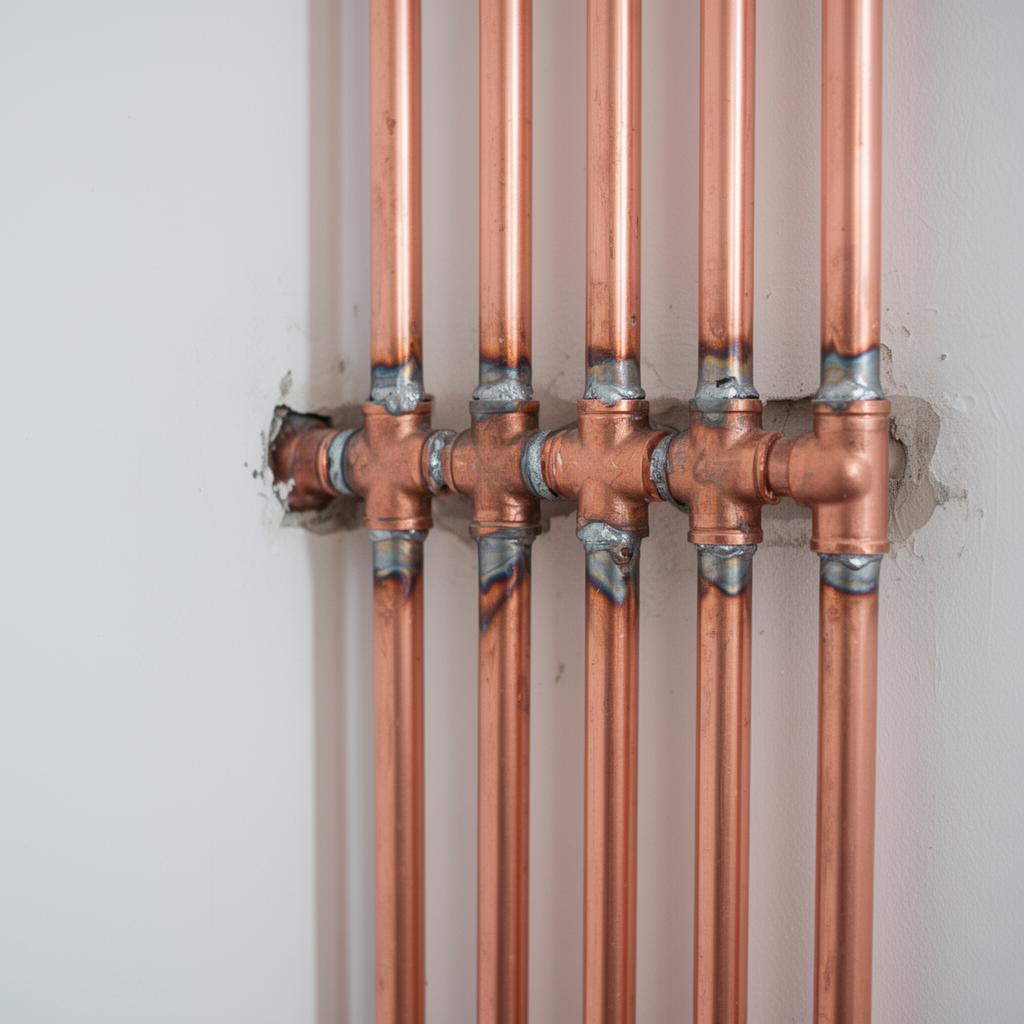
Babington: stock, water and fuel supply
Rural owner-occupiers and smallholders in this area often have specific priorities: reliable heating for a property that may be some distance from immediate help if something fails, sensible running costs on an off-grid fuel, and a system that copes with an older, harder-to-insulate building. We hear these priorities often enough locally to factor them into how we survey and specify rural properties, rather than applying a standard suburban approach. Access is farm track, so parking, spoil removal and delivery timing get planned in advance. Babington is roughly 3 miles from our Radstock base via the unclassified. Typical property stock here: isolated cottages and estate properties. Babington sits in the Somerset BA3 postcode and is part of our weekly run, so local response is quick. Repair calls in Babington usually get a same-week visit, with most common faults fixed on the first attempt.
Within reach of the unclassified
Beyond Babington we're frequently on jobs in Kilmersdon (BA3), Hemington (BA3), Mells (BA3) and Leigh upon Mendip (BA3) — so spares, follow-ups and annual services are straightforward.
How we run landlord gas safety certificates on site
- Gas Safe registered, CP12 issued same day
- Tightness test, combustion analysis and flue checks
- Tenant access arranged by text or phone
- Several properties aligned to one renewal date
- Free written quote, no obligation
- Local aftercare from a 3-mile base
Registrations and how work is signed off
Qualifies your install for the full 10-year manufacturer guarantee* on supported models.
Oil boilers, oil tanks and pipework — fully certified for off-grid installs and replacements.
Reg. 549918 — every gas job notified to Building Control and a CP12 issued where required.
362+ verified reviews from real customers across BA and BS postcodes.
Straight answers for Babington homeowners
- Can you look over a quote I've already had from another company?
- Yes, this comes up often. Send or bring in the other written quote and we'll go through the spec — boiler size, controls, cylinder if included, and what's actually listed for parts and labour — and tell you plainly whether it looks right for the property, oversized, or missing something we'd expect to see.
- What support do I get after the install is finished?
- Once commissioning's complete we talk you through the controls, leave the paperwork, and register the manufacturer warranty on your behalf. If anything doesn't feel right in the first few weeks — a fault code, an odd noise, a control setting you're unsure of — call us during office hours and we'll talk it through or come back out.
- Who actually carries out the work?
- A Gas Safe and, where relevant, OFTEC registered engineer from our own small team carries out the job — we don't sub the install out to a third party after quoting. You deal with the same people from survey through to commissioning and any aftercare calls.
- How often should a boiler actually be serviced?
- Once a year is the standard recommendation from every manufacturer, and most warranty terms make it a condition rather than a suggestion — miss a year and a claim can be refused even if the fault is unrelated. Landlords have a separate legal duty to have gas appliances checked annually regardless of warranty terms.
- We've still got an old back boiler behind the fireplace — what's involved in removing it?
- Removing a back boiler means capping off the gas and water connections behind the fireplace, making good the opening or fitting a new fire/surround if you're keeping one, and rerouting pipework to the new combi or system boiler's position. It's more work than a like-for-like swap but a common upgrade on the older housing stock in this area.
- What's the warranty on a new boiler installed in Babington?
- Up to 10 years on qualifying Worcester Bosch installs registered through us as Accredited Installers. Other manufacturers typically offer 5–7 years.
Your next move in BA3
If you're not in a rush, arranging landlord gas safety certificates outside the depths of winter usually means more flexibility on scheduling and a calmer job overall. If you are in a rush because something's already failed, tell us that when you call so we can prioritise accordingly within our normal working hours. Send the appliance make, model and any fault code and you get a straight answer, not a sales script. Terrain is level, which matters for condensate runs and tank siting.
Coverage detail for BA3
- County
- Somerset
- Postcode district
- BA3
- Settlement type
- hamlet
- Nearest classified road
- unclassified
- Distance from our base
- 3 miles (Radstock, BA3)
- Typical building stock
- isolated cottages and estate properties
- Water hardness
- very hard limestone water
- Fuel availability
- off-grid oil and LPG common
- Customer mix
- rural owner-occupiers and smallholdings
- Nearby areas covered
- Kilmersdon, Hemington, Mells, Leigh upon Mendip
Practical considerations across BA3
LPG as an alternative to oil off the gas grid
Properties around Babington that sit off the mains gas network aren't limited to oil — bulk LPG, stored in an above-ground tank on a concrete base with the same OFTEC-style clearance and access rules as oil, runs standard gas-rated boilers with only a change of injector and pressure setting rather than a different boiler entirely. It suits households that want a gas hob and gas-style modulation rather than an oil burner's on/off firing pattern. The tank still needs delivery access for a tanker, which on some rural driveways is the deciding factor over oil. We check the access route for the largest realistic delivery vehicle before recommending LPG over oil, because a tank that can't be filled easily causes more disruption than the fuel choice was meant to solve.
What a landlord gas safety record actually checks
A landlord gas safety record (still commonly called a CP12) requires an annual check of every gas appliance, flue and installation pipework in a rented property, carried out by a Gas Safe registered engineer and recorded on a certificate issued to the tenant within 28 days and kept by the landlord for at least two years. The check covers appliance operating pressure, safety device function, ventilation adequacy, flue performance and visual condition, and any appliance found "at risk" or "immediately dangerous" is classified and, where necessary, disconnected on the spot rather than left for a follow-up visit. Landlords with property across rural owner-occupiers and smallholdings areas like Babington have a legal duty to arrange this before a new tenancy starts and annually thereafter, and failure to do so is a criminal offence, not just a lease breach.
- Required before a tenancy starts and annually thereafter
- Certificate given to tenant within 28 days of the check
- Records kept by the landlord for at least 2 years
- "At risk" or "dangerous" appliances can be disconnected immediately
Single-pipe circuits in older stone cottages
A lot of the stone cottages and farmhouses around Babington were plumbed decades ago on a single-pipe gravity circuit, where each radiator draws from and returns to the same loop rather than having its own flow and return. It works, but radiators furthest from the boiler receive water that's already cooled after giving up heat to the ones before it, so the far end of the house is always the coldest. Converting to a two-pipe layout means new pipe runs, which in a stone cottage often means chasing lime plaster or lifting flagstones — not a trivial job. Where a full rewire of the pipework isn't wanted, we sometimes improve balance instead by oversizing the radiators nearest the end of the run and fitting TRVs to hold back the ones nearest the boiler.
Chimney liners for boilers using an existing flue
Where an older boiler used the property's original brick or stone chimney as its flue route, a replacement condensing boiler usually can't use the same masonry flue unlined, because the flue gases are cooler and wetter and will attack unprotected brickwork and mortar over time. A correctly specified stainless steel liner, sized to the boiler manufacturer's flue length and diameter tables, carries the flue gases safely and lets the existing chimney be reused rather than needing a new wall or roof penetration — often the only realistic option on a listed or solid-wall property in Babington where an external flue run isn't permitted. The liner has to be inspected and swept as part of ongoing servicing exactly as an open-fire flue would be, which is easy to overlook once it's hidden inside the chimney.
What a proper heating quote should include
A quote worth relying on states the specific boiler or equipment model, the labour and materials it covers, whether a system flush and magnetic filter are included, what happens to old equipment removal and disposal, and what's excluded — an unexpected gas pipe upsizing or asbestos-containing material discovered during removal, for example, which can't always be known before work starts. It should also state who's completing the Gas Safe or OFTEC notification and Benchmark commissioning record, since that's the paperwork that protects both the manufacturer's guarantee and the property's compliance history when it's sold. A vague one-line quote makes comparing genuinely different offers difficult, because two prices that look similar can cover very different scopes of actual work.
- Specific make and model, not just "combi boiler"
- Flush and magnetic filter stated as included or excluded
- Old equipment removal and disposal covered
- Notification and Benchmark record responsibility stated
Nozzle replacement and baffle cleaning on oil burners
An oil burner's nozzle atomises fuel into a fine spray for combustion, and it wears from constant fuel flow at pressure, gradually changing the spray pattern away from the burner manufacturer's specification even before it visibly fails. A worn nozzle burns less cleanly, producing more soot that coats the heat exchanger's baffles, and a sooted heat exchanger loses efficiency in the same way scale does on a gas boiler's plates. Standard practice on an annual oil service is to replace the nozzle as a matter of course, rather than wait for a fault, and to remove and clean the baffles so the heat exchanger surfaces are exposed to combustion heat properly again. Skipping nozzle replacement to save a service visit's minor parts cost is a false economy against the fuel wasted by a poorly atomising burner.
Practical considerations for rural, off-grid households
Rural owner-occupiers around Babington are more likely to be managing their own fuel deliveries, tank levels and, in some cases, a private water supply rather than relying entirely on mains utilities, which changes what "routine maintenance" needs to cover compared with a mains-gas property. Keeping a fuel gauge or tank monitor checked regularly avoids the classic winter problem of running out of oil during the coldest week of the year when delivery lead times are also longest. Where a private water supply feeds the property, water hardness and sediment content can vary more than a mains-fed hard water area, so a scale reducer or filter specification benefits from an actual water test rather than assuming the regional hardness figure applies unchanged. We factor private supply and fuel logistics into servicing advice for these properties specifically.
Frost protection in outbuildings and unheated spaces
Pipework and cylinders sited in an unheated garage, outbuilding or loft on rural properties around Babington are exposed to temperatures well below what the main house experiences overnight, and a single hard frost can split a pipe that's sat full of static water with nowhere to expand. A frost thermostat wired to bring on a small heat source, or to trigger a pump to keep water moving through vulnerable pipework, is the standard protection where lagging alone isn't sufficient — lagging slows heat loss but doesn't stop it given long enough exposure. We assess frost risk on any pipework routed through an unheated space rather than assuming standard lagging is automatically adequate, particularly where a property is left unoccupied for periods during winter.
Other boiler services in Babington
- Boiler Installation in BabingtonNew combi, system and regular boiler installations for gas and oil homes — fixed prices, manufacturer warranties.
- Gas Boiler Installation in BabingtonGas Safe registered installations and upgrades for mains gas homes across Bath, Radstock and Wells.
- Oil Boiler Installation in BabingtonOFTEC-trained oil boiler specialist for rural homes off the gas grid — tank and boiler replacements.
- Boiler Servicing in BabingtonAnnual boiler services to keep your warranty valid and your home safe, efficient and warm.
- Maintenance & Repair in BabingtonDiagnostics, repairs and breakdown call-outs for gas and oil boilers across BA and BS postcodes.
- Oil Boiler Servicing in BabingtonOFTEC registered annual servicing for oil boilers, including nozzle, electrode, filter and smoke test work on off grid homes.
- Oil Boiler Repairs in BabingtonOil boiler breakdown repairs across rural Somerset, from lockouts and sooting to pump, photocell and control faults.
- Oil Tank Replacement in BabingtonBunded oil tank replacement and relocation with base preparation, new supply line and OFTEC paperwork on completion.
New Worcester boiler with a 10 year guarantee*
Free no-obligation quotes for installation, servicing & repairs across BA & BS postcodes.