
High Littleton Landlord Gas Safety Certificates
We treat landlord gas safety certificates as work that has to meet the same standard whether it's a small job or a full system replacement: correct registration, proper commissioning, and documentation you can keep. Gas Safe registered, OFTEC registered and a Worcester Bosch Accredited Installer, based at 24 Bristol Road, Radstock BA3 3EE, that's the baseline we work to on every job, not an upsell. Nearest neighbours on our round are Paulton, Hallatrow, Clutton. Typical era of build is postwar, which affects existing pipework and system cleanliness. In High Littleton itself (BS39, Somerset) that usually means 1960s–80s estates and modern infill, roughly 3 miles from the workshop.
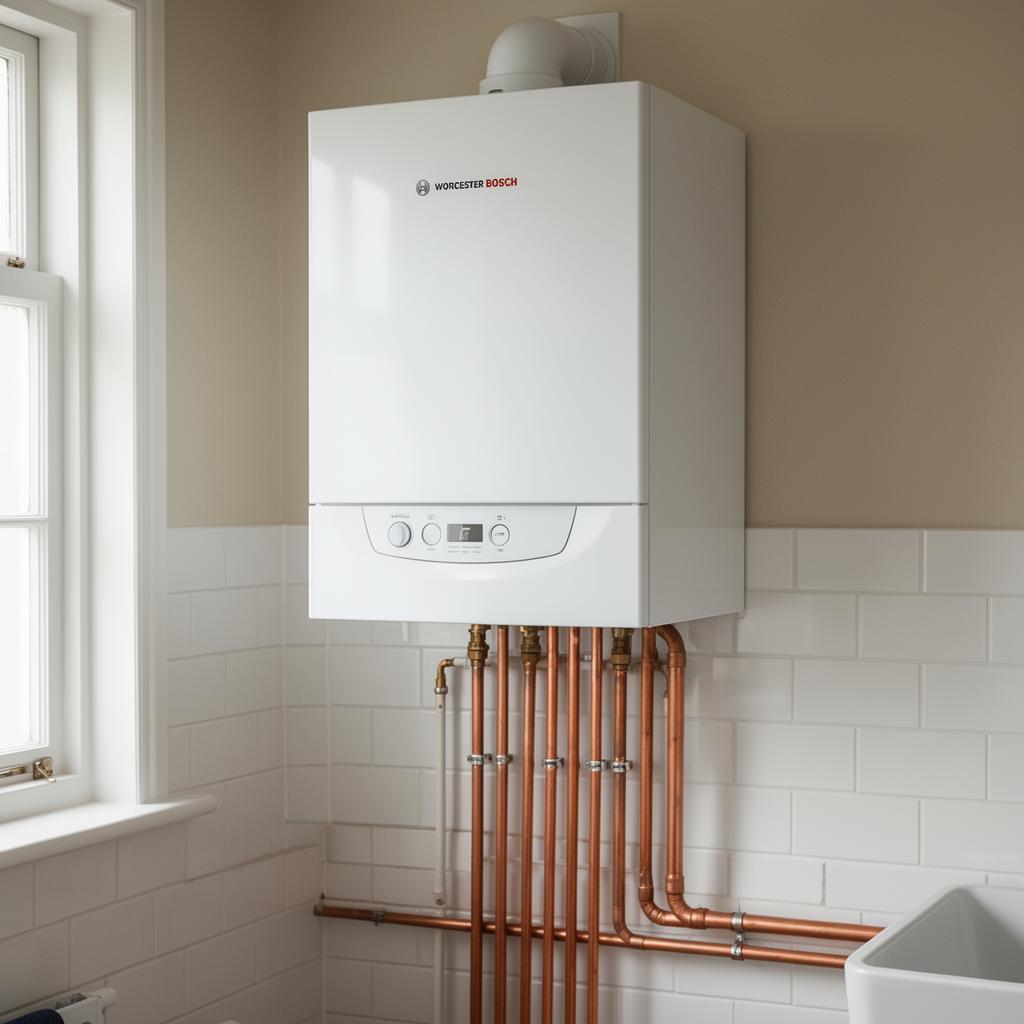
What the buildings in High Littleton change about the job
This area has a genuine mix of mains gas and oil-fired properties, sometimes on the same street, depending on when the gas network reached that particular row of houses. It's worth confirming which fuel your property is actually on and whether a fuel switch is realistic before assuming either option is off the table. Being registered for both Gas Safe and OFTEC work means we can look at the honest options for your specific property rather than steering you toward whichever fuel we happen to be set up for. Mains gas covers much of the area, with off-grid pockets, which changes the appliance shortlist. Access is lane access, so parking, spoil removal and delivery timing get planned in advance. High Littleton is roughly 3 miles from our Radstock base via the A39. Typical property stock here: 1960s–80s estates and modern infill. High Littleton sits in the Somerset BS39 postcode and is part of our weekly run, so local response is quick. Repair calls in High Littleton usually get a same-week visit, with most common faults fixed on the first attempt.
Where else we work near High Littleton
Beyond High Littleton we're frequently on jobs in Paulton (BS39), Hallatrow (BS39), Clutton (BS39) and Timsbury (BA2) — so spares, follow-ups and annual services are straightforward.
Proof, paperwork and accountability
Qualifies your install for the full 10-year manufacturer guarantee* on supported models.
362+ verified reviews from real customers across BA and BS postcodes.
Oil boilers, oil tanks and pipework — fully certified for off-grid installs and replacements.
Based at 24 Bristol Rd, Radstock — every job is run by the team that quoted it.
The work, step by step
- Gas Safe registered, CP12 issued same day
- Tightness test, combustion analysis and flue checks
- Tenant access arranged by text or phone
- Several properties aligned to one renewal date
- Free written quote, no obligation
- Local aftercare from a 3-mile base
Common queries, answered honestly
- Is oil more expensive to run than mains gas?
- Oil and gas prices both move with the wholesale market and neither is fixed, so a blanket answer isn't honest. What we can say is that a modern condensing oil boiler, correctly sized and commissioned, will run considerably more efficiently than an old non-condensing model — that efficiency gap usually matters more than the fuel choice itself.
- What if a part for my existing boiler isn't available anymore?
- Manufacturers stop stocking parts for discontinued models after a number of years, and once that happens a repair simply isn't possible even if the fault itself is minor. We'll confirm parts availability with the manufacturer before quoting a repair, and if it's a dead end we'll explain your replacement options honestly.
- How do you decide whether to repair or replace a boiler?
- We weigh the age of the boiler, whether parts are still made for it, how many faults it's had recently, and its running efficiency against a like-for-like or upgraded replacement. If a straightforward part fixes it and the boiler's otherwise sound, we'll say so rather than push a new install you don't need.
- Do I need to do anything to activate my boiler's warranty?
- As a Worcester Bosch Accredited Installer we register qualifying Worcester installs on your behalf, which is what unlocks the extended guarantee (up to 10 years* on qualifying installs) rather than the standard shorter term. For other brands we still register the installation; keep the confirmation with your other paperwork in case you need it.
- Is a boiler install a noisy, disruptive job?
- There's unavoidable noise — drilling for the flue, pipework, sometimes moving a cylinder — but a straightforward swap is usually done within a working day with the mess kept to the immediate work area. We dust-sheet the route in and out and clear away pipe offcuts and old parts before we leave.
- Is there mains gas across High Littleton?
- Most of High Littleton is on mains gas, though pockets towards Paulton and Hallatrow can be off-grid. We'll confirm what's at the property as part of the survey.
Your next move in BS39
Finishing landlord gas safety certificates isn't the end of the relationship — if something doesn't feel right once the system's been running for a while, get in touch and we'll come back and look at it. Annual servicing afterwards keeps the guarantee valid and the system running as it should. A written quote follows the survey — no pressure, and no charge for the High Littleton visit. Nearest neighbours on our round are Paulton, Hallatrow, Clutton. Our van runs the A39 to reach you, 3 miles out from the Radstock workshop.
The factual picture in High Littleton
- County
- Somerset
- Postcode district
- BS39
- Settlement type
- village
- Nearest classified road
- A39
- Distance from our base
- 3 miles (Radstock, BA3)
- Typical building stock
- 1960s–80s estates and modern infill
- Water hardness
- hard water
- Fuel availability
- mains gas with off-grid pockets
- Customer mix
- homes alongside small commercial and agricultural premises
- Nearby areas covered
- Paulton, Hallatrow, Clutton, Timsbury
The parts of the job people rarely mention
Electronic and physical scale reducers compared
In hard water areas like High Littleton, a scale reducer fitted on the boiler's cold feed protects the heat exchanger without the ongoing salt and drainage requirements of a full water softener. Physical scale reducers use a polyphosphate or template-assisted crystallisation cartridge that alters how calcium carbonate crystallises so it's less likely to adhere to hot surfaces; electronic and electromagnetic devices claim a similar effect without a cartridge to replace, though the evidence base for electronic types is weaker and more inconsistent than for physical media. Manufacturers including Worcester Bosch now specify a scale reducer or softener as a condition of extended guarantees in hard water areas, so the choice affects warranty validity as well as long-term performance, not just descale frequency.
Common boiler fault codes and what usually causes them
Most modern boilers display a fault code on the control panel when they lock out, and while the exact code differs between manufacturers, the underlying causes cluster into a small number of categories: low system pressure (often from a small leak or after bleeding radiators), ignition failure (a worn electrode, gas supply issue, or blocked condensate causing a safety shutdown), or a failed sensor reporting an implausible temperature reading. A condensate blockage or freeze specifically tends to show a distinct code from a genuine ignition fault, which is why checking the external condensate pipe for ice before calling out an engineer in a cold snap can sometimes resolve the issue without a visit at all. We ask for the exact fault code and any recent history — a bled radiator, a cold snap, a recent service — before attending, since it often narrows down the likely cause before we arrive.
Signs a boiler repair is no longer the right call
A boiler that's failing repeatedly, needing a different part replaced every service, or over roughly ten to fifteen years old is approaching the point where continued repair costs more over time than replacement, particularly once a heat exchanger — the most expensive single part — starts to show signs of failure through leaks or reduced output. Efficiency is the other half of the calculation: an older non-condensing boiler running at 70-80% efficiency against a modern condensing combi at over 90% means a meaningful chunk of every unit of fuel burned in the old boiler is simply lost up the flue. We give a straight answer on repair versus replace based on the fault found and the boiler's age and condition, rather than defaulting to whichever is more profitable to us on the day.
How a condensing boiler recovers extra heat
A condensing boiler passes flue gases through a secondary heat exchanger before they leave the flue, extracting additional heat by condensing water vapour in the exhaust back into liquid, which is expelled as the mildly acidic condensate water down the drain. This is why every condensing boiler needs a condensate drainage route as part of its installation, unlike older non-condensing boilers, which simply vented hot dry gas straight out. The efficiency benefit only fully materialises when the boiler is actually condensing regularly, which needs a return water temperature low enough — generally below 55°C — for water vapour to condense in the first place. A condensing boiler run permanently at a high flow temperature can spend much of its time not actually condensing, which is one of the main reasons flow temperature settings matter as much as the boiler model chosen.
LPG as an alternative to oil off the gas grid
Properties around High Littleton that sit off the mains gas network aren't limited to oil — bulk LPG, stored in an above-ground tank on a concrete base with the same OFTEC-style clearance and access rules as oil, runs standard gas-rated boilers with only a change of injector and pressure setting rather than a different boiler entirely. It suits households that want a gas hob and gas-style modulation rather than an oil burner's on/off firing pattern. The tank still needs delivery access for a tanker, which on some rural driveways is the deciding factor over oil. We check the access route for the largest realistic delivery vehicle before recommending LPG over oil, because a tank that can't be filled easily causes more disruption than the fuel choice was meant to solve.
Being minutes away in High Littleton
High Littleton sits close enough to our Radstock base, just 3 miles via the A39, that a diagnostic visit or a return trip for a part doesn't add the delay it would on a job further afield. That's practically useful on jobs where a fault only shows itself once a boiler's been running for a while, or where a part needs collecting after an initial diagnosis rather than being carried on the off-chance. It doesn't change how the job itself is done — the same Gas Safe and OFTEC standards and the same commissioning paperwork apply regardless of distance — but it does mean less waiting between visits on multi-stage jobs like a full system upgrade that needs a survey, a flush, and an installation visit in sequence.
What a landlord gas safety record actually checks
A landlord gas safety record (still commonly called a CP12) requires an annual check of every gas appliance, flue and installation pipework in a rented property, carried out by a Gas Safe registered engineer and recorded on a certificate issued to the tenant within 28 days and kept by the landlord for at least two years. The check covers appliance operating pressure, safety device function, ventilation adequacy, flue performance and visual condition, and any appliance found "at risk" or "immediately dangerous" is classified and, where necessary, disconnected on the spot rather than left for a follow-up visit. Landlords with property across homes alongside small commercial and agricultural premises areas like High Littleton have a legal duty to arrange this before a new tenancy starts and annually thereafter, and failure to do so is a criminal offence, not just a lease breach.
- Required before a tenancy starts and annually thereafter
- Certificate given to tenant within 28 days of the check
- Records kept by the landlord for at least 2 years
- "At risk" or "dangerous" appliances can be disconnected immediately
What different boiler noises usually mean
A kettling or rumbling sound from a boiler is most often scale or sludge build-up on the heat exchanger causing localised boiling as water is trapped and overheated in restricted channels — the heating equivalent of a kettle furring up. A banging or knocking sound in pipework, sometimes called water hammer, is usually caused by a valve closing too quickly or trapped air rather than the boiler itself. A whining or humming sound tends to point to the circulating pump, either from wear or from air in the system reducing lubrication at the bearing. Diagnosing correctly from the noise alone isn't reliable enough to act on without checking system pressure, inhibitor condition and the pump directly, but the noise itself is a useful first indicator of which of those to check first.
Other boiler services in High Littleton
- Boiler Installation in High LittletonNew combi, system and regular boiler installations for gas and oil homes — fixed prices, manufacturer warranties.
- Gas Boiler Installation in High LittletonGas Safe registered installations and upgrades for mains gas homes across Bath, Radstock and Wells.
- Oil Boiler Installation in High LittletonOFTEC-trained oil boiler specialist for rural homes off the gas grid — tank and boiler replacements.
- Boiler Servicing in High LittletonAnnual boiler services to keep your warranty valid and your home safe, efficient and warm.
- Maintenance & Repair in High LittletonDiagnostics, repairs and breakdown call-outs for gas and oil boilers across BA and BS postcodes.
- Oil Boiler Servicing in High LittletonOFTEC registered annual servicing for oil boilers, including nozzle, electrode, filter and smoke test work on off grid homes.
- Oil Boiler Repairs in High LittletonOil boiler breakdown repairs across rural Somerset, from lockouts and sooting to pump, photocell and control faults.
- Oil Tank Replacement in High LittletonBunded oil tank replacement and relocation with base preparation, new supply line and OFTEC paperwork on completion.
New Worcester boiler with a 10 year guarantee*
Free no-obligation quotes for installation, servicing & repairs across BA & BS postcodes.