
Oakhill's Local Landlord Gas Safety Certificates Specialist
Some properties make landlord gas safety certificates straightforward; others need a bit more thought about parking, access to the boiler cupboard, or how equipment gets in and out. We factor that into the visit rather than discovering it on the day. Working from 24 Bristol Road, Radstock BA3 3EE across the Radstock, Bath and Mendip area, we're Gas Safe registered and OFTEC registered, so both mains gas and oil-fired work is covered under one roof. Typical era of build is mixed-cottage, which affects existing pipework and system cleanliness. Conservation and listed constraints apply to parts of the area, so external work is checked first. In Oakhill itself (BA3, Somerset) that usually means stone cottages and modern estates, roughly 6 miles from the workshop.
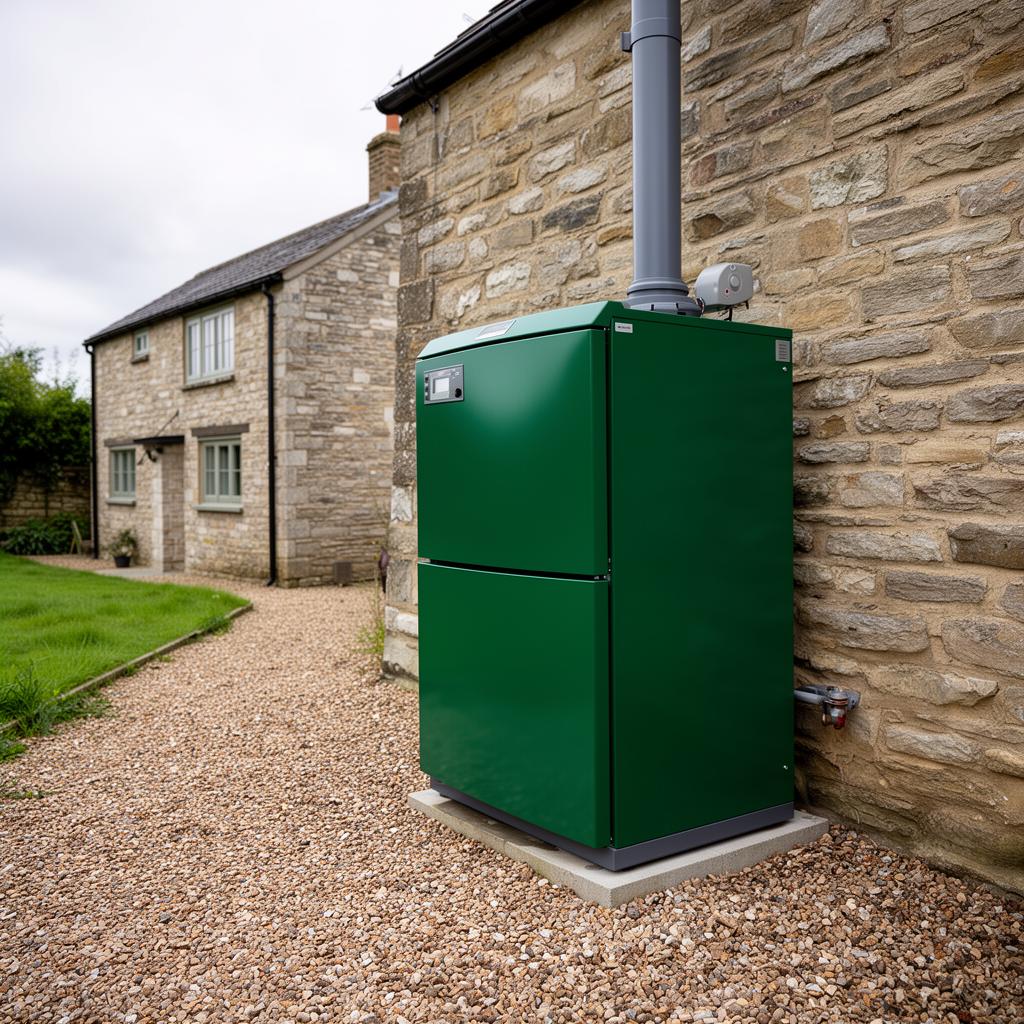
Reading the property before pricing the work
This area has a genuine mix of mains gas and oil-fired properties, sometimes on the same street, depending on when the gas network reached that particular row of houses. It's worth confirming which fuel your property is actually on and whether a fuel switch is realistic before assuming either option is off the table. Being registered for both Gas Safe and OFTEC work means we can look at the honest options for your specific property rather than steering you toward whichever fuel we happen to be set up for. Typical era of build is mixed-cottage, which affects existing pipework and system cleanliness. Access is lane access, so parking, spoil removal and delivery timing get planned in advance. Oakhill is roughly 6 miles from our Radstock base via the A37. Typical property stock here: stone cottages and modern estates. A meaningful share of properties around Oakhill are off the gas grid, so oil boiler installs and tank swaps make up a fair part of what we do locally. Repair calls in Oakhill usually get a same-week visit, with most common faults fixed on the first attempt.
Why Oakhill households use us
Based at 24 Bristol Rd, Radstock — every job is run by the team that quoted it.
362+ verified reviews from real customers across BA and BS postcodes.
Oil boilers, oil tanks and pipework — fully certified for off-grid installs and replacements.
Reg. 549918 — every gas job notified to Building Control and a CP12 issued where required.
Where else we work near Oakhill
Beyond Oakhill we're frequently on jobs in Chilcompton (BA3), Stoke St Michael (BA3), Binegar (BA3) and Shepton Mallet (BA4) — so spares, follow-ups and annual services are straightforward.
How we run landlord gas safety certificates on site
- Gas Safe registered, CP12 issued same day
- Tightness test, combustion analysis and flue checks
- Tenant access arranged by text or phone
- Several properties aligned to one renewal date
- Free written quote, no obligation
- Local aftercare from a 6-mile base
Common queries, answered honestly
- Who actually carries out the work?
- A Gas Safe and, where relevant, OFTEC registered engineer from our own small team carries out the job — we don't sub the install out to a third party after quoting. You deal with the same people from survey through to commissioning and any aftercare calls.
- What's the difference between a power flush and a chemical flush?
- A chemical flush circulates a cleaning agent through the existing system to loosen light debris, while a power flush uses a pump to force water at higher velocity and reversed direction through radiators and pipework to shift heavier sludge. We usually recommend the more thorough power flush before connecting a new boiler to an older system.
- What is condensate and why does its routing matter?
- Condensate is the mildly acidic water produced by a modern condensing boiler as it extracts extra heat from the flue gases, and it needs a route to an internal drain or, less ideally, an external soakaway. In colder or more exposed locations an external condensate pipe can freeze and shut the boiler down, so internal routing is worth prioritising where the layout allows it.
- What support do I get after the install is finished?
- Once commissioning's complete we talk you through the controls, leave the paperwork, and register the manufacturer warranty on your behalf. If anything doesn't feel right in the first few weeks — a fault code, an odd noise, a control setting you're unsure of — call us during office hours and we'll talk it through or come back out.
- Will the new boiler work properly with our existing radiators?
- Not always without checking. Modern condensing boilers run most efficiently at lower flow temperatures, and radiators originally sized for an old, hotter-running boiler can end up struggling to heat a room adequately at those lower temperatures. We check radiator sizing against a heat loss calculation and flag any that are undersized for the room before installing.
- Will you come out to a village like Oakhill?
- Oakhill is part of our core patch (6 miles from base via the A37). Same-week site visits and quick callbacks are normal.
How to get this priced
A survey and written quote for landlord gas safety certificates doesn't commit you to anything — it gives you accurate information to make a decision with, whether that's going ahead with us, getting a further comparison, or deciding the timing isn't right yet. Send the appliance make, model and any fault code and you get a straight answer, not a sales script. Conservation and listed constraints apply to parts of the area, so external work is checked first. Most of what we open up here is stone cottages and modern estates, which dictates flue routes and pipe sizing.
Oakhill coverage and distances
- County
- Somerset
- Postcode district
- BA3
- Settlement type
- village
- Nearest classified road
- A37
- Distance from our base
- 6 miles (Radstock, BA3)
- Typical building stock
- stone cottages and modern estates
- Water hardness
- very hard limestone water
- Fuel availability
- mains gas with off-grid pockets
- Customer mix
- homes alongside small commercial and agricultural premises
- Nearby areas covered
- Chilcompton, Stoke St Michael, Binegar, Shepton Mallet
Detail that matters in Oakhill
Low-loss headers on larger or multi-zone systems
On a system with several heating zones or a boiler oversized relative to any single zone's flow requirement, a low-loss header hydraulically separates the boiler's primary circuit from the secondary zone circuits, so each side can run its own pump and flow rate without one interfering with the other. Without it, a zone valve closing on a multi-zone system can starve the boiler of flow or force excessive pump pressure through the remaining open zones. It's most relevant on larger properties or ones with commercial premises attached, where several distinct heating circuits — perhaps a shop unit and a flat above — share one heat source. Getting the header sized to the boiler's actual flow rate, not just fitted as standard, is what makes it work rather than just adding another connection.
Wood-burning stoves with a back boiler alongside a main boiler
Some older rural properties around Oakhill run a wood-burning stove with a back boiler feeding heat into the same central heating circuit as an oil or gas boiler, usually through a thermal store or a cylinder with two coils. Getting this combination to work safely means the stove's back boiler circuit has its own means of dissipating heat if the pump fails or a valve closes while the stove is still burning — a stove can't simply be switched off the way a boiler can if its heat has nowhere to go, so a gravity-fed safety circuit or heat leak radiator is normally required. It's a more involved design than a single-boiler system and needs planning at the point either appliance is replaced, not treated as an afterthought once the new boiler is already fitted.
Plume management kits for restricted flue positions
Where the ideal, shortest flue route would discharge too close to a boundary, a window, or onto a neighbouring property — a common constraint on tight plots in Oakhill — a plume management kit extends the flue's discharge point away from the boiler's own wall penetration, directing the visible water vapour plume and flue gases to a compliant location instead. It adds ductwork and sometimes a small additional fan to overcome the extra resistance, and it has to be specified against the specific boiler's approved kit range rather than improvised, since flue certification only covers tested combinations. It's a legitimate way to fit a boiler on a plot where the compliant flue route and the sensible boiler location aren't the same wall, without compromising on clearances to solve it.
Choosing a boiler location that satisfies both planning and practicality in Oakhill
On a property within a conservation area, AONB or World Heritage designation, the boiler's physical location is often decided as much by the acceptable flue route as by where the homeowner would naturally put it — a kitchen wall facing the street may need ruling out even before considering pipe run length, simply because the flue outlet would be visible from a protected streetscape. Working back from an acceptable flue position to find a viable boiler location sometimes means a longer pipework run through the property than would otherwise be chosen, adding to the job's cost and complexity. We assess planning constraints on the flue before finalising the boiler's proposed location, rather than picking the location first and discovering the flue route is unacceptable afterwards.
Electronic and physical scale reducers compared
In very hard limestone water areas like Oakhill, a scale reducer fitted on the boiler's cold feed protects the heat exchanger without the ongoing salt and drainage requirements of a full water softener. Physical scale reducers use a polyphosphate or template-assisted crystallisation cartridge that alters how calcium carbonate crystallises so it's less likely to adhere to hot surfaces; electronic and electromagnetic devices claim a similar effect without a cartridge to replace, though the evidence base for electronic types is weaker and more inconsistent than for physical media. Manufacturers including Worcester Bosch now specify a scale reducer or softener as a condition of extended guarantees in hard water areas, so the choice affects warranty validity as well as long-term performance, not just descale frequency.
What different boiler noises usually mean
A kettling or rumbling sound from a boiler is most often scale or sludge build-up on the heat exchanger causing localised boiling as water is trapped and overheated in restricted channels — the heating equivalent of a kettle furring up. A banging or knocking sound in pipework, sometimes called water hammer, is usually caused by a valve closing too quickly or trapped air rather than the boiler itself. A whining or humming sound tends to point to the circulating pump, either from wear or from air in the system reducing lubrication at the bearing. Diagnosing correctly from the noise alone isn't reliable enough to act on without checking system pressure, inhibitor condition and the pump directly, but the noise itself is a useful first indicator of which of those to check first.
Other boiler services in Oakhill
- Boiler Installation in OakhillNew combi, system and regular boiler installations for gas and oil homes — fixed prices, manufacturer warranties.
- Gas Boiler Installation in OakhillGas Safe registered installations and upgrades for mains gas homes across Bath, Radstock and Wells.
- Oil Boiler Installation in OakhillOFTEC-trained oil boiler specialist for rural homes off the gas grid — tank and boiler replacements.
- Boiler Servicing in OakhillAnnual boiler services to keep your warranty valid and your home safe, efficient and warm.
- Maintenance & Repair in OakhillDiagnostics, repairs and breakdown call-outs for gas and oil boilers across BA and BS postcodes.
- Oil Boiler Servicing in OakhillOFTEC registered annual servicing for oil boilers, including nozzle, electrode, filter and smoke test work on off grid homes.
- Oil Boiler Repairs in OakhillOil boiler breakdown repairs across rural Somerset, from lockouts and sooting to pump, photocell and control faults.
- Oil Tank Replacement in OakhillBunded oil tank replacement and relocation with base preparation, new supply line and OFTEC paperwork on completion.
New Worcester boiler with a 10 year guarantee*
Free no-obligation quotes for installation, servicing & repairs across BA & BS postcodes.