
Batheaston Oil Boiler Repairs
A heating system fitted properly should be low-maintenance for years, which is why the detail in oil boiler repairs matters more than it might seem at the time: correct sizing, clean pipework, and controls set up to suit how the household actually lives. We're Gas Safe registered, OFTEC registered and a Worcester Bosch Accredited Installer, and we fit accordingly from our workshop at 24 Bristol Road, Radstock BA3 3EE. homes alongside small commercial and agricultural premises make up most enquiries from this postcode. Terrain is valley floor, which matters for condensate runs and tank siting. In Batheaston itself (BA1, Somerset) that usually means stone cottages and 1960s housing, roughly 10 miles from the workshop.
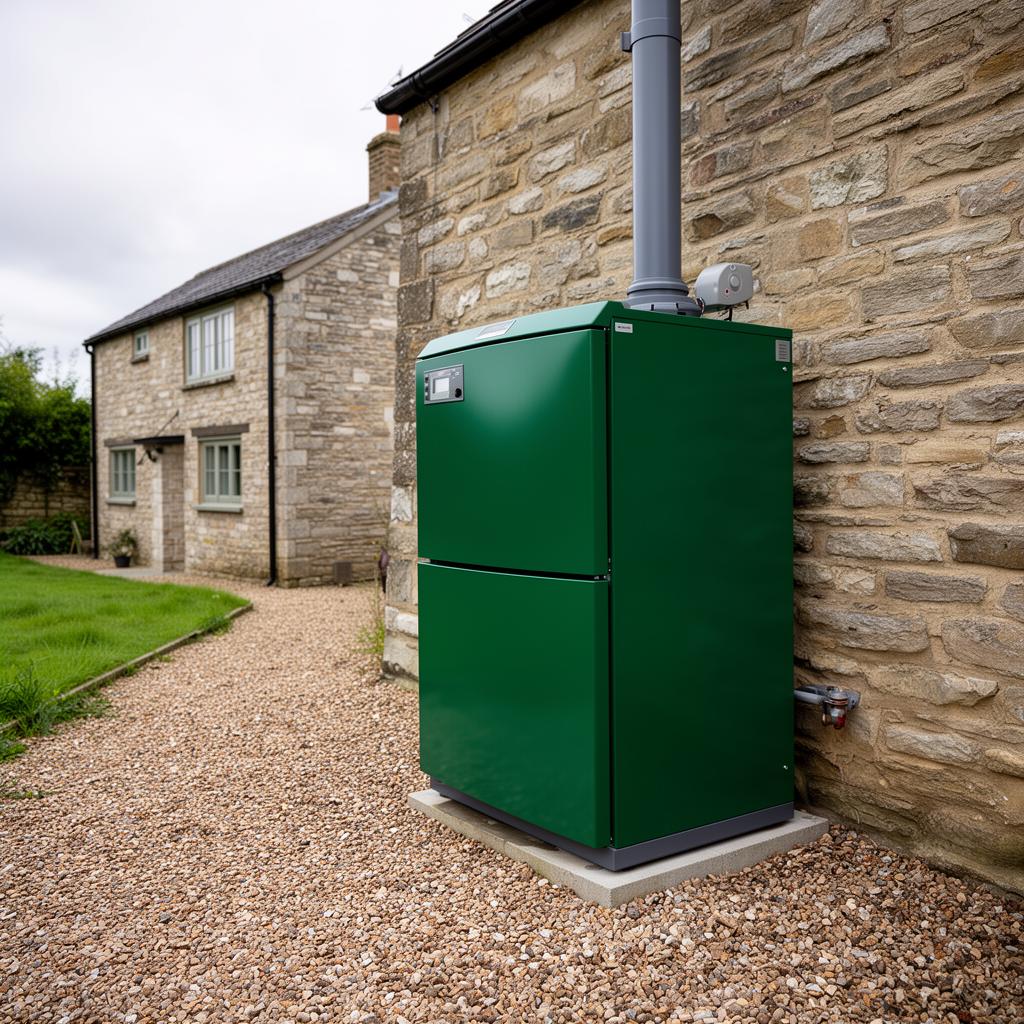
Local conditions we plan around in BA1
Properties in this area sometimes sit alongside small commercial premises or agricultural buildings, which occasionally means slightly different considerations around flue positioning, noise from external plant, or shared access with a business next door. It's worth mentioning at the point of booking a survey if your property has any commercial neighbours or shared access, so we can check anything relevant before quoting rather than after. Nearest neighbours on our round are Bath, Bathampton, Bathford. Conservation and listed constraints apply to parts of the area, so external work is checked first. Batheaston is roughly 10 miles from our Radstock base via the A4. Typical property stock here: stone cottages and 1960s housing. Batheaston sits in the Somerset BA1 postcode and is part of our weekly run, so local response is quick. Repair calls in Batheaston usually get a same-week visit, with most common faults fixed on the first attempt.
Within reach of the A4
Beyond Batheaston we're frequently on jobs in Bath (BA1), Bathampton (BA2), Bathford (BA1) and Larkhall (BA1) — so spares, follow-ups and annual services are straightforward.
What backs up a Batheaston quote
Qualifies your install for the full 10-year manufacturer guarantee* on supported models.
Based at 24 Bristol Rd, Radstock — every job is run by the team that quoted it.
Oil boilers, oil tanks and pipework — fully certified for off-grid installs and replacements.
Reg. 549918 — every gas job notified to Building Control and a CP12 issued where required.
What oil boiler repairs includes here
- Boiler will not fire or keeps locking out
- Sooting, puffing and smoky flue faults
- Pump, photocell and control diagnostics
- Sludge and water in tank dealt with properly
- Free written quote, no obligation
- Local aftercare from a 10-mile base
Oil Boiler Repairs FAQs for BA1
- What's actually checked during an annual boiler service?
- A service includes a visual and functional check of the boiler's casing and controls, flue gas analysis to confirm safe and efficient combustion, checking the flame picture and pressure, inspecting seals and condensate, and testing safety devices. It's a safety check as much as a performance one, and it's what keeps most manufacturer warranties valid.
- What actually happens on install day?
- The engineer isolates the gas or oil supply and water, removes the old boiler, fits and pressure-tests the new one, connects the flue and condensate, and commissions the system. For a straight swap this is usually one day; a conversion, relocation, or cylinder change can run into a second depending on the pipework involved.
- How do you decide whether to repair or replace a boiler?
- We weigh the age of the boiler, whether parts are still made for it, how many faults it's had recently, and its running efficiency against a like-for-like or upgraded replacement. If a straightforward part fixes it and the boiler's otherwise sound, we'll say so rather than push a new install you don't need.
- What's the difference between a power flush and a chemical flush?
- A chemical flush circulates a cleaning agent through the existing system to loosen light debris, while a power flush uses a pump to force water at higher velocity and reversed direction through radiators and pipework to shift heavier sludge. We usually recommend the more thorough power flush before connecting a new boiler to an older system.
- Does the hard water around Batheaston cause problems for boilers?
- The limestone geology around Batheaston gives very hard water, and scale build-up inside heat exchangers and pipework is one of the most common causes of boilers losing efficiency or breaking down early in this area. We routinely fit a scale reducer or filter on new installs here and would strongly recommend one on any hard-water property.
- Will you come out to a village like Batheaston?
- Batheaston is part of our core patch (10 miles from base via the A4). Same-week site visits and quick callbacks are normal.
Where to go from here
Getting more than one quote for oil boiler repairs is sensible, and we're happy to be one of them. Ask each tradesperson the same questions about what's included, what's excluded, and what registration they hold, so you're comparing genuinely equivalent quotes rather than a headline figure with hidden gaps. We can usually pair the visit with other work in Bath to keep the trip efficient. Water here is very hard limestone water, so scale protection is specified accordingly. Nearest neighbours on our round are Bath, Bathampton, Bathford.
Batheaston at a glance
- County
- Somerset
- Postcode district
- BA1
- Settlement type
- village
- Nearest classified road
- A4
- Distance from our base
- 10 miles (Radstock, BA3)
- Typical building stock
- stone cottages and 1960s housing
- Water hardness
- very hard limestone water
- Fuel availability
- mains gas with off-grid pockets
- Customer mix
- homes alongside small commercial and agricultural premises
- Nearby areas covered
- Bath, Bathampton, Bathford, Larkhall
Practical considerations across BA1
Low-loss headers on larger or multi-zone systems
On a system with several heating zones or a boiler oversized relative to any single zone's flow requirement, a low-loss header hydraulically separates the boiler's primary circuit from the secondary zone circuits, so each side can run its own pump and flow rate without one interfering with the other. Without it, a zone valve closing on a multi-zone system can starve the boiler of flow or force excessive pump pressure through the remaining open zones. It's most relevant on larger properties or ones with commercial premises attached, where several distinct heating circuits — perhaps a shop unit and a flat above — share one heat source. Getting the header sized to the boiler's actual flow rate, not just fitted as standard, is what makes it work rather than just adding another connection.
Village lane access and van positioning for larger jobs
Village lanes around Batheaston are often single-track or tight two-way roads without dedicated off-street loading space, which affects how a larger job like a full system installation or an oil tank replacement is planned — the van needs somewhere to park close enough for repeated trips carrying equipment without blocking the lane for through traffic or farm vehicles. On a job involving a full radiator or pipework replacement, materials sometimes need staging over more than one visit rather than delivered all at once if there's nowhere secure to leave them on-site between visits. We check lane width and passing places when scheduling larger jobs in village locations, and plan van access and parking as part of the job rather than as an afterthought on the day.
Batheaston's place within the wider Somerset area we cover
Batheaston is one of several neighbourhoods we work in around the wider area, and while the postcode district and general water hardness and building stock trends are shared with the surrounding district, the specific street-level access, parking and property type still varies enough locally that we treat each visit on its own facts rather than applying a generic area answer. Nearby areas we also cover include Bath, Bathampton and Bathford, which is relevant mainly where a customer wants comparable jobs referenced or where a single visit can sensibly cover more than one nearby property in the same trip. The underlying trade standards — Gas Safe, OFTEC, correct commissioning — don't vary by neighbourhood, only the practical details of the job do.
Radiator sizing after lowering the flow temperature
Running a boiler at a lower flow temperature — typically 55°C or below rather than the old default of 70-80°C — improves condensing efficiency measurably, but it also reduces the heat output of every radiator in the house, because a radiator's output falls roughly with the square of the temperature difference to the room. Radiators sized correctly for a 75°C flow can end up unable to heat the room properly at 55°C unless they're upsized or supplemented. We check each radiator against the lower design flow temperature before recommending it, and where a room falls short we look at whether a larger single panel, a double panel, or an additional radiator on that circuit closes the gap, rather than pushing the flow temperature back up and giving away the efficiency gain.
Common boiler fault codes and what usually causes them
Most modern boilers display a fault code on the control panel when they lock out, and while the exact code differs between manufacturers, the underlying causes cluster into a small number of categories: low system pressure (often from a small leak or after bleeding radiators), ignition failure (a worn electrode, gas supply issue, or blocked condensate causing a safety shutdown), or a failed sensor reporting an implausible temperature reading. A condensate blockage or freeze specifically tends to show a distinct code from a genuine ignition fault, which is why checking the external condensate pipe for ice before calling out an engineer in a cold snap can sometimes resolve the issue without a visit at all. We ask for the exact fault code and any recent history — a bled radiator, a cold snap, a recent service — before attending, since it often narrows down the likely cause before we arrive.
Condensate soakaways where there's no convenient drain
Properties without a nearby internal waste connection or external gully for the boiler's condensate — common on rural plots around Batheaston where the nearest drain run is a long way from the boiler's location — sometimes need a dedicated condensate soakaway instead. This is a small pit filled with granular material that the condensate, which is mildly acidic, can disperse into gradually rather than running to a drain at all. Sizing and siting it correctly matters: it needs to be far enough from foundations and sited where the local ground can actually absorb the modest but steady volume a boiler produces, particularly over a long heating season. Where ground conditions make a soakaway unreliable, running a longer insulated pipe to a proper drainage connection is usually the safer long-term choice even though it's more work to install.
Choosing a boiler location that satisfies both planning and practicality in Batheaston
On a property within a conservation area, AONB or World Heritage designation, the boiler's physical location is often decided as much by the acceptable flue route as by where the homeowner would naturally put it — a kitchen wall facing the street may need ruling out even before considering pipe run length, simply because the flue outlet would be visible from a protected streetscape. Working back from an acceptable flue position to find a viable boiler location sometimes means a longer pipework run through the property than would otherwise be chosen, adding to the job's cost and complexity. We assess planning constraints on the flue before finalising the boiler's proposed location, rather than picking the location first and discovering the flue route is unacceptable afterwards.
Oil tank de-sludging: why it's not optional
Oil sitting in a tank for years accumulates water from condensation and fine sediment that settles at the bottom, and over time this forms a sludge layer that can be drawn into the fuel line, particularly when the tank is nearly empty and the outlet pulls from lower in the tank than usual. Sludge blocks fine oil filters and burner nozzles, which shows up as burner lockouts or a boiler that won't fire cleanly rather than as an obvious tank problem. De-sludging drains and cleans the tank base without necessarily removing the whole tank, and it's worth doing when a tank is inherited with a property, before switching to a new boiler, or if lockouts recur despite the filter and nozzle being replaced. It's a preventative job that's cheaper done on schedule than after a burner failure it caused.
Other boiler services in Batheaston
- Boiler Installation in BatheastonNew combi, system and regular boiler installations for gas and oil homes — fixed prices, manufacturer warranties.
- Gas Boiler Installation in BatheastonGas Safe registered installations and upgrades for mains gas homes across Bath, Radstock and Wells.
- Oil Boiler Installation in BatheastonOFTEC-trained oil boiler specialist for rural homes off the gas grid — tank and boiler replacements.
- Boiler Servicing in BatheastonAnnual boiler services to keep your warranty valid and your home safe, efficient and warm.
- Maintenance & Repair in BatheastonDiagnostics, repairs and breakdown call-outs for gas and oil boilers across BA and BS postcodes.
- Landlord Gas Safety Certificates in BatheastonAnnual CP12 landlord gas safety records issued on the day, for single lets, HMOs, holiday lets and whole portfolios.
- Oil Boiler Servicing in BatheastonOFTEC registered annual servicing for oil boilers, including nozzle, electrode, filter and smoke test work on off grid homes.
- Oil Tank Replacement in BatheastonBunded oil tank replacement and relocation with base preparation, new supply line and OFTEC paperwork on completion.
New Worcester boiler with a 10 year guarantee*
Free no-obligation quotes for installation, servicing & repairs across BA & BS postcodes.