
Freshford's Local Oil Boiler Repairs Specialist
Before quoting for oil boiler repairs, we start with what's actually there: the existing pipework, the flue route, the water pressure and the age of what you've already got. Guesswork on a heating system leads to call-backs and wasted money, so a proper look at the property comes first. We're Gas Safe registered and OFTEC registered, based at 24 Bristol Road, Radstock BA3 3EE, and we size and specify jobs on what we find on site, not on assumptions. Our van runs the unclassified to reach you, 7 miles out from the Radstock workshop. Conservation and listed constraints apply to parts of the area, so external work is checked first. In Freshford itself (BA2, Somerset) that usually means stone cottages, roughly 7 miles from the workshop.
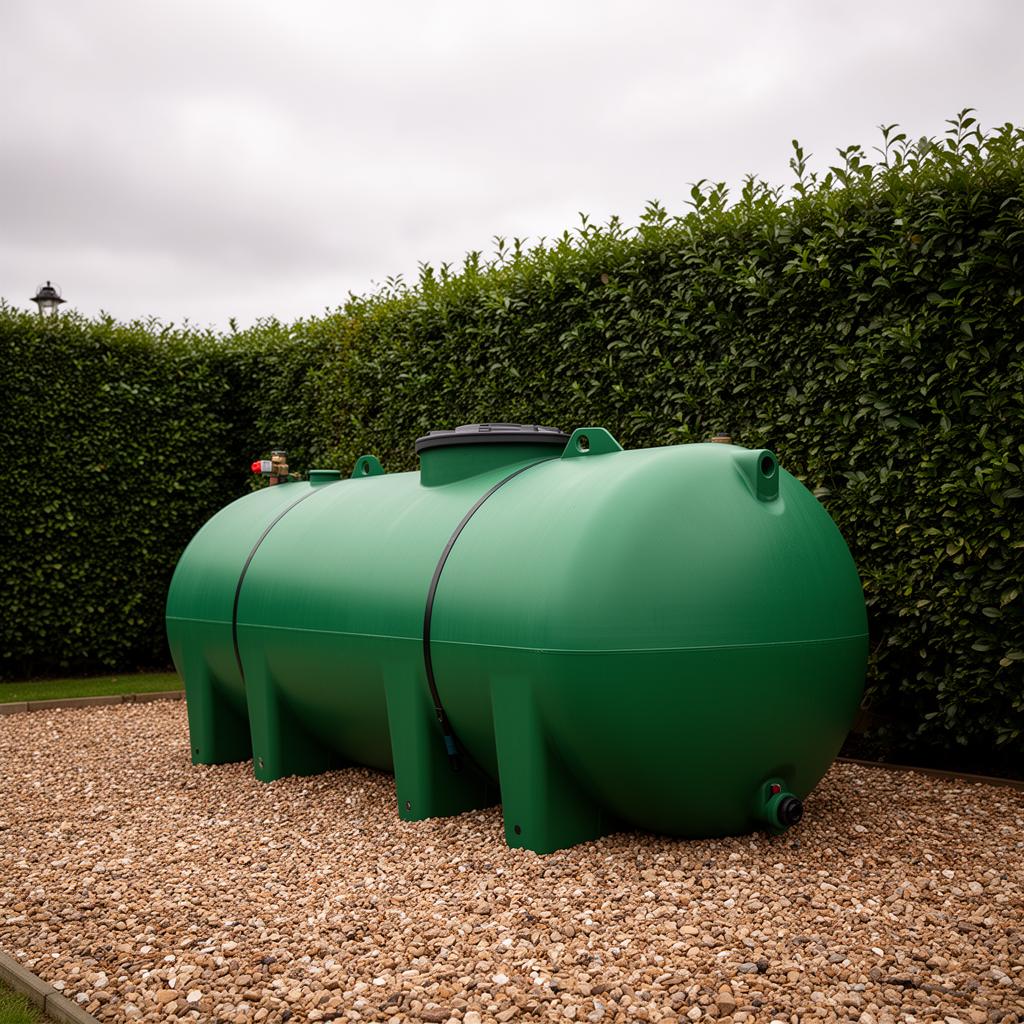
Within reach of the unclassified
Beyond Freshford we're frequently on jobs in Limpley Stoke (BA2), Hinton Charterhouse (BA2), Bathford (BA1) and Bath (BA1) — so spares, follow-ups and annual services are straightforward.
Registrations and how work is signed off
Oil boilers, oil tanks and pipework — fully certified for off-grid installs and replacements.
No verbal-only quotes. You'll get the boiler model, controls and warranty in writing before we book.
Based at 24 Bristol Rd, Radstock — every job is run by the team that quoted it.
Reg. 549918 — every gas job notified to Building Control and a CP12 issued where required.
Local conditions we plan around in BA2
Stone cottages and farmhouses around here were mostly built long before central heating existed, so pipework and boiler locations have usually been retrofitted at some point, sometimes more than once. Thick stone walls, uneven floor levels and low ceilings can all affect where a boiler or cylinder can practically go, and older stonework doesn't always take fixings the way modern block or brick does. We work around those constraints on site rather than assuming a straightforward install. Conservation and listed constraints apply to parts of the area, so external work is checked first. Mains gas covers much of the area, with off-grid pockets, which changes the appliance shortlist. Freshford is roughly 7 miles from our Radstock base via the unclassified. Typical property stock here: stone cottages. Freshford sits in the Somerset BA2 postcode and is part of our weekly run, so local response is quick. Repair calls in Freshford usually get a same-week visit, with most common faults fixed on the first attempt.
What you get, start to finish
- Boiler will not fire or keeps locking out
- Sooting, puffing and smoky flue faults
- Pump, photocell and control diagnostics
- Sludge and water in tank dealt with properly
- Free written quote, no obligation
- Local aftercare from a 7-mile base
Questions before you book
- Who actually carries out the work?
- A Gas Safe and, where relevant, OFTEC registered engineer from our own small team carries out the job — we don't sub the install out to a third party after quoting. You deal with the same people from survey through to commissioning and any aftercare calls.
- We've got an oil-fired Rayburn or Aga heating the house — can that be replaced with a standard boiler?
- Yes, where a range cooker like a Rayburn or Aga is also running the central heating, it can be separated out and replaced with a dedicated modern oil or LPG boiler, keeping the range purely for cooking if you want to retain it, or removing it entirely. Sizing the new boiler correctly for the property is the key part of getting this right.
- How do you decide whether to repair or replace a boiler?
- We weigh the age of the boiler, whether parts are still made for it, how many faults it's had recently, and its running efficiency against a like-for-like or upgraded replacement. If a straightforward part fixes it and the boiler's otherwise sound, we'll say so rather than push a new install you don't need.
- Is a boiler install a noisy, disruptive job?
- There's unavoidable noise — drilling for the flue, pipework, sometimes moving a cylinder — but a straightforward swap is usually done within a working day with the mess kept to the immediate work area. We dust-sheet the route in and out and clear away pipe offcuts and old parts before we leave.
- What actually happens on install day?
- The engineer isolates the gas or oil supply and water, removes the old boiler, fits and pressure-tests the new one, connects the flue and condensate, and commissions the system. For a straight swap this is usually one day; a conversion, relocation, or cylinder change can run into a second depending on the pipework involved.
- Will you come out to a village like Freshford?
- Freshford is part of our core patch (7 miles from base via the unclassified). Same-week site visits and quick callbacks are normal.
Your next move in BA2
Expect three things from oil boiler repairs with us: a proper look at the property before any figure is given, a written quote that spells out what's included, and work carried out by a Gas Safe and OFTEC registered engineer who stands behind it. Send the appliance make, model and any fault code and you get a straight answer, not a sales script. Typical era of build is mixed-cottage, which affects existing pipework and system cleanliness. Terrain is valley floor, which matters for condensate runs and tank siting.
Freshford at a glance
- County
- Somerset
- Postcode district
- BA2
- Settlement type
- village
- Nearest classified road
- unclassified
- Distance from our base
- 7 miles (Radstock, BA3)
- Typical building stock
- stone cottages
- Water hardness
- very hard limestone water
- Fuel availability
- mains gas with off-grid pockets
- Customer mix
- homes alongside small commercial and agricultural premises
- Nearby areas covered
- Limpley Stoke, Hinton Charterhouse, Bathford, Bath
The parts of the job people rarely mention
Nozzle replacement and baffle cleaning on oil burners
An oil burner's nozzle atomises fuel into a fine spray for combustion, and it wears from constant fuel flow at pressure, gradually changing the spray pattern away from the burner manufacturer's specification even before it visibly fails. A worn nozzle burns less cleanly, producing more soot that coats the heat exchanger's baffles, and a sooted heat exchanger loses efficiency in the same way scale does on a gas boiler's plates. Standard practice on an annual oil service is to replace the nozzle as a matter of course, rather than wait for a fault, and to remove and clean the baffles so the heat exchanger surfaces are exposed to combustion heat properly again. Skipping nozzle replacement to save a service visit's minor parts cost is a false economy against the fuel wasted by a poorly atomising burner.
Choosing a boiler location that satisfies both planning and practicality in Freshford
On a property within a conservation area, AONB or World Heritage designation, the boiler's physical location is often decided as much by the acceptable flue route as by where the homeowner would naturally put it — a kitchen wall facing the street may need ruling out even before considering pipe run length, simply because the flue outlet would be visible from a protected streetscape. Working back from an acceptable flue position to find a viable boiler location sometimes means a longer pipework run through the property than would otherwise be chosen, adding to the job's cost and complexity. We assess planning constraints on the flue before finalising the boiler's proposed location, rather than picking the location first and discovering the flue route is unacceptable afterwards.
LPG as an alternative to oil off the gas grid
Properties around Freshford that sit off the mains gas network aren't limited to oil — bulk LPG, stored in an above-ground tank on a concrete base with the same OFTEC-style clearance and access rules as oil, runs standard gas-rated boilers with only a change of injector and pressure setting rather than a different boiler entirely. It suits households that want a gas hob and gas-style modulation rather than an oil burner's on/off firing pattern. The tank still needs delivery access for a tanker, which on some rural driveways is the deciding factor over oil. We check the access route for the largest realistic delivery vehicle before recommending LPG over oil, because a tank that can't be filled easily causes more disruption than the fuel choice was meant to solve.
Signs a boiler repair is no longer the right call
A boiler that's failing repeatedly, needing a different part replaced every service, or over roughly ten to fifteen years old is approaching the point where continued repair costs more over time than replacement, particularly once a heat exchanger — the most expensive single part — starts to show signs of failure through leaks or reduced output. Efficiency is the other half of the calculation: an older non-condensing boiler running at 70-80% efficiency against a modern condensing combi at over 90% means a meaningful chunk of every unit of fuel burned in the old boiler is simply lost up the flue. We give a straight answer on repair versus replace based on the fault found and the boiler's age and condition, rather than defaulting to whichever is more profitable to us on the day.
How a condensing boiler recovers extra heat
A condensing boiler passes flue gases through a secondary heat exchanger before they leave the flue, extracting additional heat by condensing water vapour in the exhaust back into liquid, which is expelled as the mildly acidic condensate water down the drain. This is why every condensing boiler needs a condensate drainage route as part of its installation, unlike older non-condensing boilers, which simply vented hot dry gas straight out. The efficiency benefit only fully materialises when the boiler is actually condensing regularly, which needs a return water temperature low enough — generally below 55°C — for water vapour to condense in the first place. A condensing boiler run permanently at a high flow temperature can spend much of its time not actually condensing, which is one of the main reasons flow temperature settings matter as much as the boiler model chosen.
Single-pipe circuits in older stone cottages
A lot of the stone cottages and farmhouses around Freshford were plumbed decades ago on a single-pipe gravity circuit, where each radiator draws from and returns to the same loop rather than having its own flow and return. It works, but radiators furthest from the boiler receive water that's already cooled after giving up heat to the ones before it, so the far end of the house is always the coldest. Converting to a two-pipe layout means new pipe runs, which in a stone cottage often means chasing lime plaster or lifting flagstones — not a trivial job. Where a full rewire of the pipework isn't wanted, we sometimes improve balance instead by oversizing the radiators nearest the end of the run and fitting TRVs to hold back the ones nearest the boiler.
Other boiler services in Freshford
- Boiler Installation in FreshfordNew combi, system and regular boiler installations for gas and oil homes — fixed prices, manufacturer warranties.
- Gas Boiler Installation in FreshfordGas Safe registered installations and upgrades for mains gas homes across Bath, Radstock and Wells.
- Oil Boiler Installation in FreshfordOFTEC-trained oil boiler specialist for rural homes off the gas grid — tank and boiler replacements.
- Boiler Servicing in FreshfordAnnual boiler services to keep your warranty valid and your home safe, efficient and warm.
- Maintenance & Repair in FreshfordDiagnostics, repairs and breakdown call-outs for gas and oil boilers across BA and BS postcodes.
- Landlord Gas Safety Certificates in FreshfordAnnual CP12 landlord gas safety records issued on the day, for single lets, HMOs, holiday lets and whole portfolios.
- Oil Boiler Servicing in FreshfordOFTEC registered annual servicing for oil boilers, including nozzle, electrode, filter and smoke test work on off grid homes.
- Oil Tank Replacement in FreshfordBunded oil tank replacement and relocation with base preparation, new supply line and OFTEC paperwork on completion.
New Worcester boiler with a 10 year guarantee*
Free no-obligation quotes for installation, servicing & repairs across BA & BS postcodes.