
Local Oil Boiler Servicing for Publow
We treat oil boiler servicing as work that has to meet the same standard whether it's a small job or a full system replacement: correct registration, proper commissioning, and documentation you can keep. Gas Safe registered, OFTEC registered and a Worcester Bosch Accredited Installer, based at 24 Bristol Road, Radstock BA3 3EE, that's the baseline we work to on every job, not an upsell. Terrain is valley floor, which matters for condensate runs and tank siting. homes alongside small commercial and agricultural premises make up most enquiries from this postcode. In Publow itself (BS39, Somerset) that usually means stone village homes, roughly 6 miles from the workshop.
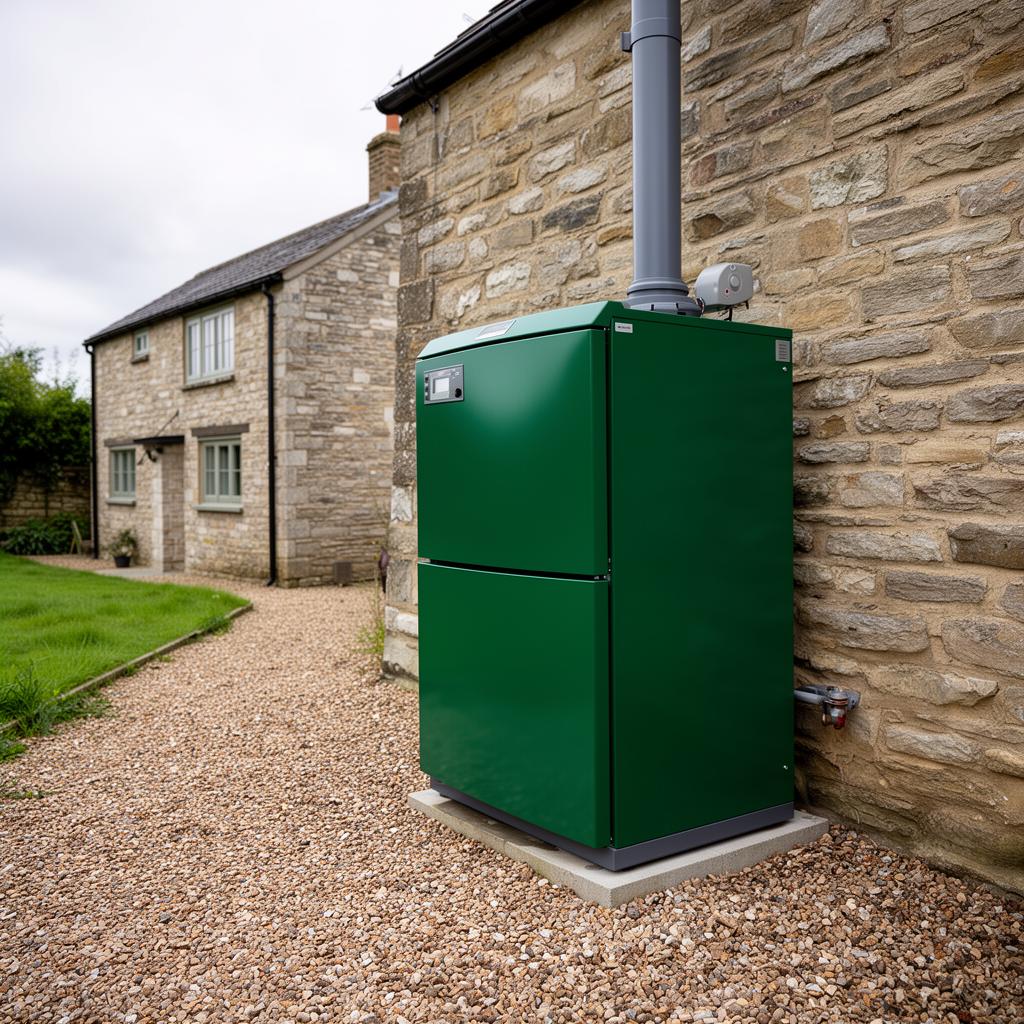
Why Publow work is specified differently
Stone cottages and farmhouses around here were mostly built long before central heating existed, so pipework and boiler locations have usually been retrofitted at some point, sometimes more than once. Thick stone walls, uneven floor levels and low ceilings can all affect where a boiler or cylinder can practically go, and older stonework doesn't always take fixings the way modern block or brick does. We work around those constraints on site rather than assuming a straightforward install. Most of what we open up here is stone village homes, which dictates flue routes and pipe sizing. Conservation and listed constraints apply to parts of the area, so external work is checked first. Publow is roughly 6 miles from our Radstock base via the unclassified. Typical property stock here: stone village homes. A meaningful share of properties around Publow are off the gas grid, so oil boiler installs and tank swaps make up a fair part of what we do locally. Repair calls in Publow usually get a same-week visit, with most common faults fixed on the first attempt.
Within reach of the unclassified
Beyond Publow we're frequently on jobs in Pensford (BS39), Compton Dando (BS39), Chelwood (BS39) and Stanton Drew (BS39) — so spares, follow-ups and annual services are straightforward.
What backs up a Publow quote
Based at 24 Bristol Rd, Radstock — every job is run by the team that quoted it.
No verbal-only quotes. You'll get the boiler model, controls and warranty in writing before we book.
Oil boilers, oil tanks and pipework — fully certified for off-grid installs and replacements.
Reg. 549918 — every gas job notified to Building Control and a CP12 issued where required.
What oil boiler servicing includes here
- OFTEC registered oil specialist
- Nozzle, electrode and fuel filter renewed
- Smoke test and pump pressure set correctly
- Oil tank and supply line inspected
- Free written quote, no obligation
- Local aftercare from a 6-mile base
Questions before you book
- Can your van get down our lane, or do we need to arrange something?
- Most village lanes we work on are manageable in our vehicles, but if it's single-track, has a low bridge, or turning is tight, mention it when you book so we bring the right size van and allow extra time. It's rarely a reason to turn a job down, just something we plan around.
- Stone cottages seem to lose heat fast — does that change what boiler we need?
- Solid stone walls and older windows do increase heat loss compared to cavity-wall construction, so we size the boiler and radiators around a proper heat loss calculation for the property rather than just matching what's there already. Getting this right matters more in a cottage than a modern house, where an undersized system will never quite keep up.
- Is it worth upgrading the heating controls when we replace the boiler?
- Where the existing controls are an old mechanical timer and single room thermostat, replacing them alongside the boiler with weather compensation or a modern programmable thermostat usually improves comfort and efficiency more than the boiler swap alone. It's not compulsory, but it's often the single best-value addition to a new install.
- What does "commissioning" a boiler actually involve?
- Commissioning is setting the boiler up correctly for the property rather than just switching it on: checking gas or oil pressure and flow rates, setting flow temperatures, testing safety devices, balancing the system, and completing the manufacturer's Benchmark checklist. Skipping this properly is one of the most common reasons warranty claims get refused later.
- What paperwork do I get once the job's finished?
- You'll get a Benchmark commissioning checklist for the boiler, a building notice or Building Control completion certificate for notifiable work, manufacturer warranty registration confirmation, and a Gas Safe (or OFTEC) record of the work. Keep these together — they're what a future buyer's solicitor or a warranty claim will ask for.
- Can you do oil boiler work in Publow?
- Yes — we're OFTEC registered. Publow has plenty of off-grid properties, so Worcester Heatslave and Grant Vortex installs (with tank swaps where needed) are routine for us.
Next step for Publow
Worcester Bosch Accredited Installer status means we've met the manufacturer's own standards for training and installation quality, which is part of why we can offer the extended guarantee on qualifying installs. It's worth asking any installer whether they hold equivalent accreditation, not just whether they can fit the boiler. We can usually pair the visit with other work in Pensford to keep the trip efficient. Access is lane access, so parking, spoil removal and delivery timing get planned in advance. Typical era of build is mixed-cottage, which affects existing pipework and system cleanliness.
Local reference data
- County
- Somerset
- Postcode district
- BS39
- Settlement type
- village
- Nearest classified road
- unclassified
- Distance from our base
- 6 miles (Radstock, BA3)
- Typical building stock
- stone village homes
- Water hardness
- hard water
- Fuel availability
- mains gas with off-grid pockets
- Customer mix
- homes alongside small commercial and agricultural premises
- Nearby areas covered
- Pensford, Compton Dando, Chelwood, Stanton Drew
Technical notes for this job type
Plume management kits for restricted flue positions
Where the ideal, shortest flue route would discharge too close to a boundary, a window, or onto a neighbouring property — a common constraint on tight plots in Publow — a plume management kit extends the flue's discharge point away from the boiler's own wall penetration, directing the visible water vapour plume and flue gases to a compliant location instead. It adds ductwork and sometimes a small additional fan to overcome the extra resistance, and it has to be specified against the specific boiler's approved kit range rather than improvised, since flue certification only covers tested combinations. It's a legitimate way to fit a boiler on a plot where the compliant flue route and the sensible boiler location aren't the same wall, without compromising on clearances to solve it.
Oil tank de-sludging: why it's not optional
Oil sitting in a tank for years accumulates water from condensation and fine sediment that settles at the bottom, and over time this forms a sludge layer that can be drawn into the fuel line, particularly when the tank is nearly empty and the outlet pulls from lower in the tank than usual. Sludge blocks fine oil filters and burner nozzles, which shows up as burner lockouts or a boiler that won't fire cleanly rather than as an obvious tank problem. De-sludging drains and cleans the tank base without necessarily removing the whole tank, and it's worth doing when a tank is inherited with a property, before switching to a new boiler, or if lockouts recur despite the filter and nozzle being replaced. It's a preventative job that's cheaper done on schedule than after a burner failure it caused.
Valley-floor properties: flood risk and boiler positioning
Properties on lower ground near watercourses around Publow carry a higher flood risk than the surrounding hills, and that's a genuine factor in deciding where a replacement boiler or cylinder is sited, particularly in a floor-standing oil boiler's case. Raising a floor-standing appliance onto a plinth, or relocating a boiler from a ground-floor utility room to a wall-mounted position higher up, reduces the chance of it being damaged in a flood event that a hillside property simply doesn't need to plan for. Electrical connections and any floor-level wiring also benefit from being kept above likely flood water levels where practical. We raise this with customers on lower-lying sites at the planning stage rather than only after a flood has already caused damage.
Village lane access and van positioning for larger jobs
Village lanes around Publow are often single-track or tight two-way roads without dedicated off-street loading space, which affects how a larger job like a full system installation or an oil tank replacement is planned — the van needs somewhere to park close enough for repeated trips carrying equipment without blocking the lane for through traffic or farm vehicles. On a job involving a full radiator or pipework replacement, materials sometimes need staging over more than one visit rather than delivered all at once if there's nowhere secure to leave them on-site between visits. We check lane width and passing places when scheduling larger jobs in village locations, and plan van access and parking as part of the job rather than as an afterthought on the day.
Reaching properties off the main road network
Publow is reached via the unclassified, an unclassified road rather than a numbered route, which matters mainly for winter access and for confirming a delivery vehicle carrying a new oil tank or bulky equipment can realistically reach the property. We factor the actual route in when scheduling deliveries or larger installations, checking with the customer about any width, height or surface restrictions on the final approach rather than assuming a mapping app's route reflects what a loaded van can manage. It rarely changes the technical scope of a job, but it does affect how a visit is planned and timed, particularly for jobs needing a specific delivery slot to coincide with the installation date.
Electronic and physical scale reducers compared
In hard water areas like Publow, a scale reducer fitted on the boiler's cold feed protects the heat exchanger without the ongoing salt and drainage requirements of a full water softener. Physical scale reducers use a polyphosphate or template-assisted crystallisation cartridge that alters how calcium carbonate crystallises so it's less likely to adhere to hot surfaces; electronic and electromagnetic devices claim a similar effect without a cartridge to replace, though the evidence base for electronic types is weaker and more inconsistent than for physical media. Manufacturers including Worcester Bosch now specify a scale reducer or softener as a condition of extended guarantees in hard water areas, so the choice affects warranty validity as well as long-term performance, not just descale frequency.
Signs a boiler repair is no longer the right call
A boiler that's failing repeatedly, needing a different part replaced every service, or over roughly ten to fifteen years old is approaching the point where continued repair costs more over time than replacement, particularly once a heat exchanger — the most expensive single part — starts to show signs of failure through leaks or reduced output. Efficiency is the other half of the calculation: an older non-condensing boiler running at 70-80% efficiency against a modern condensing combi at over 90% means a meaningful chunk of every unit of fuel burned in the old boiler is simply lost up the flue. We give a straight answer on repair versus replace based on the fault found and the boiler's age and condition, rather than defaulting to whichever is more profitable to us on the day.
How a condensing boiler recovers extra heat
A condensing boiler passes flue gases through a secondary heat exchanger before they leave the flue, extracting additional heat by condensing water vapour in the exhaust back into liquid, which is expelled as the mildly acidic condensate water down the drain. This is why every condensing boiler needs a condensate drainage route as part of its installation, unlike older non-condensing boilers, which simply vented hot dry gas straight out. The efficiency benefit only fully materialises when the boiler is actually condensing regularly, which needs a return water temperature low enough — generally below 55°C — for water vapour to condense in the first place. A condensing boiler run permanently at a high flow temperature can spend much of its time not actually condensing, which is one of the main reasons flow temperature settings matter as much as the boiler model chosen.
Other boiler services in Publow
- Boiler Installation in PublowNew combi, system and regular boiler installations for gas and oil homes — fixed prices, manufacturer warranties.
- Gas Boiler Installation in PublowGas Safe registered installations and upgrades for mains gas homes across Bath, Radstock and Wells.
- Oil Boiler Installation in PublowOFTEC-trained oil boiler specialist for rural homes off the gas grid — tank and boiler replacements.
- Boiler Servicing in PublowAnnual boiler services to keep your warranty valid and your home safe, efficient and warm.
- Maintenance & Repair in PublowDiagnostics, repairs and breakdown call-outs for gas and oil boilers across BA and BS postcodes.
- Landlord Gas Safety Certificates in PublowAnnual CP12 landlord gas safety records issued on the day, for single lets, HMOs, holiday lets and whole portfolios.
- Oil Boiler Repairs in PublowOil boiler breakdown repairs across rural Somerset, from lockouts and sooting to pump, photocell and control faults.
- Oil Tank Replacement in PublowBunded oil tank replacement and relocation with base preparation, new supply line and OFTEC paperwork on completion.
New Worcester boiler with a 10 year guarantee*
Free no-obligation quotes for installation, servicing & repairs across BA & BS postcodes.