
Stowey's Local Oil Boiler Servicing Specialist
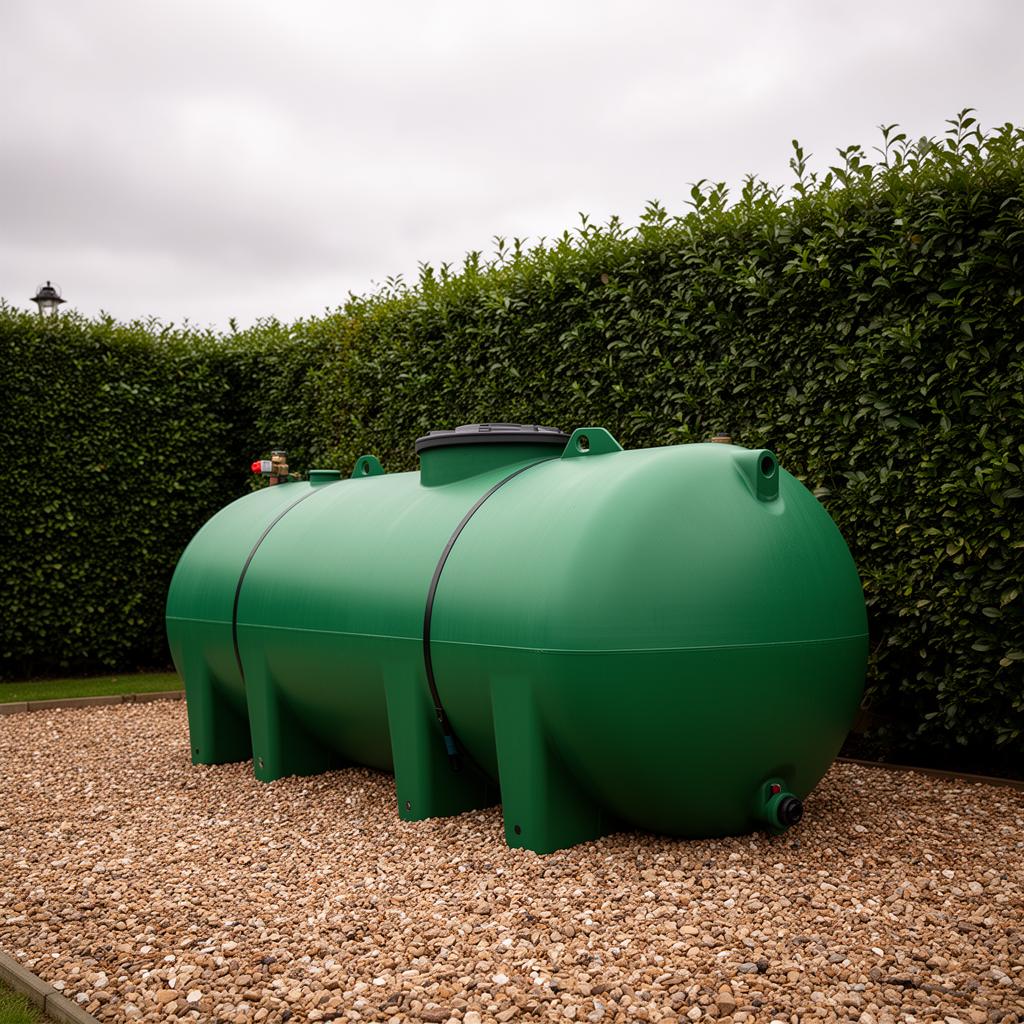
Homeowners, landlords and smallholders tend to ask different questions about oil boiler servicing: homeowners want comfort and running costs sorted, landlords need compliant paperwork they can hand to tenants and agents, and rural owners often need to weigh oil against other fuels. We cover all three from 24 Bristol Road, Radstock BA3 3EE as a Gas Safe registered and OFTEC registered firm, so the advice is tailored to what you actually need the system to do. Access is farm track, so parking, spoil removal and delivery timing get planned in advance.
Site realities in and around Stowey
The water supply in this part of the Chew Valley and surrounding area is hard, sitting between the very hard limestone water closer to Bath and the moderately hard supply further out. It's still enough to affect scale build-up over time, particularly in hot water cylinders and combi heat exchangers. We take that into account when specifying protection for a new system rather than assuming the same setup that works on a soft-water supply elsewhere in the country will perform the same way here. Water here is hard water, so scale protection is specified accordingly. Stowey is roughly 7 miles from our Radstock base via the A368. Typical property stock here: stone cottages. A meaningful share of properties around Stowey are off the gas grid, so oil boiler installs and tank swaps make up a fair part of what we do locally. Repair calls in Stowey usually get a same-week visit, with most common faults fixed on the first attempt.
Proof, paperwork and accountability
Qualifies your install for the full 10-year manufacturer guarantee* on supported models.
Oil boilers, oil tanks and pipework — fully certified for off-grid installs and replacements.
Based at 24 Bristol Rd, Radstock — every job is run by the team that quoted it.
No verbal-only quotes. You'll get the boiler model, controls and warranty in writing before we book.
Also covering the lanes around Stowey
Beyond Stowey we're frequently on jobs in Bishop Sutton (BS39), Chelwood (BS39), Compton Dando (BS39) and Chew Magna (BS40) — so spares, follow-ups and annual services are straightforward.
Scope of work, itemised
- OFTEC registered oil specialist
- Nozzle, electrode and fuel filter renewed
- Smoke test and pump pressure set correctly
- Oil tank and supply line inspected
- Free written quote, no obligation
- Local aftercare from a 7-mile base
Straight answers for Stowey homeowners
- What actually happens on install day?
- The engineer isolates the gas or oil supply and water, removes the old boiler, fits and pressure-tests the new one, connects the flue and condensate, and commissions the system. For a straight swap this is usually one day; a conversion, relocation, or cylinder change can run into a second depending on the pipework involved.
- What are your opening hours, and can you help out of hours?
- Our published hours are Monday to Friday, 8:30am to 5pm, and that's when the phones are answered and jobs are booked. We're honest that we don't run a round-the-clock emergency line, so if you're planning ahead, call during those hours on 07516 118198 and we'll get you booked in.
- What's a CP12 and do I need one as a landlord?
- A CP12 (Landlord Gas Safety Record) confirms every gas appliance in a rented property has passed an annual safety check by a Gas Safe registered engineer. It's a legal requirement before letting and at each renewal, a copy has to go to tenants, and it needs to be renewed every 12 months without a gap.
- Is a magnetic filter really necessary, or is it an upsell?
- It's a genuine manufacturer requirement, not an add-on we invent — most boiler warranties are conditional on a system filter being fitted, particularly on hard water. The filter catches magnetite sludge and debris circulating in the system before it reaches the boiler's heat exchanger, which is what actually causes blockages and noise over time.
- How do you decide whether to repair or replace a boiler?
- We weigh the age of the boiler, whether parts are still made for it, how many faults it's had recently, and its running efficiency against a like-for-like or upgraded replacement. If a straightforward part fixes it and the boiler's otherwise sound, we'll say so rather than push a new install you don't need.
- Will you come out to a village like Stowey?
- Stowey is part of our core patch (7 miles from base via the A368). Same-week site visits and quick callbacks are normal.
How to get this priced
Finishing oil boiler servicing isn't the end of the relationship — if something doesn't feel right once the system's been running for a while, get in touch and we'll come back and look at it. Annual servicing afterwards keeps the guarantee valid and the system running as it should. We can usually pair the visit with other work in Bishop Sutton to keep the trip efficient. rural owner-occupiers and smallholdings make up most enquiries from this postcode.
Stowey at a glance
- County
- Somerset
- Postcode district
- BS39
- Settlement type
- hamlet
- Nearest classified road
- A368
- Distance from our base
- 7 miles (Radstock, BA3)
- Typical building stock
- stone cottages
- Water hardness
- hard water
- Fuel availability
- off-grid oil and LPG common
- Customer mix
- rural owner-occupiers and smallholdings
- Nearby areas covered
- Bishop Sutton, Chelwood, Compton Dando, Chew Magna
Things we check around Stowey
Electronic and physical scale reducers compared
In hard water areas like Stowey, a scale reducer fitted on the boiler's cold feed protects the heat exchanger without the ongoing salt and drainage requirements of a full water softener. Physical scale reducers use a polyphosphate or template-assisted crystallisation cartridge that alters how calcium carbonate crystallises so it's less likely to adhere to hot surfaces; electronic and electromagnetic devices claim a similar effect without a cartridge to replace, though the evidence base for electronic types is weaker and more inconsistent than for physical media. Manufacturers including Worcester Bosch now specify a scale reducer or softener as a condition of extended guarantees in hard water areas, so the choice affects warranty validity as well as long-term performance, not just descale frequency.
Valley-floor properties: flood risk and boiler positioning
Properties on lower ground near watercourses around Stowey carry a higher flood risk than the surrounding hills, and that's a genuine factor in deciding where a replacement boiler or cylinder is sited, particularly in a floor-standing oil boiler's case. Raising a floor-standing appliance onto a plinth, or relocating a boiler from a ground-floor utility room to a wall-mounted position higher up, reduces the chance of it being damaged in a flood event that a hillside property simply doesn't need to plan for. Electrical connections and any floor-level wiring also benefit from being kept above likely flood water levels where practical. We raise this with customers on lower-lying sites at the planning stage rather than only after a flood has already caused damage.
Chimney liners for boilers using an existing flue
Where an older boiler used the property's original brick or stone chimney as its flue route, a replacement condensing boiler usually can't use the same masonry flue unlined, because the flue gases are cooler and wetter and will attack unprotected brickwork and mortar over time. A correctly specified stainless steel liner, sized to the boiler manufacturer's flue length and diameter tables, carries the flue gases safely and lets the existing chimney be reused rather than needing a new wall or roof penetration — often the only realistic option on a listed or solid-wall property in Stowey where an external flue run isn't permitted. The liner has to be inspected and swept as part of ongoing servicing exactly as an open-fire flue would be, which is easy to overlook once it's hidden inside the chimney.
How a condensing boiler recovers extra heat
A condensing boiler passes flue gases through a secondary heat exchanger before they leave the flue, extracting additional heat by condensing water vapour in the exhaust back into liquid, which is expelled as the mildly acidic condensate water down the drain. This is why every condensing boiler needs a condensate drainage route as part of its installation, unlike older non-condensing boilers, which simply vented hot dry gas straight out. The efficiency benefit only fully materialises when the boiler is actually condensing regularly, which needs a return water temperature low enough — generally below 55°C — for water vapour to condense in the first place. A condensing boiler run permanently at a high flow temperature can spend much of its time not actually condensing, which is one of the main reasons flow temperature settings matter as much as the boiler model chosen.
Single-pipe circuits in older stone cottages
A lot of the stone cottages and farmhouses around Stowey were plumbed decades ago on a single-pipe gravity circuit, where each radiator draws from and returns to the same loop rather than having its own flow and return. It works, but radiators furthest from the boiler receive water that's already cooled after giving up heat to the ones before it, so the far end of the house is always the coldest. Converting to a two-pipe layout means new pipe runs, which in a stone cottage often means chasing lime plaster or lifting flagstones — not a trivial job. Where a full rewire of the pipework isn't wanted, we sometimes improve balance instead by oversizing the radiators nearest the end of the run and fitting TRVs to hold back the ones nearest the boiler.
Radiator sizing after lowering the flow temperature
Running a boiler at a lower flow temperature — typically 55°C or below rather than the old default of 70-80°C — improves condensing efficiency measurably, but it also reduces the heat output of every radiator in the house, because a radiator's output falls roughly with the square of the temperature difference to the room. Radiators sized correctly for a 75°C flow can end up unable to heat the room properly at 55°C unless they're upsized or supplemented. We check each radiator against the lower design flow temperature before recommending it, and where a room falls short we look at whether a larger single panel, a double panel, or an additional radiator on that circuit closes the gap, rather than pushing the flow temperature back up and giving away the efficiency gain.
Siting a boiler in an outbuilding or farm building
Rural properties around Stowey, particularly working farms and smallholdings, sometimes need a boiler sited in an unheated outbuilding rather than the main house, whether that's an oil boiler kept away from living space or a system serving an annexe. An external or outbuilding-sited boiler needs frost protection built in — either the boiler's own internal frost thermostat, which only protects the appliance itself, or a separate frost stat wired to bring on a pump or trace heating if the space temperature drops close to freezing. Pipework in an unheated building needs full insulation and, on exposed runs, trace heating tape rather than lagging alone. We specify frost protection based on the actual building's exposure, not a generic assumption, because an unheated stone barn and a modern insulated garage lose heat at very different rates.
Stowey's A368 corridor and what it means for scheduling
Properties along or near the A368 corridor around Stowey are generally straightforward to reach without the access constraints of side lanes or unclassified roads further off the main network, which helps with scheduling deliveries of boilers, cylinders or oil tanks to a fixed slot. It doesn't change the technical requirements of the job itself, but predictable access does mean less contingency time needs building into a visit, and it makes coordinating a delivery with an installation date more reliable than on a property with a difficult final approach. We still confirm any specific parking or loading restriction on the immediate street before a job, since a fast main road doesn't guarantee easy stopping right outside the property.
Other boiler services in Stowey
- Boiler Installation in StoweyNew combi, system and regular boiler installations for gas and oil homes — fixed prices, manufacturer warranties.
- Gas Boiler Installation in StoweyGas Safe registered installations and upgrades for mains gas homes across Bath, Radstock and Wells.
- Oil Boiler Installation in StoweyOFTEC-trained oil boiler specialist for rural homes off the gas grid — tank and boiler replacements.
- Boiler Servicing in StoweyAnnual boiler services to keep your warranty valid and your home safe, efficient and warm.
- Maintenance & Repair in StoweyDiagnostics, repairs and breakdown call-outs for gas and oil boilers across BA and BS postcodes.
- Landlord Gas Safety Certificates in StoweyAnnual CP12 landlord gas safety records issued on the day, for single lets, HMOs, holiday lets and whole portfolios.
- Oil Boiler Repairs in StoweyOil boiler breakdown repairs across rural Somerset, from lockouts and sooting to pump, photocell and control faults.
- Oil Tank Replacement in StoweyBunded oil tank replacement and relocation with base preparation, new supply line and OFTEC paperwork on completion.
New Worcester boiler with a 10 year guarantee*
Free no-obligation quotes for installation, servicing & repairs across BA & BS postcodes.