
Oil Boiler Servicing — Sutton Veny (BA12)
Oil Boiler Servicing covers a range of jobs, from straightforward like-for-like swaps to full system redesigns with new pipework, controls and hot water storage. The right approach depends on boiler location, flue length, pump speed, radiator sizing and how the property loses heat. As a Gas Safe and OFTEC registered firm and a Worcester Bosch Accredited Installer working out of Radstock, we specify each install against the building rather than fitting a standard package regardless of fit. rural owner-occupiers and smallholdings make up most enquiries from this postcode. Water here is moderately hard water, so scale protection is specified accordingly. In Sutton Veny itself (BA12, Wiltshire) that usually means stone cottages, roughly 15 miles from the workshop.
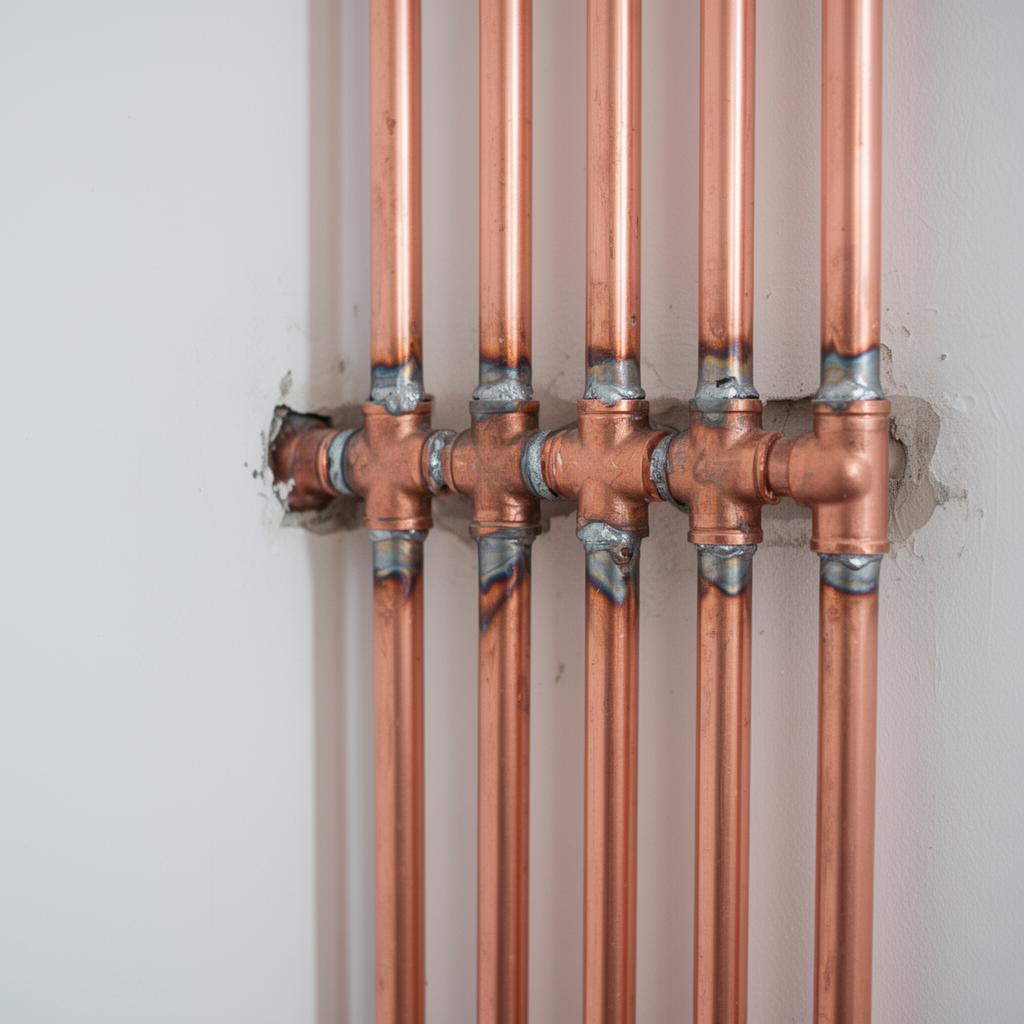
How we run oil boiler servicing on site
- OFTEC registered oil specialist
- Nozzle, electrode and fuel filter renewed
- Smoke test and pump pressure set correctly
- Oil tank and supply line inspected
- Free written quote, no obligation
- Local aftercare from a 15-mile base
Reading the property before pricing the work
Rural owner-occupiers and smallholders in this area often have specific priorities: reliable heating for a property that may be some distance from immediate help if something fails, sensible running costs on an off-grid fuel, and a system that copes with an older, harder-to-insulate building. We hear these priorities often enough locally to factor them into how we survey and specify rural properties, rather than applying a standard suburban approach. Water here is moderately hard water, so scale protection is specified accordingly. Most of what we open up here is stone cottages, which dictates flue routes and pipe sizing. Sutton Veny is roughly 15 miles from our Radstock base via the unclassified. Typical property stock here: stone cottages. A meaningful share of properties around Sutton Veny are off the gas grid, so oil boiler installs and tank swaps make up a fair part of what we do locally. Repair calls in Sutton Veny usually get a same-week visit, with most common faults fixed on the first attempt.
Qualifications behind the work
Based at 24 Bristol Rd, Radstock — every job is run by the team that quoted it.
362+ verified reviews from real customers across BA and BS postcodes.
Qualifies your install for the full 10-year manufacturer guarantee* on supported models.
No verbal-only quotes. You'll get the boiler model, controls and warranty in writing before we book.
Neighbouring Wiltshire areas we serve
Beyond Sutton Veny we're frequently on jobs in Warminster (BA12), Heytesbury (BA12), Westbury (Wiltshire) (BA13) and Frome (BA11) — so spares, follow-ups and annual services are straightforward.
Oil Boiler Servicing FAQs for BA12
- How often should a boiler actually be serviced?
- Once a year is the standard recommendation from every manufacturer, and most warranty terms make it a condition rather than a suggestion — miss a year and a claim can be refused even if the fault is unrelated. Landlords have a separate legal duty to have gas appliances checked annually regardless of warranty terms.
- Is oil more expensive to run than mains gas?
- Oil and gas prices both move with the wholesale market and neither is fixed, so a blanket answer isn't honest. What we can say is that a modern condensing oil boiler, correctly sized and commissioned, will run considerably more efficiently than an old non-condensing model — that efficiency gap usually matters more than the fuel choice itself.
- We've still got an old back boiler behind the fireplace — what's involved in removing it?
- Removing a back boiler means capping off the gas and water connections behind the fireplace, making good the opening or fitting a new fire/surround if you're keeping one, and rerouting pipework to the new combi or system boiler's position. It's more work than a like-for-like swap but a common upgrade on the older housing stock in this area.
- Is it worth upgrading the heating controls when we replace the boiler?
- Where the existing controls are an old mechanical timer and single room thermostat, replacing them alongside the boiler with weather compensation or a modern programmable thermostat usually improves comfort and efficiency more than the boiler swap alone. It's not compulsory, but it's often the single best-value addition to a new install.
- Can you look over a quote I've already had from another company?
- Yes, this comes up often. Send or bring in the other written quote and we'll go through the spec — boiler size, controls, cylinder if included, and what's actually listed for parts and labour — and tell you plainly whether it looks right for the property, oversized, or missing something we'd expect to see.
- Is a boiler install a noisy, disruptive job?
- There's unavoidable noise — drilling for the flue, pipework, sometimes moving a cylinder — but a straightforward swap is usually done within a working day with the mess kept to the immediate work area. We dust-sheet the route in and out and clear away pipe offcuts and old parts before we leave.
Your next move in BA12
Finishing oil boiler servicing isn't the end of the relationship — if something doesn't feel right once the system's been running for a while, get in touch and we'll come back and look at it. Annual servicing afterwards keeps the guarantee valid and the system running as it should. Send the appliance make, model and any fault code and you get a straight answer, not a sales script. Off-grid oil and LPG are common on these lanes, which changes the appliance shortlist. Nearest neighbours on our round are Warminster, Heytesbury, Westbury (Wiltshire).
Area data we work from
- County
- Wiltshire
- Postcode district
- BA12
- Settlement type
- village
- Nearest classified road
- unclassified
- Distance from our base
- 15 miles (Radstock, BA3)
- Typical building stock
- stone cottages
- Water hardness
- moderately hard water
- Fuel availability
- off-grid oil and LPG common
- Customer mix
- rural owner-occupiers and smallholdings
- Nearby areas covered
- Warminster, Heytesbury, Westbury (Wiltshire), Frome
Things we check around Sutton Veny
LPG as an alternative to oil off the gas grid
Properties around Sutton Veny that sit off the mains gas network aren't limited to oil — bulk LPG, stored in an above-ground tank on a concrete base with the same OFTEC-style clearance and access rules as oil, runs standard gas-rated boilers with only a change of injector and pressure setting rather than a different boiler entirely. It suits households that want a gas hob and gas-style modulation rather than an oil burner's on/off firing pattern. The tank still needs delivery access for a tanker, which on some rural driveways is the deciding factor over oil. We check the access route for the largest realistic delivery vehicle before recommending LPG over oil, because a tank that can't be filled easily causes more disruption than the fuel choice was meant to solve.
Oil tank bunding and fire valve rules
Off-grid properties around Sutton Veny rely on oil, and OFTEC's technical standards (OFS T100) set out when a tank needs a bund — a sealed secondary container holding at least 110% of the tank's capacity — based on how close it sits to a watercourse, drain, or boundary, and whether it's within a certain distance of a building. A fire valve fitted at the tank outlet, with its sensor mounted above the boiler's burner, will shut off oil flow automatically if a fire starts, and it's now expected on virtually every new or replaced installation. We check both bunding and fire-valve provision on every oil quote, because retrofitting a bund after a tank is delivered and sited is a second job, not a five-minute add-on.
- Bund holds 110% of tank capacity minimum
- Fire valve sensor mounted directly above the burner
- Distances to boundaries and drains checked against OFS T100
- Applies to replacement tanks, not just new installs
Frost protection in outbuildings and unheated spaces
Pipework and cylinders sited in an unheated garage, outbuilding or loft on rural properties around Sutton Veny are exposed to temperatures well below what the main house experiences overnight, and a single hard frost can split a pipe that's sat full of static water with nowhere to expand. A frost thermostat wired to bring on a small heat source, or to trigger a pump to keep water moving through vulnerable pipework, is the standard protection where lagging alone isn't sufficient — lagging slows heat loss but doesn't stop it given long enough exposure. We assess frost risk on any pipework routed through an unheated space rather than assuming standard lagging is automatically adequate, particularly where a property is left unoccupied for periods during winter.
Working across Wiltshire: what being local changes
Being based at 24 Bristol Road, Radstock, 15 miles from Sutton Veny via the unclassified, means a callout doesn't involve a long cross-county drive, and it also means familiarity with the recurring patterns in the local building stock — stone cottages — rather than encountering that construction type for the first time on-site. Local knowledge doesn't replace a proper site survey, but it does mean fewer surprises: knowing in advance that a particular postcode area typically has hard water, older single-pipe circuits, or restricted parking means the quote reflects the likely reality of the job before the first visit. We're Gas Safe and OFTEC registered and work across Wiltshire on that basis, not by claiming coverage we don't actually deliver on.
Common boiler fault codes and what usually causes them
Most modern boilers display a fault code on the control panel when they lock out, and while the exact code differs between manufacturers, the underlying causes cluster into a small number of categories: low system pressure (often from a small leak or after bleeding radiators), ignition failure (a worn electrode, gas supply issue, or blocked condensate causing a safety shutdown), or a failed sensor reporting an implausible temperature reading. A condensate blockage or freeze specifically tends to show a distinct code from a genuine ignition fault, which is why checking the external condensate pipe for ice before calling out an engineer in a cold snap can sometimes resolve the issue without a visit at all. We ask for the exact fault code and any recent history — a bled radiator, a cold snap, a recent service — before attending, since it often narrows down the likely cause before we arrive.
Oil tank de-sludging: why it's not optional
Oil sitting in a tank for years accumulates water from condensation and fine sediment that settles at the bottom, and over time this forms a sludge layer that can be drawn into the fuel line, particularly when the tank is nearly empty and the outlet pulls from lower in the tank than usual. Sludge blocks fine oil filters and burner nozzles, which shows up as burner lockouts or a boiler that won't fire cleanly rather than as an obvious tank problem. De-sludging drains and cleans the tank base without necessarily removing the whole tank, and it's worth doing when a tank is inherited with a property, before switching to a new boiler, or if lockouts recur despite the filter and nozzle being replaced. It's a preventative job that's cheaper done on schedule than after a burner failure it caused.
Single-pipe circuits in older stone cottages
A lot of the stone cottages and farmhouses around Sutton Veny were plumbed decades ago on a single-pipe gravity circuit, where each radiator draws from and returns to the same loop rather than having its own flow and return. It works, but radiators furthest from the boiler receive water that's already cooled after giving up heat to the ones before it, so the far end of the house is always the coldest. Converting to a two-pipe layout means new pipe runs, which in a stone cottage often means chasing lime plaster or lifting flagstones — not a trivial job. Where a full rewire of the pipework isn't wanted, we sometimes improve balance instead by oversizing the radiators nearest the end of the run and fitting TRVs to hold back the ones nearest the boiler.
How a condensing boiler recovers extra heat
A condensing boiler passes flue gases through a secondary heat exchanger before they leave the flue, extracting additional heat by condensing water vapour in the exhaust back into liquid, which is expelled as the mildly acidic condensate water down the drain. This is why every condensing boiler needs a condensate drainage route as part of its installation, unlike older non-condensing boilers, which simply vented hot dry gas straight out. The efficiency benefit only fully materialises when the boiler is actually condensing regularly, which needs a return water temperature low enough — generally below 55°C — for water vapour to condense in the first place. A condensing boiler run permanently at a high flow temperature can spend much of its time not actually condensing, which is one of the main reasons flow temperature settings matter as much as the boiler model chosen.
Radiator sizing after lowering the flow temperature
Running a boiler at a lower flow temperature — typically 55°C or below rather than the old default of 70-80°C — improves condensing efficiency measurably, but it also reduces the heat output of every radiator in the house, because a radiator's output falls roughly with the square of the temperature difference to the room. Radiators sized correctly for a 75°C flow can end up unable to heat the room properly at 55°C unless they're upsized or supplemented. We check each radiator against the lower design flow temperature before recommending it, and where a room falls short we look at whether a larger single panel, a double panel, or an additional radiator on that circuit closes the gap, rather than pushing the flow temperature back up and giving away the efficiency gain.
Other boiler services in Sutton Veny
- Boiler Installation in Sutton VenyNew combi, system and regular boiler installations for gas and oil homes — fixed prices, manufacturer warranties.
- Gas Boiler Installation in Sutton VenyGas Safe registered installations and upgrades for mains gas homes across Bath, Radstock and Wells.
- Oil Boiler Installation in Sutton VenyOFTEC-trained oil boiler specialist for rural homes off the gas grid — tank and boiler replacements.
- Boiler Servicing in Sutton VenyAnnual boiler services to keep your warranty valid and your home safe, efficient and warm.
- Maintenance & Repair in Sutton VenyDiagnostics, repairs and breakdown call-outs for gas and oil boilers across BA and BS postcodes.
- Landlord Gas Safety Certificates in Sutton VenyAnnual CP12 landlord gas safety records issued on the day, for single lets, HMOs, holiday lets and whole portfolios.
- Oil Boiler Repairs in Sutton VenyOil boiler breakdown repairs across rural Somerset, from lockouts and sooting to pump, photocell and control faults.
- Oil Tank Replacement in Sutton VenyBunded oil tank replacement and relocation with base preparation, new supply line and OFTEC paperwork on completion.
New Worcester boiler with a 10 year guarantee*
Free no-obligation quotes for installation, servicing & repairs across BA & BS postcodes.