
Oil Boiler Installers in Berkley
A heating system fitted properly should be low-maintenance for years, which is why the detail in oil boiler installation matters more than it might seem at the time: correct sizing, clean pipework, and controls set up to suit how the household actually lives. We're Gas Safe registered, OFTEC registered and a Worcester Bosch Accredited Installer, and we fit accordingly from our workshop at 24 Bristol Road, Radstock BA3 3EE. Mains gas covers much of the area, with off-grid pockets, which changes the appliance shortlist. Typical era of build is mixed-cottage, which affects existing pipework and system cleanliness. In Berkley itself (BA11, Somerset) that usually means stone village homes, roughly 7 miles from the workshop.
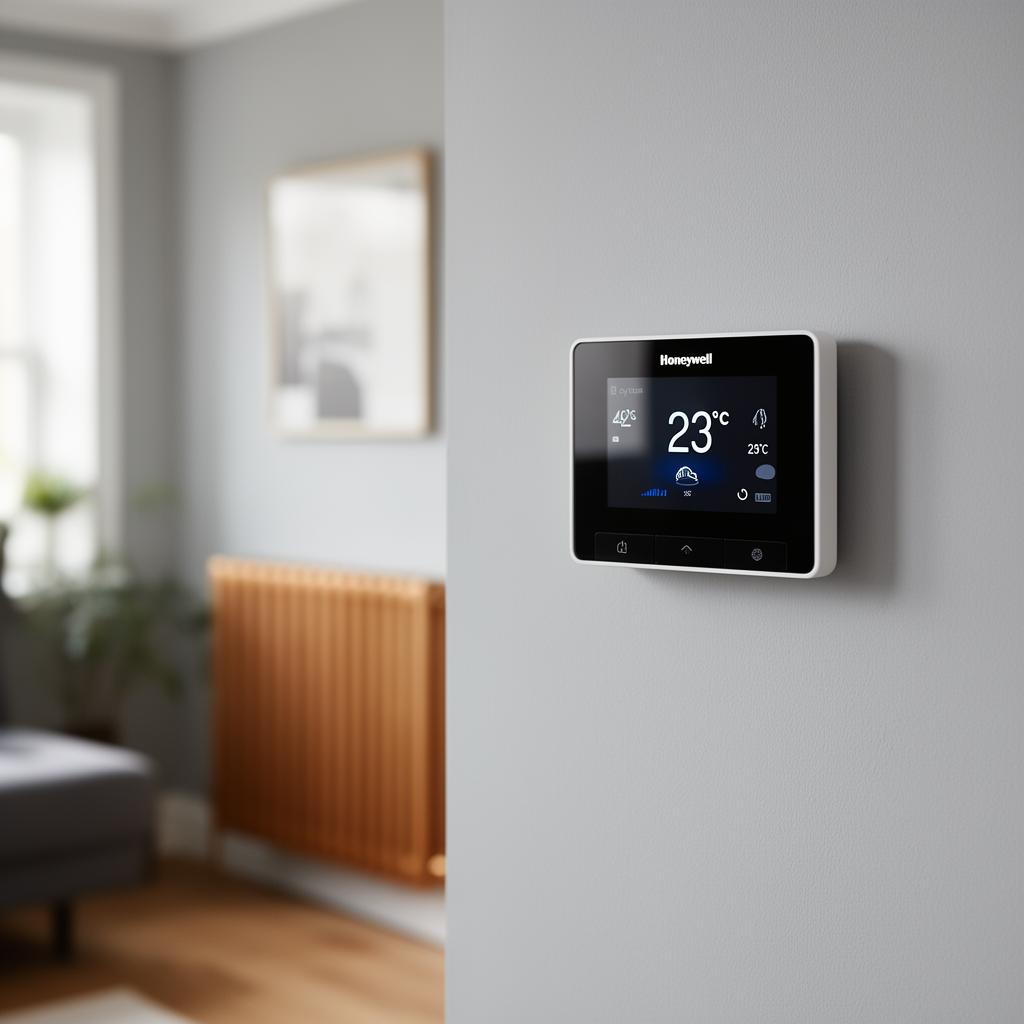
How we run oil boiler installation on site
- OFTEC trained & registered
- Internal & external oil boilers
- Oil tank replacements
- Worcester Greenstar & Grant Vortex
- Free written quote, no obligation
- Local aftercare from a 7-mile base
Why Berkley households use us
Oil boilers, oil tanks and pipework — fully certified for off-grid installs and replacements.
362+ verified reviews from real customers across BA and BS postcodes.
Reg. 549918 — every gas job notified to Building Control and a CP12 issued where required.
Based at 24 Bristol Rd, Radstock — every job is run by the team that quoted it.
Also covering the lanes around Berkley
Beyond Berkley we're frequently on jobs in Frome (BA11), Beckington (BA11), Rode (BA11) and Selwood (BA11) — so spares, follow-ups and annual services are straightforward.
How Somerset building stock shapes the spec
Village lanes around here are sometimes narrow enough that arranging a specific arrival time matters more than it would on a wider suburban road, particularly if a new boiler, cylinder or radiators need to be carried some distance from where a van can park. We ask about this when scheduling the survey so the job itself isn't held up by something that could have been sorted in advance. Most of what we open up here is stone village homes, which dictates flue routes and pipe sizing. Typical era of build is mixed-cottage, which affects existing pipework and system cleanliness. Berkley is roughly 7 miles from our Radstock base via the unclassified. Typical property stock here: stone village homes. A meaningful share of properties around Berkley are off the gas grid, so oil boiler installs and tank swaps make up a fair part of what we do locally. For oil work we look at the tank's age, bund condition, fire valve and fuel-line route as part of the survey — not as an afterthought.
Oil Boiler Installation FAQs for BA11
- What are your opening hours, and can you help out of hours?
- Our published hours are Monday to Friday, 8:30am to 5pm, and that's when the phones are answered and jobs are booked. We're honest that we don't run a round-the-clock emergency line, so if you're planning ahead, call during those hours on 07516 118198 and we'll get you booked in.
- What if a part for my existing boiler isn't available anymore?
- Manufacturers stop stocking parts for discontinued models after a number of years, and once that happens a repair simply isn't possible even if the fault itself is minor. We'll confirm parts availability with the manufacturer before quoting a repair, and if it's a dead end we'll explain your replacement options honestly.
- Do you cover Berkley?
- Yes. Berkley is 7 miles from our workshop at 24 Bristol Road, Radstock BA3 3EE, reached via the unclassified, and it's a regular part of our working area. We're Gas Safe and OFTEC registered, so we cover both mains gas and oil work out here without treating it as a special trip.
- What actually happens on install day?
- The engineer isolates the gas or oil supply and water, removes the old boiler, fits and pressure-tests the new one, connects the flue and condensate, and commissions the system. For a straight swap this is usually one day; a conversion, relocation, or cylinder change can run into a second depending on the pipework involved.
- What is condensate and why does its routing matter?
- Condensate is the mildly acidic water produced by a modern condensing boiler as it extracts extra heat from the flue gases, and it needs a route to an internal drain or, less ideally, an external soakaway. In colder or more exposed locations an external condensate pipe can freeze and shut the boiler down, so internal routing is worth prioritising where the layout allows it.
- We run a holiday let — do the same gas safety rules apply as a standard rental?
- Yes, holiday lets fall under the same landlord gas safety duty as any other let property — an annual CP12 from a Gas Safe registered engineer is required, and it's worth timing the visit for a gap between bookings rather than trying to fit it around guests, which we're happy to help plan around.
Next step for Berkley
Correct sizing matters more than most people realise for oil boiler installation: an undersized system struggles to keep up, and an oversized one costs more to run and buy than it needs to. We size against the property's actual heat loss and hot water demand, not a rule of thumb. Gas work is signed off Gas Safe; oil work is signed off OFTEC. Mains gas covers much of the area, with off-grid pockets, which changes the appliance shortlist. Most of what we open up here is stone village homes, which dictates flue routes and pipe sizing.
Berkley coverage and distances
- County
- Somerset
- Postcode district
- BA11
- Settlement type
- village
- Nearest classified road
- unclassified
- Distance from our base
- 7 miles (Radstock, BA3)
- Typical building stock
- stone village homes
- Water hardness
- moderately hard water
- Fuel availability
- mains gas with off-grid pockets
- Customer mix
- homes alongside small commercial and agricultural premises
- Nearby areas covered
- Frome, Beckington, Rode, Selwood
Technical notes for this job type
Condensate soakaways where there's no convenient drain
Properties without a nearby internal waste connection or external gully for the boiler's condensate — common on rural plots around Berkley where the nearest drain run is a long way from the boiler's location — sometimes need a dedicated condensate soakaway instead. This is a small pit filled with granular material that the condensate, which is mildly acidic, can disperse into gradually rather than running to a drain at all. Sizing and siting it correctly matters: it needs to be far enough from foundations and sited where the local ground can actually absorb the modest but steady volume a boiler produces, particularly over a long heating season. Where ground conditions make a soakaway unreliable, running a longer insulated pipe to a proper drainage connection is usually the safer long-term choice even though it's more work to install.
Berkley's place within the wider Somerset area we cover
Berkley is one of several neighbourhoods we work in around the wider area, and while the postcode district and general water hardness and building stock trends are shared with the surrounding district, the specific street-level access, parking and property type still varies enough locally that we treat each visit on its own facts rather than applying a generic area answer. Nearby areas we also cover include Frome, Beckington and Rode, which is relevant mainly where a customer wants comparable jobs referenced or where a single visit can sensibly cover more than one nearby property in the same trip. The underlying trade standards — Gas Safe, OFTEC, correct commissioning — don't vary by neighbourhood, only the practical details of the job do.
Low-loss headers on larger or multi-zone systems
On a system with several heating zones or a boiler oversized relative to any single zone's flow requirement, a low-loss header hydraulically separates the boiler's primary circuit from the secondary zone circuits, so each side can run its own pump and flow rate without one interfering with the other. Without it, a zone valve closing on a multi-zone system can starve the boiler of flow or force excessive pump pressure through the remaining open zones. It's most relevant on larger properties or ones with commercial premises attached, where several distinct heating circuits — perhaps a shop unit and a flat above — share one heat source. Getting the header sized to the boiler's actual flow rate, not just fitted as standard, is what makes it work rather than just adding another connection.
How a condensing boiler recovers extra heat
A condensing boiler passes flue gases through a secondary heat exchanger before they leave the flue, extracting additional heat by condensing water vapour in the exhaust back into liquid, which is expelled as the mildly acidic condensate water down the drain. This is why every condensing boiler needs a condensate drainage route as part of its installation, unlike older non-condensing boilers, which simply vented hot dry gas straight out. The efficiency benefit only fully materialises when the boiler is actually condensing regularly, which needs a return water temperature low enough — generally below 55°C — for water vapour to condense in the first place. A condensing boiler run permanently at a high flow temperature can spend much of its time not actually condensing, which is one of the main reasons flow temperature settings matter as much as the boiler model chosen.
Chimney liners for boilers using an existing flue
Where an older boiler used the property's original brick or stone chimney as its flue route, a replacement condensing boiler usually can't use the same masonry flue unlined, because the flue gases are cooler and wetter and will attack unprotected brickwork and mortar over time. A correctly specified stainless steel liner, sized to the boiler manufacturer's flue length and diameter tables, carries the flue gases safely and lets the existing chimney be reused rather than needing a new wall or roof penetration — often the only realistic option on a listed or solid-wall property in Berkley where an external flue run isn't permitted. The liner has to be inspected and swept as part of ongoing servicing exactly as an open-fire flue would be, which is easy to overlook once it's hidden inside the chimney.
Chasing pipework into lime plaster and stone walls
Solid stone or cob walls finished in lime plaster, common in the older parts of Berkley, behave very differently to modern plasterboard when a pipe run needs chasing in. Lime plaster is softer and more porous than gypsum, so cutting a neat, consistent chase without blowing the surface needs a slower hand and finer disc than a stud-wall job, and any repair has to be made good in a lime-based skim rather than modern filler, which can trap moisture behind it and cause the patch to fail. On solid stone we sometimes surface-mount pipework in painted conduit instead of chasing, particularly where the wall is a significant structural thickness and chasing would weaken it. Knowing which approach a wall needs before starting avoids expensive plaster damage.
Signs a boiler repair is no longer the right call
A boiler that's failing repeatedly, needing a different part replaced every service, or over roughly ten to fifteen years old is approaching the point where continued repair costs more over time than replacement, particularly once a heat exchanger — the most expensive single part — starts to show signs of failure through leaks or reduced output. Efficiency is the other half of the calculation: an older non-condensing boiler running at 70-80% efficiency against a modern condensing combi at over 90% means a meaningful chunk of every unit of fuel burned in the old boiler is simply lost up the flue. We give a straight answer on repair versus replace based on the fault found and the boiler's age and condition, rather than defaulting to whichever is more profitable to us on the day.
Nozzle replacement and baffle cleaning on oil burners
An oil burner's nozzle atomises fuel into a fine spray for combustion, and it wears from constant fuel flow at pressure, gradually changing the spray pattern away from the burner manufacturer's specification even before it visibly fails. A worn nozzle burns less cleanly, producing more soot that coats the heat exchanger's baffles, and a sooted heat exchanger loses efficiency in the same way scale does on a gas boiler's plates. Standard practice on an annual oil service is to replace the nozzle as a matter of course, rather than wait for a fault, and to remove and clean the baffles so the heat exchanger surfaces are exposed to combustion heat properly again. Skipping nozzle replacement to save a service visit's minor parts cost is a false economy against the fuel wasted by a poorly atomising burner.
Village lane access and van positioning for larger jobs
Village lanes around Berkley are often single-track or tight two-way roads without dedicated off-street loading space, which affects how a larger job like a full system installation or an oil tank replacement is planned — the van needs somewhere to park close enough for repeated trips carrying equipment without blocking the lane for through traffic or farm vehicles. On a job involving a full radiator or pipework replacement, materials sometimes need staging over more than one visit rather than delivered all at once if there's nowhere secure to leave them on-site between visits. We check lane width and passing places when scheduling larger jobs in village locations, and plan van access and parking as part of the job rather than as an afterthought on the day.
Other boiler services in Berkley
- Boiler Installation in BerkleyNew combi, system and regular boiler installations for gas and oil homes — fixed prices, manufacturer warranties.
- Gas Boiler Installation in BerkleyGas Safe registered installations and upgrades for mains gas homes across Bath, Radstock and Wells.
- Boiler Servicing in BerkleyAnnual boiler services to keep your warranty valid and your home safe, efficient and warm.
- Maintenance & Repair in BerkleyDiagnostics, repairs and breakdown call-outs for gas and oil boilers across BA and BS postcodes.
- Landlord Gas Safety Certificates in BerkleyAnnual CP12 landlord gas safety records issued on the day, for single lets, HMOs, holiday lets and whole portfolios.
- Oil Boiler Servicing in BerkleyOFTEC registered annual servicing for oil boilers, including nozzle, electrode, filter and smoke test work on off grid homes.
- Oil Boiler Repairs in BerkleyOil boiler breakdown repairs across rural Somerset, from lockouts and sooting to pump, photocell and control faults.
- Oil Tank Replacement in BerkleyBunded oil tank replacement and relocation with base preparation, new supply line and OFTEC paperwork on completion.
New Worcester boiler with a 10 year guarantee*
Free no-obligation quotes for installation, servicing & repairs across BA & BS postcodes.