
Oil Boiler Installation in Chew Stoke
There's not much mystery to oil boiler installation done properly: a site visit to see the property, a written quote that sets out exactly what's included, and work carried out by a registered engineer who takes responsibility for it. That's how we run things from 24 Bristol Road, Radstock BA3 3EE, as a Gas Safe registered and OFTEC registered business open Monday to Friday, 8:30am to 5pm. Our van runs the B3114 to reach you, 9 miles out from the Radstock workshop. Typical era of build is mixed-cottage, which affects existing pipework and system cleanliness. In Chew Stoke itself (BS40, North Somerset) that usually means stone cottages and modern estates, roughly 9 miles from the workshop.
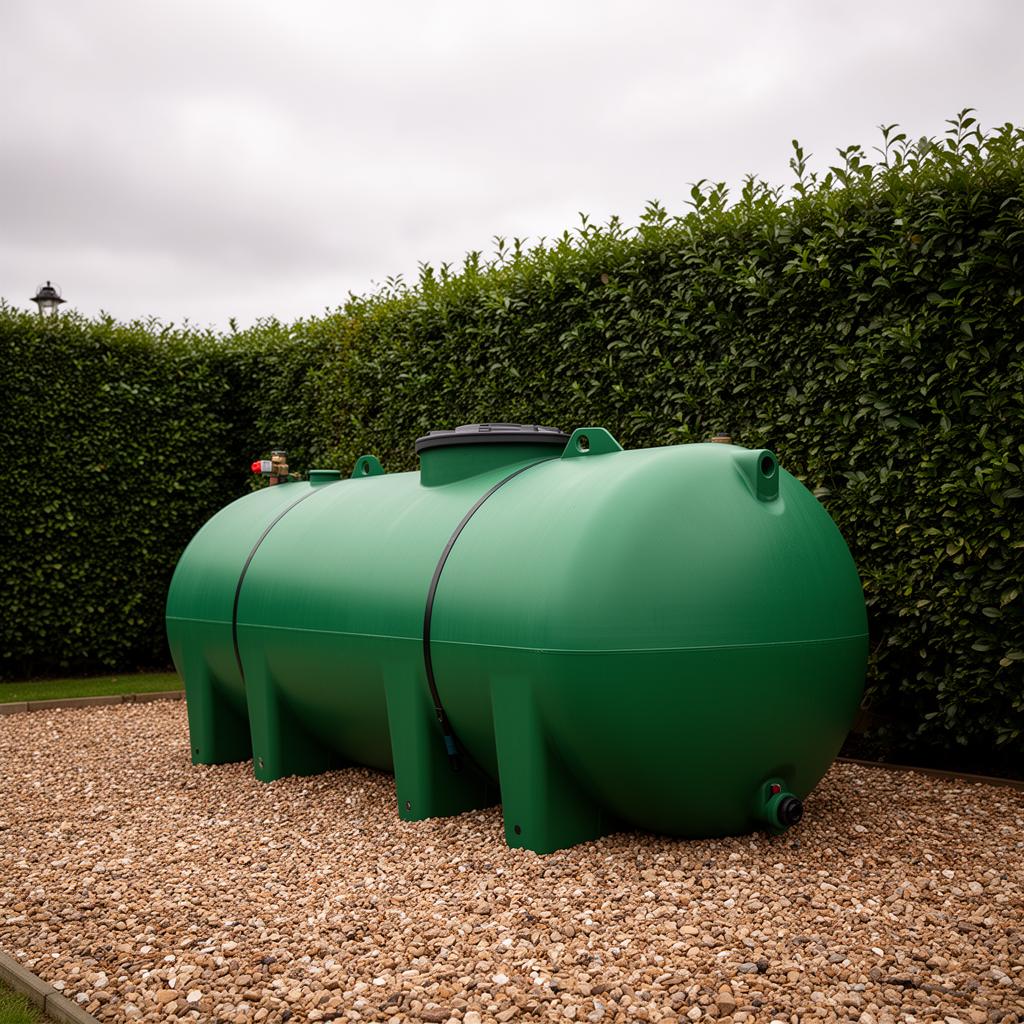
The work, step by step
- OFTEC trained & registered
- Internal & external oil boilers
- Oil tank replacements
- Worcester Greenstar & Grant Vortex
- Free written quote, no obligation
- Local aftercare from a 9-mile base
Reading the property before pricing the work
This area has a genuine mix of mains gas and oil-fired properties, sometimes on the same street, depending on when the gas network reached that particular row of houses. It's worth confirming which fuel your property is actually on and whether a fuel switch is realistic before assuming either option is off the table. Being registered for both Gas Safe and OFTEC work means we can look at the honest options for your specific property rather than steering you toward whichever fuel we happen to be set up for. Terrain is valley floor, which matters for condensate runs and tank siting. Mains gas covers much of the area, with off-grid pockets, which changes the appliance shortlist. Chew Stoke is roughly 9 miles from our Radstock base via the B3114. Typical property stock here: stone cottages and modern estates. A meaningful share of properties around Chew Stoke are off the gas grid, so oil boiler installs and tank swaps make up a fair part of what we do locally. For oil work we look at the tank's age, bund condition, fire valve and fuel-line route as part of the survey — not as an afterthought.
Registrations and how work is signed off
Reg. 549918 — every gas job notified to Building Control and a CP12 issued where required.
No verbal-only quotes. You'll get the boiler model, controls and warranty in writing before we book.
362+ verified reviews from real customers across BA and BS postcodes.
Based at 24 Bristol Rd, Radstock — every job is run by the team that quoted it.
Within reach of the B3114
Beyond Chew Stoke we're frequently on jobs in Chew Magna (BS40), Bishop Sutton (BS39), Ubley (BS40) and Blagdon (BS40) — so spares, follow-ups and annual services are straightforward.
Oil Boiler Installation FAQs for BS40
- What paperwork do I get once the job's finished?
- You'll get a Benchmark commissioning checklist for the boiler, a building notice or Building Control completion certificate for notifiable work, manufacturer warranty registration confirmation, and a Gas Safe (or OFTEC) record of the work. Keep these together — they're what a future buyer's solicitor or a warranty claim will ask for.
- How do you decide whether to repair or replace a boiler?
- We weigh the age of the boiler, whether parts are still made for it, how many faults it's had recently, and its running efficiency against a like-for-like or upgraded replacement. If a straightforward part fixes it and the boiler's otherwise sound, we'll say so rather than push a new install you don't need.
- What's the difference between a boiler service and general maintenance?
- A service is the annual manufacturer-required safety and efficiency check that keeps the warranty valid. Maintenance covers everything else — bleeding radiators, checking system pressure, sorting minor faults, and periodic flushing or filter checks — that keeps the system running well between those annual services rather than replacing them.
- How often should a boiler actually be serviced?
- Once a year is the standard recommendation from every manufacturer, and most warranty terms make it a condition rather than a suggestion — miss a year and a claim can be refused even if the fault is unrelated. Landlords have a separate legal duty to have gas appliances checked annually regardless of warranty terms.
- Who actually carries out the work?
- A Gas Safe and, where relevant, OFTEC registered engineer from our own small team carries out the job — we don't sub the install out to a third party after quoting. You deal with the same people from survey through to commissioning and any aftercare calls.
- What if a part for my existing boiler isn't available anymore?
- Manufacturers stop stocking parts for discontinued models after a number of years, and once that happens a repair simply isn't possible even if the fault itself is minor. We'll confirm parts availability with the manufacturer before quoting a repair, and if it's a dead end we'll explain your replacement options honestly.
Your next move in BS40
Finishing oil boiler installation isn't the end of the relationship — if something doesn't feel right once the system's been running for a while, get in touch and we'll come back and look at it. Annual servicing afterwards keeps the guarantee valid and the system running as it should. Photos of the existing setup speed up pricing for village properties like these. Water here is hard water, so scale protection is specified accordingly. Our van runs the B3114 to reach you, 9 miles out from the Radstock workshop.
Coverage detail for BS40
- County
- North Somerset
- Postcode district
- BS40
- Settlement type
- village
- Nearest classified road
- B3114
- Distance from our base
- 9 miles (Radstock, BA3)
- Typical building stock
- stone cottages and modern estates
- Water hardness
- hard water
- Fuel availability
- mains gas with off-grid pockets
- Customer mix
- homes alongside small commercial and agricultural premises
- Nearby areas covered
- Chew Magna, Bishop Sutton, Ubley, Blagdon
Things we check around Chew Stoke
What voids or protects a Worcester Bosch extended guarantee
Worcester Bosch's longer guarantee periods on qualifying installations are conditional on the boiler being installed and commissioned by an Accredited Installer, on an annual service being carried out (by any Gas Safe registered engineer, not necessarily the original installer) within the required window each year, and on system water quality being maintained to the standard set out in their published guidance — meaning a system flush at installation, correct inhibitor dosing, and in hard water areas a scale reducer or filter as specified. Missing a single annual service, or installing without the required water treatment, can reduce cover back to the manufacturer's standard guarantee period even if the boiler itself has had no faults. Keeping the Benchmark record and service history together is what lets a claim be assessed quickly if it's ever needed.
Oil tank de-sludging: why it's not optional
Oil sitting in a tank for years accumulates water from condensation and fine sediment that settles at the bottom, and over time this forms a sludge layer that can be drawn into the fuel line, particularly when the tank is nearly empty and the outlet pulls from lower in the tank than usual. Sludge blocks fine oil filters and burner nozzles, which shows up as burner lockouts or a boiler that won't fire cleanly rather than as an obvious tank problem. De-sludging drains and cleans the tank base without necessarily removing the whole tank, and it's worth doing when a tank is inherited with a property, before switching to a new boiler, or if lockouts recur despite the filter and nozzle being replaced. It's a preventative job that's cheaper done on schedule than after a burner failure it caused.
Plume management kits for restricted flue positions
Where the ideal, shortest flue route would discharge too close to a boundary, a window, or onto a neighbouring property — a common constraint on tight plots in Chew Stoke — a plume management kit extends the flue's discharge point away from the boiler's own wall penetration, directing the visible water vapour plume and flue gases to a compliant location instead. It adds ductwork and sometimes a small additional fan to overcome the extra resistance, and it has to be specified against the specific boiler's approved kit range rather than improvised, since flue certification only covers tested combinations. It's a legitimate way to fit a boiler on a plot where the compliant flue route and the sensible boiler location aren't the same wall, without compromising on clearances to solve it.
Pumped-oil versus gravity feed: does it matter?
Older oil systems sometimes still rely on gravity feed, where the tank sits higher than the burner and oil flows down to it under its own weight; a pumped system uses the burner's internal pump to draw oil up from a tank at any level, including below the boiler. Gravity feed limits where a tank can be sited and is more prone to airlocks if the line runs dry, while a pumped system is more flexible on tank position but needs the pipe run and lift height kept within the burner pump's rated capacity — usually no more than a few metres of lift and a set maximum run length. When we replace an oil boiler we check which type the existing tank and pipework support before assuming a straight swap, because a tank sited for gravity feed may need repositioning or a different pump to suit a modern burner.
Reaching properties off the main road network
Chew Stoke is reached via the B3114, a B-road rather than a trunk route, which matters mainly for winter access and for confirming a delivery vehicle carrying a new oil tank or bulky equipment can realistically reach the property. We factor the actual route in when scheduling deliveries or larger installations, checking with the customer about any width, height or surface restrictions on the final approach rather than assuming a mapping app's route reflects what a loaded van can manage. It rarely changes the technical scope of a job, but it does affect how a visit is planned and timed, particularly for jobs needing a specific delivery slot to coincide with the installation date.
LPG as an alternative to oil off the gas grid
Properties around Chew Stoke that sit off the mains gas network aren't limited to oil — bulk LPG, stored in an above-ground tank on a concrete base with the same OFTEC-style clearance and access rules as oil, runs standard gas-rated boilers with only a change of injector and pressure setting rather than a different boiler entirely. It suits households that want a gas hob and gas-style modulation rather than an oil burner's on/off firing pattern. The tank still needs delivery access for a tanker, which on some rural driveways is the deciding factor over oil. We check the access route for the largest realistic delivery vehicle before recommending LPG over oil, because a tank that can't be filled easily causes more disruption than the fuel choice was meant to solve.
Radiator sizing after lowering the flow temperature
Running a boiler at a lower flow temperature — typically 55°C or below rather than the old default of 70-80°C — improves condensing efficiency measurably, but it also reduces the heat output of every radiator in the house, because a radiator's output falls roughly with the square of the temperature difference to the room. Radiators sized correctly for a 75°C flow can end up unable to heat the room properly at 55°C unless they're upsized or supplemented. We check each radiator against the lower design flow temperature before recommending it, and where a room falls short we look at whether a larger single panel, a double panel, or an additional radiator on that circuit closes the gap, rather than pushing the flow temperature back up and giving away the efficiency gain.
How a condensing boiler recovers extra heat
A condensing boiler passes flue gases through a secondary heat exchanger before they leave the flue, extracting additional heat by condensing water vapour in the exhaust back into liquid, which is expelled as the mildly acidic condensate water down the drain. This is why every condensing boiler needs a condensate drainage route as part of its installation, unlike older non-condensing boilers, which simply vented hot dry gas straight out. The efficiency benefit only fully materialises when the boiler is actually condensing regularly, which needs a return water temperature low enough — generally below 55°C — for water vapour to condense in the first place. A condensing boiler run permanently at a high flow temperature can spend much of its time not actually condensing, which is one of the main reasons flow temperature settings matter as much as the boiler model chosen.
Low-loss headers on larger or multi-zone systems
On a system with several heating zones or a boiler oversized relative to any single zone's flow requirement, a low-loss header hydraulically separates the boiler's primary circuit from the secondary zone circuits, so each side can run its own pump and flow rate without one interfering with the other. Without it, a zone valve closing on a multi-zone system can starve the boiler of flow or force excessive pump pressure through the remaining open zones. It's most relevant on larger properties or ones with commercial premises attached, where several distinct heating circuits — perhaps a shop unit and a flat above — share one heat source. Getting the header sized to the boiler's actual flow rate, not just fitted as standard, is what makes it work rather than just adding another connection.
Other boiler services in Chew Stoke
- Boiler Installation in Chew StokeNew combi, system and regular boiler installations for gas and oil homes — fixed prices, manufacturer warranties.
- Gas Boiler Installation in Chew StokeGas Safe registered installations and upgrades for mains gas homes across Bath, Radstock and Wells.
- Boiler Servicing in Chew StokeAnnual boiler services to keep your warranty valid and your home safe, efficient and warm.
- Maintenance & Repair in Chew StokeDiagnostics, repairs and breakdown call-outs for gas and oil boilers across BA and BS postcodes.
- Landlord Gas Safety Certificates in Chew StokeAnnual CP12 landlord gas safety records issued on the day, for single lets, HMOs, holiday lets and whole portfolios.
- Oil Boiler Servicing in Chew StokeOFTEC registered annual servicing for oil boilers, including nozzle, electrode, filter and smoke test work on off grid homes.
- Oil Boiler Repairs in Chew StokeOil boiler breakdown repairs across rural Somerset, from lockouts and sooting to pump, photocell and control faults.
- Oil Tank Replacement in Chew StokeBunded oil tank replacement and relocation with base preparation, new supply line and OFTEC paperwork on completion.
New Worcester boiler with a 10 year guarantee*
Free no-obligation quotes for installation, servicing & repairs across BA & BS postcodes.