
Oil Tank Replacement — Twerton (BA2)
When you're comparing tradespeople for oil tank replacement, it's worth checking registration before price: Gas Safe for mains gas work, OFTEC for oil, and manufacturer accreditation if a specific guarantee matters to you. We hold all three — Gas Safe, OFTEC and Worcester Bosch Accredited Installer status — and work from 24 Bristol Road, Radstock BA3 3EE, so you can check us against whatever criteria you're using to shortlist. Terrain is level, which matters for condensate runs and tank siting. Our van runs the A36 to reach you, 7 miles out from the Radstock workshop. In Twerton itself (BA2, Somerset) that usually means interwar council stock and modern infill, roughly 7 miles from the workshop.
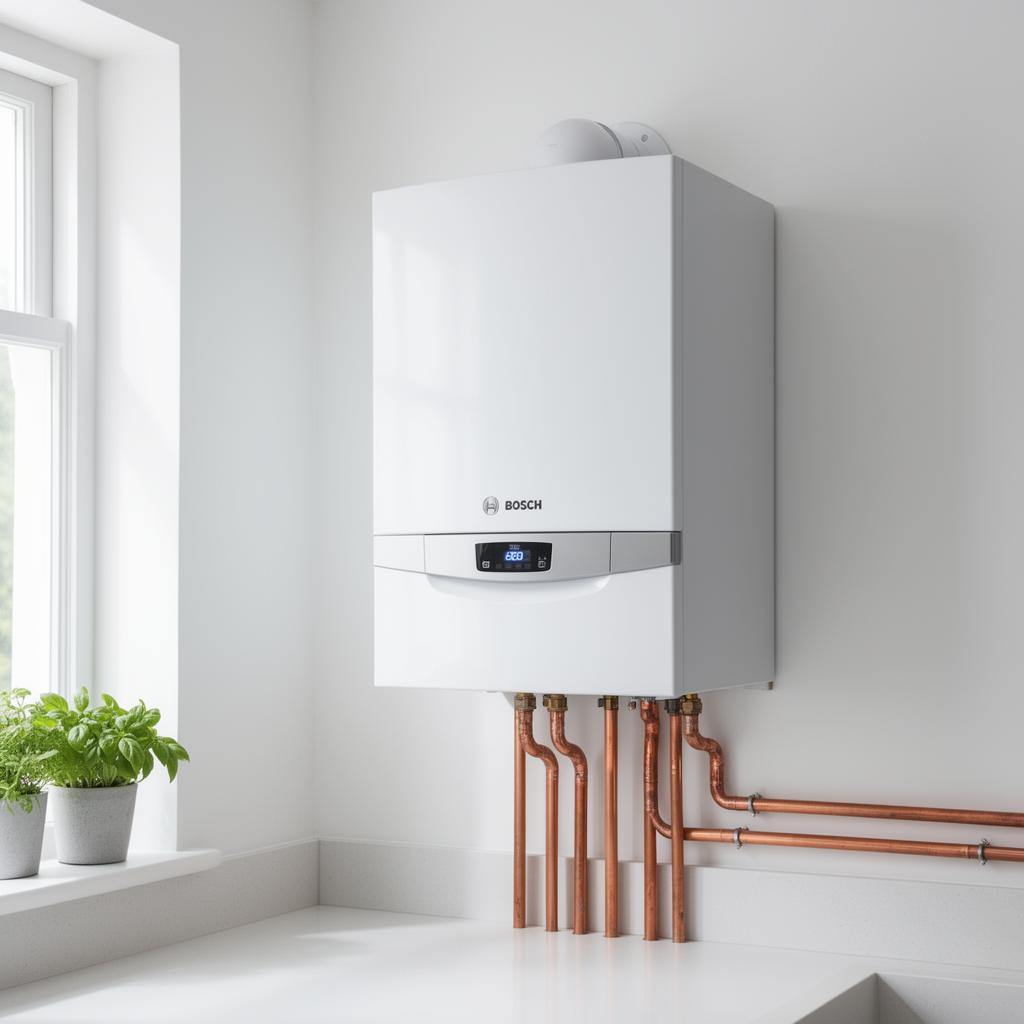
What oil tank replacement includes here
- Bunded plastic and steel tanks supplied
- Base preparation and safe siting distances
- New supply line, filter and fire valve
- Old tank drained and removed
- Free written quote, no obligation
- Local aftercare from a 7-mile base
What backs up a Twerton quote
Oil boilers, oil tanks and pipework — fully certified for off-grid installs and replacements.
362+ verified reviews from real customers across BA and BS postcodes.
Reg. 549918 — every gas job notified to Building Control and a CP12 issued where required.
Qualifies your install for the full 10-year manufacturer guarantee* on supported models.
Neighbouring Somerset areas we serve
Beyond Twerton we're frequently on jobs in Oldfield Park (BA2), Weston (Bath) (BA1), Bath (BA1) and Englishcombe (BA2) — so spares, follow-ups and annual services are straightforward.
How Somerset building stock shapes the spec
This area has a genuine mix of mains gas and oil-fired properties, sometimes on the same street, depending on when the gas network reached that particular row of houses. It's worth confirming which fuel your property is actually on and whether a fuel switch is realistic before assuming either option is off the table. Being registered for both Gas Safe and OFTEC work means we can look at the honest options for your specific property rather than steering you toward whichever fuel we happen to be set up for. Nearest neighbours on our round are Oldfield Park, Weston (Bath), Bath. a high proportion of rented and let properties make up most enquiries from this postcode. Twerton is roughly 7 miles from our Radstock base via the A36. Typical property stock here: interwar council stock and modern infill. Twerton sits in the Somerset BA2 postcode and is part of our weekly run, so local response is quick. Repair calls in Twerton usually get a same-week visit, with most common faults fixed on the first attempt.
Common queries, answered honestly
- What's actually checked during an annual boiler service?
- A service includes a visual and functional check of the boiler's casing and controls, flue gas analysis to confirm safe and efficient combustion, checking the flame picture and pressure, inspecting seals and condensate, and testing safety devices. It's a safety check as much as a performance one, and it's what keeps most manufacturer warranties valid.
- What are your opening hours, and can you help out of hours?
- Our published hours are Monday to Friday, 8:30am to 5pm, and that's when the phones are answered and jobs are booked. We're honest that we don't run a round-the-clock emergency line, so if you're planning ahead, call during those hours on 07516 118198 and we'll get you booked in.
- What does "commissioning" a boiler actually involve?
- Commissioning is setting the boiler up correctly for the property rather than just switching it on: checking gas or oil pressure and flow rates, setting flow temperatures, testing safety devices, balancing the system, and completing the manufacturer's Benchmark checklist. Skipping this properly is one of the most common reasons warranty claims get refused later.
- What paperwork do I get once the job's finished?
- You'll get a Benchmark commissioning checklist for the boiler, a building notice or Building Control completion certificate for notifiable work, manufacturer warranty registration confirmation, and a Gas Safe (or OFTEC) record of the work. Keep these together — they're what a future buyer's solicitor or a warranty claim will ask for.
- My oil tank is old — does it need replacing alongside the boiler?
- Not automatically, but we check the tank's age, material, and condition as part of any oil boiler quote. Steel tanks corrode from the inside and plastic tanks degrade with UV exposure over time; if we find cracking, rust weeping, or a missing bund we'll flag it, because a failed tank is a pollution and insurance risk, not just a heating one.
- What's a CP12 and do I need one as a landlord?
- A CP12 (Landlord Gas Safety Record) confirms every gas appliance in a rented property has passed an annual safety check by a Gas Safe registered engineer. It's a legal requirement before letting and at each renewal, a copy has to go to tenants, and it needs to be renewed every 12 months without a gap.
Where to go from here
If oil tank replacement is something you're looking into, the simplest next step is a call on 07516 118198 during our normal hours, Monday to Friday, 8:30am to 5pm. Tell us a bit about the property and what's prompted the enquiry, and we'll take it from there. Call 07516 118198 and we will confirm a visit slot for BA2. Nearest neighbours on our round are Oldfield Park, Weston (Bath), Bath. Planning constraints are usually light here, so external work is checked first.
Local reference data
- County
- Somerset
- Postcode district
- BA2
- Settlement type
- suburb
- Nearest classified road
- A36
- Distance from our base
- 7 miles (Radstock, BA3)
- Typical building stock
- interwar council stock and modern infill
- Water hardness
- very hard limestone water
- Fuel availability
- mains gas with off-grid pockets
- Customer mix
- a high proportion of rented and let properties
- Nearby areas covered
- Oldfield Park, Weston (Bath), Bath, Englishcombe
Practical considerations across BA2
Pumped-oil versus gravity feed: does it matter?
Older oil systems sometimes still rely on gravity feed, where the tank sits higher than the burner and oil flows down to it under its own weight; a pumped system uses the burner's internal pump to draw oil up from a tank at any level, including below the boiler. Gravity feed limits where a tank can be sited and is more prone to airlocks if the line runs dry, while a pumped system is more flexible on tank position but needs the pipe run and lift height kept within the burner pump's rated capacity — usually no more than a few metres of lift and a set maximum run length. When we replace an oil boiler we check which type the existing tank and pipework support before assuming a straight swap, because a tank sited for gravity feed may need repositioning or a different pump to suit a modern burner.
How a condensing boiler recovers extra heat
A condensing boiler passes flue gases through a secondary heat exchanger before they leave the flue, extracting additional heat by condensing water vapour in the exhaust back into liquid, which is expelled as the mildly acidic condensate water down the drain. This is why every condensing boiler needs a condensate drainage route as part of its installation, unlike older non-condensing boilers, which simply vented hot dry gas straight out. The efficiency benefit only fully materialises when the boiler is actually condensing regularly, which needs a return water temperature low enough — generally below 55°C — for water vapour to condense in the first place. A condensing boiler run permanently at a high flow temperature can spend much of its time not actually condensing, which is one of the main reasons flow temperature settings matter as much as the boiler model chosen.
Dealing with microbore pipework
Housing from the 1930s to 1960s around Twerton was sometimes retrofitted with 8mm or 10mm microbore pipe run in bundles from a manifold, which was cheap and quick to install at the time but restricts flow badly compared with modern 15mm or 22mm pipe. Microbore is prone to sludge blockage because its narrow bore has no capacity to carry debris in suspension — it settles instead. A radiator on a microbore tail that's cold at the bottom is very often a blocked tail rather than a boiler fault. Replacing microbore with standard-bore pipe usually needs some floor lifting, but on a heating upgrade it removes a recurring source of cold radiators rather than papering over it with another flush.
Common boiler fault codes and what usually causes them
Most modern boilers display a fault code on the control panel when they lock out, and while the exact code differs between manufacturers, the underlying causes cluster into a small number of categories: low system pressure (often from a small leak or after bleeding radiators), ignition failure (a worn electrode, gas supply issue, or blocked condensate causing a safety shutdown), or a failed sensor reporting an implausible temperature reading. A condensate blockage or freeze specifically tends to show a distinct code from a genuine ignition fault, which is why checking the external condensate pipe for ice before calling out an engineer in a cold snap can sometimes resolve the issue without a visit at all. We ask for the exact fault code and any recent history — a bled radiator, a cold snap, a recent service — before attending, since it often narrows down the likely cause before we arrive.
Why very hard limestone water shortens boiler life around Twerton
The limestone geology under Somerset gives Twerton very hard limestone water, which drops calcium carbonate out of solution as soon as it's heated. Inside a combi's plate heat exchanger the gaps between plates are only a millimetre or two wide, so scale narrows the waterways long before it's visible anywhere else in the system. The first symptom is usually a hot tap that runs warm rather than hot, or a boiler that fires more often for the same demand. Left unchecked, scale insulates the exchanger from the burner, forces flue gases hotter, and can crack the exchanger from thermal stress. A scale reducer fitted on the mains feed, sized to the property's flow rate, is cheaper to install once than to replace a heat exchanger twice.
LPG as an alternative to oil off the gas grid
Properties around Twerton that sit off the mains gas network aren't limited to oil — bulk LPG, stored in an above-ground tank on a concrete base with the same OFTEC-style clearance and access rules as oil, runs standard gas-rated boilers with only a change of injector and pressure setting rather than a different boiler entirely. It suits households that want a gas hob and gas-style modulation rather than an oil burner's on/off firing pattern. The tank still needs delivery access for a tanker, which on some rural driveways is the deciding factor over oil. We check the access route for the largest realistic delivery vehicle before recommending LPG over oil, because a tank that can't be filled easily causes more disruption than the fuel choice was meant to solve.
Electronic and physical scale reducers compared
In very hard limestone water areas like Twerton, a scale reducer fitted on the boiler's cold feed protects the heat exchanger without the ongoing salt and drainage requirements of a full water softener. Physical scale reducers use a polyphosphate or template-assisted crystallisation cartridge that alters how calcium carbonate crystallises so it's less likely to adhere to hot surfaces; electronic and electromagnetic devices claim a similar effect without a cartridge to replace, though the evidence base for electronic types is weaker and more inconsistent than for physical media. Manufacturers including Worcester Bosch now specify a scale reducer or softener as a condition of extended guarantees in hard water areas, so the choice affects warranty validity as well as long-term performance, not just descale frequency.
Other boiler services in Twerton
- Boiler Installation in TwertonNew combi, system and regular boiler installations for gas and oil homes — fixed prices, manufacturer warranties.
- Gas Boiler Installation in TwertonGas Safe registered installations and upgrades for mains gas homes across Bath, Radstock and Wells.
- Oil Boiler Installation in TwertonOFTEC-trained oil boiler specialist for rural homes off the gas grid — tank and boiler replacements.
- Boiler Servicing in TwertonAnnual boiler services to keep your warranty valid and your home safe, efficient and warm.
- Maintenance & Repair in TwertonDiagnostics, repairs and breakdown call-outs for gas and oil boilers across BA and BS postcodes.
- Landlord Gas Safety Certificates in TwertonAnnual CP12 landlord gas safety records issued on the day, for single lets, HMOs, holiday lets and whole portfolios.
- Oil Boiler Servicing in TwertonOFTEC registered annual servicing for oil boilers, including nozzle, electrode, filter and smoke test work on off grid homes.
- Oil Boiler Repairs in TwertonOil boiler breakdown repairs across rural Somerset, from lockouts and sooting to pump, photocell and control faults.
New Worcester boiler with a 10 year guarantee*
Free no-obligation quotes for installation, servicing & repairs across BA & BS postcodes.