
Free Boiler Replacement Quote — Combe Hay
Timing matters with boiler replacement quote: a mid-summer replacement gives more room to plan than an emergency swap in January, and a written quote gives you time to think rather than decide under pressure. We can work to either, but a bit of notice usually means a smoother job. Gas Safe registered, OFTEC registered, 24 Bristol Road, Radstock BA3 3EE, open Monday to Friday, 8:30am to 5pm. Most of what we open up here is stone farmhouses and cottages, which dictates flue routes and pipe sizing. Our van runs the B3110 to reach you, 6 miles out from the Radstock workshop. In Combe Hay itself (BA2, Somerset) that usually means stone farmhouses and cottages, roughly 6 miles from the workshop.
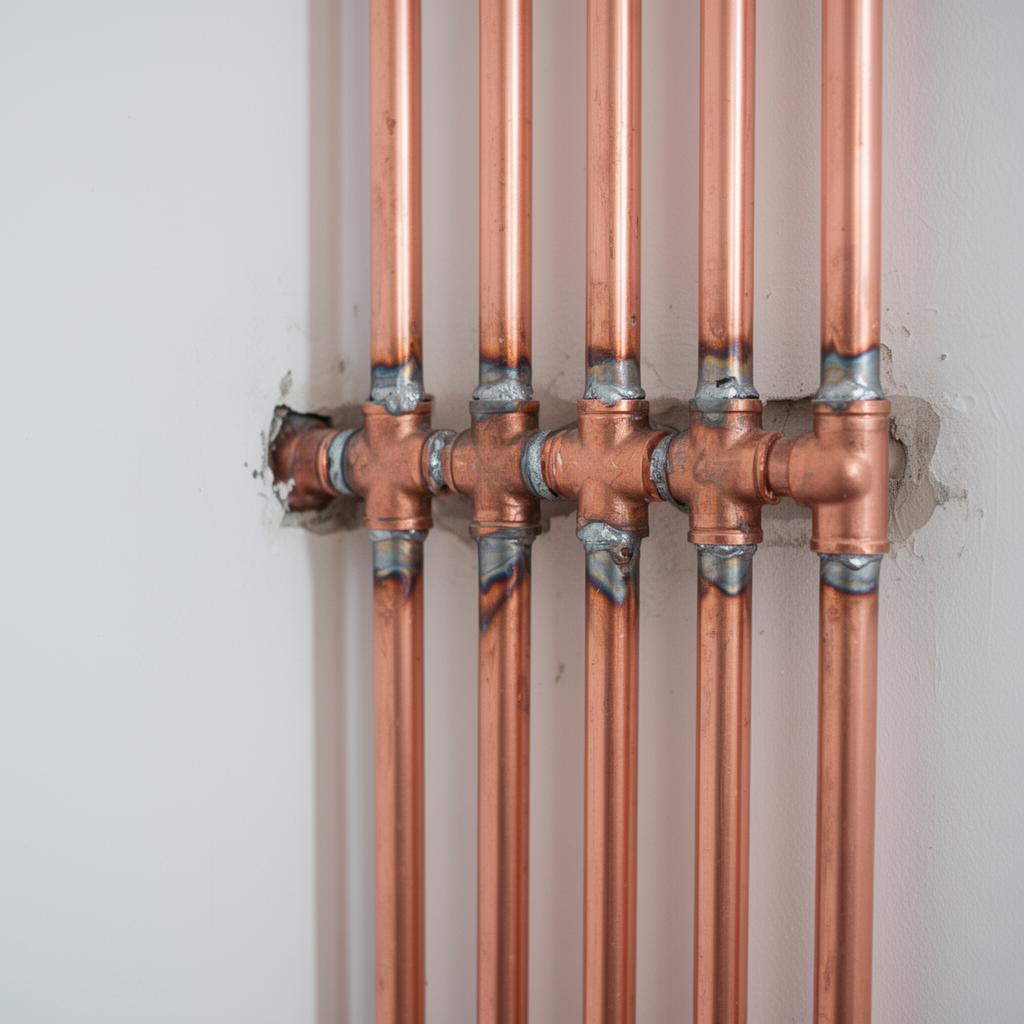
Stone cottages and farmhouses around here were mostly built long before central heating existed, so pipework and boiler locations have usually been retrofitted at some point, sometimes more than once. Thick stone walls, uneven floor levels and low ceilings can all affect where a boiler or cylinder can practically go, and older stonework doesn't always take fixings the way modern block or brick does. We work around those constraints on site rather than assuming a straightforward install. homes alongside small commercial and agricultural premises make up most enquiries from this postcode. Terrain is valley floor, which matters for condensate runs and tank siting. Boiler replacements in Combe Hay are shaped by the property stock here — stone farmhouses and cottages. We plan flue, condensate and controls around the building before we put a number on the page.
Site realities in and around Combe Hay
Stone cottages and farmhouses around here were mostly built long before central heating existed, so pipework and boiler locations have usually been retrofitted at some point, sometimes more than once. Thick stone walls, uneven floor levels and low ceilings can all affect where a boiler or cylinder can practically go, and older stonework doesn't always take fixings the way modern block or brick does. We work around those constraints on site rather than assuming a straightforward install. homes alongside small commercial and agricultural premises make up most enquiries from this postcode. Terrain is valley floor, which matters for condensate runs and tank siting. Boiler replacements in Combe Hay are shaped by the property stock here — stone farmhouses and cottages. We plan flue, condensate and controls around the building before we put a number on the page.
What a proper quote contains — Combe Hay
- Boiler manufacturer and exact model
- Controls (model + features)
- Warranty length and any conditions
- Flush type and chemicals included
- Estimated install duration
- Payment terms — clear, no deposits required
Nearby villages and neighbourhoods
We cover Combe Hay alongside South Stoke (BA2), Englishcombe (BA2), Wellow (BA2), Odd Down (BA2) — so spares, follow-ups and annual visits are easy to schedule together.
What backs up a Combe Hay quote
We don't ask for money up front. Pay on completion when the system is signed off.
Free, no-pressure 20-minute visit — measured up properly so the price is fixed, not estimated.
We're 24 Bristol Rd, Radstock — you'll deal with the same team for any aftercare.
Boiler, controls, flue, warranty terms, flush spec — all in writing before you commit.
Common queries, answered honestly
- We're a home attached to or near a small business premises — do you cover that kind of property?
- Where the heating system is a standard domestic boiler serving living accommodation, it's within our normal scope even if it sits next to or above a shop or workshop, which is a common layout around Combe Hay. Fully commercial systems and appliances are a different scope, so we'd confirm exactly what's being asked at enquiry stage.
- Is a boiler install a noisy, disruptive job?
- There's unavoidable noise — drilling for the flue, pipework, sometimes moving a cylinder — but a straightforward swap is usually done within a working day with the mess kept to the immediate work area. We dust-sheet the route in and out and clear away pipe offcuts and old parts before we leave.
- What's actually checked during an annual boiler service?
- A service includes a visual and functional check of the boiler's casing and controls, flue gas analysis to confirm safe and efficient combustion, checking the flame picture and pressure, inspecting seals and condensate, and testing safety devices. It's a safety check as much as a performance one, and it's what keeps most manufacturer warranties valid.
- How do you decide whether to repair or replace a boiler?
- We weigh the age of the boiler, whether parts are still made for it, how many faults it's had recently, and its running efficiency against a like-for-like or upgraded replacement. If a straightforward part fixes it and the boiler's otherwise sound, we'll say so rather than push a new install you don't need.
- We run a holiday let — do the same gas safety rules apply as a standard rental?
- Yes, holiday lets fall under the same landlord gas safety duty as any other let property — an annual CP12 from a Gas Safe registered engineer is required, and it's worth timing the visit for a gap between bookings rather than trying to fit it around guests, which we're happy to help plan around.
- Do I need to do anything to activate my boiler's warranty?
- As a Worcester Bosch Accredited Installer we register qualifying Worcester installs on your behalf, which is what unlocks the extended guarantee (up to 10 years* on qualifying installs) rather than the standard shorter term. For other brands we still register the installation; keep the confirmation with your other paperwork in case you need it.
Local reference data
- County
- Somerset
- Postcode district
- BA2
- Settlement type
- village
- Nearest classified road
- B3110
- Distance from our base
- 6 miles (Radstock, BA3)
- Typical building stock
- stone farmhouses and cottages
- Water hardness
- very hard limestone water
- Fuel availability
- mains gas with off-grid pockets
- Customer mix
- homes alongside small commercial and agricultural premises
- Nearby areas covered
- South Stoke, Englishcombe, Wellow, Odd Down
Technical notes for this job type
Common boiler fault codes and what usually causes them
Most modern boilers display a fault code on the control panel when they lock out, and while the exact code differs between manufacturers, the underlying causes cluster into a small number of categories: low system pressure (often from a small leak or after bleeding radiators), ignition failure (a worn electrode, gas supply issue, or blocked condensate causing a safety shutdown), or a failed sensor reporting an implausible temperature reading. A condensate blockage or freeze specifically tends to show a distinct code from a genuine ignition fault, which is why checking the external condensate pipe for ice before calling out an engineer in a cold snap can sometimes resolve the issue without a visit at all. We ask for the exact fault code and any recent history — a bled radiator, a cold snap, a recent service — before attending, since it often narrows down the likely cause before we arrive.
Low-loss headers on larger or multi-zone systems
On a system with several heating zones or a boiler oversized relative to any single zone's flow requirement, a low-loss header hydraulically separates the boiler's primary circuit from the secondary zone circuits, so each side can run its own pump and flow rate without one interfering with the other. Without it, a zone valve closing on a multi-zone system can starve the boiler of flow or force excessive pump pressure through the remaining open zones. It's most relevant on larger properties or ones with commercial premises attached, where several distinct heating circuits — perhaps a shop unit and a flat above — share one heat source. Getting the header sized to the boiler's actual flow rate, not just fitted as standard, is what makes it work rather than just adding another connection.
LPG as an alternative to oil off the gas grid
Properties around Combe Hay that sit off the mains gas network aren't limited to oil — bulk LPG, stored in an above-ground tank on a concrete base with the same OFTEC-style clearance and access rules as oil, runs standard gas-rated boilers with only a change of injector and pressure setting rather than a different boiler entirely. It suits households that want a gas hob and gas-style modulation rather than an oil burner's on/off firing pattern. The tank still needs delivery access for a tanker, which on some rural driveways is the deciding factor over oil. We check the access route for the largest realistic delivery vehicle before recommending LPG over oil, because a tank that can't be filled easily causes more disruption than the fuel choice was meant to solve.
Working across Somerset: what being local changes
Being based at 24 Bristol Road, Radstock, 6 miles from Combe Hay via the B3110, means a callout doesn't involve a long cross-county drive, and it also means familiarity with the recurring patterns in the local building stock — stone farmhouses and cottages — rather than encountering that construction type for the first time on-site. Local knowledge doesn't replace a proper site survey, but it does mean fewer surprises: knowing in advance that a particular postcode area typically has hard water, older single-pipe circuits, or restricted parking means the quote reflects the likely reality of the job before the first visit. We're Gas Safe and OFTEC registered and work across Somerset on that basis, not by claiming coverage we don't actually deliver on.
Condensate soakaways where there's no convenient drain
Properties without a nearby internal waste connection or external gully for the boiler's condensate — common on rural plots around Combe Hay where the nearest drain run is a long way from the boiler's location — sometimes need a dedicated condensate soakaway instead. This is a small pit filled with granular material that the condensate, which is mildly acidic, can disperse into gradually rather than running to a drain at all. Sizing and siting it correctly matters: it needs to be far enough from foundations and sited where the local ground can actually absorb the modest but steady volume a boiler produces, particularly over a long heating season. Where ground conditions make a soakaway unreliable, running a longer insulated pipe to a proper drainage connection is usually the safer long-term choice even though it's more work to install.
How a condensing boiler recovers extra heat
A condensing boiler passes flue gases through a secondary heat exchanger before they leave the flue, extracting additional heat by condensing water vapour in the exhaust back into liquid, which is expelled as the mildly acidic condensate water down the drain. This is why every condensing boiler needs a condensate drainage route as part of its installation, unlike older non-condensing boilers, which simply vented hot dry gas straight out. The efficiency benefit only fully materialises when the boiler is actually condensing regularly, which needs a return water temperature low enough — generally below 55°C — for water vapour to condense in the first place. A condensing boiler run permanently at a high flow temperature can spend much of its time not actually condensing, which is one of the main reasons flow temperature settings matter as much as the boiler model chosen.
Combe Hay's place within the wider Somerset area we cover
Combe Hay is one of several neighbourhoods we work in around the wider area, and while the postcode district and general water hardness and building stock trends are shared with the surrounding district, the specific street-level access, parking and property type still varies enough locally that we treat each visit on its own facts rather than applying a generic area answer. Nearby areas we also cover include South Stoke, Englishcombe and Wellow, which is relevant mainly where a customer wants comparable jobs referenced or where a single visit can sensibly cover more than one nearby property in the same trip. The underlying trade standards — Gas Safe, OFTEC, correct commissioning — don't vary by neighbourhood, only the practical details of the job do.
Radiator sizing after lowering the flow temperature
Running a boiler at a lower flow temperature — typically 55°C or below rather than the old default of 70-80°C — improves condensing efficiency measurably, but it also reduces the heat output of every radiator in the house, because a radiator's output falls roughly with the square of the temperature difference to the room. Radiators sized correctly for a 75°C flow can end up unable to heat the room properly at 55°C unless they're upsized or supplemented. We check each radiator against the lower design flow temperature before recommending it, and where a room falls short we look at whether a larger single panel, a double panel, or an additional radiator on that circuit closes the gap, rather than pushing the flow temperature back up and giving away the efficiency gain.
Chasing pipework into lime plaster and stone walls
Solid stone or cob walls finished in lime plaster, common in the older parts of Combe Hay, behave very differently to modern plasterboard when a pipe run needs chasing in. Lime plaster is softer and more porous than gypsum, so cutting a neat, consistent chase without blowing the surface needs a slower hand and finer disc than a stud-wall job, and any repair has to be made good in a lime-based skim rather than modern filler, which can trap moisture behind it and cause the patch to fail. On solid stone we sometimes surface-mount pipework in painted conduit instead of chasing, particularly where the wall is a significant structural thickness and chasing would weaken it. Knowing which approach a wall needs before starting avoids expensive plaster damage.
Where to go from here
Not every enquiry about boiler replacement quote needs a full replacement — sometimes a repair, a service, or a smaller fix solves the problem. We'll tell you which applies once we've had a proper look, rather than recommending the largest job by default. We can usually pair the visit with other work in South Stoke to keep the trip efficient. Nearest neighbours on our round are South Stoke, Englishcombe, Wellow. Mains gas covers much of the area, with off-grid pockets, which changes the appliance shortlist.
Related help for Combe Hay
- New Boiler Cost in Combe HayHonest, area-specific pricing guidance for a new combi, system or oil boiler — with no obligation site visit.
- Emergency Boiler Repair in Combe HaySame-week (often same-day) no-heat and no-hot-water call-outs for gas and oil boilers.
- Landlord Gas Safety Certificate (CP12) in Combe HayAnnual CP12 inspections for landlords and letting agents — digital certificate the same day.
- Oil Boiler Service Cost in Combe HayWhat an OFTEC registered oil boiler service costs locally, what is included, and what a tank inspection adds.
- Oil Boiler Repair in Combe HayOil boiler lockouts, sooting and no heat call outs for homes off the mains gas grid, diagnosed before parts are quoted.
- Boiler Service Cost in Combe HayAnnual gas boiler service pricing, what the check covers, and how a landlord certificate can be combined in one visit.
- Boiler Installation in Combe HayNew combi, system and regular boiler installations for gas and oil homes — fixed prices, manufacturer warranties.
- Gas Boiler Installation in Combe HayGas Safe registered installations and upgrades for mains gas homes across Bath, Radstock and Wells.
New Worcester boiler with a 10 year guarantee*
Free no-obligation quotes for installation, servicing & repairs across BA & BS postcodes.