
Boiler Service Cost, Paulton New Boiler Prices (BS39)
Not every property near us sits on the mains gas network, and boiler service cost for an off-grid home means thinking about oil, tank location and delivery access alongside the heating system itself. We're OFTEC registered as well as Gas Safe registered, so oil-fired work gets the same attention as mains gas from our base at 24 Bristol Road, Radstock BA3 3EE, rather than being treated as an afterthought. Terrain is level, which matters for condensate runs and tank siting. Water here is hard water, so scale protection is specified accordingly. In Paulton itself (BS39, Somerset) that usually means interwar and post-war estates, roughly 3 miles from the workshop.
Boiler Service Cost — what you actually get
- Full annual safety and efficiency check
- Combustion readings recorded in writing
- Certificate combined to save a second visit
- Warranty conditions kept intact
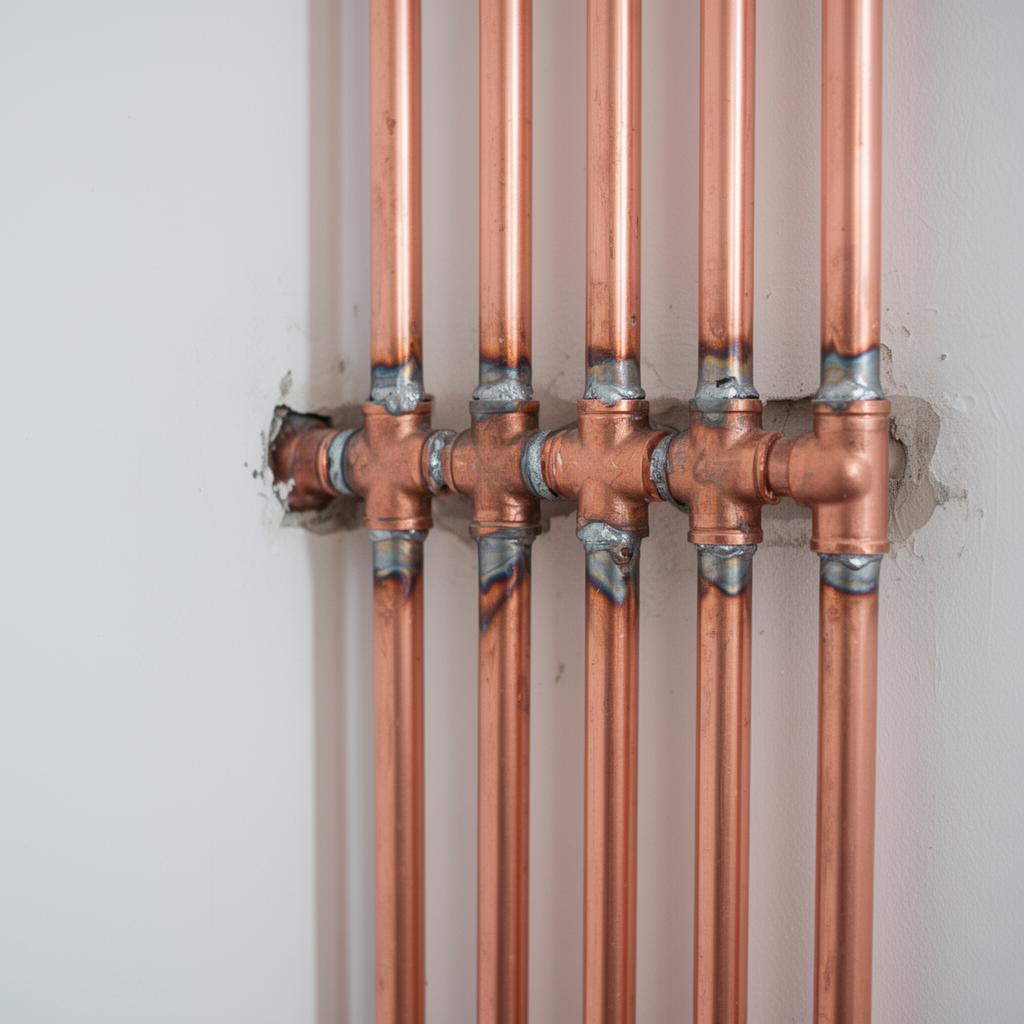
The water supply in this part of the Chew Valley and surrounding area is hard, sitting between the very hard limestone water closer to Bath and the moderately hard supply further out. It's still enough to affect scale build-up over time, particularly in hot water cylinders and combi heat exchangers. We take that into account when specifying protection for a new system rather than assuming the same setup that works on a soft-water supply elsewhere in the country will perform the same way here. Terrain is level, which matters for condensate runs and tank siting. Most of what we open up here is interwar and post-war estates, which dictates flue routes and pipe sizing. What changes a new boiler price in Paulton more than the brand is the building itself: interwar and post-war estates drive different flue routes, gas-pipe sizing and controls choices. That's why we visit before fixing a price.
Neighbouring Somerset areas we serve
We cover Paulton alongside High Littleton (BS39), Hallatrow (BS39), Farrington Gurney (BS39), Midsomer Norton (BA3) — so spares, follow-ups and annual visits are easy to schedule together.
Qualifications behind the work
Qualifies your install for the full 10-year manufacturer guarantee* on supported models.
No verbal-only quotes — every figure is in writing with the boiler, controls and warranty spelled out.
362+ verified reviews from real customers across BA and BS postcodes.
Our engineers aren't paid on what you buy — there's no incentive to upsell you to a bigger boiler.
How Somerset building stock shapes the spec
The water supply in this part of the Chew Valley and surrounding area is hard, sitting between the very hard limestone water closer to Bath and the moderately hard supply further out. It's still enough to affect scale build-up over time, particularly in hot water cylinders and combi heat exchangers. We take that into account when specifying protection for a new system rather than assuming the same setup that works on a soft-water supply elsewhere in the country will perform the same way here. Terrain is level, which matters for condensate runs and tank siting. Most of what we open up here is interwar and post-war estates, which dictates flue routes and pipe sizing. What changes a new boiler price in Paulton more than the brand is the building itself: interwar and post-war estates drive different flue routes, gas-pipe sizing and controls choices. That's why we visit before fixing a price.
Typical ranges by job — Paulton
- Like-for-like combi swap: low–mid £k range
- Back-boiler removal & combi conversion: mid–high £k range
- Full system + cylinder upgrade: higher range
- Oil boiler swap (no tank work): mid range
- Oil boiler + tank replacement: higher range
Paulton questions we get asked
- What paperwork do I get once the job's finished?
- You'll get a Benchmark commissioning checklist for the boiler, a building notice or Building Control completion certificate for notifiable work, manufacturer warranty registration confirmation, and a Gas Safe (or OFTEC) record of the work. Keep these together — they're what a future buyer's solicitor or a warranty claim will ask for.
- What's actually checked during an annual boiler service?
- A service includes a visual and functional check of the boiler's casing and controls, flue gas analysis to confirm safe and efficient combustion, checking the flame picture and pressure, inspecting seals and condensate, and testing safety devices. It's a safety check as much as a performance one, and it's what keeps most manufacturer warranties valid.
- We're on mains gas — is a boiler swap a fairly simple job?
- Where the new boiler goes in the same place with the same flue route, a mains gas swap is usually the most straightforward job we do — often completed within a working day. It gets more involved if you're relocating the boiler, changing from a heat-only or system boiler to a combi, or the existing pipework needs upgrading to suit.
- Do I need to do anything to activate my boiler's warranty?
- As a Worcester Bosch Accredited Installer we register qualifying Worcester installs on your behalf, which is what unlocks the extended guarantee (up to 10 years* on qualifying installs) rather than the standard shorter term. For other brands we still register the installation; keep the confirmation with your other paperwork in case you need it.
- We run a holiday let — do the same gas safety rules apply as a standard rental?
- Yes, holiday lets fall under the same landlord gas safety duty as any other let property — an annual CP12 from a Gas Safe registered engineer is required, and it's worth timing the visit for a gap between bookings rather than trying to fit it around guests, which we're happy to help plan around.
- As a landlord, how quickly can you deal with a no-heat call for a tenant?
- We book calls in during our published hours, Monday to Friday 8:30 to 5, and don't operate an out-of-hours emergency line, so we're upfront that a weekend no-heat call will wait until the next working day unless you've other cover in place. During the week we prioritise no-heat and no-hot-water calls where we can.
Paulton coverage and distances
- County
- Somerset
- Postcode district
- BS39
- Settlement type
- town
- Nearest classified road
- A37
- Distance from our base
- 3 miles (Radstock, BA3)
- Typical building stock
- interwar and post-war estates
- Water hardness
- hard water
- Fuel availability
- mains gas across most of the area
- Customer mix
- a mix of owner-occupied and rented homes
- Nearby areas covered
- High Littleton, Hallatrow, Farrington Gurney, Midsomer Norton
Things we check around Paulton
Why hard water shortens boiler life around Paulton
The limestone geology under Somerset gives Paulton hard water, which drops calcium carbonate out of solution as soon as it's heated. Inside a combi's plate heat exchanger the gaps between plates are only a millimetre or two wide, so scale narrows the waterways long before it's visible anywhere else in the system. The first symptom is usually a hot tap that runs warm rather than hot, or a boiler that fires more often for the same demand. Left unchecked, scale insulates the exchanger from the burner, forces flue gases hotter, and can crack the exchanger from thermal stress. A scale reducer fitted on the mains feed, sized to the property's flow rate, is cheaper to install once than to replace a heat exchanger twice.
Mixed owner-occupied and rented housing in Paulton
Paulton's mix of owner-occupied and rented housing means we regularly work to two different sets of expectations on the same street — a landlord wanting the minimum reliable, compliant system at reasonable cost for a tenanted property, and an owner-occupier next door wanting a longer-term investment in efficiency and comfort. Both are legitimate priorities, but they lead to different specifications: a landlord's replacement boiler decision is often driven by the annual gas safety record and reliable compliance, while an owner-occupier's decision more often factors in flow temperature optimisation and controls for their own daily comfort. We ask which category a job falls into early, since it changes the questions worth asking about the property and the recommendation that follows.
Oil tank de-sludging: why it's not optional
Oil sitting in a tank for years accumulates water from condensation and fine sediment that settles at the bottom, and over time this forms a sludge layer that can be drawn into the fuel line, particularly when the tank is nearly empty and the outlet pulls from lower in the tank than usual. Sludge blocks fine oil filters and burner nozzles, which shows up as burner lockouts or a boiler that won't fire cleanly rather than as an obvious tank problem. De-sludging drains and cleans the tank base without necessarily removing the whole tank, and it's worth doing when a tank is inherited with a property, before switching to a new boiler, or if lockouts recur despite the filter and nozzle being replaced. It's a preventative job that's cheaper done on schedule than after a burner failure it caused.
Working across Somerset: what being local changes
Being based at 24 Bristol Road, Radstock, 3 miles from Paulton via the A37, means a callout doesn't involve a long cross-county drive, and it also means familiarity with the recurring patterns in the local building stock — interwar and post-war estates — rather than encountering that construction type for the first time on-site. Local knowledge doesn't replace a proper site survey, but it does mean fewer surprises: knowing in advance that a particular postcode area typically has hard water, older single-pipe circuits, or restricted parking means the quote reflects the likely reality of the job before the first visit. We're Gas Safe and OFTEC registered and work across Somerset on that basis, not by claiming coverage we don't actually deliver on.
Radiator sizing after lowering the flow temperature
Running a boiler at a lower flow temperature — typically 55°C or below rather than the old default of 70-80°C — improves condensing efficiency measurably, but it also reduces the heat output of every radiator in the house, because a radiator's output falls roughly with the square of the temperature difference to the room. Radiators sized correctly for a 75°C flow can end up unable to heat the room properly at 55°C unless they're upsized or supplemented. We check each radiator against the lower design flow temperature before recommending it, and where a room falls short we look at whether a larger single panel, a double panel, or an additional radiator on that circuit closes the gap, rather than pushing the flow temperature back up and giving away the efficiency gain.
Dealing with microbore pipework
Housing from the 1930s to 1960s around Paulton was sometimes retrofitted with 8mm or 10mm microbore pipe run in bundles from a manifold, which was cheap and quick to install at the time but restricts flow badly compared with modern 15mm or 22mm pipe. Microbore is prone to sludge blockage because its narrow bore has no capacity to carry debris in suspension — it settles instead. A radiator on a microbore tail that's cold at the bottom is very often a blocked tail rather than a boiler fault. Replacing microbore with standard-bore pipe usually needs some floor lifting, but on a heating upgrade it removes a recurring source of cold radiators rather than papering over it with another flush.
Signs a boiler repair is no longer the right call
A boiler that's failing repeatedly, needing a different part replaced every service, or over roughly ten to fifteen years old is approaching the point where continued repair costs more over time than replacement, particularly once a heat exchanger — the most expensive single part — starts to show signs of failure through leaks or reduced output. Efficiency is the other half of the calculation: an older non-condensing boiler running at 70-80% efficiency against a modern condensing combi at over 90% means a meaningful chunk of every unit of fuel burned in the old boiler is simply lost up the flue. We give a straight answer on repair versus replace based on the fault found and the boiler's age and condition, rather than defaulting to whichever is more profitable to us on the day.
Common boiler fault codes and what usually causes them
Most modern boilers display a fault code on the control panel when they lock out, and while the exact code differs between manufacturers, the underlying causes cluster into a small number of categories: low system pressure (often from a small leak or after bleeding radiators), ignition failure (a worn electrode, gas supply issue, or blocked condensate causing a safety shutdown), or a failed sensor reporting an implausible temperature reading. A condensate blockage or freeze specifically tends to show a distinct code from a genuine ignition fault, which is why checking the external condensate pipe for ice before calling out an engineer in a cold snap can sometimes resolve the issue without a visit at all. We ask for the exact fault code and any recent history — a bled radiator, a cold snap, a recent service — before attending, since it often narrows down the likely cause before we arrive.
Servicing intervals: oil versus gas boilers
Gas boiler manufacturers generally recommend annual servicing, and it's also the standard assumption behind most extended parts and labour guarantees. Oil boilers benefit from the same annual frequency but for a slightly different reason: oil combustion produces more soot and the nozzle wears and fouls faster than a gas burner's equivalent, so a service that's overdue on an oil boiler is more likely to show up as reduced efficiency or sooting than a gas equivalent would over the same period. Landlords with let properties, common across a mix of owner-occupied and rented homes around Paulton, have a legal duty to service annually and hold a current gas safety record where the appliance is gas; oil appliances don't carry the same statutory landlord certificate but the same annual interval is good practice regardless of tenancy status.
Where to go from here
The next step for boiler service cost is a site visit, not a phone-only estimate. Seeing the property, the current system and the access lets us give you a figure that holds up once the work starts, rather than one that changes on the day. Call 07516 118198, Monday to Friday, 8:30am to 5pm, and we'll arrange a time that suits. Send the appliance make, model and any fault code and you get a straight answer, not a sales script. Most of what we open up here is interwar and post-war estates, which dictates flue routes and pipe sizing. Access is open suburban, so parking, spoil removal and delivery timing get planned in advance.
Related help for Paulton
- New Boiler Cost in PaultonHonest, area-specific pricing guidance for a new combi, system or oil boiler — with no obligation site visit.
- Emergency Boiler Repair in PaultonSame-week (often same-day) no-heat and no-hot-water call-outs for gas and oil boilers.
- Landlord Gas Safety Certificate (CP12) in PaultonAnnual CP12 inspections for landlords and letting agents — digital certificate the same day.
- Boiler Replacement Quote in PaultonFree, no-obligation site visits and written specifications for old boiler replacements.
- Oil Boiler Service Cost in PaultonWhat an OFTEC registered oil boiler service costs locally, what is included, and what a tank inspection adds.
- Oil Boiler Repair in PaultonOil boiler lockouts, sooting and no heat call outs for homes off the mains gas grid, diagnosed before parts are quoted.
- Boiler Installation in PaultonNew combi, system and regular boiler installations for gas and oil homes — fixed prices, manufacturer warranties.
- Gas Boiler Installation in PaultonGas Safe registered installations and upgrades for mains gas homes across Bath, Radstock and Wells.
New Worcester boiler with a 10 year guarantee*
Free no-obligation quotes for installation, servicing & repairs across BA & BS postcodes.