
Emergency Boiler Repair in Paulton
Deciding on emergency boiler repair usually comes down to a few questions: repair or replace, which fuel, which brand, and who to trust with the work. We can't answer all of those without seeing the property, but we can give you a written, itemised quote once we have, so you're comparing like with like against other tradespeople. We're Gas Safe registered, OFTEC registered and a Worcester Bosch Accredited Installer, working from 24 Bristol Road, Radstock BA3 3EE. Typical era of build is interwar, which affects existing pipework and system cleanliness. Terrain is level, which matters for condensate runs and tank siting. In Paulton itself (BS39, Somerset) that usually means interwar and post-war estates, roughly 3 miles from the workshop.
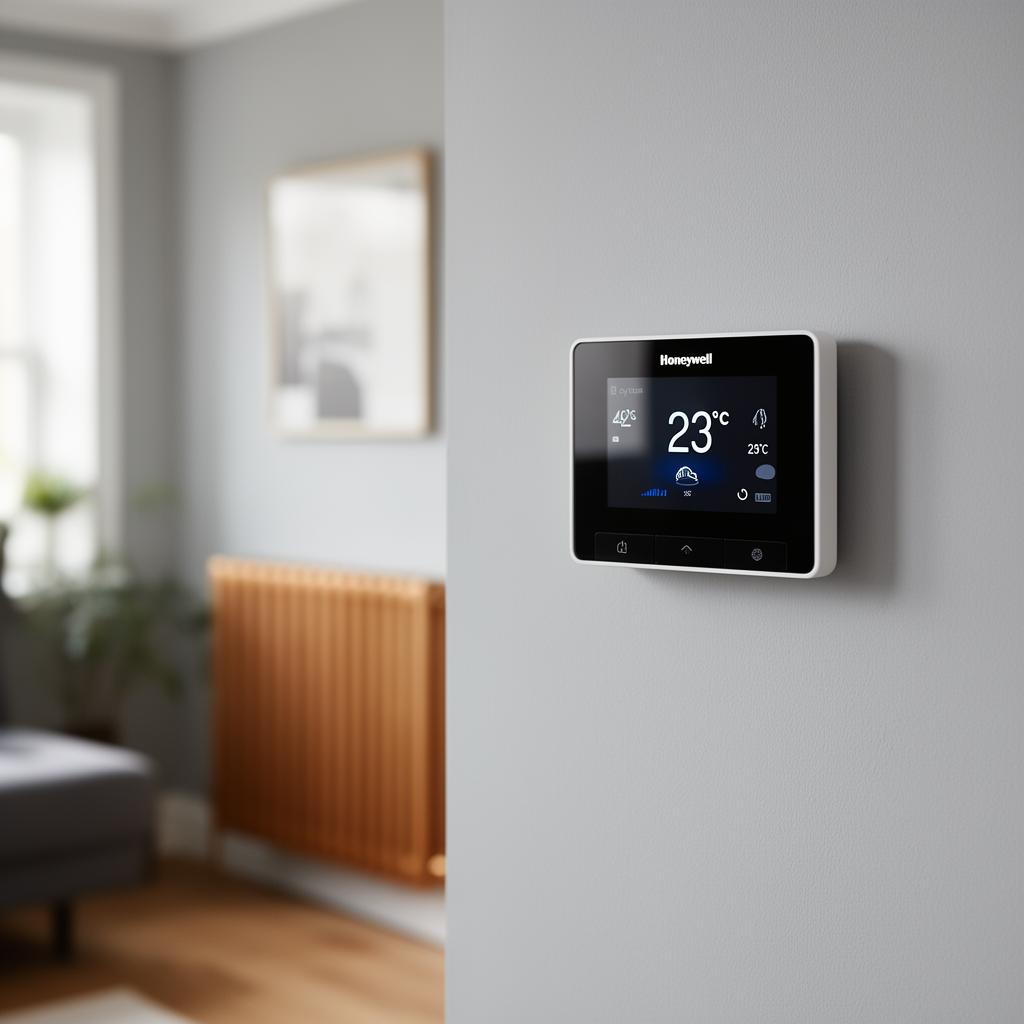
This settlement has a genuine mix of owner-occupied and rented housing, which means the priorities on any given job vary: an owner-occupier might prioritise long-term running costs, while a landlord is usually focused on reliability and having the right paperwork in place for tenants and agents. We ask early on which category a job falls into, since it shapes what matters most in the specification and what documentation needs to be provided at the end. Access is open suburban, so parking, spoil removal and delivery timing get planned in advance. Nearest neighbours on our round are High Littleton, Hallatrow, Farrington Gurney. Paulton sits roughly 3 miles from our Radstock base via the A37. We're on the road across BS39 every day, so emergency response is genuinely local — not a third-party engineer dispatched from the other side of the county.
Where else we work near Paulton
We cover Paulton alongside High Littleton (BS39), Hallatrow (BS39), Farrington Gurney (BS39), Midsomer Norton (BA3) — so spares, follow-ups and annual visits are easy to schedule together.
Local conditions we plan around in BS39
This settlement has a genuine mix of owner-occupied and rented housing, which means the priorities on any given job vary: an owner-occupier might prioritise long-term running costs, while a landlord is usually focused on reliability and having the right paperwork in place for tenants and agents. We ask early on which category a job falls into, since it shapes what matters most in the specification and what documentation needs to be provided at the end. Access is open suburban, so parking, spoil removal and delivery timing get planned in advance. Nearest neighbours on our round are High Littleton, Hallatrow, Farrington Gurney. Paulton sits roughly 3 miles from our Radstock base via the A37. We're on the road across BS39 every day, so emergency response is genuinely local — not a third-party engineer dispatched from the other side of the county.
Common faults we see — Paulton
- No heat / no hot water — diverter valve, PCB
- Pressure dropping — expansion vessel, leak
- Boiler locked out — fan, sensor, PCB
- Cold radiators — pump, sludge, valves
- Frozen condensate (winter) — quick thaw + insulate
- Hot water only — thermostat or motorised valve
What backs up a Paulton quote
Diverter valves, expansion vessels, pumps, common PCBs — first-visit fixes are the norm.
We never swap parts blindly. You'll see the fault confirmed before any spare goes in.
Oil boilers and tanks covered — we don't bounce oil-fired call-outs to another firm.
Every gas job notified to Building Control. Photo-evidenced repairs where relevant.
Straight answers for Paulton homeowners
- We're on mains gas — is a boiler swap a fairly simple job?
- Where the new boiler goes in the same place with the same flue route, a mains gas swap is usually the most straightforward job we do — often completed within a working day. It gets more involved if you're relocating the boiler, changing from a heat-only or system boiler to a combi, or the existing pipework needs upgrading to suit.
- What's an unvented cylinder and does it need special installation rules?
- An unvented cylinder stores mains-pressure hot water without a cold water tank in the loft, giving strong pressure at every outlet. Building Regulations require it to be fitted and commissioned by someone holding a specific unvented cylinder qualification (which we hold), including fitting the correct safety valves, because an incorrectly installed unvented cylinder is a pressure vessel hazard.
- How often should a boiler actually be serviced?
- Once a year is the standard recommendation from every manufacturer, and most warranty terms make it a condition rather than a suggestion — miss a year and a claim can be refused even if the fault is unrelated. Landlords have a separate legal duty to have gas appliances checked annually regardless of warranty terms.
- What's actually checked during an annual boiler service?
- A service includes a visual and functional check of the boiler's casing and controls, flue gas analysis to confirm safe and efficient combustion, checking the flame picture and pressure, inspecting seals and condensate, and testing safety devices. It's a safety check as much as a performance one, and it's what keeps most manufacturer warranties valid.
- Who actually carries out the work?
- A Gas Safe and, where relevant, OFTEC registered engineer from our own small team carries out the job — we don't sub the install out to a third party after quoting. You deal with the same people from survey through to commissioning and any aftercare calls.
- How do we decide between a combi boiler and a boiler-plus-cylinder system?
- It comes down to hot water demand and available space. A combi heats water on demand with no cylinder to fill, which suits smaller households and single-bathroom homes, while a system or regular boiler with a cylinder stores hot water and copes far better where two bathrooms or a bath and shower run at the same time.
Local reference data
- County
- Somerset
- Postcode district
- BS39
- Settlement type
- town
- Nearest classified road
- A37
- Distance from our base
- 3 miles (Radstock, BA3)
- Typical building stock
- interwar and post-war estates
- Water hardness
- hard water
- Fuel availability
- mains gas across most of the area
- Customer mix
- a mix of owner-occupied and rented homes
- Nearby areas covered
- High Littleton, Hallatrow, Farrington Gurney, Midsomer Norton
Practical considerations across BS39
How a condensing boiler recovers extra heat
A condensing boiler passes flue gases through a secondary heat exchanger before they leave the flue, extracting additional heat by condensing water vapour in the exhaust back into liquid, which is expelled as the mildly acidic condensate water down the drain. This is why every condensing boiler needs a condensate drainage route as part of its installation, unlike older non-condensing boilers, which simply vented hot dry gas straight out. The efficiency benefit only fully materialises when the boiler is actually condensing regularly, which needs a return water temperature low enough — generally below 55°C — for water vapour to condense in the first place. A condensing boiler run permanently at a high flow temperature can spend much of its time not actually condensing, which is one of the main reasons flow temperature settings matter as much as the boiler model chosen.
Paulton's A37 corridor and what it means for scheduling
Properties along or near the A37 corridor around Paulton are generally straightforward to reach without the access constraints of side lanes or unclassified roads further off the main network, which helps with scheduling deliveries of boilers, cylinders or oil tanks to a fixed slot. It doesn't change the technical requirements of the job itself, but predictable access does mean less contingency time needs building into a visit, and it makes coordinating a delivery with an installation date more reliable than on a property with a difficult final approach. We still confirm any specific parking or loading restriction on the immediate street before a job, since a fast main road doesn't guarantee easy stopping right outside the property.
Dealing with microbore pipework
Housing from the 1930s to 1960s around Paulton was sometimes retrofitted with 8mm or 10mm microbore pipe run in bundles from a manifold, which was cheap and quick to install at the time but restricts flow badly compared with modern 15mm or 22mm pipe. Microbore is prone to sludge blockage because its narrow bore has no capacity to carry debris in suspension — it settles instead. A radiator on a microbore tail that's cold at the bottom is very often a blocked tail rather than a boiler fault. Replacing microbore with standard-bore pipe usually needs some floor lifting, but on a heating upgrade it removes a recurring source of cold radiators rather than papering over it with another flush.
Signs a boiler repair is no longer the right call
A boiler that's failing repeatedly, needing a different part replaced every service, or over roughly ten to fifteen years old is approaching the point where continued repair costs more over time than replacement, particularly once a heat exchanger — the most expensive single part — starts to show signs of failure through leaks or reduced output. Efficiency is the other half of the calculation: an older non-condensing boiler running at 70-80% efficiency against a modern condensing combi at over 90% means a meaningful chunk of every unit of fuel burned in the old boiler is simply lost up the flue. We give a straight answer on repair versus replace based on the fault found and the boiler's age and condition, rather than defaulting to whichever is more profitable to us on the day.
Working across Somerset: what being local changes
Being based at 24 Bristol Road, Radstock, 3 miles from Paulton via the A37, means a callout doesn't involve a long cross-county drive, and it also means familiarity with the recurring patterns in the local building stock — interwar and post-war estates — rather than encountering that construction type for the first time on-site. Local knowledge doesn't replace a proper site survey, but it does mean fewer surprises: knowing in advance that a particular postcode area typically has hard water, older single-pipe circuits, or restricted parking means the quote reflects the likely reality of the job before the first visit. We're Gas Safe and OFTEC registered and work across Somerset on that basis, not by claiming coverage we don't actually deliver on.
Radiator sizing after lowering the flow temperature
Running a boiler at a lower flow temperature — typically 55°C or below rather than the old default of 70-80°C — improves condensing efficiency measurably, but it also reduces the heat output of every radiator in the house, because a radiator's output falls roughly with the square of the temperature difference to the room. Radiators sized correctly for a 75°C flow can end up unable to heat the room properly at 55°C unless they're upsized or supplemented. We check each radiator against the lower design flow temperature before recommending it, and where a room falls short we look at whether a larger single panel, a double panel, or an additional radiator on that circuit closes the gap, rather than pushing the flow temperature back up and giving away the efficiency gain.
Common boiler fault codes and what usually causes them
Most modern boilers display a fault code on the control panel when they lock out, and while the exact code differs between manufacturers, the underlying causes cluster into a small number of categories: low system pressure (often from a small leak or after bleeding radiators), ignition failure (a worn electrode, gas supply issue, or blocked condensate causing a safety shutdown), or a failed sensor reporting an implausible temperature reading. A condensate blockage or freeze specifically tends to show a distinct code from a genuine ignition fault, which is why checking the external condensate pipe for ice before calling out an engineer in a cold snap can sometimes resolve the issue without a visit at all. We ask for the exact fault code and any recent history — a bled radiator, a cold snap, a recent service — before attending, since it often narrows down the likely cause before we arrive.
How to get this priced
Correct sizing matters more than most people realise for emergency boiler repair: an undersized system struggles to keep up, and an oversized one costs more to run and buy than it needs to. We size against the property's actual heat loss and hot water demand, not a rule of thumb. Call 07516 118198 and we will confirm a visit slot for BS39. Terrain is level, which matters for condensate runs and tank siting. Access is open suburban, so parking, spoil removal and delivery timing get planned in advance.
Related help for Paulton
- New Boiler Cost in PaultonHonest, area-specific pricing guidance for a new combi, system or oil boiler — with no obligation site visit.
- Landlord Gas Safety Certificate (CP12) in PaultonAnnual CP12 inspections for landlords and letting agents — digital certificate the same day.
- Boiler Replacement Quote in PaultonFree, no-obligation site visits and written specifications for old boiler replacements.
- Oil Boiler Service Cost in PaultonWhat an OFTEC registered oil boiler service costs locally, what is included, and what a tank inspection adds.
- Oil Boiler Repair in PaultonOil boiler lockouts, sooting and no heat call outs for homes off the mains gas grid, diagnosed before parts are quoted.
- Boiler Service Cost in PaultonAnnual gas boiler service pricing, what the check covers, and how a landlord certificate can be combined in one visit.
- Boiler Installation in PaultonNew combi, system and regular boiler installations for gas and oil homes — fixed prices, manufacturer warranties.
- Gas Boiler Installation in PaultonGas Safe registered installations and upgrades for mains gas homes across Bath, Radstock and Wells.
New Worcester boiler with a 10 year guarantee*
Free no-obligation quotes for installation, servicing & repairs across BA & BS postcodes.