
Emergency Boiler Repair, No Heat in Norton St Philip? Local Engineer, Fast
Emergency Boiler Repair sits alongside the wider servicing cycle a heating system goes through over its life: commissioning, annual checks, and eventually replacement once repairs stop making sense. Thinking about where you are in that cycle helps decide whether now is the right time to act. We're Gas Safe registered and OFTEC registered, based at 24 Bristol Road, Radstock BA3 3EE, and happy to talk through where your system currently sits before recommending anything. homes alongside small commercial and agricultural premises make up most enquiries from this postcode. Water here is very hard limestone water, so scale protection is specified accordingly. In Norton St Philip itself (BA2, Somerset) that usually means stone cottages and modern estates, roughly 6 miles from the workshop.
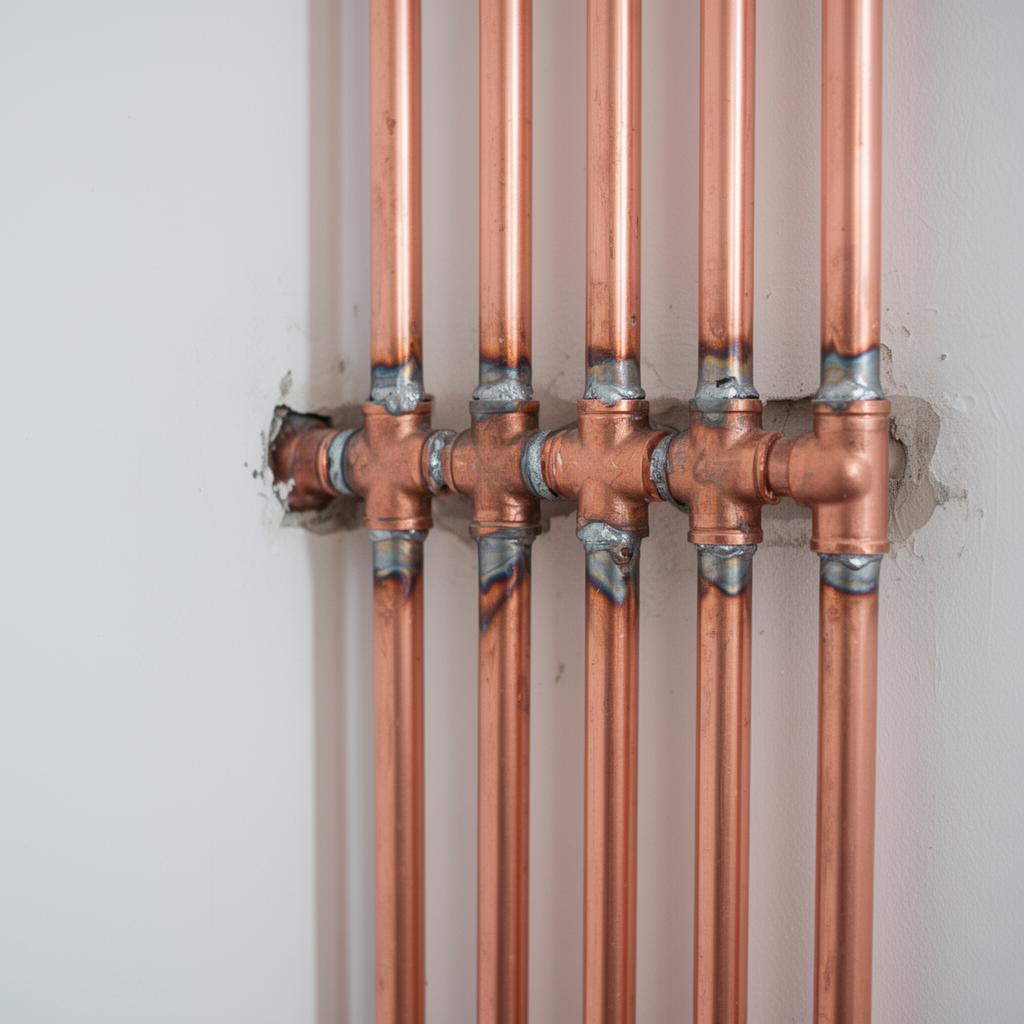
Stone cottages and farmhouses around here were mostly built long before central heating existed, so pipework and boiler locations have usually been retrofitted at some point, sometimes more than once. Thick stone walls, uneven floor levels and low ceilings can all affect where a boiler or cylinder can practically go, and older stonework doesn't always take fixings the way modern block or brick does. We work around those constraints on site rather than assuming a straightforward install. homes alongside small commercial and agricultural premises make up most enquiries from this postcode. Mains gas covers much of the area, with off-grid pockets, which changes the appliance shortlist. Norton St Philip sits roughly 6 miles from our Radstock base via the A366. We're on the road across BA2 every day, so emergency response is genuinely local — not a third-party engineer dispatched from the other side of the county.
Registrations and how work is signed off
Oil boilers and tanks covered — we don't bounce oil-fired call-outs to another firm.
Every gas job notified to Building Control. Photo-evidenced repairs where relevant.
We never swap parts blindly. You'll see the fault confirmed before any spare goes in.
Diverter valves, expansion vessels, pumps, common PCBs — first-visit fixes are the norm.
What the buildings in Norton St Philip change about the job
Stone cottages and farmhouses around here were mostly built long before central heating existed, so pipework and boiler locations have usually been retrofitted at some point, sometimes more than once. Thick stone walls, uneven floor levels and low ceilings can all affect where a boiler or cylinder can practically go, and older stonework doesn't always take fixings the way modern block or brick does. We work around those constraints on site rather than assuming a straightforward install. homes alongside small commercial and agricultural premises make up most enquiries from this postcode. Mains gas covers much of the area, with off-grid pockets, which changes the appliance shortlist. Norton St Philip sits roughly 6 miles from our Radstock base via the A366. We're on the road across BA2 every day, so emergency response is genuinely local — not a third-party engineer dispatched from the other side of the county.
Within reach of the A366
We cover Norton St Philip alongside Hinton Charterhouse (BA2), Wellow (BA2), Faulkland (BA3), Beckington (BA11) — so spares, follow-ups and annual visits are easy to schedule together.
When to call vs wait — Norton St Philip
- No heat in winter with vulnerable occupants — call
- Visible water leak — turn off, then call
- Smell of gas — leave the property, ring 0800 111 999 first
- Boiler keeps locking out — likely needs a visit
- Slight pressure drop after months — can usually wait
Questions before you book
- Can your van get down our lane, or do we need to arrange something?
- Most village lanes we work on are manageable in our vehicles, but if it's single-track, has a low bridge, or turning is tight, mention it when you book so we bring the right size van and allow extra time. It's rarely a reason to turn a job down, just something we plan around.
- How does LPG heating differ from mains gas day to day?
- An LPG boiler works the same way as a mains gas one day to day, but the gas is stored in a tank or cylinders on site and topped up by a supplier rather than piped in continuously. That means keeping an eye on tank levels and arranging deliveries, but appliance choice, controls, and servicing requirements are otherwise very similar.
- What support do I get after the install is finished?
- Once commissioning's complete we talk you through the controls, leave the paperwork, and register the manufacturer warranty on your behalf. If anything doesn't feel right in the first few weeks — a fault code, an odd noise, a control setting you're unsure of — call us during office hours and we'll talk it through or come back out.
- Stone cottages seem to lose heat fast — does that change what boiler we need?
- Solid stone walls and older windows do increase heat loss compared to cavity-wall construction, so we size the boiler and radiators around a proper heat loss calculation for the property rather than just matching what's there already. Getting this right matters more in a cottage than a modern house, where an undersized system will never quite keep up.
- How do you decide whether to repair or replace a boiler?
- We weigh the age of the boiler, whether parts are still made for it, how many faults it's had recently, and its running efficiency against a like-for-like or upgraded replacement. If a straightforward part fixes it and the boiler's otherwise sound, we'll say so rather than push a new install you don't need.
- How often should a boiler actually be serviced?
- Once a year is the standard recommendation from every manufacturer, and most warranty terms make it a condition rather than a suggestion — miss a year and a claim can be refused even if the fault is unrelated. Landlords have a separate legal duty to have gas appliances checked annually regardless of warranty terms.
Coverage detail for BA2
- County
- Somerset
- Postcode district
- BA2
- Settlement type
- village
- Nearest classified road
- A366
- Distance from our base
- 6 miles (Radstock, BA3)
- Typical building stock
- stone cottages and modern estates
- Water hardness
- very hard limestone water
- Fuel availability
- mains gas with off-grid pockets
- Customer mix
- homes alongside small commercial and agricultural premises
- Nearby areas covered
- Hinton Charterhouse, Wellow, Faulkland, Beckington
Technical notes for this job type
Signs a boiler repair is no longer the right call
A boiler that's failing repeatedly, needing a different part replaced every service, or over roughly ten to fifteen years old is approaching the point where continued repair costs more over time than replacement, particularly once a heat exchanger — the most expensive single part — starts to show signs of failure through leaks or reduced output. Efficiency is the other half of the calculation: an older non-condensing boiler running at 70-80% efficiency against a modern condensing combi at over 90% means a meaningful chunk of every unit of fuel burned in the old boiler is simply lost up the flue. We give a straight answer on repair versus replace based on the fault found and the boiler's age and condition, rather than defaulting to whichever is more profitable to us on the day.
Low-loss headers on larger or multi-zone systems
On a system with several heating zones or a boiler oversized relative to any single zone's flow requirement, a low-loss header hydraulically separates the boiler's primary circuit from the secondary zone circuits, so each side can run its own pump and flow rate without one interfering with the other. Without it, a zone valve closing on a multi-zone system can starve the boiler of flow or force excessive pump pressure through the remaining open zones. It's most relevant on larger properties or ones with commercial premises attached, where several distinct heating circuits — perhaps a shop unit and a flat above — share one heat source. Getting the header sized to the boiler's actual flow rate, not just fitted as standard, is what makes it work rather than just adding another connection.
Oil tank de-sludging: why it's not optional
Oil sitting in a tank for years accumulates water from condensation and fine sediment that settles at the bottom, and over time this forms a sludge layer that can be drawn into the fuel line, particularly when the tank is nearly empty and the outlet pulls from lower in the tank than usual. Sludge blocks fine oil filters and burner nozzles, which shows up as burner lockouts or a boiler that won't fire cleanly rather than as an obvious tank problem. De-sludging drains and cleans the tank base without necessarily removing the whole tank, and it's worth doing when a tank is inherited with a property, before switching to a new boiler, or if lockouts recur despite the filter and nozzle being replaced. It's a preventative job that's cheaper done on schedule than after a burner failure it caused.
What voids or protects a Worcester Bosch extended guarantee
Worcester Bosch's longer guarantee periods on qualifying installations are conditional on the boiler being installed and commissioned by an Accredited Installer, on an annual service being carried out (by any Gas Safe registered engineer, not necessarily the original installer) within the required window each year, and on system water quality being maintained to the standard set out in their published guidance — meaning a system flush at installation, correct inhibitor dosing, and in hard water areas a scale reducer or filter as specified. Missing a single annual service, or installing without the required water treatment, can reduce cover back to the manufacturer's standard guarantee period even if the boiler itself has had no faults. Keeping the Benchmark record and service history together is what lets a claim be assessed quickly if it's ever needed.
Radiator sizing after lowering the flow temperature
Running a boiler at a lower flow temperature — typically 55°C or below rather than the old default of 70-80°C — improves condensing efficiency measurably, but it also reduces the heat output of every radiator in the house, because a radiator's output falls roughly with the square of the temperature difference to the room. Radiators sized correctly for a 75°C flow can end up unable to heat the room properly at 55°C unless they're upsized or supplemented. We check each radiator against the lower design flow temperature before recommending it, and where a room falls short we look at whether a larger single panel, a double panel, or an additional radiator on that circuit closes the gap, rather than pushing the flow temperature back up and giving away the efficiency gain.
Single-pipe circuits in older stone cottages
A lot of the stone cottages and farmhouses around Norton St Philip were plumbed decades ago on a single-pipe gravity circuit, where each radiator draws from and returns to the same loop rather than having its own flow and return. It works, but radiators furthest from the boiler receive water that's already cooled after giving up heat to the ones before it, so the far end of the house is always the coldest. Converting to a two-pipe layout means new pipe runs, which in a stone cottage often means chasing lime plaster or lifting flagstones — not a trivial job. Where a full rewire of the pipework isn't wanted, we sometimes improve balance instead by oversizing the radiators nearest the end of the run and fitting TRVs to hold back the ones nearest the boiler.
Why very hard limestone water shortens boiler life around Norton St Philip
The limestone geology under Somerset gives Norton St Philip very hard limestone water, which drops calcium carbonate out of solution as soon as it's heated. Inside a combi's plate heat exchanger the gaps between plates are only a millimetre or two wide, so scale narrows the waterways long before it's visible anywhere else in the system. The first symptom is usually a hot tap that runs warm rather than hot, or a boiler that fires more often for the same demand. Left unchecked, scale insulates the exchanger from the burner, forces flue gases hotter, and can crack the exchanger from thermal stress. A scale reducer fitted on the mains feed, sized to the property's flow rate, is cheaper to install once than to replace a heat exchanger twice.
Where to go from here
Getting more than one quote for emergency boiler repair is sensible, and we're happy to be one of them. Ask each tradesperson the same questions about what's included, what's excluded, and what registration they hold, so you're comparing genuinely equivalent quotes rather than a headline figure with hidden gaps. Send the appliance make, model and any fault code and you get a straight answer, not a sales script. Typical era of build is mixed-cottage, which affects existing pipework and system cleanliness. Terrain is level, which matters for condensate runs and tank siting.
Related help for Norton St Philip
- New Boiler Cost in Norton St PhilipHonest, area-specific pricing guidance for a new combi, system or oil boiler — with no obligation site visit.
- Landlord Gas Safety Certificate (CP12) in Norton St PhilipAnnual CP12 inspections for landlords and letting agents — digital certificate the same day.
- Boiler Replacement Quote in Norton St PhilipFree, no-obligation site visits and written specifications for old boiler replacements.
- Oil Boiler Service Cost in Norton St PhilipWhat an OFTEC registered oil boiler service costs locally, what is included, and what a tank inspection adds.
- Oil Boiler Repair in Norton St PhilipOil boiler lockouts, sooting and no heat call outs for homes off the mains gas grid, diagnosed before parts are quoted.
- Boiler Service Cost in Norton St PhilipAnnual gas boiler service pricing, what the check covers, and how a landlord certificate can be combined in one visit.
- Boiler Installation in Norton St PhilipNew combi, system and regular boiler installations for gas and oil homes — fixed prices, manufacturer warranties.
- Gas Boiler Installation in Norton St PhilipGas Safe registered installations and upgrades for mains gas homes across Bath, Radstock and Wells.
New Worcester boiler with a 10 year guarantee*
Free no-obligation quotes for installation, servicing & repairs across BA & BS postcodes.