
Landlord Gas Safety Certificate (CP12), Gas Safety Checks for Publow Rental Properties
Not every property near us sits on the mains gas network, and landlord gas safety certificate (cp12) for an off-grid home means thinking about oil, tank location and delivery access alongside the heating system itself. We're OFTEC registered as well as Gas Safe registered, so oil-fired work gets the same attention as mains gas from our base at 24 Bristol Road, Radstock BA3 3EE, rather than being treated as an afterthought. Water here is hard water, so scale protection is specified accordingly. Typical era of build is mixed-cottage, which affects existing pipework and system cleanliness. In Publow itself (BS39, Somerset) that usually means stone village homes, roughly 6 miles from the workshop.
Landlord Gas Safety Certificate (CP12) — what you actually get
- Digital CP12 emailed same day
- Boiler service can be combined to save a visit
- Reminders 30 days before expiry
- Multi-property landlord pricing
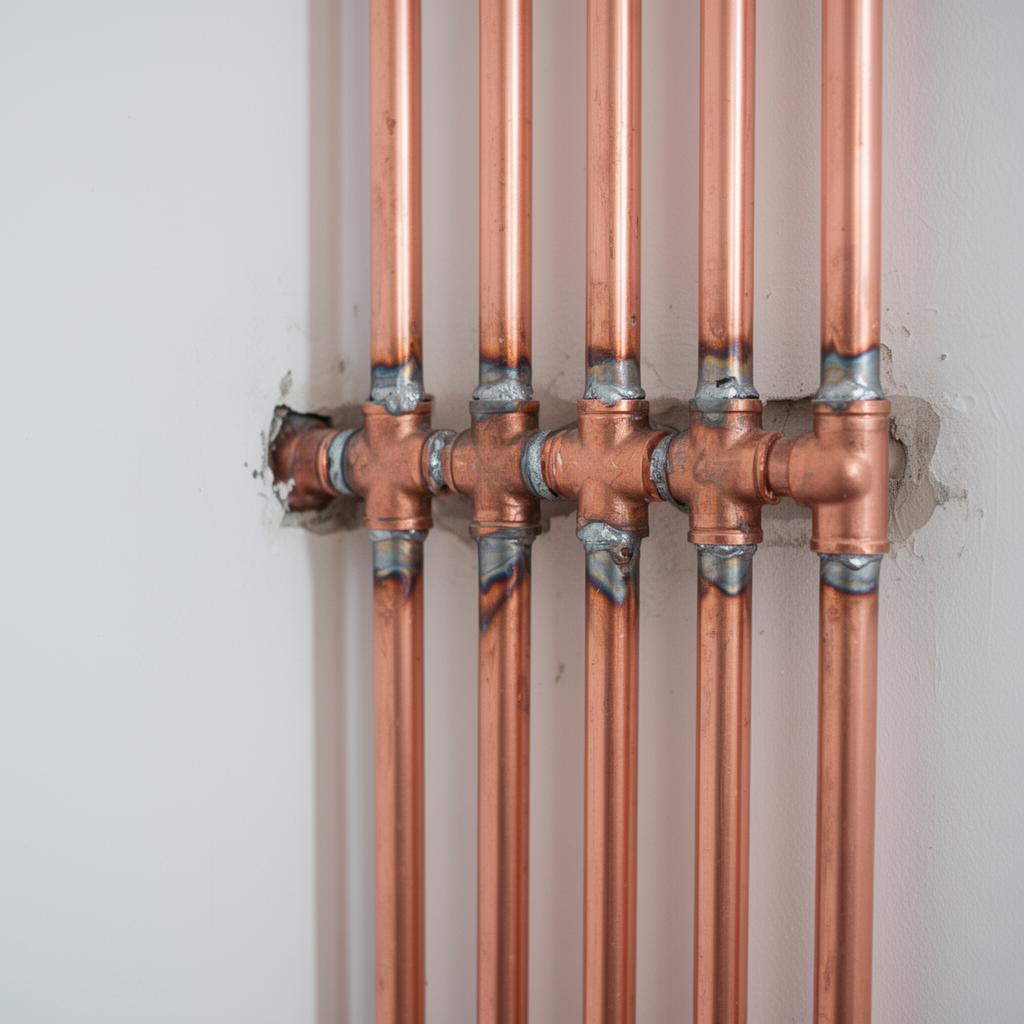
This area has a genuine mix of mains gas and oil-fired properties, sometimes on the same street, depending on when the gas network reached that particular row of houses. It's worth confirming which fuel your property is actually on and whether a fuel switch is realistic before assuming either option is off the table. Being registered for both Gas Safe and OFTEC work means we can look at the honest options for your specific property rather than steering you toward whichever fuel we happen to be set up for. Mains gas covers much of the area, with off-grid pockets, which changes the appliance shortlist. Nearest neighbours on our round are Pensford, Compton Dando, Chelwood. Publow (BS39) has a healthy private-rental sector, particularly across stone village homes. We service a number of letting-agent portfolios across the area and keep the certification cycle running so renewals never slip.
Where else we work near Publow
We cover Publow alongside Pensford (BS39), Compton Dando (BS39), Chelwood (BS39), Stanton Drew (BS39) — so spares, follow-ups and annual visits are easy to schedule together.
Local conditions we plan around in BS39
This area has a genuine mix of mains gas and oil-fired properties, sometimes on the same street, depending on when the gas network reached that particular row of houses. It's worth confirming which fuel your property is actually on and whether a fuel switch is realistic before assuming either option is off the table. Being registered for both Gas Safe and OFTEC work means we can look at the honest options for your specific property rather than steering you toward whichever fuel we happen to be set up for. Mains gas covers much of the area, with off-grid pockets, which changes the appliance shortlist. Nearest neighbours on our round are Pensford, Compton Dando, Chelwood. Publow (BS39) has a healthy private-rental sector, particularly across stone village homes. We service a number of letting-agent portfolios across the area and keep the certification cycle running so renewals never slip.
Qualifications behind the work
Rolling 30-day reminders across every property — no missed renewals.
Notified, certified, fully insured — your statutory obligations covered properly.
Certificate emailed before we leave the property — copy direct to tenant if preferred.
Direct billing to the letting agent, single engineer across the portfolio.
Landlord extras we offer — Publow
- Rolling annual reminders 30 days before expiry
- Boiler service combined with the CP12 visit
- Multi-property landlord pricing
- Direct billing for letting agents
- Single point of contact across the portfolio
- Out-of-hours tenant call-outs
Common queries, answered honestly
- What if a part for my existing boiler isn't available anymore?
- Manufacturers stop stocking parts for discontinued models after a number of years, and once that happens a repair simply isn't possible even if the fault itself is minor. We'll confirm parts availability with the manufacturer before quoting a repair, and if it's a dead end we'll explain your replacement options honestly.
- What paperwork do I get once the job's finished?
- You'll get a Benchmark commissioning checklist for the boiler, a building notice or Building Control completion certificate for notifiable work, manufacturer warranty registration confirmation, and a Gas Safe (or OFTEC) record of the work. Keep these together — they're what a future buyer's solicitor or a warranty claim will ask for.
- How much longer does a full conversion take compared to a straight boiler swap?
- A straight like-for-like swap in the same location is typically a single working day. Converting boiler type (for example back boiler to combi, or oil to LPG), relocating the boiler, or adding a new cylinder usually needs one to two extra days for additional pipework, flue routing, and electrical work, which we'll scope out at survey.
- We've still got an old back boiler behind the fireplace — what's involved in removing it?
- Removing a back boiler means capping off the gas and water connections behind the fireplace, making good the opening or fitting a new fire/surround if you're keeping one, and rerouting pipework to the new combi or system boiler's position. It's more work than a like-for-like swap but a common upgrade on the older housing stock in this area.
- What's the difference between a power flush and a chemical flush?
- A chemical flush circulates a cleaning agent through the existing system to loosen light debris, while a power flush uses a pump to force water at higher velocity and reversed direction through radiators and pipework to shift heavier sludge. We usually recommend the more thorough power flush before connecting a new boiler to an older system.
- What support do I get after the install is finished?
- Once commissioning's complete we talk you through the controls, leave the paperwork, and register the manufacturer warranty on your behalf. If anything doesn't feel right in the first few weeks — a fault code, an odd noise, a control setting you're unsure of — call us during office hours and we'll talk it through or come back out.
Area data we work from
- County
- Somerset
- Postcode district
- BS39
- Settlement type
- village
- Nearest classified road
- unclassified
- Distance from our base
- 6 miles (Radstock, BA3)
- Typical building stock
- stone village homes
- Water hardness
- hard water
- Fuel availability
- mains gas with off-grid pockets
- Customer mix
- homes alongside small commercial and agricultural premises
- Nearby areas covered
- Pensford, Compton Dando, Chelwood, Stanton Drew
The parts of the job people rarely mention
Chasing pipework into lime plaster and stone walls
Solid stone or cob walls finished in lime plaster, common in the older parts of Publow, behave very differently to modern plasterboard when a pipe run needs chasing in. Lime plaster is softer and more porous than gypsum, so cutting a neat, consistent chase without blowing the surface needs a slower hand and finer disc than a stud-wall job, and any repair has to be made good in a lime-based skim rather than modern filler, which can trap moisture behind it and cause the patch to fail. On solid stone we sometimes surface-mount pipework in painted conduit instead of chasing, particularly where the wall is a significant structural thickness and chasing would weaken it. Knowing which approach a wall needs before starting avoids expensive plaster damage.
Wood-burning stoves with a back boiler alongside a main boiler
Some older rural properties around Publow run a wood-burning stove with a back boiler feeding heat into the same central heating circuit as an oil or gas boiler, usually through a thermal store or a cylinder with two coils. Getting this combination to work safely means the stove's back boiler circuit has its own means of dissipating heat if the pump fails or a valve closes while the stove is still burning — a stove can't simply be switched off the way a boiler can if its heat has nowhere to go, so a gravity-fed safety circuit or heat leak radiator is normally required. It's a more involved design than a single-boiler system and needs planning at the point either appliance is replaced, not treated as an afterthought once the new boiler is already fitted.
Valley-floor properties: flood risk and boiler positioning
Properties on lower ground near watercourses around Publow carry a higher flood risk than the surrounding hills, and that's a genuine factor in deciding where a replacement boiler or cylinder is sited, particularly in a floor-standing oil boiler's case. Raising a floor-standing appliance onto a plinth, or relocating a boiler from a ground-floor utility room to a wall-mounted position higher up, reduces the chance of it being damaged in a flood event that a hillside property simply doesn't need to plan for. Electrical connections and any floor-level wiring also benefit from being kept above likely flood water levels where practical. We raise this with customers on lower-lying sites at the planning stage rather than only after a flood has already caused damage.
Electronic and physical scale reducers compared
In hard water areas like Publow, a scale reducer fitted on the boiler's cold feed protects the heat exchanger without the ongoing salt and drainage requirements of a full water softener. Physical scale reducers use a polyphosphate or template-assisted crystallisation cartridge that alters how calcium carbonate crystallises so it's less likely to adhere to hot surfaces; electronic and electromagnetic devices claim a similar effect without a cartridge to replace, though the evidence base for electronic types is weaker and more inconsistent than for physical media. Manufacturers including Worcester Bosch now specify a scale reducer or softener as a condition of extended guarantees in hard water areas, so the choice affects warranty validity as well as long-term performance, not just descale frequency.
Coordinating heating and gas safety across multiple let properties
Landlords and agents managing several let properties across Somerset, rather than a single tenancy, benefit from staggering annual gas safety checks and boiler services onto a schedule that's easy to track rather than each property renewing on whatever date the previous engineer happened to visit. Keeping service records and gas safety certificates for each property organised together also matters at the point a tenancy changes, since an incoming tenant is legally entitled to see a current certificate before or at the start of their tenancy, not weeks afterwards. We can align service and safety-check dates across a small portfolio where that's useful, rather than treating each property as a completely separate booking with no coordination between them.
LPG as an alternative to oil off the gas grid
Properties around Publow that sit off the mains gas network aren't limited to oil — bulk LPG, stored in an above-ground tank on a concrete base with the same OFTEC-style clearance and access rules as oil, runs standard gas-rated boilers with only a change of injector and pressure setting rather than a different boiler entirely. It suits households that want a gas hob and gas-style modulation rather than an oil burner's on/off firing pattern. The tank still needs delivery access for a tanker, which on some rural driveways is the deciding factor over oil. We check the access route for the largest realistic delivery vehicle before recommending LPG over oil, because a tank that can't be filled easily causes more disruption than the fuel choice was meant to solve.
Village lane access and van positioning for larger jobs
Village lanes around Publow are often single-track or tight two-way roads without dedicated off-street loading space, which affects how a larger job like a full system installation or an oil tank replacement is planned — the van needs somewhere to park close enough for repeated trips carrying equipment without blocking the lane for through traffic or farm vehicles. On a job involving a full radiator or pipework replacement, materials sometimes need staging over more than one visit rather than delivered all at once if there's nowhere secure to leave them on-site between visits. We check lane width and passing places when scheduling larger jobs in village locations, and plan van access and parking as part of the job rather than as an afterthought on the day.
How to get this priced
Correct sizing matters more than most people realise for landlord gas safety certificate (cp12): an undersized system struggles to keep up, and an oversized one costs more to run and buy than it needs to. We size against the property's actual heat loss and hot water demand, not a rule of thumb. Photos of the existing setup speed up pricing for village properties like these. Conservation and listed constraints apply to parts of the area, so external work is checked first. Water here is hard water, so scale protection is specified accordingly.
Related help for Publow
- New Boiler Cost in PublowHonest, area-specific pricing guidance for a new combi, system or oil boiler — with no obligation site visit.
- Emergency Boiler Repair in PublowSame-week (often same-day) no-heat and no-hot-water call-outs for gas and oil boilers.
- Boiler Replacement Quote in PublowFree, no-obligation site visits and written specifications for old boiler replacements.
- Oil Boiler Service Cost in PublowWhat an OFTEC registered oil boiler service costs locally, what is included, and what a tank inspection adds.
- Oil Boiler Repair in PublowOil boiler lockouts, sooting and no heat call outs for homes off the mains gas grid, diagnosed before parts are quoted.
- Boiler Service Cost in PublowAnnual gas boiler service pricing, what the check covers, and how a landlord certificate can be combined in one visit.
- Boiler Installation in PublowNew combi, system and regular boiler installations for gas and oil homes — fixed prices, manufacturer warranties.
- Gas Boiler Installation in PublowGas Safe registered installations and upgrades for mains gas homes across Bath, Radstock and Wells.
New Worcester boiler with a 10 year guarantee*
Free no-obligation quotes for installation, servicing & repairs across BA & BS postcodes.