
New Boiler Cost, Binegar New Boiler Prices (BA3)
When you're comparing tradespeople for new boiler cost, it's worth checking registration before price: Gas Safe for mains gas work, OFTEC for oil, and manufacturer accreditation if a specific guarantee matters to you. We hold all three — Gas Safe, OFTEC and Worcester Bosch Accredited Installer status — and work from 24 Bristol Road, Radstock BA3 3EE, so you can check us against whatever criteria you're using to shortlist. Access is lane access, so parking, spoil removal and delivery timing get planned in advance. Typical era of build is mixed-cottage, which affects existing pipework and system cleanliness. In Binegar itself (BA3, Somerset) that usually means stone village homes, roughly 6 miles from the workshop.
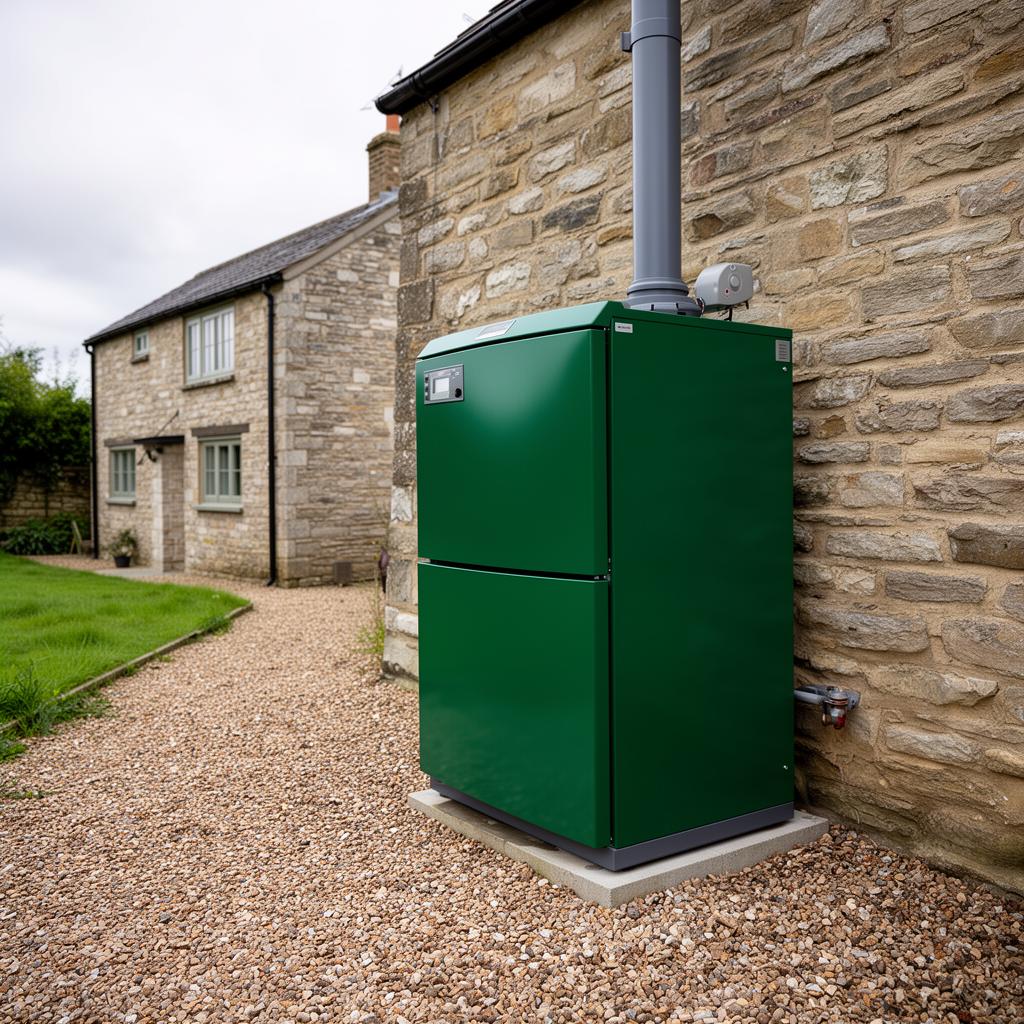
Water here runs off carboniferous limestone and Jurassic oolite, which makes it very hard by national standards. Hard water accelerates scale build-up inside heat exchangers, cylinders and pipework, which shortens the working life of components that aren't protected against it. On jobs in this area we factor scale protection into the specification rather than treating it as an optional extra, because the difference between a protected and unprotected system shows up within a few years, not decades. It's a genuine local variable, not generic sales advice, and it applies whether the property is on mains gas or oil. Our van runs the unclassified to reach you, 6 miles out from the Radstock workshop. Access is lane access, so parking, spoil removal and delivery timing get planned in advance. What changes a new boiler price in Binegar more than the brand is the building itself: stone village homes drive different flue routes, gas-pipe sizing and controls choices. That's why we visit before fixing a price.
Where else we work near Binegar
We cover Binegar alongside Oakhill (BA3), Gurney Slade (BA3), Chilcompton (BA3), Stoke St Michael (BA3) — so spares, follow-ups and annual visits are easy to schedule together.
Why Binegar households use us
362+ verified reviews from real customers across BA and BS postcodes.
No verbal-only quotes — every figure is in writing with the boiler, controls and warranty spelled out.
Qualifies your install for the full 10-year manufacturer guarantee* on supported models.
Our engineers aren't paid on what you buy — there's no incentive to upsell you to a bigger boiler.
Binegar: stock, water and fuel supply
Water here runs off carboniferous limestone and Jurassic oolite, which makes it very hard by national standards. Hard water accelerates scale build-up inside heat exchangers, cylinders and pipework, which shortens the working life of components that aren't protected against it. On jobs in this area we factor scale protection into the specification rather than treating it as an optional extra, because the difference between a protected and unprotected system shows up within a few years, not decades. It's a genuine local variable, not generic sales advice, and it applies whether the property is on mains gas or oil. Our van runs the unclassified to reach you, 6 miles out from the Radstock workshop. Access is lane access, so parking, spoil removal and delivery timing get planned in advance. What changes a new boiler price in Binegar more than the brand is the building itself: stone village homes drive different flue routes, gas-pipe sizing and controls choices. That's why we visit before fixing a price.
What's included in our price — Binegar
- Boiler, flue and standard controls
- Magnetic filter + chemical inhibitor
- System flush appropriate to system age
- All gas / oil works, building notification
- Commissioning, handover and paperwork
- Warranty registration with the manufacturer
Questions before you book
- What's the difference between a power flush and a chemical flush?
- A chemical flush circulates a cleaning agent through the existing system to loosen light debris, while a power flush uses a pump to force water at higher velocity and reversed direction through radiators and pipework to shift heavier sludge. We usually recommend the more thorough power flush before connecting a new boiler to an older system.
- Will the new boiler work properly with our existing radiators?
- Not always without checking. Modern condensing boilers run most efficiently at lower flow temperatures, and radiators originally sized for an old, hotter-running boiler can end up struggling to heat a room adequately at those lower temperatures. We check radiator sizing against a heat loss calculation and flag any that are undersized for the room before installing.
- Can you look over a quote I've already had from another company?
- Yes, this comes up often. Send or bring in the other written quote and we'll go through the spec — boiler size, controls, cylinder if included, and what's actually listed for parts and labour — and tell you plainly whether it looks right for the property, oversized, or missing something we'd expect to see.
- Is a boiler install a noisy, disruptive job?
- There's unavoidable noise — drilling for the flue, pipework, sometimes moving a cylinder — but a straightforward swap is usually done within a working day with the mess kept to the immediate work area. We dust-sheet the route in and out and clear away pipe offcuts and old parts before we leave.
- What are your opening hours, and can you help out of hours?
- Our published hours are Monday to Friday, 8:30am to 5pm, and that's when the phones are answered and jobs are booked. We're honest that we don't run a round-the-clock emergency line, so if you're planning ahead, call during those hours on 07516 118198 and we'll get you booked in.
- Does being in the Mendip AONB affect boiler or tank installation?
- An Area of Outstanding Natural Beauty designation is mainly about protecting the wider landscape, so it more commonly affects things like external oil tank visibility or large equipment siting than a standard boiler flue. It's worth checking with the local planning authority for anything highly visible from outside; for a routine internal swap it rarely changes anything.
Coverage detail for BA3
- County
- Somerset
- Postcode district
- BA3
- Settlement type
- village
- Nearest classified road
- unclassified
- Distance from our base
- 6 miles (Radstock, BA3)
- Typical building stock
- stone village homes
- Water hardness
- very hard limestone water
- Fuel availability
- mains gas with off-grid pockets
- Customer mix
- homes alongside small commercial and agricultural premises
- Nearby areas covered
- Oakhill, Gurney Slade, Chilcompton, Stoke St Michael
Detail that matters in Binegar
Binegar's place within the wider Somerset area we cover
Binegar is one of several neighbourhoods we work in around the wider area, and while the postcode district and general water hardness and building stock trends are shared with the surrounding district, the specific street-level access, parking and property type still varies enough locally that we treat each visit on its own facts rather than applying a generic area answer. Nearby areas we also cover include Oakhill, Gurney Slade and Chilcompton, which is relevant mainly where a customer wants comparable jobs referenced or where a single visit can sensibly cover more than one nearby property in the same trip. The underlying trade standards — Gas Safe, OFTEC, correct commissioning — don't vary by neighbourhood, only the practical details of the job do.
LPG as an alternative to oil off the gas grid
Properties around Binegar that sit off the mains gas network aren't limited to oil — bulk LPG, stored in an above-ground tank on a concrete base with the same OFTEC-style clearance and access rules as oil, runs standard gas-rated boilers with only a change of injector and pressure setting rather than a different boiler entirely. It suits households that want a gas hob and gas-style modulation rather than an oil burner's on/off firing pattern. The tank still needs delivery access for a tanker, which on some rural driveways is the deciding factor over oil. We check the access route for the largest realistic delivery vehicle before recommending LPG over oil, because a tank that can't be filled easily causes more disruption than the fuel choice was meant to solve.
Heating outbuildings and annexes within an AONB
Converting an outbuilding to a habitable annexe within the Mendip or Chew Valley AONB around Binegar often comes with planning conditions attached to external alterations, which can affect where a flue, condensate pipe or oil tank for the new space is permitted to sit relative to the original building's character. Extending an existing boiler or cylinder to also serve the annexe, rather than installing a second separate system, sometimes avoids adding further visible plant to the property, though it depends on whether the existing system has the capacity and pipe run length to serve the extra space without compromising performance at the main house. We check both the planning constraints and the existing system's spare capacity before recommending whether to extend or install separately.
Oil tank de-sludging: why it's not optional
Oil sitting in a tank for years accumulates water from condensation and fine sediment that settles at the bottom, and over time this forms a sludge layer that can be drawn into the fuel line, particularly when the tank is nearly empty and the outlet pulls from lower in the tank than usual. Sludge blocks fine oil filters and burner nozzles, which shows up as burner lockouts or a boiler that won't fire cleanly rather than as an obvious tank problem. De-sludging drains and cleans the tank base without necessarily removing the whole tank, and it's worth doing when a tank is inherited with a property, before switching to a new boiler, or if lockouts recur despite the filter and nozzle being replaced. It's a preventative job that's cheaper done on schedule than after a burner failure it caused.
What a proper heating quote should include
A quote worth relying on states the specific boiler or equipment model, the labour and materials it covers, whether a system flush and magnetic filter are included, what happens to old equipment removal and disposal, and what's excluded — an unexpected gas pipe upsizing or asbestos-containing material discovered during removal, for example, which can't always be known before work starts. It should also state who's completing the Gas Safe or OFTEC notification and Benchmark commissioning record, since that's the paperwork that protects both the manufacturer's guarantee and the property's compliance history when it's sold. A vague one-line quote makes comparing genuinely different offers difficult, because two prices that look similar can cover very different scopes of actual work.
- Specific make and model, not just "combi boiler"
- Flush and magnetic filter stated as included or excluded
- Old equipment removal and disposal covered
- Notification and Benchmark record responsibility stated
Radiator sizing after lowering the flow temperature
Running a boiler at a lower flow temperature — typically 55°C or below rather than the old default of 70-80°C — improves condensing efficiency measurably, but it also reduces the heat output of every radiator in the house, because a radiator's output falls roughly with the square of the temperature difference to the room. Radiators sized correctly for a 75°C flow can end up unable to heat the room properly at 55°C unless they're upsized or supplemented. We check each radiator against the lower design flow temperature before recommending it, and where a room falls short we look at whether a larger single panel, a double panel, or an additional radiator on that circuit closes the gap, rather than pushing the flow temperature back up and giving away the efficiency gain.
Chasing pipework into lime plaster and stone walls
Solid stone or cob walls finished in lime plaster, common in the older parts of Binegar, behave very differently to modern plasterboard when a pipe run needs chasing in. Lime plaster is softer and more porous than gypsum, so cutting a neat, consistent chase without blowing the surface needs a slower hand and finer disc than a stud-wall job, and any repair has to be made good in a lime-based skim rather than modern filler, which can trap moisture behind it and cause the patch to fail. On solid stone we sometimes surface-mount pipework in painted conduit instead of chasing, particularly where the wall is a significant structural thickness and chasing would weaken it. Knowing which approach a wall needs before starting avoids expensive plaster damage.
Electronic and physical scale reducers compared
In very hard limestone water areas like Binegar, a scale reducer fitted on the boiler's cold feed protects the heat exchanger without the ongoing salt and drainage requirements of a full water softener. Physical scale reducers use a polyphosphate or template-assisted crystallisation cartridge that alters how calcium carbonate crystallises so it's less likely to adhere to hot surfaces; electronic and electromagnetic devices claim a similar effect without a cartridge to replace, though the evidence base for electronic types is weaker and more inconsistent than for physical media. Manufacturers including Worcester Bosch now specify a scale reducer or softener as a condition of extended guarantees in hard water areas, so the choice affects warranty validity as well as long-term performance, not just descale frequency.
Low-loss headers on larger or multi-zone systems
On a system with several heating zones or a boiler oversized relative to any single zone's flow requirement, a low-loss header hydraulically separates the boiler's primary circuit from the secondary zone circuits, so each side can run its own pump and flow rate without one interfering with the other. Without it, a zone valve closing on a multi-zone system can starve the boiler of flow or force excessive pump pressure through the remaining open zones. It's most relevant on larger properties or ones with commercial premises attached, where several distinct heating circuits — perhaps a shop unit and a flat above — share one heat source. Getting the header sized to the boiler's actual flow rate, not just fitted as standard, is what makes it work rather than just adding another connection.
How to get this priced
For landlords, new boiler cost usually needs to fit around a tenancy, so let us know at the outset if the property is occupied and what access arrangements work for the tenant. We'll build that into the quote and the schedule rather than assuming an empty property. We can usually pair the visit with other work in Oakhill to keep the trip efficient. Typical era of build is mixed-cottage, which affects existing pipework and system cleanliness. Mains gas covers much of the area, with off-grid pockets, which changes the appliance shortlist.
Related help for Binegar
- Emergency Boiler Repair in BinegarSame-week (often same-day) no-heat and no-hot-water call-outs for gas and oil boilers.
- Landlord Gas Safety Certificate (CP12) in BinegarAnnual CP12 inspections for landlords and letting agents — digital certificate the same day.
- Boiler Replacement Quote in BinegarFree, no-obligation site visits and written specifications for old boiler replacements.
- Oil Boiler Service Cost in BinegarWhat an OFTEC registered oil boiler service costs locally, what is included, and what a tank inspection adds.
- Oil Boiler Repair in BinegarOil boiler lockouts, sooting and no heat call outs for homes off the mains gas grid, diagnosed before parts are quoted.
- Boiler Service Cost in BinegarAnnual gas boiler service pricing, what the check covers, and how a landlord certificate can be combined in one visit.
- Boiler Installation in BinegarNew combi, system and regular boiler installations for gas and oil homes — fixed prices, manufacturer warranties.
- Gas Boiler Installation in BinegarGas Safe registered installations and upgrades for mains gas homes across Bath, Radstock and Wells.
New Worcester boiler with a 10 year guarantee*
Free no-obligation quotes for installation, servicing & repairs across BA & BS postcodes.