
Oil Boiler Repair, Emergency Boiler Repair in Binegar
Timing matters with oil boiler repair: a mid-summer replacement gives more room to plan than an emergency swap in January, and a written quote gives you time to think rather than decide under pressure. We can work to either, but a bit of notice usually means a smoother job. Gas Safe registered, OFTEC registered, 24 Bristol Road, Radstock BA3 3EE, open Monday to Friday, 8:30am to 5pm. Typical era of build is mixed-cottage, which affects existing pipework and system cleanliness. Most of what we open up here is stone village homes, which dictates flue routes and pipe sizing. In Binegar itself (BA3, Somerset) that usually means stone village homes, roughly 6 miles from the workshop.
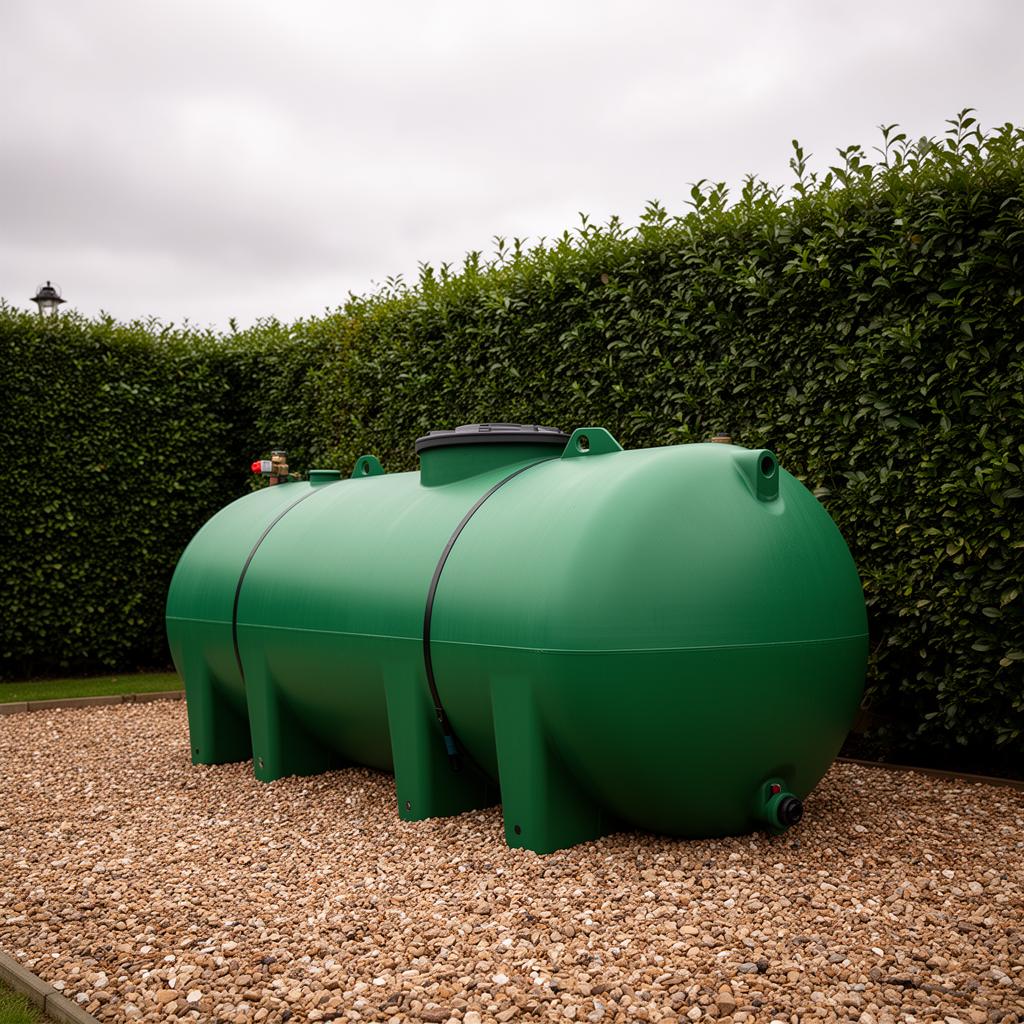
Being within or close to the Mendip or Chew Valley area of natural beauty doesn't generally add restrictions to internal heating work, but it does often coincide with rural, off-grid or agricultural properties where oil storage, tank siting and access are the more relevant practical considerations. We treat those two things — the planning designation and the practical rural setting — as separate issues, and deal with whichever actually applies to your property rather than assuming both automatically apply. Access is lane access, so parking, spoil removal and delivery timing get planned in advance. Typical era of build is mixed-cottage, which affects existing pipework and system cleanliness. Binegar sits roughly 6 miles from our Radstock base via the unclassified. We're on the road across BA3 every day, so emergency response is genuinely local — not a third-party engineer dispatched from the other side of the county.
Why Binegar work is specified differently
Being within or close to the Mendip or Chew Valley area of natural beauty doesn't generally add restrictions to internal heating work, but it does often coincide with rural, off-grid or agricultural properties where oil storage, tank siting and access are the more relevant practical considerations. We treat those two things — the planning designation and the practical rural setting — as separate issues, and deal with whichever actually applies to your property rather than assuming both automatically apply. Access is lane access, so parking, spoil removal and delivery timing get planned in advance. Typical era of build is mixed-cottage, which affects existing pipework and system cleanliness. Binegar sits roughly 6 miles from our Radstock base via the unclassified. We're on the road across BA3 every day, so emergency response is genuinely local — not a third-party engineer dispatched from the other side of the county.
When to call vs wait — Binegar
- No heat in winter with vulnerable occupants — call
- Visible water leak — turn off, then call
- Smell of gas — leave the property, ring 0800 111 999 first
- Boiler keeps locking out — likely needs a visit
- Slight pressure drop after months — can usually wait
Also covering the lanes around Binegar
We cover Binegar alongside Oakhill (BA3), Gurney Slade (BA3), Chilcompton (BA3), Stoke St Michael (BA3) — so spares, follow-ups and annual visits are easy to schedule together.
Why Binegar households use us
Oil boilers and tanks covered — we don't bounce oil-fired call-outs to another firm.
We never swap parts blindly. You'll see the fault confirmed before any spare goes in.
Diverter valves, expansion vessels, pumps, common PCBs — first-visit fixes are the norm.
Every gas job notified to Building Control. Photo-evidenced repairs where relevant.
Questions before you book
- Will the new boiler work properly with our existing radiators?
- Not always without checking. Modern condensing boilers run most efficiently at lower flow temperatures, and radiators originally sized for an old, hotter-running boiler can end up struggling to heat a room adequately at those lower temperatures. We check radiator sizing against a heat loss calculation and flag any that are undersized for the room before installing.
- What support do I get after the install is finished?
- Once commissioning's complete we talk you through the controls, leave the paperwork, and register the manufacturer warranty on your behalf. If anything doesn't feel right in the first few weeks — a fault code, an odd noise, a control setting you're unsure of — call us during office hours and we'll talk it through or come back out.
- Where can a new boiler actually be sited in the property?
- A combi is usually fitted in a kitchen cupboard, utility room, loft, or garage as long as flue clearances to windows, doors, and boundaries are met. A system or regular boiler with a cylinder needs a bit more room and usually stays close to its current position unless you're relocating the whole system, which is a bigger job.
- Does being in the Mendip AONB affect boiler or tank installation?
- An Area of Outstanding Natural Beauty designation is mainly about protecting the wider landscape, so it more commonly affects things like external oil tank visibility or large equipment siting than a standard boiler flue. It's worth checking with the local planning authority for anything highly visible from outside; for a routine internal swap it rarely changes anything.
- How often should a boiler actually be serviced?
- Once a year is the standard recommendation from every manufacturer, and most warranty terms make it a condition rather than a suggestion — miss a year and a claim can be refused even if the fault is unrelated. Landlords have a separate legal duty to have gas appliances checked annually regardless of warranty terms.
- We're a home attached to or near a small business premises — do you cover that kind of property?
- Where the heating system is a standard domestic boiler serving living accommodation, it's within our normal scope even if it sits next to or above a shop or workshop, which is a common layout around Binegar. Fully commercial systems and appliances are a different scope, so we'd confirm exactly what's being asked at enquiry stage.
Local reference data
- County
- Somerset
- Postcode district
- BA3
- Settlement type
- village
- Nearest classified road
- unclassified
- Distance from our base
- 6 miles (Radstock, BA3)
- Typical building stock
- stone village homes
- Water hardness
- very hard limestone water
- Fuel availability
- mains gas with off-grid pockets
- Customer mix
- homes alongside small commercial and agricultural premises
- Nearby areas covered
- Oakhill, Gurney Slade, Chilcompton, Stoke St Michael
Practical considerations across BA3
Heating outbuildings and annexes within an AONB
Converting an outbuilding to a habitable annexe within the Mendip or Chew Valley AONB around Binegar often comes with planning conditions attached to external alterations, which can affect where a flue, condensate pipe or oil tank for the new space is permitted to sit relative to the original building's character. Extending an existing boiler or cylinder to also serve the annexe, rather than installing a second separate system, sometimes avoids adding further visible plant to the property, though it depends on whether the existing system has the capacity and pipe run length to serve the extra space without compromising performance at the main house. We check both the planning constraints and the existing system's spare capacity before recommending whether to extend or install separately.
How a condensing boiler recovers extra heat
A condensing boiler passes flue gases through a secondary heat exchanger before they leave the flue, extracting additional heat by condensing water vapour in the exhaust back into liquid, which is expelled as the mildly acidic condensate water down the drain. This is why every condensing boiler needs a condensate drainage route as part of its installation, unlike older non-condensing boilers, which simply vented hot dry gas straight out. The efficiency benefit only fully materialises when the boiler is actually condensing regularly, which needs a return water temperature low enough — generally below 55°C — for water vapour to condense in the first place. A condensing boiler run permanently at a high flow temperature can spend much of its time not actually condensing, which is one of the main reasons flow temperature settings matter as much as the boiler model chosen.
Low-loss headers on larger or multi-zone systems
On a system with several heating zones or a boiler oversized relative to any single zone's flow requirement, a low-loss header hydraulically separates the boiler's primary circuit from the secondary zone circuits, so each side can run its own pump and flow rate without one interfering with the other. Without it, a zone valve closing on a multi-zone system can starve the boiler of flow or force excessive pump pressure through the remaining open zones. It's most relevant on larger properties or ones with commercial premises attached, where several distinct heating circuits — perhaps a shop unit and a flat above — share one heat source. Getting the header sized to the boiler's actual flow rate, not just fitted as standard, is what makes it work rather than just adding another connection.
Condensate soakaways where there's no convenient drain
Properties without a nearby internal waste connection or external gully for the boiler's condensate — common on rural plots around Binegar where the nearest drain run is a long way from the boiler's location — sometimes need a dedicated condensate soakaway instead. This is a small pit filled with granular material that the condensate, which is mildly acidic, can disperse into gradually rather than running to a drain at all. Sizing and siting it correctly matters: it needs to be far enough from foundations and sited where the local ground can actually absorb the modest but steady volume a boiler produces, particularly over a long heating season. Where ground conditions make a soakaway unreliable, running a longer insulated pipe to a proper drainage connection is usually the safer long-term choice even though it's more work to install.
Single-pipe circuits in older stone cottages
A lot of the stone cottages and farmhouses around Binegar were plumbed decades ago on a single-pipe gravity circuit, where each radiator draws from and returns to the same loop rather than having its own flow and return. It works, but radiators furthest from the boiler receive water that's already cooled after giving up heat to the ones before it, so the far end of the house is always the coldest. Converting to a two-pipe layout means new pipe runs, which in a stone cottage often means chasing lime plaster or lifting flagstones — not a trivial job. Where a full rewire of the pipework isn't wanted, we sometimes improve balance instead by oversizing the radiators nearest the end of the run and fitting TRVs to hold back the ones nearest the boiler.
Choosing a boiler location that satisfies both planning and practicality in Binegar
On a property within a conservation area, AONB or World Heritage designation, the boiler's physical location is often decided as much by the acceptable flue route as by where the homeowner would naturally put it — a kitchen wall facing the street may need ruling out even before considering pipe run length, simply because the flue outlet would be visible from a protected streetscape. Working back from an acceptable flue position to find a viable boiler location sometimes means a longer pipework run through the property than would otherwise be chosen, adding to the job's cost and complexity. We assess planning constraints on the flue before finalising the boiler's proposed location, rather than picking the location first and discovering the flue route is unacceptable afterwards.
What different boiler noises usually mean
A kettling or rumbling sound from a boiler is most often scale or sludge build-up on the heat exchanger causing localised boiling as water is trapped and overheated in restricted channels — the heating equivalent of a kettle furring up. A banging or knocking sound in pipework, sometimes called water hammer, is usually caused by a valve closing too quickly or trapped air rather than the boiler itself. A whining or humming sound tends to point to the circulating pump, either from wear or from air in the system reducing lubrication at the bearing. Diagnosing correctly from the noise alone isn't reliable enough to act on without checking system pressure, inhibitor condition and the pump directly, but the noise itself is a useful first indicator of which of those to check first.
How to get this priced
Expect three things from oil boiler repair with us: a proper look at the property before any figure is given, a written quote that spells out what's included, and work carried out by a Gas Safe and OFTEC registered engineer who stands behind it. We can usually pair the visit with other work in Oakhill to keep the trip efficient. Typical era of build is mixed-cottage, which affects existing pipework and system cleanliness. Terrain is level, which matters for condensate runs and tank siting.
Related help for Binegar
- New Boiler Cost in BinegarHonest, area-specific pricing guidance for a new combi, system or oil boiler — with no obligation site visit.
- Emergency Boiler Repair in BinegarSame-week (often same-day) no-heat and no-hot-water call-outs for gas and oil boilers.
- Landlord Gas Safety Certificate (CP12) in BinegarAnnual CP12 inspections for landlords and letting agents — digital certificate the same day.
- Boiler Replacement Quote in BinegarFree, no-obligation site visits and written specifications for old boiler replacements.
- Oil Boiler Service Cost in BinegarWhat an OFTEC registered oil boiler service costs locally, what is included, and what a tank inspection adds.
- Boiler Service Cost in BinegarAnnual gas boiler service pricing, what the check covers, and how a landlord certificate can be combined in one visit.
- Boiler Installation in BinegarNew combi, system and regular boiler installations for gas and oil homes — fixed prices, manufacturer warranties.
- Gas Boiler Installation in BinegarGas Safe registered installations and upgrades for mains gas homes across Bath, Radstock and Wells.
New Worcester boiler with a 10 year guarantee*
Free no-obligation quotes for installation, servicing & repairs across BA & BS postcodes.