
Oil Boiler Repair, Emergency Boiler Repair in Litton
Getting quotes for oil boiler repair can feel like a gamble when you don't know the trade. You want someone who turns up when they say they will, explains what they're doing, and leaves you with a system you understand. That's the standard we work to from 24 Bristol Road, Radstock BA3 3EE. We're Gas Safe registered, OFTEC registered and a Worcester Bosch Accredited Installer, so the paperwork and the workmanship both hold up to scrutiny. Our van runs the B3114 to reach you, 6 miles out from the Radstock workshop. Most of what we open up here is stone cottages and farms, which dictates flue routes and pipe sizing. In Litton itself (BA3, Somerset) that usually means stone cottages and farms, roughly 6 miles from the workshop.
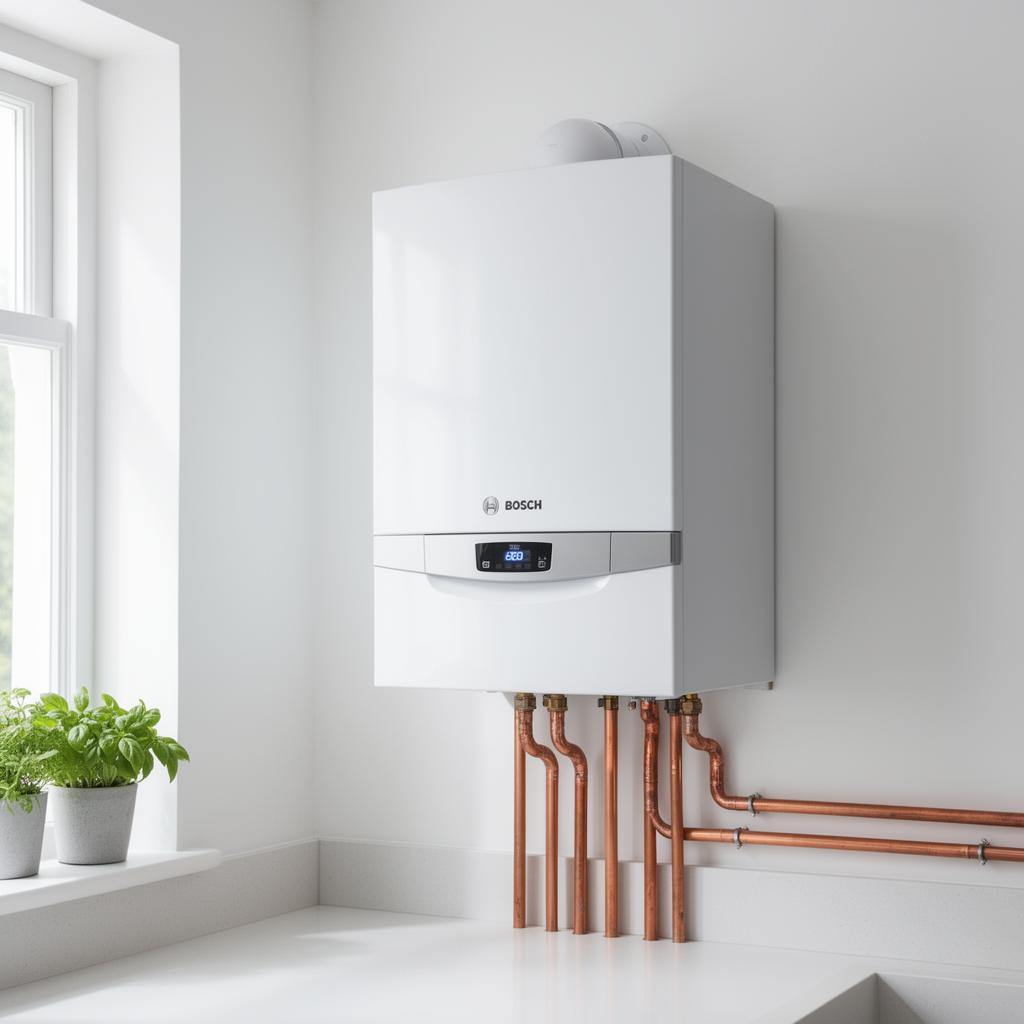
This area has a genuine mix of mains gas and oil-fired properties, sometimes on the same street, depending on when the gas network reached that particular row of houses. It's worth confirming which fuel your property is actually on and whether a fuel switch is realistic before assuming either option is off the table. Being registered for both Gas Safe and OFTEC work means we can look at the honest options for your specific property rather than steering you toward whichever fuel we happen to be set up for. Our van runs the B3114 to reach you, 6 miles out from the Radstock workshop. Conservation and listed constraints apply to parts of the area, so external work is checked first. Litton sits roughly 6 miles from our Radstock base via the B3114. We're on the road across BA3 every day, so emergency response is genuinely local — not a third-party engineer dispatched from the other side of the county.
How Somerset building stock shapes the spec
This area has a genuine mix of mains gas and oil-fired properties, sometimes on the same street, depending on when the gas network reached that particular row of houses. It's worth confirming which fuel your property is actually on and whether a fuel switch is realistic before assuming either option is off the table. Being registered for both Gas Safe and OFTEC work means we can look at the honest options for your specific property rather than steering you toward whichever fuel we happen to be set up for. Our van runs the B3114 to reach you, 6 miles out from the Radstock workshop. Conservation and listed constraints apply to parts of the area, so external work is checked first. Litton sits roughly 6 miles from our Radstock base via the B3114. We're on the road across BA3 every day, so emergency response is genuinely local — not a third-party engineer dispatched from the other side of the county.
When to call vs wait — Litton
- No heat in winter with vulnerable occupants — call
- Visible water leak — turn off, then call
- Smell of gas — leave the property, ring 0800 111 999 first
- Boiler keeps locking out — likely needs a visit
- Slight pressure drop after months — can usually wait
Within reach of the B3114
We cover Litton alongside East Harptree (BS40), Hinton Blewett (BS39), Priddy (BA5), Chewton Mendip (BA3) — so spares, follow-ups and annual visits are easy to schedule together.
Qualifications behind the work
Oil boilers and tanks covered — we don't bounce oil-fired call-outs to another firm.
We never swap parts blindly. You'll see the fault confirmed before any spare goes in.
Diverter valves, expansion vessels, pumps, common PCBs — first-visit fixes are the norm.
Every gas job notified to Building Control. Photo-evidenced repairs where relevant.
Common queries, answered honestly
- Can you look over a quote I've already had from another company?
- Yes, this comes up often. Send or bring in the other written quote and we'll go through the spec — boiler size, controls, cylinder if included, and what's actually listed for parts and labour — and tell you plainly whether it looks right for the property, oversized, or missing something we'd expect to see.
- How do you decide whether to repair or replace a boiler?
- We weigh the age of the boiler, whether parts are still made for it, how many faults it's had recently, and its running efficiency against a like-for-like or upgraded replacement. If a straightforward part fixes it and the boiler's otherwise sound, we'll say so rather than push a new install you don't need.
- What paperwork do I get once the job's finished?
- You'll get a Benchmark commissioning checklist for the boiler, a building notice or Building Control completion certificate for notifiable work, manufacturer warranty registration confirmation, and a Gas Safe (or OFTEC) record of the work. Keep these together — they're what a future buyer's solicitor or a warranty claim will ask for.
- What's actually checked during an annual boiler service?
- A service includes a visual and functional check of the boiler's casing and controls, flue gas analysis to confirm safe and efficient combustion, checking the flame picture and pressure, inspecting seals and condensate, and testing safety devices. It's a safety check as much as a performance one, and it's what keeps most manufacturer warranties valid.
- Does being in the Mendip AONB affect boiler or tank installation?
- An Area of Outstanding Natural Beauty designation is mainly about protecting the wider landscape, so it more commonly affects things like external oil tank visibility or large equipment siting than a standard boiler flue. It's worth checking with the local planning authority for anything highly visible from outside; for a routine internal swap it rarely changes anything.
- What support do I get after the install is finished?
- Once commissioning's complete we talk you through the controls, leave the paperwork, and register the manufacturer warranty on your behalf. If anything doesn't feel right in the first few weeks — a fault code, an odd noise, a control setting you're unsure of — call us during office hours and we'll talk it through or come back out.
Litton at a glance
- County
- Somerset
- Postcode district
- BA3
- Settlement type
- village
- Nearest classified road
- B3114
- Distance from our base
- 6 miles (Radstock, BA3)
- Typical building stock
- stone cottages and farms
- Water hardness
- very hard limestone water
- Fuel availability
- mains gas with off-grid pockets
- Customer mix
- homes alongside small commercial and agricultural premises
- Nearby areas covered
- East Harptree, Hinton Blewett, Priddy, Chewton Mendip
Detail that matters in Litton
Village lane access and van positioning for larger jobs
Village lanes around Litton are often single-track or tight two-way roads without dedicated off-street loading space, which affects how a larger job like a full system installation or an oil tank replacement is planned — the van needs somewhere to park close enough for repeated trips carrying equipment without blocking the lane for through traffic or farm vehicles. On a job involving a full radiator or pipework replacement, materials sometimes need staging over more than one visit rather than delivered all at once if there's nowhere secure to leave them on-site between visits. We check lane width and passing places when scheduling larger jobs in village locations, and plan van access and parking as part of the job rather than as an afterthought on the day.
Nozzle replacement and baffle cleaning on oil burners
An oil burner's nozzle atomises fuel into a fine spray for combustion, and it wears from constant fuel flow at pressure, gradually changing the spray pattern away from the burner manufacturer's specification even before it visibly fails. A worn nozzle burns less cleanly, producing more soot that coats the heat exchanger's baffles, and a sooted heat exchanger loses efficiency in the same way scale does on a gas boiler's plates. Standard practice on an annual oil service is to replace the nozzle as a matter of course, rather than wait for a fault, and to remove and clean the baffles so the heat exchanger surfaces are exposed to combustion heat properly again. Skipping nozzle replacement to save a service visit's minor parts cost is a false economy against the fuel wasted by a poorly atomising burner.
Radiator sizing after lowering the flow temperature
Running a boiler at a lower flow temperature — typically 55°C or below rather than the old default of 70-80°C — improves condensing efficiency measurably, but it also reduces the heat output of every radiator in the house, because a radiator's output falls roughly with the square of the temperature difference to the room. Radiators sized correctly for a 75°C flow can end up unable to heat the room properly at 55°C unless they're upsized or supplemented. We check each radiator against the lower design flow temperature before recommending it, and where a room falls short we look at whether a larger single panel, a double panel, or an additional radiator on that circuit closes the gap, rather than pushing the flow temperature back up and giving away the efficiency gain.
What different boiler noises usually mean
A kettling or rumbling sound from a boiler is most often scale or sludge build-up on the heat exchanger causing localised boiling as water is trapped and overheated in restricted channels — the heating equivalent of a kettle furring up. A banging or knocking sound in pipework, sometimes called water hammer, is usually caused by a valve closing too quickly or trapped air rather than the boiler itself. A whining or humming sound tends to point to the circulating pump, either from wear or from air in the system reducing lubrication at the bearing. Diagnosing correctly from the noise alone isn't reliable enough to act on without checking system pressure, inhibitor condition and the pump directly, but the noise itself is a useful first indicator of which of those to check first.
Why very hard limestone water shortens boiler life around Litton
The limestone geology under Somerset gives Litton very hard limestone water, which drops calcium carbonate out of solution as soon as it's heated. Inside a combi's plate heat exchanger the gaps between plates are only a millimetre or two wide, so scale narrows the waterways long before it's visible anywhere else in the system. The first symptom is usually a hot tap that runs warm rather than hot, or a boiler that fires more often for the same demand. Left unchecked, scale insulates the exchanger from the burner, forces flue gases hotter, and can crack the exchanger from thermal stress. A scale reducer fitted on the mains feed, sized to the property's flow rate, is cheaper to install once than to replace a heat exchanger twice.
LPG as an alternative to oil off the gas grid
Properties around Litton that sit off the mains gas network aren't limited to oil — bulk LPG, stored in an above-ground tank on a concrete base with the same OFTEC-style clearance and access rules as oil, runs standard gas-rated boilers with only a change of injector and pressure setting rather than a different boiler entirely. It suits households that want a gas hob and gas-style modulation rather than an oil burner's on/off firing pattern. The tank still needs delivery access for a tanker, which on some rural driveways is the deciding factor over oil. We check the access route for the largest realistic delivery vehicle before recommending LPG over oil, because a tank that can't be filled easily causes more disruption than the fuel choice was meant to solve.
Condensate soakaways where there's no convenient drain
Properties without a nearby internal waste connection or external gully for the boiler's condensate — common on rural plots around Litton where the nearest drain run is a long way from the boiler's location — sometimes need a dedicated condensate soakaway instead. This is a small pit filled with granular material that the condensate, which is mildly acidic, can disperse into gradually rather than running to a drain at all. Sizing and siting it correctly matters: it needs to be far enough from foundations and sited where the local ground can actually absorb the modest but steady volume a boiler produces, particularly over a long heating season. Where ground conditions make a soakaway unreliable, running a longer insulated pipe to a proper drainage connection is usually the safer long-term choice even though it's more work to install.
Signs a boiler repair is no longer the right call
A boiler that's failing repeatedly, needing a different part replaced every service, or over roughly ten to fifteen years old is approaching the point where continued repair costs more over time than replacement, particularly once a heat exchanger — the most expensive single part — starts to show signs of failure through leaks or reduced output. Efficiency is the other half of the calculation: an older non-condensing boiler running at 70-80% efficiency against a modern condensing combi at over 90% means a meaningful chunk of every unit of fuel burned in the old boiler is simply lost up the flue. We give a straight answer on repair versus replace based on the fault found and the boiler's age and condition, rather than defaulting to whichever is more profitable to us on the day.
Heating where a home sits alongside commercial premises
Properties around Litton that combine living accommodation with an attached shop, workshop or other commercial space often need heating designed as genuinely separate zones with independent controls, since a shop's occupied hours and heating demand rarely match the flat or house above it. Where the two shared a single ageing system, splitting them onto separate zone valves — or, on a larger scale, separate boilers — stops one side subsidising or interfering with the other's heating schedule. Commercial space also sometimes falls under different servicing and safety-record obligations than the residential side, depending on how it's used, so it's worth establishing which parts of the building fall under which regime before assuming a single annual service covers everything.
Booking work in Litton
The next step for oil boiler repair is a site visit, not a phone-only estimate. Seeing the property, the current system and the access lets us give you a figure that holds up once the work starts, rather than one that changes on the day. Call 07516 118198, Monday to Friday, 8:30am to 5pm, and we'll arrange a time that suits. A written quote follows the survey — no pressure, and no charge for the Litton visit. Conservation and listed constraints apply to parts of the area, so external work is checked first. homes alongside small commercial and agricultural premises make up most enquiries from this postcode.
Related help for Litton
- New Boiler Cost in LittonHonest, area-specific pricing guidance for a new combi, system or oil boiler — with no obligation site visit.
- Emergency Boiler Repair in LittonSame-week (often same-day) no-heat and no-hot-water call-outs for gas and oil boilers.
- Landlord Gas Safety Certificate (CP12) in LittonAnnual CP12 inspections for landlords and letting agents — digital certificate the same day.
- Boiler Replacement Quote in LittonFree, no-obligation site visits and written specifications for old boiler replacements.
- Oil Boiler Service Cost in LittonWhat an OFTEC registered oil boiler service costs locally, what is included, and what a tank inspection adds.
- Boiler Service Cost in LittonAnnual gas boiler service pricing, what the check covers, and how a landlord certificate can be combined in one visit.
- Boiler Installation in LittonNew combi, system and regular boiler installations for gas and oil homes — fixed prices, manufacturer warranties.
- Gas Boiler Installation in LittonGas Safe registered installations and upgrades for mains gas homes across Bath, Radstock and Wells.
New Worcester boiler with a 10 year guarantee*
Free no-obligation quotes for installation, servicing & repairs across BA & BS postcodes.