
Broughton Gifford's Local Boiler Installation Specialist
Boiler Installation sits alongside the wider servicing cycle a heating system goes through over its life: commissioning, annual checks, and eventually replacement once repairs stop making sense. Thinking about where you are in that cycle helps decide whether now is the right time to act. We're Gas Safe registered and OFTEC registered, based at 24 Bristol Road, Radstock BA3 3EE, and happy to talk through where your system currently sits before recommending anything. Mains gas covers much of the area, with off-grid pockets, which changes the appliance shortlist. Most of what we open up here is stone cottages, which dictates flue routes and pipe sizing. In Broughton Gifford itself (BA14, Wiltshire) that usually means stone cottages, roughly 11 miles from the workshop.
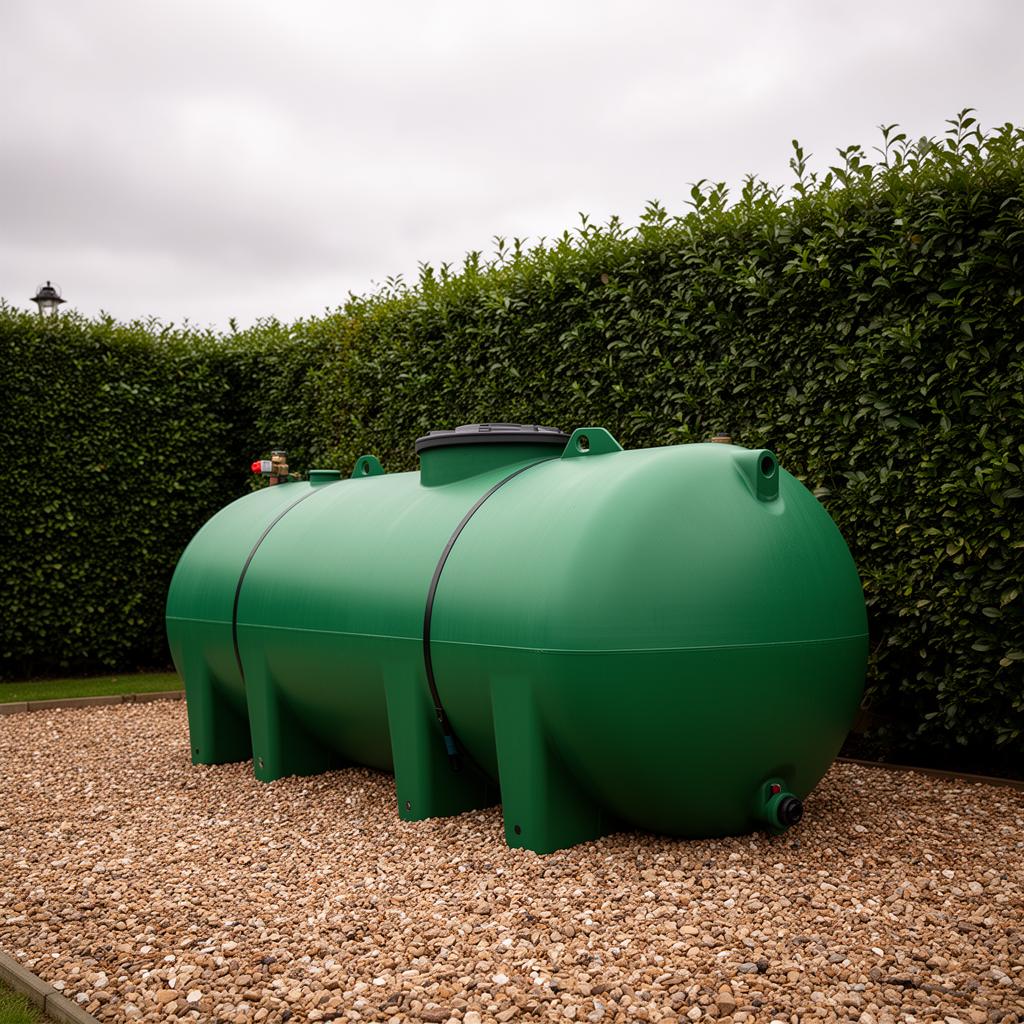
Broughton Gifford: stock, water and fuel supply
Stone cottages and farmhouses around here were mostly built long before central heating existed, so pipework and boiler locations have usually been retrofitted at some point, sometimes more than once. Thick stone walls, uneven floor levels and low ceilings can all affect where a boiler or cylinder can practically go, and older stonework doesn't always take fixings the way modern block or brick does. We work around those constraints on site rather than assuming a straightforward install. Our van runs the unclassified to reach you, 11 miles out from the Radstock workshop. Mains gas covers much of the area, with off-grid pockets, which changes the appliance shortlist. Broughton Gifford is roughly 11 miles from our Radstock base via the unclassified. Typical property stock here: stone cottages. A meaningful share of properties around Broughton Gifford are off the gas grid, so oil boiler installs and tank swaps make up a fair part of what we do locally. When we quote boiler installation here we factor in flue routing, condensate fall and gas-supply pipe sizing before the price is fixed.
Proof, paperwork and accountability
Based at 24 Bristol Rd, Radstock — every job is run by the team that quoted it.
362+ verified reviews from real customers across BA and BS postcodes.
Qualifies your install for the full 10-year manufacturer guarantee* on supported models.
Reg. 549918 — every gas job notified to Building Control and a CP12 issued where required.
Within reach of the unclassified
Beyond Broughton Gifford we're frequently on jobs in Holt (BA14), Staverton (BA14), Bradford on Avon (BA15) and Trowbridge (BA14) — so spares, follow-ups and annual services are straightforward.
What you get, start to finish
- Combi, system & regular boilers
- Like-for-like swaps in a single day
- Worcester, Vaillant, Ideal, Grant & more
- Up to 10-year manufacturer warranties
- Free written quote, no obligation
- Local aftercare from a 11-mile base
Broughton Gifford questions we get asked
- How does LPG heating differ from mains gas day to day?
- An LPG boiler works the same way as a mains gas one day to day, but the gas is stored in a tank or cylinders on site and topped up by a supplier rather than piped in continuously. That means keeping an eye on tank levels and arranging deliveries, but appliance choice, controls, and servicing requirements are otherwise very similar.
- What paperwork do I get once the job's finished?
- You'll get a Benchmark commissioning checklist for the boiler, a building notice or Building Control completion certificate for notifiable work, manufacturer warranty registration confirmation, and a Gas Safe (or OFTEC) record of the work. Keep these together — they're what a future buyer's solicitor or a warranty claim will ask for.
- Do you cover Broughton Gifford?
- Yes. Broughton Gifford is 11 miles from our workshop at 24 Bristol Road, Radstock BA3 3EE, reached via the unclassified, and it's a regular part of our working area. We're Gas Safe and OFTEC registered, so we cover both mains gas and oil work out here without treating it as a special trip.
- How often should a boiler actually be serviced?
- Once a year is the standard recommendation from every manufacturer, and most warranty terms make it a condition rather than a suggestion — miss a year and a claim can be refused even if the fault is unrelated. Landlords have a separate legal duty to have gas appliances checked annually regardless of warranty terms.
- What's the difference between a power flush and a chemical flush?
- A chemical flush circulates a cleaning agent through the existing system to loosen light debris, while a power flush uses a pump to force water at higher velocity and reversed direction through radiators and pipework to shift heavier sludge. We usually recommend the more thorough power flush before connecting a new boiler to an older system.
- Do you cover all of Broughton Gifford?
- Yes — every street in BA14 that falls under Broughton Gifford, plus the lanes towards Holt and Staverton. We're 11 miles away in Radstock, so most jobs are reached in well under half an hour.
Next step for Broughton Gifford
Once we've seen the property, you'll get a written quote for boiler installation that sets out exactly what's included — the equipment, the work, and what happens if anything unexpected turns up once we're on site. That gives you something concrete to compare against any other quotes you're getting. Send the appliance make, model and any fault code and you get a straight answer, not a sales script. Most of what we open up here is stone cottages, which dictates flue routes and pipe sizing. Planning constraints are usually light here, so external work is checked first.
The factual picture in Broughton Gifford
- County
- Wiltshire
- Postcode district
- BA14
- Settlement type
- village
- Nearest classified road
- unclassified
- Distance from our base
- 11 miles (Radstock, BA3)
- Typical building stock
- stone cottages
- Water hardness
- moderately hard water
- Fuel availability
- mains gas with off-grid pockets
- Customer mix
- homes alongside small commercial and agricultural premises
- Nearby areas covered
- Holt, Staverton, Bradford on Avon, Trowbridge
Detail that matters in Broughton Gifford
How a condensing boiler recovers extra heat
A condensing boiler passes flue gases through a secondary heat exchanger before they leave the flue, extracting additional heat by condensing water vapour in the exhaust back into liquid, which is expelled as the mildly acidic condensate water down the drain. This is why every condensing boiler needs a condensate drainage route as part of its installation, unlike older non-condensing boilers, which simply vented hot dry gas straight out. The efficiency benefit only fully materialises when the boiler is actually condensing regularly, which needs a return water temperature low enough — generally below 55°C — for water vapour to condense in the first place. A condensing boiler run permanently at a high flow temperature can spend much of its time not actually condensing, which is one of the main reasons flow temperature settings matter as much as the boiler model chosen.
Weather compensation: matching flow temperature to outdoor conditions
Weather compensation uses an external sensor to adjust the boiler's flow temperature automatically as outdoor temperature changes, running a lower flow temperature on a mild day and a higher one on a cold one, rather than the fixed flow temperature most boilers are left on permanently. Because condensing boiler efficiency is highest at lower flow and return temperatures, weather compensation keeps the system closer to peak efficiency across the heating season instead of only on the coldest days it was set up for. It needs a compensation curve set to suit the specific building's heat loss characteristics — the same curve on a well-insulated modern semi and a solid-wall Victorian terrace won't give the same comfort result. We set the curve empirically over the first heating season rather than leaving factory defaults in place.
LPG as an alternative to oil off the gas grid
Properties around Broughton Gifford that sit off the mains gas network aren't limited to oil — bulk LPG, stored in an above-ground tank on a concrete base with the same OFTEC-style clearance and access rules as oil, runs standard gas-rated boilers with only a change of injector and pressure setting rather than a different boiler entirely. It suits households that want a gas hob and gas-style modulation rather than an oil burner's on/off firing pattern. The tank still needs delivery access for a tanker, which on some rural driveways is the deciding factor over oil. We check the access route for the largest realistic delivery vehicle before recommending LPG over oil, because a tank that can't be filled easily causes more disruption than the fuel choice was meant to solve.
Nozzle replacement and baffle cleaning on oil burners
An oil burner's nozzle atomises fuel into a fine spray for combustion, and it wears from constant fuel flow at pressure, gradually changing the spray pattern away from the burner manufacturer's specification even before it visibly fails. A worn nozzle burns less cleanly, producing more soot that coats the heat exchanger's baffles, and a sooted heat exchanger loses efficiency in the same way scale does on a gas boiler's plates. Standard practice on an annual oil service is to replace the nozzle as a matter of course, rather than wait for a fault, and to remove and clean the baffles so the heat exchanger surfaces are exposed to combustion heat properly again. Skipping nozzle replacement to save a service visit's minor parts cost is a false economy against the fuel wasted by a poorly atomising burner.
Chasing pipework into lime plaster and stone walls
Solid stone or cob walls finished in lime plaster, common in the older parts of Broughton Gifford, behave very differently to modern plasterboard when a pipe run needs chasing in. Lime plaster is softer and more porous than gypsum, so cutting a neat, consistent chase without blowing the surface needs a slower hand and finer disc than a stud-wall job, and any repair has to be made good in a lime-based skim rather than modern filler, which can trap moisture behind it and cause the patch to fail. On solid stone we sometimes surface-mount pipework in painted conduit instead of chasing, particularly where the wall is a significant structural thickness and chasing would weaken it. Knowing which approach a wall needs before starting avoids expensive plaster damage.
Commissioning checklist and the Benchmark record
Every new boiler installation comes with a Benchmark commissioning checklist that has to be completed and signed at the point of installation — recording gas or oil pressure readings, flue gas analysis results, system flush confirmation and control settings. It's not paperwork for its own sake: manufacturers require a fully completed Benchmark record as a condition of the boiler's guarantee, and an incomplete or missing record is one of the most common reasons a warranty claim gets refused later. We complete and hand over the Benchmark log, along with the Gas Safe or OFTEC notification, on the day of installation rather than promising to send it on, specifically so the paperwork exists from day one if it's ever needed.
Condensate soakaways where there's no convenient drain
Properties without a nearby internal waste connection or external gully for the boiler's condensate — common on rural plots around Broughton Gifford where the nearest drain run is a long way from the boiler's location — sometimes need a dedicated condensate soakaway instead. This is a small pit filled with granular material that the condensate, which is mildly acidic, can disperse into gradually rather than running to a drain at all. Sizing and siting it correctly matters: it needs to be far enough from foundations and sited where the local ground can actually absorb the modest but steady volume a boiler produces, particularly over a long heating season. Where ground conditions make a soakaway unreliable, running a longer insulated pipe to a proper drainage connection is usually the safer long-term choice even though it's more work to install.
Combi, system or regular: which suits the property?
A combi boiler heats water directly from the mains on demand with no cylinder or tank, which suits smaller households with modest simultaneous hot water demand and properties with no loft or airing cupboard space to spare. A system boiler heats a stored cylinder, giving stronger and more consistent flow to multiple outlets at once — better suited to larger households or properties with more than one bathroom — while a regular (open-vent) boiler additionally needs a cold feed and expansion tank, usually only chosen now where an existing system layout makes it the simpler swap. On stock like stone cottages the right answer depends on bathroom count and existing pipework layout as much as household size, which is why we ask about actual usage patterns rather than defaulting to whatever's currently fitted.
Other boiler services in Broughton Gifford
- Gas Boiler Installation in Broughton GiffordGas Safe registered installations and upgrades for mains gas homes across Bath, Radstock and Wells.
- Oil Boiler Installation in Broughton GiffordOFTEC-trained oil boiler specialist for rural homes off the gas grid — tank and boiler replacements.
- Boiler Servicing in Broughton GiffordAnnual boiler services to keep your warranty valid and your home safe, efficient and warm.
- Maintenance & Repair in Broughton GiffordDiagnostics, repairs and breakdown call-outs for gas and oil boilers across BA and BS postcodes.
- Landlord Gas Safety Certificates in Broughton GiffordAnnual CP12 landlord gas safety records issued on the day, for single lets, HMOs, holiday lets and whole portfolios.
- Oil Boiler Servicing in Broughton GiffordOFTEC registered annual servicing for oil boilers, including nozzle, electrode, filter and smoke test work on off grid homes.
- Oil Boiler Repairs in Broughton GiffordOil boiler breakdown repairs across rural Somerset, from lockouts and sooting to pump, photocell and control faults.
- Oil Tank Replacement in Broughton GiffordBunded oil tank replacement and relocation with base preparation, new supply line and OFTEC paperwork on completion.
New Worcester boiler with a 10 year guarantee*
Free no-obligation quotes for installation, servicing & repairs across BA & BS postcodes.