
Local Boiler Installation for Wellow
Homeowners, landlords and smallholders tend to ask different questions about boiler installation: homeowners want comfort and running costs sorted, landlords need compliant paperwork they can hand to tenants and agents, and rural owners often need to weigh oil against other fuels. We cover all three from 24 Bristol Road, Radstock BA3 3EE as a Gas Safe registered and OFTEC registered firm, so the advice is tailored to what you actually need the system to do. Our van runs the unclassified to reach you, 3 miles out from the Radstock workshop. Mains gas covers much of the area, with off-grid pockets, which changes the appliance shortlist. In Wellow itself (BA2, Somerset) that usually means stone village cottages and farmhouses, roughly 3 miles from the workshop.
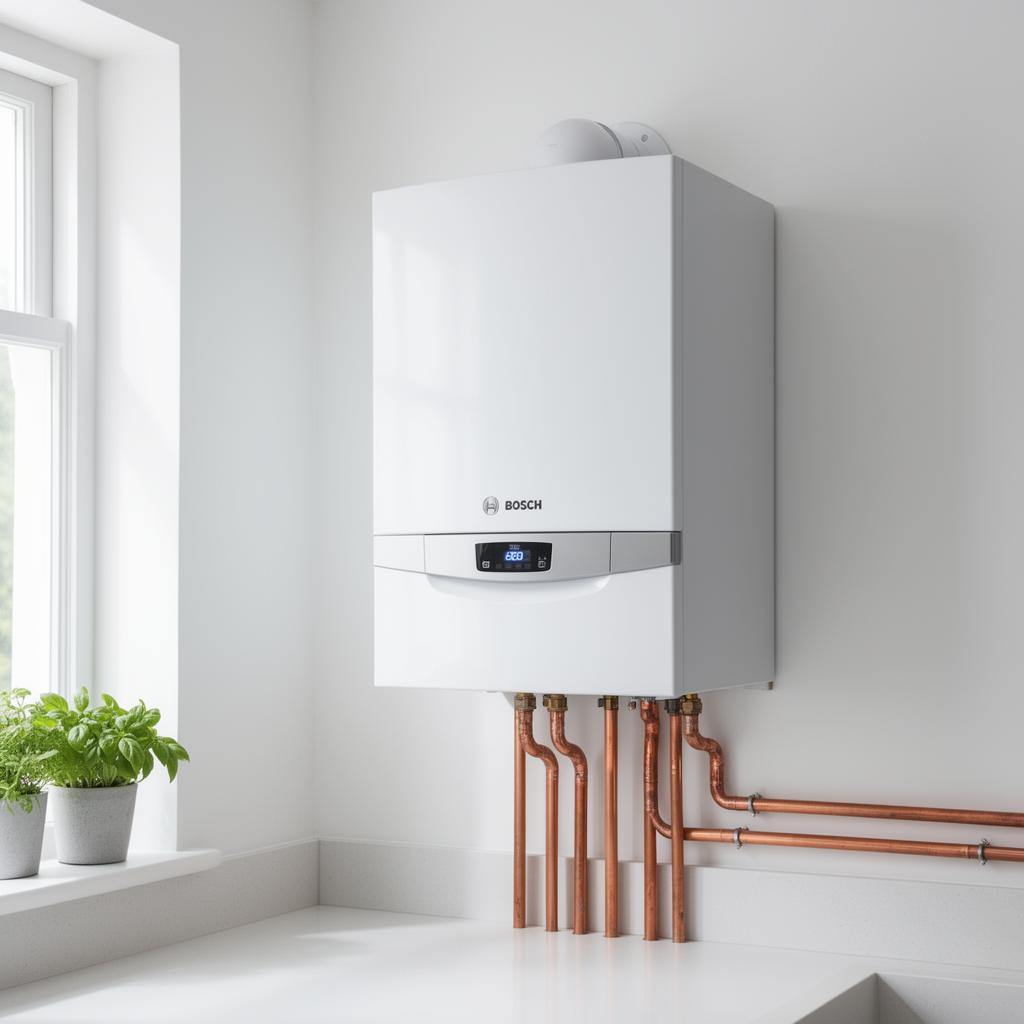
Reading the property before pricing the work
Stone cottages and farmhouses around here were mostly built long before central heating existed, so pipework and boiler locations have usually been retrofitted at some point, sometimes more than once. Thick stone walls, uneven floor levels and low ceilings can all affect where a boiler or cylinder can practically go, and older stonework doesn't always take fixings the way modern block or brick does. We work around those constraints on site rather than assuming a straightforward install. Most of what we open up here is stone village cottages and farmhouses, which dictates flue routes and pipe sizing. Our van runs the unclassified to reach you, 3 miles out from the Radstock workshop. Wellow is roughly 3 miles from our Radstock base via the unclassified. Typical property stock here: stone village cottages and farmhouses. Wellow sits in the Somerset BA2 postcode and is part of our weekly run, so local response is quick. When we quote boiler installation here we factor in flue routing, condensate fall and gas-supply pipe sizing before the price is fixed.
Included as standard in Wellow
- Combi, system & regular boilers
- Like-for-like swaps in a single day
- Worcester, Vaillant, Ideal, Grant & more
- Up to 10-year manufacturer warranties
- Free written quote, no obligation
- Local aftercare from a 3-mile base
Also covering the lanes around Wellow
Beyond Wellow we're frequently on jobs in Peasedown St John (BA2), Combe Hay (BA2), Hinton Charterhouse (BA2) and Shoscombe (BA2) — so spares, follow-ups and annual services are straightforward.
Registrations and how work is signed off
Based at 24 Bristol Rd, Radstock — every job is run by the team that quoted it.
No verbal-only quotes. You'll get the boiler model, controls and warranty in writing before we book.
Oil boilers, oil tanks and pipework — fully certified for off-grid installs and replacements.
362+ verified reviews from real customers across BA and BS postcodes.
Straight answers for Wellow homeowners
- Do we need planning permission for a new boiler flue on a listed or conservation-area property?
- If the property is listed, Listed Building Consent can be needed for anything altering its appearance, including a new external flue terminal, even where the work itself would normally be permitted development. In conservation areas like parts of Wellow's setting, flue position and visibility from the street can also come under scrutiny. We flag this at survey rather than after ordering the boiler.
- We've still got an old back boiler behind the fireplace — what's involved in removing it?
- Removing a back boiler means capping off the gas and water connections behind the fireplace, making good the opening or fitting a new fire/surround if you're keeping one, and rerouting pipework to the new combi or system boiler's position. It's more work than a like-for-like swap but a common upgrade on the older housing stock in this area.
- What if a part for my existing boiler isn't available anymore?
- Manufacturers stop stocking parts for discontinued models after a number of years, and once that happens a repair simply isn't possible even if the fault itself is minor. We'll confirm parts availability with the manufacturer before quoting a repair, and if it's a dead end we'll explain your replacement options honestly.
- Will the new boiler work properly with our existing radiators?
- Not always without checking. Modern condensing boilers run most efficiently at lower flow temperatures, and radiators originally sized for an old, hotter-running boiler can end up struggling to heat a room adequately at those lower temperatures. We check radiator sizing against a heat loss calculation and flag any that are undersized for the room before installing.
- What's the difference between a power flush and a chemical flush?
- A chemical flush circulates a cleaning agent through the existing system to loosen light debris, while a power flush uses a pump to force water at higher velocity and reversed direction through radiators and pipework to shift heavier sludge. We usually recommend the more thorough power flush before connecting a new boiler to an older system.
- Do you cover all of Wellow?
- Yes — every street in BA2 that falls under Wellow, plus the lanes towards Peasedown St John and Combe Hay. We're 3 miles away in Radstock, so most jobs are reached in well under half an hour.
Booking work in Wellow
Once we've seen the property, you'll get a written quote for boiler installation that sets out exactly what's included — the equipment, the work, and what happens if anything unexpected turns up once we're on site. That gives you something concrete to compare against any other quotes you're getting. A written quote follows the survey — no pressure, and no charge for the Wellow visit. Terrain is level, which matters for condensate runs and tank siting. Typical era of build is mixed-cottage, which affects existing pipework and system cleanliness.
Area data we work from
- County
- Somerset
- Postcode district
- BA2
- Settlement type
- village
- Nearest classified road
- unclassified
- Distance from our base
- 3 miles (Radstock, BA3)
- Typical building stock
- stone village cottages and farmhouses
- Water hardness
- very hard limestone water
- Fuel availability
- mains gas with off-grid pockets
- Customer mix
- homes alongside small commercial and agricultural premises
- Nearby areas covered
- Peasedown St John, Combe Hay, Hinton Charterhouse, Shoscombe
Technical notes for this job type
Radiator sizing after lowering the flow temperature
Running a boiler at a lower flow temperature — typically 55°C or below rather than the old default of 70-80°C — improves condensing efficiency measurably, but it also reduces the heat output of every radiator in the house, because a radiator's output falls roughly with the square of the temperature difference to the room. Radiators sized correctly for a 75°C flow can end up unable to heat the room properly at 55°C unless they're upsized or supplemented. We check each radiator against the lower design flow temperature before recommending it, and where a room falls short we look at whether a larger single panel, a double panel, or an additional radiator on that circuit closes the gap, rather than pushing the flow temperature back up and giving away the efficiency gain.
Working across Somerset: what being local changes
Being based at 24 Bristol Road, Radstock, 3 miles from Wellow via the unclassified, means a callout doesn't involve a long cross-county drive, and it also means familiarity with the recurring patterns in the local building stock — stone village cottages and farmhouses — rather than encountering that construction type for the first time on-site. Local knowledge doesn't replace a proper site survey, but it does mean fewer surprises: knowing in advance that a particular postcode area typically has hard water, older single-pipe circuits, or restricted parking means the quote reflects the likely reality of the job before the first visit. We're Gas Safe and OFTEC registered and work across Somerset on that basis, not by claiming coverage we don't actually deliver on.
Heating where a home sits alongside commercial premises
Properties around Wellow that combine living accommodation with an attached shop, workshop or other commercial space often need heating designed as genuinely separate zones with independent controls, since a shop's occupied hours and heating demand rarely match the flat or house above it. Where the two shared a single ageing system, splitting them onto separate zone valves — or, on a larger scale, separate boilers — stops one side subsidising or interfering with the other's heating schedule. Commercial space also sometimes falls under different servicing and safety-record obligations than the residential side, depending on how it's used, so it's worth establishing which parts of the building fall under which regime before assuming a single annual service covers everything.
What a flue gas combustion analysis actually tells us
A combustion analyser measures the flue gases leaving a boiler — oxygen, carbon dioxide, and carbon monoxide content, along with flue temperature — and from those figures calculates the boiler's actual combustion efficiency and confirms it's burning cleanly rather than producing dangerous carbon monoxide. It's a required part of every gas and oil service and commissioning visit, not an optional extra, because visual inspection alone can't detect incomplete combustion. Readings outside the manufacturer's specified range point to a specific fault — a partially blocked burner, incorrect gas or oil pressure, or a fouled heat exchanger — rather than a general sense that something's wrong. We record the readings on every service so any drift between visits is visible, not just the pass/fail result on the day.
Common boiler fault codes and what usually causes them
Most modern boilers display a fault code on the control panel when they lock out, and while the exact code differs between manufacturers, the underlying causes cluster into a small number of categories: low system pressure (often from a small leak or after bleeding radiators), ignition failure (a worn electrode, gas supply issue, or blocked condensate causing a safety shutdown), or a failed sensor reporting an implausible temperature reading. A condensate blockage or freeze specifically tends to show a distinct code from a genuine ignition fault, which is why checking the external condensate pipe for ice before calling out an engineer in a cold snap can sometimes resolve the issue without a visit at all. We ask for the exact fault code and any recent history — a bled radiator, a cold snap, a recent service — before attending, since it often narrows down the likely cause before we arrive.
Commissioning checklist and the Benchmark record
Every new boiler installation comes with a Benchmark commissioning checklist that has to be completed and signed at the point of installation — recording gas or oil pressure readings, flue gas analysis results, system flush confirmation and control settings. It's not paperwork for its own sake: manufacturers require a fully completed Benchmark record as a condition of the boiler's guarantee, and an incomplete or missing record is one of the most common reasons a warranty claim gets refused later. We complete and hand over the Benchmark log, along with the Gas Safe or OFTEC notification, on the day of installation rather than promising to send it on, specifically so the paperwork exists from day one if it's ever needed.
Why very hard limestone water shortens boiler life around Wellow
The limestone geology under Somerset gives Wellow very hard limestone water, which drops calcium carbonate out of solution as soon as it's heated. Inside a combi's plate heat exchanger the gaps between plates are only a millimetre or two wide, so scale narrows the waterways long before it's visible anywhere else in the system. The first symptom is usually a hot tap that runs warm rather than hot, or a boiler that fires more often for the same demand. Left unchecked, scale insulates the exchanger from the burner, forces flue gases hotter, and can crack the exchanger from thermal stress. A scale reducer fitted on the mains feed, sized to the property's flow rate, is cheaper to install once than to replace a heat exchanger twice.
Combi, system or regular: which suits the property?
A combi boiler heats water directly from the mains on demand with no cylinder or tank, which suits smaller households with modest simultaneous hot water demand and properties with no loft or airing cupboard space to spare. A system boiler heats a stored cylinder, giving stronger and more consistent flow to multiple outlets at once — better suited to larger households or properties with more than one bathroom — while a regular (open-vent) boiler additionally needs a cold feed and expansion tank, usually only chosen now where an existing system layout makes it the simpler swap. On stock like stone village cottages and farmhouses the right answer depends on bathroom count and existing pipework layout as much as household size, which is why we ask about actual usage patterns rather than defaulting to whatever's currently fitted.
Other boiler services in Wellow
- Gas Boiler Installation in WellowGas Safe registered installations and upgrades for mains gas homes across Bath, Radstock and Wells.
- Oil Boiler Installation in WellowOFTEC-trained oil boiler specialist for rural homes off the gas grid — tank and boiler replacements.
- Boiler Servicing in WellowAnnual boiler services to keep your warranty valid and your home safe, efficient and warm.
- Maintenance & Repair in WellowDiagnostics, repairs and breakdown call-outs for gas and oil boilers across BA and BS postcodes.
- Landlord Gas Safety Certificates in WellowAnnual CP12 landlord gas safety records issued on the day, for single lets, HMOs, holiday lets and whole portfolios.
- Oil Boiler Servicing in WellowOFTEC registered annual servicing for oil boilers, including nozzle, electrode, filter and smoke test work on off grid homes.
- Oil Boiler Repairs in WellowOil boiler breakdown repairs across rural Somerset, from lockouts and sooting to pump, photocell and control faults.
- Oil Tank Replacement in WellowBunded oil tank replacement and relocation with base preparation, new supply line and OFTEC paperwork on completion.
New Worcester boiler with a 10 year guarantee*
Free no-obligation quotes for installation, servicing & repairs across BA & BS postcodes.