
Wellow's Local Boiler Servicing Specialist
Properties in conservation areas or with listed status add an extra layer to boiler servicing, particularly around flue positions and anything visible from the street. We factor planning sensitivity into the survey rather than leaving it to be discovered after the quote. Gas Safe registered, OFTEC registered and a Worcester Bosch Accredited Installer, working from 24 Bristol Road, Radstock BA3 3EE, we'll flag where sign-off or a discreet routing is likely to matter. Our van runs the unclassified to reach you, 3 miles out from the Radstock workshop. homes alongside small commercial and agricultural premises make up most enquiries from this postcode. In Wellow itself (BA2, Somerset) that usually means stone village cottages and farmhouses, roughly 3 miles from the workshop.
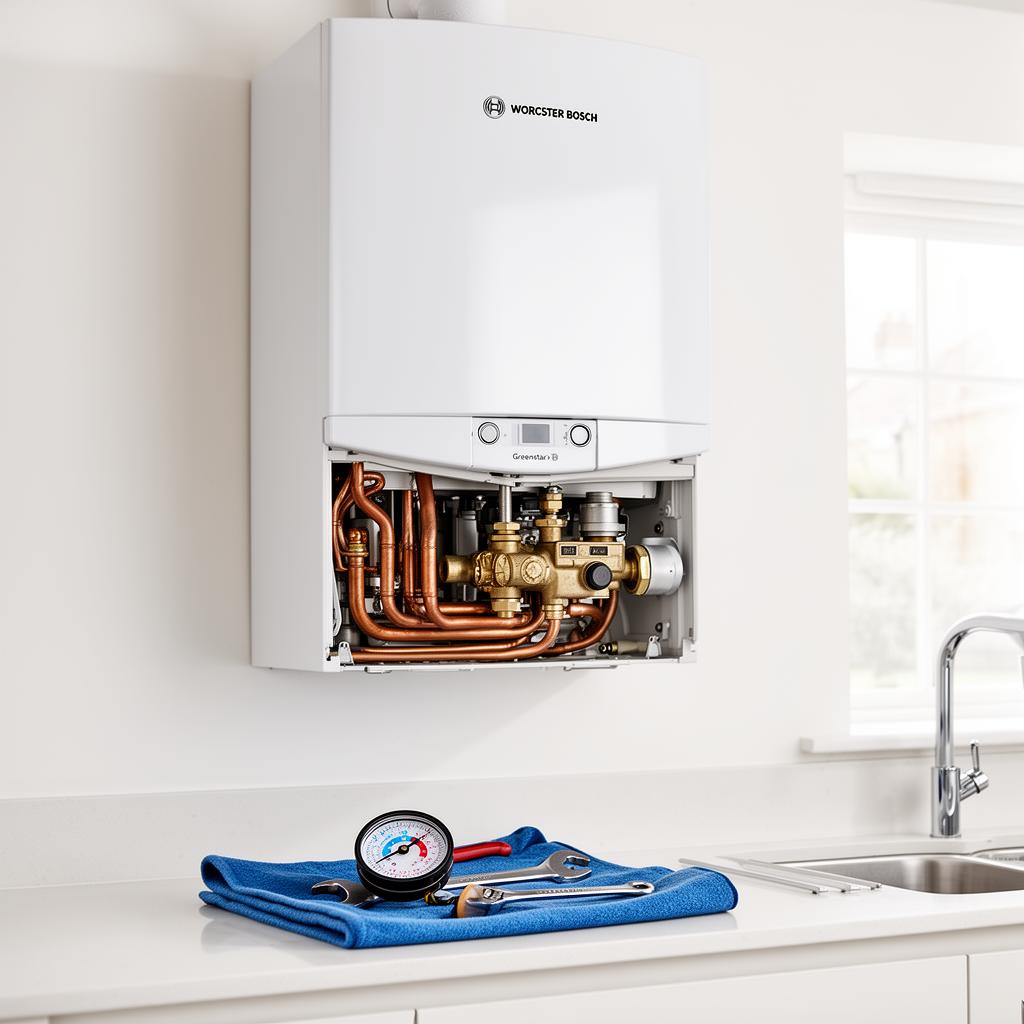
Why Wellow work is specified differently
Stone cottages and farmhouses around here were mostly built long before central heating existed, so pipework and boiler locations have usually been retrofitted at some point, sometimes more than once. Thick stone walls, uneven floor levels and low ceilings can all affect where a boiler or cylinder can practically go, and older stonework doesn't always take fixings the way modern block or brick does. We work around those constraints on site rather than assuming a straightforward install. homes alongside small commercial and agricultural premises make up most enquiries from this postcode. Conservation and listed constraints apply to parts of the area, so external work is checked first. Wellow is roughly 3 miles from our Radstock base via the unclassified. Typical property stock here: stone village cottages and farmhouses. Wellow sits in the Somerset BA2 postcode and is part of our weekly run, so local response is quick. Annual services in Wellow include a full safety check, efficiency report and warranty stamp where applicable.
Within reach of the unclassified
Beyond Wellow we're frequently on jobs in Peasedown St John (BA2), Combe Hay (BA2), Hinton Charterhouse (BA2) and Shoscombe (BA2) — so spares, follow-ups and annual services are straightforward.
Qualifications behind the work
Qualifies your install for the full 10-year manufacturer guarantee* on supported models.
Oil boilers, oil tanks and pipework — fully certified for off-grid installs and replacements.
No verbal-only quotes. You'll get the boiler model, controls and warranty in writing before we book.
Based at 24 Bristol Rd, Radstock — every job is run by the team that quoted it.
Scope of work, itemised
- Full annual safety check
- Landlord gas safety certificates
- Efficiency report
- Friendly, tidy engineers
- Free written quote, no obligation
- Local aftercare from a 3-mile base
Common queries, answered honestly
- Do we need planning permission for a new boiler flue on a listed or conservation-area property?
- If the property is listed, Listed Building Consent can be needed for anything altering its appearance, including a new external flue terminal, even where the work itself would normally be permitted development. In conservation areas like parts of Wellow's setting, flue position and visibility from the street can also come under scrutiny. We flag this at survey rather than after ordering the boiler.
- How does LPG heating differ from mains gas day to day?
- An LPG boiler works the same way as a mains gas one day to day, but the gas is stored in a tank or cylinders on site and topped up by a supplier rather than piped in continuously. That means keeping an eye on tank levels and arranging deliveries, but appliance choice, controls, and servicing requirements are otherwise very similar.
- What's the difference between a boiler service and general maintenance?
- A service is the annual manufacturer-required safety and efficiency check that keeps the warranty valid. Maintenance covers everything else — bleeding radiators, checking system pressure, sorting minor faults, and periodic flushing or filter checks — that keeps the system running well between those annual services rather than replacing them.
- What actually happens on install day?
- The engineer isolates the gas or oil supply and water, removes the old boiler, fits and pressure-tests the new one, connects the flue and condensate, and commissions the system. For a straight swap this is usually one day; a conversion, relocation, or cylinder change can run into a second depending on the pipework involved.
- Do you cover Wellow?
- Yes. Wellow is 3 miles from our workshop at 24 Bristol Road, Radstock BA3 3EE, reached via the unclassified, and it's a regular part of our working area. We're Gas Safe and OFTEC registered, so we cover both mains gas and oil work out here without treating it as a special trip.
- Is there mains gas across Wellow?
- Most of Wellow is on mains gas, though pockets towards Peasedown St John and Combe Hay can be off-grid. We'll confirm what's at the property as part of the survey.
Your next move in BA2
Once we've seen the property, you'll get a written quote for boiler servicing that sets out exactly what's included — the equipment, the work, and what happens if anything unexpected turns up once we're on site. That gives you something concrete to compare against any other quotes you're getting. We can usually pair the visit with other work in Peasedown St John to keep the trip efficient. Conservation and listed constraints apply to parts of the area, so external work is checked first. Terrain is level, which matters for condensate runs and tank siting.
Area data we work from
- County
- Somerset
- Postcode district
- BA2
- Settlement type
- village
- Nearest classified road
- unclassified
- Distance from our base
- 3 miles (Radstock, BA3)
- Typical building stock
- stone village cottages and farmhouses
- Water hardness
- very hard limestone water
- Fuel availability
- mains gas with off-grid pockets
- Customer mix
- homes alongside small commercial and agricultural premises
- Nearby areas covered
- Peasedown St John, Combe Hay, Hinton Charterhouse, Shoscombe
Technical notes for this job type
Why very hard limestone water shortens boiler life around Wellow
The limestone geology under Somerset gives Wellow very hard limestone water, which drops calcium carbonate out of solution as soon as it's heated. Inside a combi's plate heat exchanger the gaps between plates are only a millimetre or two wide, so scale narrows the waterways long before it's visible anywhere else in the system. The first symptom is usually a hot tap that runs warm rather than hot, or a boiler that fires more often for the same demand. Left unchecked, scale insulates the exchanger from the burner, forces flue gases hotter, and can crack the exchanger from thermal stress. A scale reducer fitted on the mains feed, sized to the property's flow rate, is cheaper to install once than to replace a heat exchanger twice.
Routing a flue through a listed or conservation-area property
Wellow falls within an area where listed building consent or conservation area rules can affect where a boiler flue is allowed to terminate — a plume on a principal elevation facing the street is often unacceptable even where it would technically clear manufacturer distances. Getting consent, where it's needed, has to happen before the flue is cut through a wall, not retrospectively. In practice this usually means routing the flue to a rear or side elevation even if that means a longer pipe run and an extra bend, or using a horizontal flue kit through a lower window reveal wall rather than the roof. We check with the relevant conservation officer's published guidance before quoting a flue route on a listed or Article 4 property rather than assuming the shortest run will be approved.
Chasing pipework into lime plaster and stone walls
Solid stone or cob walls finished in lime plaster, common in the older parts of Wellow, behave very differently to modern plasterboard when a pipe run needs chasing in. Lime plaster is softer and more porous than gypsum, so cutting a neat, consistent chase without blowing the surface needs a slower hand and finer disc than a stud-wall job, and any repair has to be made good in a lime-based skim rather than modern filler, which can trap moisture behind it and cause the patch to fail. On solid stone we sometimes surface-mount pipework in painted conduit instead of chasing, particularly where the wall is a significant structural thickness and chasing would weaken it. Knowing which approach a wall needs before starting avoids expensive plaster damage.
Chimney liners for boilers using an existing flue
Where an older boiler used the property's original brick or stone chimney as its flue route, a replacement condensing boiler usually can't use the same masonry flue unlined, because the flue gases are cooler and wetter and will attack unprotected brickwork and mortar over time. A correctly specified stainless steel liner, sized to the boiler manufacturer's flue length and diameter tables, carries the flue gases safely and lets the existing chimney be reused rather than needing a new wall or roof penetration — often the only realistic option on a listed or solid-wall property in Wellow where an external flue run isn't permitted. The liner has to be inspected and swept as part of ongoing servicing exactly as an open-fire flue would be, which is easy to overlook once it's hidden inside the chimney.
What different boiler noises usually mean
A kettling or rumbling sound from a boiler is most often scale or sludge build-up on the heat exchanger causing localised boiling as water is trapped and overheated in restricted channels — the heating equivalent of a kettle furring up. A banging or knocking sound in pipework, sometimes called water hammer, is usually caused by a valve closing too quickly or trapped air rather than the boiler itself. A whining or humming sound tends to point to the circulating pump, either from wear or from air in the system reducing lubrication at the bearing. Diagnosing correctly from the noise alone isn't reliable enough to act on without checking system pressure, inhibitor condition and the pump directly, but the noise itself is a useful first indicator of which of those to check first.
Low-loss headers on larger or multi-zone systems
On a system with several heating zones or a boiler oversized relative to any single zone's flow requirement, a low-loss header hydraulically separates the boiler's primary circuit from the secondary zone circuits, so each side can run its own pump and flow rate without one interfering with the other. Without it, a zone valve closing on a multi-zone system can starve the boiler of flow or force excessive pump pressure through the remaining open zones. It's most relevant on larger properties or ones with commercial premises attached, where several distinct heating circuits — perhaps a shop unit and a flat above — share one heat source. Getting the header sized to the boiler's actual flow rate, not just fitted as standard, is what makes it work rather than just adding another connection.
Nozzle replacement and baffle cleaning on oil burners
An oil burner's nozzle atomises fuel into a fine spray for combustion, and it wears from constant fuel flow at pressure, gradually changing the spray pattern away from the burner manufacturer's specification even before it visibly fails. A worn nozzle burns less cleanly, producing more soot that coats the heat exchanger's baffles, and a sooted heat exchanger loses efficiency in the same way scale does on a gas boiler's plates. Standard practice on an annual oil service is to replace the nozzle as a matter of course, rather than wait for a fault, and to remove and clean the baffles so the heat exchanger surfaces are exposed to combustion heat properly again. Skipping nozzle replacement to save a service visit's minor parts cost is a false economy against the fuel wasted by a poorly atomising burner.
Electronic and physical scale reducers compared
In very hard limestone water areas like Wellow, a scale reducer fitted on the boiler's cold feed protects the heat exchanger without the ongoing salt and drainage requirements of a full water softener. Physical scale reducers use a polyphosphate or template-assisted crystallisation cartridge that alters how calcium carbonate crystallises so it's less likely to adhere to hot surfaces; electronic and electromagnetic devices claim a similar effect without a cartridge to replace, though the evidence base for electronic types is weaker and more inconsistent than for physical media. Manufacturers including Worcester Bosch now specify a scale reducer or softener as a condition of extended guarantees in hard water areas, so the choice affects warranty validity as well as long-term performance, not just descale frequency.
Other boiler services in Wellow
- Boiler Installation in WellowNew combi, system and regular boiler installations for gas and oil homes — fixed prices, manufacturer warranties.
- Gas Boiler Installation in WellowGas Safe registered installations and upgrades for mains gas homes across Bath, Radstock and Wells.
- Oil Boiler Installation in WellowOFTEC-trained oil boiler specialist for rural homes off the gas grid — tank and boiler replacements.
- Maintenance & Repair in WellowDiagnostics, repairs and breakdown call-outs for gas and oil boilers across BA and BS postcodes.
- Landlord Gas Safety Certificates in WellowAnnual CP12 landlord gas safety records issued on the day, for single lets, HMOs, holiday lets and whole portfolios.
- Oil Boiler Servicing in WellowOFTEC registered annual servicing for oil boilers, including nozzle, electrode, filter and smoke test work on off grid homes.
- Oil Boiler Repairs in WellowOil boiler breakdown repairs across rural Somerset, from lockouts and sooting to pump, photocell and control faults.
- Oil Tank Replacement in WellowBunded oil tank replacement and relocation with base preparation, new supply line and OFTEC paperwork on completion.
New Worcester boiler with a 10 year guarantee*
Free no-obligation quotes for installation, servicing & repairs across BA & BS postcodes.