
Butleigh Gas Boiler Installation
Gas Boiler Installation sits alongside the wider servicing cycle a heating system goes through over its life: commissioning, annual checks, and eventually replacement once repairs stop making sense. Thinking about where you are in that cycle helps decide whether now is the right time to act. We're Gas Safe registered and OFTEC registered, based at 24 Bristol Road, Radstock BA3 3EE, and happy to talk through where your system currently sits before recommending anything. Water here is moderately hard water, so scale protection is specified accordingly. Our van runs the unclassified to reach you, 14 miles out from the Radstock workshop. In Butleigh itself (BA6, Somerset) that usually means stone cottages and farmhouses, roughly 14 miles from the workshop.
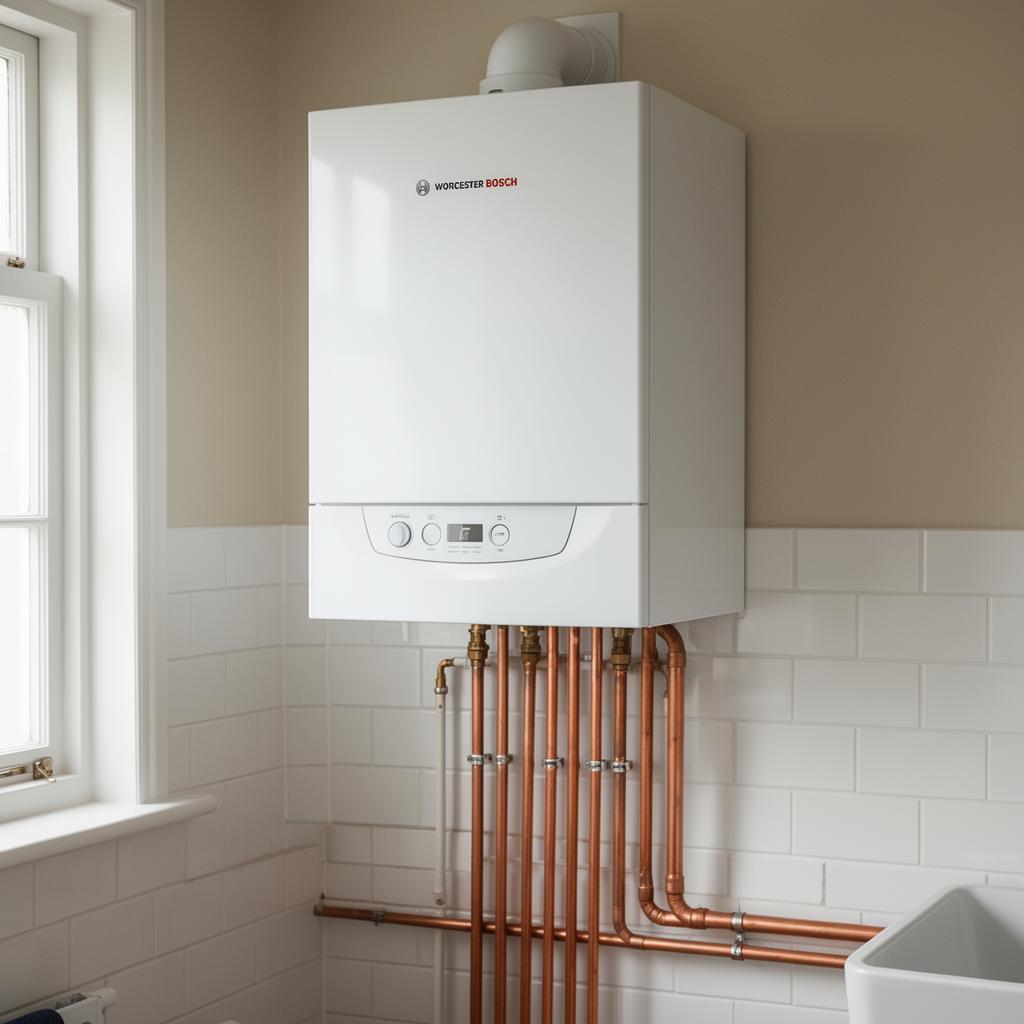
Reading the property before pricing the work
Properties in this area sometimes sit alongside small commercial premises or agricultural buildings, which occasionally means slightly different considerations around flue positioning, noise from external plant, or shared access with a business next door. It's worth mentioning at the point of booking a survey if your property has any commercial neighbours or shared access, so we can check anything relevant before quoting rather than after. Off-grid oil and LPG are common on these lanes, which changes the appliance shortlist. homes alongside small commercial and agricultural premises make up most enquiries from this postcode. Butleigh is roughly 14 miles from our Radstock base via the unclassified. Typical property stock here: stone cottages and farmhouses. A meaningful share of properties around Butleigh are off the gas grid, so oil boiler installs and tank swaps make up a fair part of what we do locally. When we quote gas boiler installation here we factor in flue routing, condensate fall and gas-supply pipe sizing before the price is fixed.
Neighbouring Somerset areas we serve
Beyond Butleigh we're frequently on jobs in Baltonsborough (BA6), Walton (BA16), Glastonbury (BA6) and West Pennard (BA6) — so spares, follow-ups and annual services are straightforward.
Scope of work, itemised
- Gas Safe registered engineers
- Free no-obligation quotes
- Smart heating controls fitted
- Conversions (regular to combi)
- Free written quote, no obligation
- Local aftercare from a 14-mile base
What backs up a Butleigh quote
Oil boilers, oil tanks and pipework — fully certified for off-grid installs and replacements.
Based at 24 Bristol Rd, Radstock — every job is run by the team that quoted it.
Qualifies your install for the full 10-year manufacturer guarantee* on supported models.
362+ verified reviews from real customers across BA and BS postcodes.
Questions before you book
- Is a boiler install a noisy, disruptive job?
- There's unavoidable noise — drilling for the flue, pipework, sometimes moving a cylinder — but a straightforward swap is usually done within a working day with the mess kept to the immediate work area. We dust-sheet the route in and out and clear away pipe offcuts and old parts before we leave.
- What support do I get after the install is finished?
- Once commissioning's complete we talk you through the controls, leave the paperwork, and register the manufacturer warranty on your behalf. If anything doesn't feel right in the first few weeks — a fault code, an odd noise, a control setting you're unsure of — call us during office hours and we'll talk it through or come back out.
- How much longer does a full conversion take compared to a straight boiler swap?
- A straight like-for-like swap in the same location is typically a single working day. Converting boiler type (for example back boiler to combi, or oil to LPG), relocating the boiler, or adding a new cylinder usually needs one to two extra days for additional pipework, flue routing, and electrical work, which we'll scope out at survey.
- What's actually checked during an annual boiler service?
- A service includes a visual and functional check of the boiler's casing and controls, flue gas analysis to confirm safe and efficient combustion, checking the flame picture and pressure, inspecting seals and condensate, and testing safety devices. It's a safety check as much as a performance one, and it's what keeps most manufacturer warranties valid.
- Can your van get down our lane, or do we need to arrange something?
- Most village lanes we work on are manageable in our vehicles, but if it's single-track, has a low bridge, or turning is tight, mention it when you book so we bring the right size van and allow extra time. It's rarely a reason to turn a job down, just something we plan around.
- Do you cover all of Butleigh?
- Yes — every street in BA6 that falls under Butleigh, plus the lanes towards Baltonsborough and Walton. We're 14 miles away in Radstock, so most jobs are reached in well under half an hour.
Next step for Butleigh
For landlords, gas boiler installation usually needs to fit around a tenancy, so let us know at the outset if the property is occupied and what access arrangements work for the tenant. We'll build that into the quote and the schedule rather than assuming an empty property. Call 07516 118198 and we will confirm a visit slot for BA6. Access is lane access, so parking, spoil removal and delivery timing get planned in advance. Terrain is level, which matters for condensate runs and tank siting.
Butleigh at a glance
- County
- Somerset
- Postcode district
- BA6
- Settlement type
- village
- Nearest classified road
- unclassified
- Distance from our base
- 14 miles (Radstock, BA3)
- Typical building stock
- stone cottages and farmhouses
- Water hardness
- moderately hard water
- Fuel availability
- off-grid oil and LPG common
- Customer mix
- homes alongside small commercial and agricultural premises
- Nearby areas covered
- Baltonsborough, Walton, Glastonbury, West Pennard
The parts of the job people rarely mention
Oil tank bunding and fire valve rules
Off-grid properties around Butleigh rely on oil, and OFTEC's technical standards (OFS T100) set out when a tank needs a bund — a sealed secondary container holding at least 110% of the tank's capacity — based on how close it sits to a watercourse, drain, or boundary, and whether it's within a certain distance of a building. A fire valve fitted at the tank outlet, with its sensor mounted above the boiler's burner, will shut off oil flow automatically if a fire starts, and it's now expected on virtually every new or replaced installation. We check both bunding and fire-valve provision on every oil quote, because retrofitting a bund after a tank is delivered and sited is a second job, not a five-minute add-on.
- Bund holds 110% of tank capacity minimum
- Fire valve sensor mounted directly above the burner
- Distances to boundaries and drains checked against OFS T100
- Applies to replacement tanks, not just new installs
Chasing pipework into lime plaster and stone walls
Solid stone or cob walls finished in lime plaster, common in the older parts of Butleigh, behave very differently to modern plasterboard when a pipe run needs chasing in. Lime plaster is softer and more porous than gypsum, so cutting a neat, consistent chase without blowing the surface needs a slower hand and finer disc than a stud-wall job, and any repair has to be made good in a lime-based skim rather than modern filler, which can trap moisture behind it and cause the patch to fail. On solid stone we sometimes surface-mount pipework in painted conduit instead of chasing, particularly where the wall is a significant structural thickness and chasing would weaken it. Knowing which approach a wall needs before starting avoids expensive plaster damage.
LPG as an alternative to oil off the gas grid
Properties around Butleigh that sit off the mains gas network aren't limited to oil — bulk LPG, stored in an above-ground tank on a concrete base with the same OFTEC-style clearance and access rules as oil, runs standard gas-rated boilers with only a change of injector and pressure setting rather than a different boiler entirely. It suits households that want a gas hob and gas-style modulation rather than an oil burner's on/off firing pattern. The tank still needs delivery access for a tanker, which on some rural driveways is the deciding factor over oil. We check the access route for the largest realistic delivery vehicle before recommending LPG over oil, because a tank that can't be filled easily causes more disruption than the fuel choice was meant to solve.
Condensate soakaways where there's no convenient drain
Properties without a nearby internal waste connection or external gully for the boiler's condensate — common on rural plots around Butleigh where the nearest drain run is a long way from the boiler's location — sometimes need a dedicated condensate soakaway instead. This is a small pit filled with granular material that the condensate, which is mildly acidic, can disperse into gradually rather than running to a drain at all. Sizing and siting it correctly matters: it needs to be far enough from foundations and sited where the local ground can actually absorb the modest but steady volume a boiler produces, particularly over a long heating season. Where ground conditions make a soakaway unreliable, running a longer insulated pipe to a proper drainage connection is usually the safer long-term choice even though it's more work to install.
Chimney liners for boilers using an existing flue
Where an older boiler used the property's original brick or stone chimney as its flue route, a replacement condensing boiler usually can't use the same masonry flue unlined, because the flue gases are cooler and wetter and will attack unprotected brickwork and mortar over time. A correctly specified stainless steel liner, sized to the boiler manufacturer's flue length and diameter tables, carries the flue gases safely and lets the existing chimney be reused rather than needing a new wall or roof penetration — often the only realistic option on a listed or solid-wall property in Butleigh where an external flue run isn't permitted. The liner has to be inspected and swept as part of ongoing servicing exactly as an open-fire flue would be, which is easy to overlook once it's hidden inside the chimney.
What different boiler noises usually mean
A kettling or rumbling sound from a boiler is most often scale or sludge build-up on the heat exchanger causing localised boiling as water is trapped and overheated in restricted channels — the heating equivalent of a kettle furring up. A banging or knocking sound in pipework, sometimes called water hammer, is usually caused by a valve closing too quickly or trapped air rather than the boiler itself. A whining or humming sound tends to point to the circulating pump, either from wear or from air in the system reducing lubrication at the bearing. Diagnosing correctly from the noise alone isn't reliable enough to act on without checking system pressure, inhibitor condition and the pump directly, but the noise itself is a useful first indicator of which of those to check first.
Routing a flue through a listed or conservation-area property
Butleigh falls within an area where listed building consent or conservation area rules can affect where a boiler flue is allowed to terminate — a plume on a principal elevation facing the street is often unacceptable even where it would technically clear manufacturer distances. Getting consent, where it's needed, has to happen before the flue is cut through a wall, not retrospectively. In practice this usually means routing the flue to a rear or side elevation even if that means a longer pipe run and an extra bend, or using a horizontal flue kit through a lower window reveal wall rather than the roof. We check with the relevant conservation officer's published guidance before quoting a flue route on a listed or Article 4 property rather than assuming the shortest run will be approved.
Nozzle replacement and baffle cleaning on oil burners
An oil burner's nozzle atomises fuel into a fine spray for combustion, and it wears from constant fuel flow at pressure, gradually changing the spray pattern away from the burner manufacturer's specification even before it visibly fails. A worn nozzle burns less cleanly, producing more soot that coats the heat exchanger's baffles, and a sooted heat exchanger loses efficiency in the same way scale does on a gas boiler's plates. Standard practice on an annual oil service is to replace the nozzle as a matter of course, rather than wait for a fault, and to remove and clean the baffles so the heat exchanger surfaces are exposed to combustion heat properly again. Skipping nozzle replacement to save a service visit's minor parts cost is a false economy against the fuel wasted by a poorly atomising burner.
Other boiler services in Butleigh
- Boiler Installation in ButleighNew combi, system and regular boiler installations for gas and oil homes — fixed prices, manufacturer warranties.
- Oil Boiler Installation in ButleighOFTEC-trained oil boiler specialist for rural homes off the gas grid — tank and boiler replacements.
- Boiler Servicing in ButleighAnnual boiler services to keep your warranty valid and your home safe, efficient and warm.
- Maintenance & Repair in ButleighDiagnostics, repairs and breakdown call-outs for gas and oil boilers across BA and BS postcodes.
- Landlord Gas Safety Certificates in ButleighAnnual CP12 landlord gas safety records issued on the day, for single lets, HMOs, holiday lets and whole portfolios.
- Oil Boiler Servicing in ButleighOFTEC registered annual servicing for oil boilers, including nozzle, electrode, filter and smoke test work on off grid homes.
- Oil Boiler Repairs in ButleighOil boiler breakdown repairs across rural Somerset, from lockouts and sooting to pump, photocell and control faults.
- Oil Tank Replacement in ButleighBunded oil tank replacement and relocation with base preparation, new supply line and OFTEC paperwork on completion.
New Worcester boiler with a 10 year guarantee*
Free no-obligation quotes for installation, servicing & repairs across BA & BS postcodes.