
Gas Boiler Installers in Limpley Stoke
Gas Boiler Installation sits alongside the wider servicing cycle a heating system goes through over its life: commissioning, annual checks, and eventually replacement once repairs stop making sense. Thinking about where you are in that cycle helps decide whether now is the right time to act. We're Gas Safe registered and OFTEC registered, based at 24 Bristol Road, Radstock BA3 3EE, and happy to talk through where your system currently sits before recommending anything. Typical era of build is mixed-cottage, which affects existing pipework and system cleanliness. Most of what we open up here is valley-side stone homes, which dictates flue routes and pipe sizing. In Limpley Stoke itself (BA2, Somerset) that usually means valley-side stone homes, roughly 8 miles from the workshop.
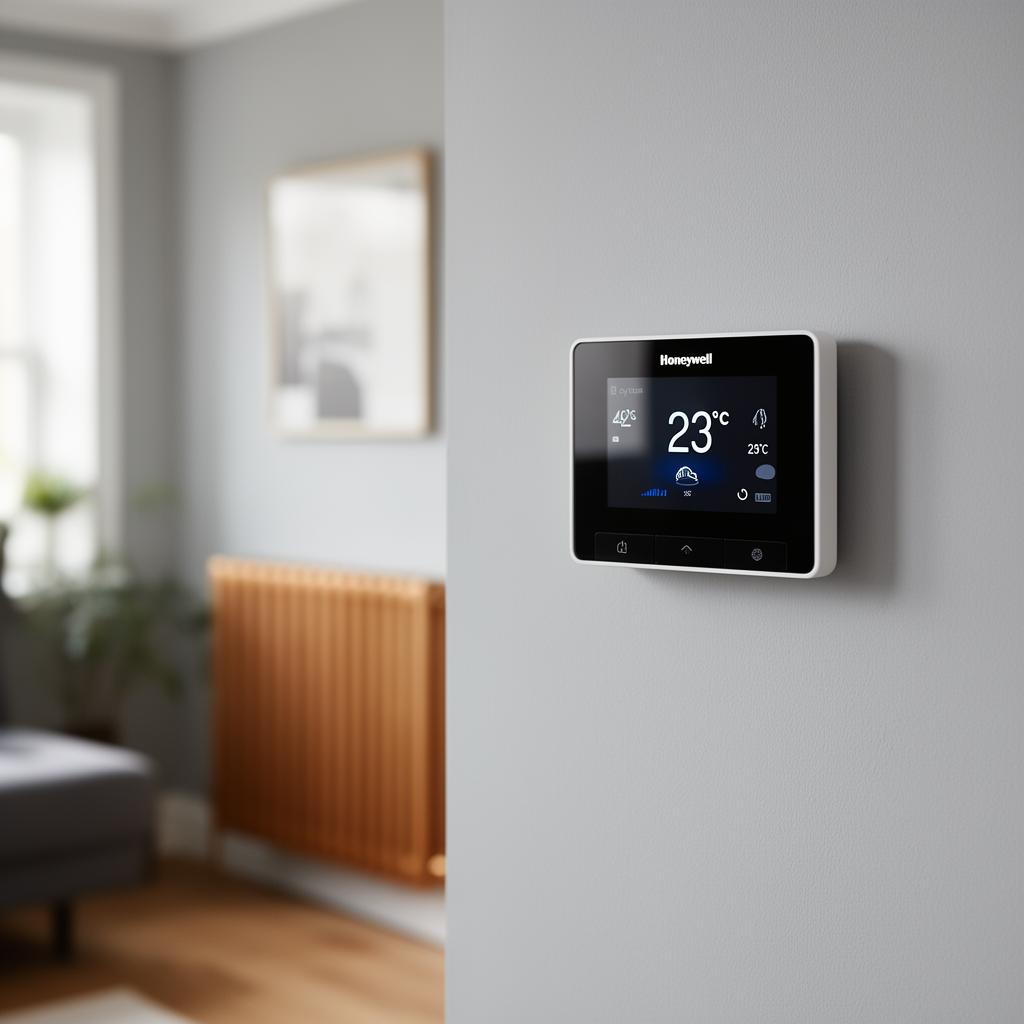
What gas boiler installation includes here
- Gas Safe registered engineers
- Free no-obligation quotes
- Smart heating controls fitted
- Conversions (regular to combi)
- Free written quote, no obligation
- Local aftercare from a 8-mile base
What backs up a Limpley Stoke quote
Reg. 549918 — every gas job notified to Building Control and a CP12 issued where required.
No verbal-only quotes. You'll get the boiler model, controls and warranty in writing before we book.
362+ verified reviews from real customers across BA and BS postcodes.
Qualifies your install for the full 10-year manufacturer guarantee* on supported models.
Nearby villages and neighbourhoods
Beyond Limpley Stoke we're frequently on jobs in Freshford (BA2), Bathford (BA1), Winsley (BA15) and Monkton Combe (BA2) — so spares, follow-ups and annual services are straightforward.
How Somerset building stock shapes the spec
Water here runs off carboniferous limestone and Jurassic oolite, which makes it very hard by national standards. Hard water accelerates scale build-up inside heat exchangers, cylinders and pipework, which shortens the working life of components that aren't protected against it. On jobs in this area we factor scale protection into the specification rather than treating it as an optional extra, because the difference between a protected and unprotected system shows up within a few years, not decades. It's a genuine local variable, not generic sales advice, and it applies whether the property is on mains gas or oil. Our van runs the A36 to reach you, 8 miles out from the Radstock workshop. Terrain is valley floor, which matters for condensate runs and tank siting. Limpley Stoke is roughly 8 miles from our Radstock base via the A36. Typical property stock here: valley-side stone homes. Limpley Stoke sits in the Somerset BA2 postcode and is part of our weekly run, so local response is quick. When we quote gas boiler installation here we factor in flue routing, condensate fall and gas-supply pipe sizing before the price is fixed.
Questions before you book
- Could we switch from oil to mains gas if it's nearby?
- It depends entirely on whether a gas main actually runs past the property — some parts of the Somerset patch we cover have gas on one side of the road and none on the other. We can check with the network on request; if it's there, a conversion is a bigger job than a swap but often worthwhile long-term.
- How often should a boiler actually be serviced?
- Once a year is the standard recommendation from every manufacturer, and most warranty terms make it a condition rather than a suggestion — miss a year and a claim can be refused even if the fault is unrelated. Landlords have a separate legal duty to have gas appliances checked annually regardless of warranty terms.
- Is oil more expensive to run than mains gas?
- Oil and gas prices both move with the wholesale market and neither is fixed, so a blanket answer isn't honest. What we can say is that a modern condensing oil boiler, correctly sized and commissioned, will run considerably more efficiently than an old non-condensing model — that efficiency gap usually matters more than the fuel choice itself.
- Will the new boiler work properly with our existing radiators?
- Not always without checking. Modern condensing boilers run most efficiently at lower flow temperatures, and radiators originally sized for an old, hotter-running boiler can end up struggling to heat a room adequately at those lower temperatures. We check radiator sizing against a heat loss calculation and flag any that are undersized for the room before installing.
- What is condensate and why does its routing matter?
- Condensate is the mildly acidic water produced by a modern condensing boiler as it extracts extra heat from the flue gases, and it needs a route to an internal drain or, less ideally, an external soakaway. In colder or more exposed locations an external condensate pipe can freeze and shut the boiler down, so internal routing is worth prioritising where the layout allows it.
- Where can a new boiler actually be sited in the property?
- A combi is usually fitted in a kitchen cupboard, utility room, loft, or garage as long as flue clearances to windows, doors, and boundaries are met. A system or regular boiler with a cylinder needs a bit more room and usually stays close to its current position unless you're relocating the whole system, which is a bigger job.
Next step for Limpley Stoke
Getting more than one quote for gas boiler installation is sensible, and we're happy to be one of them. Ask each tradesperson the same questions about what's included, what's excluded, and what registration they hold, so you're comparing genuinely equivalent quotes rather than a headline figure with hidden gaps. Call 07516 118198 and we will confirm a visit slot for BA2. Access is lane access, so parking, spoil removal and delivery timing get planned in advance. Mains gas covers much of the area, with off-grid pockets, which changes the appliance shortlist.
The factual picture in Limpley Stoke
- County
- Somerset
- Postcode district
- BA2
- Settlement type
- village
- Nearest classified road
- A36
- Distance from our base
- 8 miles (Radstock, BA3)
- Typical building stock
- valley-side stone homes
- Water hardness
- very hard limestone water
- Fuel availability
- mains gas with off-grid pockets
- Customer mix
- homes alongside small commercial and agricultural premises
- Nearby areas covered
- Freshford, Bathford, Winsley, Monkton Combe
Detail that matters in Limpley Stoke
Wood-burning stoves with a back boiler alongside a main boiler
Some older rural properties around Limpley Stoke run a wood-burning stove with a back boiler feeding heat into the same central heating circuit as an oil or gas boiler, usually through a thermal store or a cylinder with two coils. Getting this combination to work safely means the stove's back boiler circuit has its own means of dissipating heat if the pump fails or a valve closes while the stove is still burning — a stove can't simply be switched off the way a boiler can if its heat has nowhere to go, so a gravity-fed safety circuit or heat leak radiator is normally required. It's a more involved design than a single-boiler system and needs planning at the point either appliance is replaced, not treated as an afterthought once the new boiler is already fitted.
LPG as an alternative to oil off the gas grid
Properties around Limpley Stoke that sit off the mains gas network aren't limited to oil — bulk LPG, stored in an above-ground tank on a concrete base with the same OFTEC-style clearance and access rules as oil, runs standard gas-rated boilers with only a change of injector and pressure setting rather than a different boiler entirely. It suits households that want a gas hob and gas-style modulation rather than an oil burner's on/off firing pattern. The tank still needs delivery access for a tanker, which on some rural driveways is the deciding factor over oil. We check the access route for the largest realistic delivery vehicle before recommending LPG over oil, because a tank that can't be filled easily causes more disruption than the fuel choice was meant to solve.
Single-pipe circuits in older stone cottages
A lot of the stone cottages and farmhouses around Limpley Stoke were plumbed decades ago on a single-pipe gravity circuit, where each radiator draws from and returns to the same loop rather than having its own flow and return. It works, but radiators furthest from the boiler receive water that's already cooled after giving up heat to the ones before it, so the far end of the house is always the coldest. Converting to a two-pipe layout means new pipe runs, which in a stone cottage often means chasing lime plaster or lifting flagstones — not a trivial job. Where a full rewire of the pipework isn't wanted, we sometimes improve balance instead by oversizing the radiators nearest the end of the run and fitting TRVs to hold back the ones nearest the boiler.
Limpley Stoke's A36 corridor and what it means for scheduling
Properties along or near the A36 corridor around Limpley Stoke are generally straightforward to reach without the access constraints of side lanes or unclassified roads further off the main network, which helps with scheduling deliveries of boilers, cylinders or oil tanks to a fixed slot. It doesn't change the technical requirements of the job itself, but predictable access does mean less contingency time needs building into a visit, and it makes coordinating a delivery with an installation date more reliable than on a property with a difficult final approach. We still confirm any specific parking or loading restriction on the immediate street before a job, since a fast main road doesn't guarantee easy stopping right outside the property.
Nozzle replacement and baffle cleaning on oil burners
An oil burner's nozzle atomises fuel into a fine spray for combustion, and it wears from constant fuel flow at pressure, gradually changing the spray pattern away from the burner manufacturer's specification even before it visibly fails. A worn nozzle burns less cleanly, producing more soot that coats the heat exchanger's baffles, and a sooted heat exchanger loses efficiency in the same way scale does on a gas boiler's plates. Standard practice on an annual oil service is to replace the nozzle as a matter of course, rather than wait for a fault, and to remove and clean the baffles so the heat exchanger surfaces are exposed to combustion heat properly again. Skipping nozzle replacement to save a service visit's minor parts cost is a false economy against the fuel wasted by a poorly atomising burner.
Electronic and physical scale reducers compared
In very hard limestone water areas like Limpley Stoke, a scale reducer fitted on the boiler's cold feed protects the heat exchanger without the ongoing salt and drainage requirements of a full water softener. Physical scale reducers use a polyphosphate or template-assisted crystallisation cartridge that alters how calcium carbonate crystallises so it's less likely to adhere to hot surfaces; electronic and electromagnetic devices claim a similar effect without a cartridge to replace, though the evidence base for electronic types is weaker and more inconsistent than for physical media. Manufacturers including Worcester Bosch now specify a scale reducer or softener as a condition of extended guarantees in hard water areas, so the choice affects warranty validity as well as long-term performance, not just descale frequency.
Pumped-oil versus gravity feed: does it matter?
Older oil systems sometimes still rely on gravity feed, where the tank sits higher than the burner and oil flows down to it under its own weight; a pumped system uses the burner's internal pump to draw oil up from a tank at any level, including below the boiler. Gravity feed limits where a tank can be sited and is more prone to airlocks if the line runs dry, while a pumped system is more flexible on tank position but needs the pipe run and lift height kept within the burner pump's rated capacity — usually no more than a few metres of lift and a set maximum run length. When we replace an oil boiler we check which type the existing tank and pipework support before assuming a straight swap, because a tank sited for gravity feed may need repositioning or a different pump to suit a modern burner.
Signs a boiler repair is no longer the right call
A boiler that's failing repeatedly, needing a different part replaced every service, or over roughly ten to fifteen years old is approaching the point where continued repair costs more over time than replacement, particularly once a heat exchanger — the most expensive single part — starts to show signs of failure through leaks or reduced output. Efficiency is the other half of the calculation: an older non-condensing boiler running at 70-80% efficiency against a modern condensing combi at over 90% means a meaningful chunk of every unit of fuel burned in the old boiler is simply lost up the flue. We give a straight answer on repair versus replace based on the fault found and the boiler's age and condition, rather than defaulting to whichever is more profitable to us on the day.
What a proper heating quote should include
A quote worth relying on states the specific boiler or equipment model, the labour and materials it covers, whether a system flush and magnetic filter are included, what happens to old equipment removal and disposal, and what's excluded — an unexpected gas pipe upsizing or asbestos-containing material discovered during removal, for example, which can't always be known before work starts. It should also state who's completing the Gas Safe or OFTEC notification and Benchmark commissioning record, since that's the paperwork that protects both the manufacturer's guarantee and the property's compliance history when it's sold. A vague one-line quote makes comparing genuinely different offers difficult, because two prices that look similar can cover very different scopes of actual work.
- Specific make and model, not just "combi boiler"
- Flush and magnetic filter stated as included or excluded
- Old equipment removal and disposal covered
- Notification and Benchmark record responsibility stated
Other boiler services in Limpley Stoke
- Boiler Installation in Limpley StokeNew combi, system and regular boiler installations for gas and oil homes — fixed prices, manufacturer warranties.
- Oil Boiler Installation in Limpley StokeOFTEC-trained oil boiler specialist for rural homes off the gas grid — tank and boiler replacements.
- Boiler Servicing in Limpley StokeAnnual boiler services to keep your warranty valid and your home safe, efficient and warm.
- Maintenance & Repair in Limpley StokeDiagnostics, repairs and breakdown call-outs for gas and oil boilers across BA and BS postcodes.
- Landlord Gas Safety Certificates in Limpley StokeAnnual CP12 landlord gas safety records issued on the day, for single lets, HMOs, holiday lets and whole portfolios.
- Oil Boiler Servicing in Limpley StokeOFTEC registered annual servicing for oil boilers, including nozzle, electrode, filter and smoke test work on off grid homes.
- Oil Boiler Repairs in Limpley StokeOil boiler breakdown repairs across rural Somerset, from lockouts and sooting to pump, photocell and control faults.
- Oil Tank Replacement in Limpley StokeBunded oil tank replacement and relocation with base preparation, new supply line and OFTEC paperwork on completion.
New Worcester boiler with a 10 year guarantee*
Free no-obligation quotes for installation, servicing & repairs across BA & BS postcodes.