
Boiler Installation in Limpley Stoke
Getting quotes for boiler installation can feel like a gamble when you don't know the trade. You want someone who turns up when they say they will, explains what they're doing, and leaves you with a system you understand. That's the standard we work to from 24 Bristol Road, Radstock BA3 3EE. We're Gas Safe registered, OFTEC registered and a Worcester Bosch Accredited Installer, so the paperwork and the workmanship both hold up to scrutiny. Water here is very hard limestone water, so scale protection is specified accordingly. homes alongside small commercial and agricultural premises make up most enquiries from this postcode. In Limpley Stoke itself (BA2, Somerset) that usually means valley-side stone homes, roughly 8 miles from the workshop.
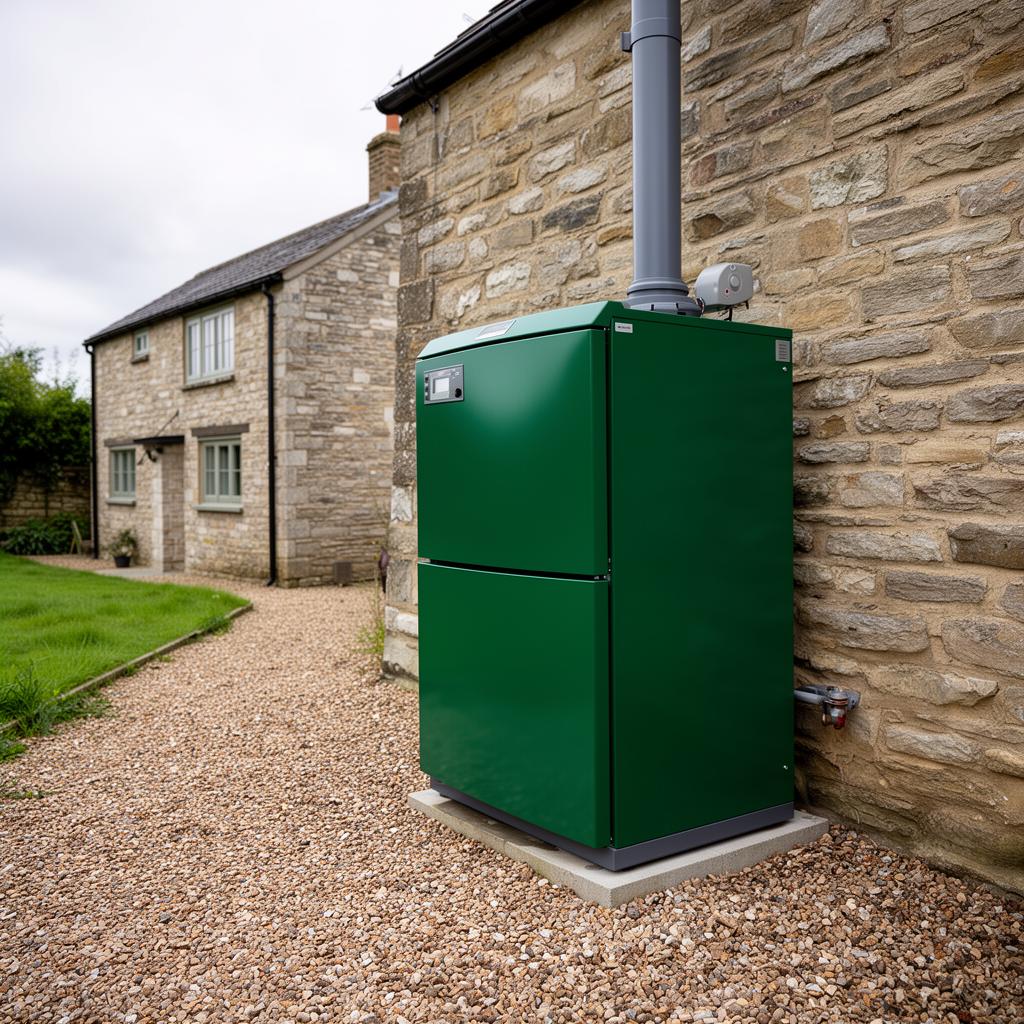
Included as standard in Limpley Stoke
- Combi, system & regular boilers
- Like-for-like swaps in a single day
- Worcester, Vaillant, Ideal, Grant & more
- Up to 10-year manufacturer warranties
- Free written quote, no obligation
- Local aftercare from a 8-mile base
Why Limpley Stoke households use us
Reg. 549918 — every gas job notified to Building Control and a CP12 issued where required.
362+ verified reviews from real customers across BA and BS postcodes.
No verbal-only quotes. You'll get the boiler model, controls and warranty in writing before we book.
Oil boilers, oil tanks and pipework — fully certified for off-grid installs and replacements.
Site realities in and around Limpley Stoke
Water here runs off carboniferous limestone and Jurassic oolite, which makes it very hard by national standards. Hard water accelerates scale build-up inside heat exchangers, cylinders and pipework, which shortens the working life of components that aren't protected against it. On jobs in this area we factor scale protection into the specification rather than treating it as an optional extra, because the difference between a protected and unprotected system shows up within a few years, not decades. It's a genuine local variable, not generic sales advice, and it applies whether the property is on mains gas or oil. Planning constraints are usually light here, so external work is checked first. Access is lane access, so parking, spoil removal and delivery timing get planned in advance. Limpley Stoke is roughly 8 miles from our Radstock base via the A36. Typical property stock here: valley-side stone homes. Limpley Stoke sits in the Somerset BA2 postcode and is part of our weekly run, so local response is quick. When we quote boiler installation here we factor in flue routing, condensate fall and gas-supply pipe sizing before the price is fixed.
Where else we work near Limpley Stoke
Beyond Limpley Stoke we're frequently on jobs in Freshford (BA2), Bathford (BA1), Winsley (BA15) and Monkton Combe (BA2) — so spares, follow-ups and annual services are straightforward.
Boiler Installation FAQs for BA2
- How often should a boiler actually be serviced?
- Once a year is the standard recommendation from every manufacturer, and most warranty terms make it a condition rather than a suggestion — miss a year and a claim can be refused even if the fault is unrelated. Landlords have a separate legal duty to have gas appliances checked annually regardless of warranty terms.
- Could we switch from oil to mains gas if it's nearby?
- It depends entirely on whether a gas main actually runs past the property — some parts of the Somerset patch we cover have gas on one side of the road and none on the other. We can check with the network on request; if it's there, a conversion is a bigger job than a swap but often worthwhile long-term.
- How much longer does a full conversion take compared to a straight boiler swap?
- A straight like-for-like swap in the same location is typically a single working day. Converting boiler type (for example back boiler to combi, or oil to LPG), relocating the boiler, or adding a new cylinder usually needs one to two extra days for additional pipework, flue routing, and electrical work, which we'll scope out at survey.
- How do you decide whether to repair or replace a boiler?
- We weigh the age of the boiler, whether parts are still made for it, how many faults it's had recently, and its running efficiency against a like-for-like or upgraded replacement. If a straightforward part fixes it and the boiler's otherwise sound, we'll say so rather than push a new install you don't need.
- What's the difference between a boiler service and general maintenance?
- A service is the annual manufacturer-required safety and efficiency check that keeps the warranty valid. Maintenance covers everything else — bleeding radiators, checking system pressure, sorting minor faults, and periodic flushing or filter checks — that keeps the system running well between those annual services rather than replacing them.
- Is a boiler install a noisy, disruptive job?
- There's unavoidable noise — drilling for the flue, pipework, sometimes moving a cylinder — but a straightforward swap is usually done within a working day with the mess kept to the immediate work area. We dust-sheet the route in and out and clear away pipe offcuts and old parts before we leave.
Booking work in Limpley Stoke
For landlords, boiler installation usually needs to fit around a tenancy, so let us know at the outset if the property is occupied and what access arrangements work for the tenant. We'll build that into the quote and the schedule rather than assuming an empty property. Photos of the existing setup speed up pricing for village properties like these. Mains gas covers much of the area, with off-grid pockets, which changes the appliance shortlist. Nearest neighbours on our round are Freshford, Bathford, Winsley.
Area data we work from
- County
- Somerset
- Postcode district
- BA2
- Settlement type
- village
- Nearest classified road
- A36
- Distance from our base
- 8 miles (Radstock, BA3)
- Typical building stock
- valley-side stone homes
- Water hardness
- very hard limestone water
- Fuel availability
- mains gas with off-grid pockets
- Customer mix
- homes alongside small commercial and agricultural premises
- Nearby areas covered
- Freshford, Bathford, Winsley, Monkton Combe
The parts of the job people rarely mention
Condensate soakaways where there's no convenient drain
Properties without a nearby internal waste connection or external gully for the boiler's condensate — common on rural plots around Limpley Stoke where the nearest drain run is a long way from the boiler's location — sometimes need a dedicated condensate soakaway instead. This is a small pit filled with granular material that the condensate, which is mildly acidic, can disperse into gradually rather than running to a drain at all. Sizing and siting it correctly matters: it needs to be far enough from foundations and sited where the local ground can actually absorb the modest but steady volume a boiler produces, particularly over a long heating season. Where ground conditions make a soakaway unreliable, running a longer insulated pipe to a proper drainage connection is usually the safer long-term choice even though it's more work to install.
The case for turning your flow temperature down
Most combi boilers leave the factory set to a flow temperature around 75-80°C, which is far higher than needed for most homes and well above the point where a condensing boiler achieves its best efficiency. Condensing boilers recover extra heat by condensing water vapour out of the flue gases, and that only happens efficiently when the return water temperature is below roughly 55°C — a target easier to hit with a lower flow setting. Dropping the flow temperature to 60°C or lower, and checking radiators can still heat the coldest rooms adequately at that setting, typically improves gas consumption noticeably over a heating season. The setting itself takes minutes to change on the boiler's control panel or app, but it's only worth doing after checking radiator sizing can cope, which is why we check both together rather than adjusting the boiler alone.
Chasing pipework into lime plaster and stone walls
Solid stone or cob walls finished in lime plaster, common in the older parts of Limpley Stoke, behave very differently to modern plasterboard when a pipe run needs chasing in. Lime plaster is softer and more porous than gypsum, so cutting a neat, consistent chase without blowing the surface needs a slower hand and finer disc than a stud-wall job, and any repair has to be made good in a lime-based skim rather than modern filler, which can trap moisture behind it and cause the patch to fail. On solid stone we sometimes surface-mount pipework in painted conduit instead of chasing, particularly where the wall is a significant structural thickness and chasing would weaken it. Knowing which approach a wall needs before starting avoids expensive plaster damage.
Weather compensation: matching flow temperature to outdoor conditions
Weather compensation uses an external sensor to adjust the boiler's flow temperature automatically as outdoor temperature changes, running a lower flow temperature on a mild day and a higher one on a cold one, rather than the fixed flow temperature most boilers are left on permanently. Because condensing boiler efficiency is highest at lower flow and return temperatures, weather compensation keeps the system closer to peak efficiency across the heating season instead of only on the coldest days it was set up for. It needs a compensation curve set to suit the specific building's heat loss characteristics — the same curve on a well-insulated modern semi and a solid-wall Victorian terrace won't give the same comfort result. We set the curve empirically over the first heating season rather than leaving factory defaults in place.
Chimney liners for boilers using an existing flue
Where an older boiler used the property's original brick or stone chimney as its flue route, a replacement condensing boiler usually can't use the same masonry flue unlined, because the flue gases are cooler and wetter and will attack unprotected brickwork and mortar over time. A correctly specified stainless steel liner, sized to the boiler manufacturer's flue length and diameter tables, carries the flue gases safely and lets the existing chimney be reused rather than needing a new wall or roof penetration — often the only realistic option on a listed or solid-wall property in Limpley Stoke where an external flue run isn't permitted. The liner has to be inspected and swept as part of ongoing servicing exactly as an open-fire flue would be, which is easy to overlook once it's hidden inside the chimney.
Gas pipe sizing and working pressure drop
Swapping to a higher-output combi or adding an extra gas appliance means the existing gas pipe has to be checked against the new total demand, not just the boiler's own rating plate. Gas Safe installation procedures require a working pressure test at the appliance under full load, and IGE/UP/2 tables set the maximum permitted pressure drop over the pipe run length and diameter. A run that was adequate for a 24kW back boiler can be undersized once a modern combi with a larger instantaneous hot water draw is fitted on the same 15mm supply. Where the test shows an unacceptable drop, the fix is upsizing to 22mm or shortening the run — not turning the boiler down, which just masks the underlying restriction.
Single-pipe circuits in older stone cottages
A lot of the stone cottages and farmhouses around Limpley Stoke were plumbed decades ago on a single-pipe gravity circuit, where each radiator draws from and returns to the same loop rather than having its own flow and return. It works, but radiators furthest from the boiler receive water that's already cooled after giving up heat to the ones before it, so the far end of the house is always the coldest. Converting to a two-pipe layout means new pipe runs, which in a stone cottage often means chasing lime plaster or lifting flagstones — not a trivial job. Where a full rewire of the pipework isn't wanted, we sometimes improve balance instead by oversizing the radiators nearest the end of the run and fitting TRVs to hold back the ones nearest the boiler.
Other boiler services in Limpley Stoke
- Gas Boiler Installation in Limpley StokeGas Safe registered installations and upgrades for mains gas homes across Bath, Radstock and Wells.
- Oil Boiler Installation in Limpley StokeOFTEC-trained oil boiler specialist for rural homes off the gas grid — tank and boiler replacements.
- Boiler Servicing in Limpley StokeAnnual boiler services to keep your warranty valid and your home safe, efficient and warm.
- Maintenance & Repair in Limpley StokeDiagnostics, repairs and breakdown call-outs for gas and oil boilers across BA and BS postcodes.
- Landlord Gas Safety Certificates in Limpley StokeAnnual CP12 landlord gas safety records issued on the day, for single lets, HMOs, holiday lets and whole portfolios.
- Oil Boiler Servicing in Limpley StokeOFTEC registered annual servicing for oil boilers, including nozzle, electrode, filter and smoke test work on off grid homes.
- Oil Boiler Repairs in Limpley StokeOil boiler breakdown repairs across rural Somerset, from lockouts and sooting to pump, photocell and control faults.
- Oil Tank Replacement in Limpley StokeBunded oil tank replacement and relocation with base preparation, new supply line and OFTEC paperwork on completion.
New Worcester boiler with a 10 year guarantee*
Free no-obligation quotes for installation, servicing & repairs across BA & BS postcodes.