
Cameley Landlord Gas Safety Certificates
Landlord Gas Safety Certificates covers a range of jobs, from straightforward like-for-like swaps to full system redesigns with new pipework, controls and hot water storage. The right approach depends on boiler location, flue length, pump speed, radiator sizing and how the property loses heat. As a Gas Safe and OFTEC registered firm and a Worcester Bosch Accredited Installer working out of Radstock, we specify each install against the building rather than fitting a standard package regardless of fit. Water here is hard water, so scale protection is specified accordingly.
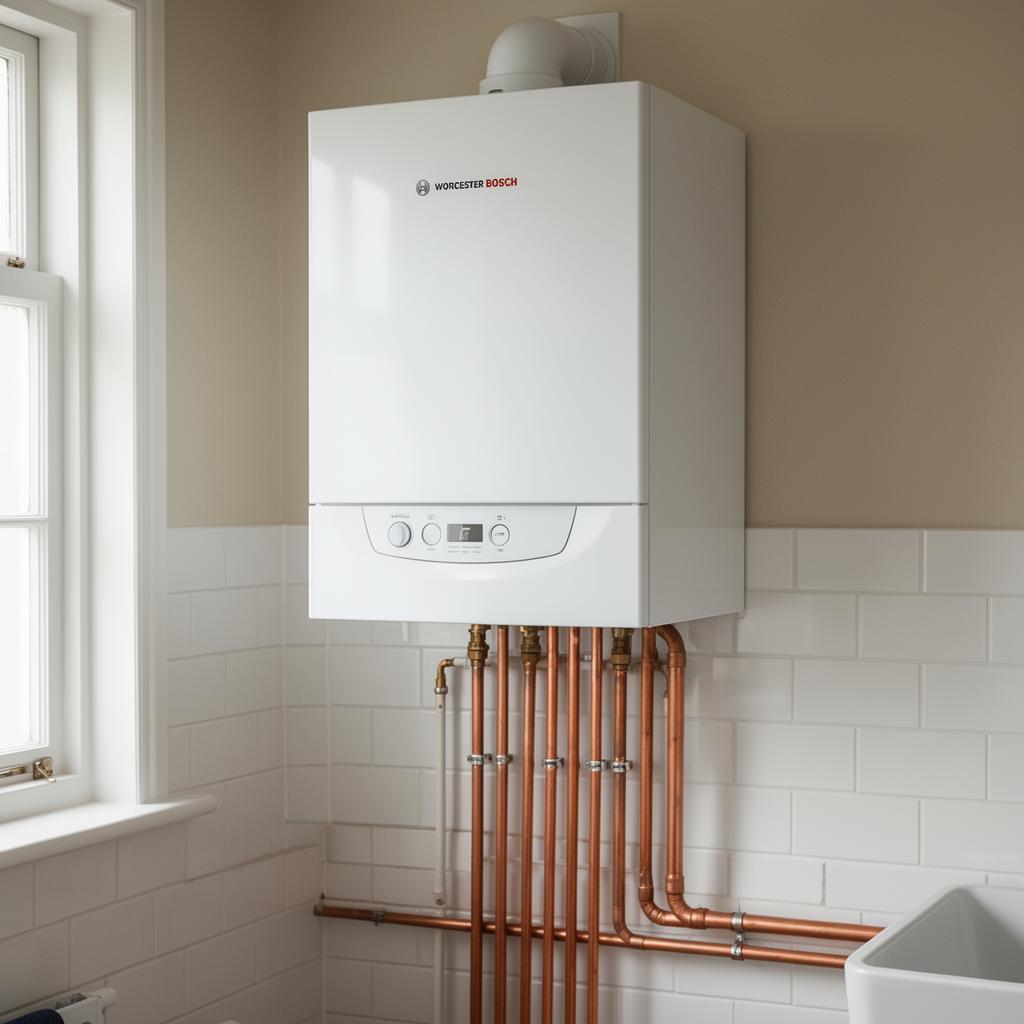
Site realities in and around Cameley
Rural owner-occupiers and smallholders in this area often have specific priorities: reliable heating for a property that may be some distance from immediate help if something fails, sensible running costs on an off-grid fuel, and a system that copes with an older, harder-to-insulate building. We hear these priorities often enough locally to factor them into how we survey and specify rural properties, rather than applying a standard suburban approach. Most of what we open up here is stone cottages, which dictates flue routes and pipe sizing. Cameley is roughly 5 miles from our Radstock base via the unclassified. Typical property stock here: stone cottages. A meaningful share of properties around Cameley are off the gas grid, so oil boiler installs and tank swaps make up a fair part of what we do locally. Repair calls in Cameley usually get a same-week visit, with most common faults fixed on the first attempt.
Neighbouring Somerset areas we serve
Beyond Cameley we're frequently on jobs in Temple Cloud (BS39), Clutton (BS39), Hinton Blewett (BS39) and Bishop Sutton (BS39) — so spares, follow-ups and annual services are straightforward.
Scope of work, itemised
- Gas Safe registered, CP12 issued same day
- Tightness test, combustion analysis and flue checks
- Tenant access arranged by text or phone
- Several properties aligned to one renewal date
- Free written quote, no obligation
- Local aftercare from a 5-mile base
Why Cameley households use us
Qualifies your install for the full 10-year manufacturer guarantee* on supported models.
Based at 24 Bristol Rd, Radstock — every job is run by the team that quoted it.
Oil boilers, oil tanks and pipework — fully certified for off-grid installs and replacements.
362+ verified reviews from real customers across BA and BS postcodes.
Common queries, answered honestly
- Our access is a long farm track — does that limit what you can do?
- It doesn't stop the job, but it does affect timing and delivery, particularly for oil tank work or a new cylinder that needs a specific access point. Tell us about gates, track surface, or turning space when you book, and for oil deliveries afterwards it's worth checking the same access suits your fuel supplier.
- My oil tank is old — does it need replacing alongside the boiler?
- Not automatically, but we check the tank's age, material, and condition as part of any oil boiler quote. Steel tanks corrode from the inside and plastic tanks degrade with UV exposure over time; if we find cracking, rust weeping, or a missing bund we'll flag it, because a failed tank is a pollution and insurance risk, not just a heating one.
- What actually happens on install day?
- The engineer isolates the gas or oil supply and water, removes the old boiler, fits and pressure-tests the new one, connects the flue and condensate, and commissions the system. For a straight swap this is usually one day; a conversion, relocation, or cylinder change can run into a second depending on the pipework involved.
- What if a part for my existing boiler isn't available anymore?
- Manufacturers stop stocking parts for discontinued models after a number of years, and once that happens a repair simply isn't possible even if the fault itself is minor. We'll confirm parts availability with the manufacturer before quoting a repair, and if it's a dead end we'll explain your replacement options honestly.
- How do you decide whether to repair or replace a boiler?
- We weigh the age of the boiler, whether parts are still made for it, how many faults it's had recently, and its running efficiency against a like-for-like or upgraded replacement. If a straightforward part fixes it and the boiler's otherwise sound, we'll say so rather than push a new install you don't need.
- Will you come out to a village like Cameley?
- Cameley is part of our core patch (5 miles from base via the unclassified). Same-week site visits and quick callbacks are normal.
Where to go from here
Once landlord gas safety certificates is complete, you'll have the documentation that goes with it — commissioning records and, where applicable, Gas Safe or OFTEC paperwork and manufacturer registration for the guarantee. Keep it somewhere safe; it's what an agent, buyer or insurer will ask to see later. Call 07516 118198 and we will confirm a visit slot for BS39. Planning constraints are usually light here, so external work is checked first.
Cameley at a glance
- County
- Somerset
- Postcode district
- BS39
- Settlement type
- hamlet
- Nearest classified road
- unclassified
- Distance from our base
- 5 miles (Radstock, BA3)
- Typical building stock
- stone cottages
- Water hardness
- hard water
- Fuel availability
- off-grid oil and LPG common
- Customer mix
- rural owner-occupiers and smallholdings
- Nearby areas covered
- Temple Cloud, Clutton, Hinton Blewett, Bishop Sutton
Technical notes for this job type
Chasing pipework into lime plaster and stone walls
Solid stone or cob walls finished in lime plaster, common in the older parts of Cameley, behave very differently to modern plasterboard when a pipe run needs chasing in. Lime plaster is softer and more porous than gypsum, so cutting a neat, consistent chase without blowing the surface needs a slower hand and finer disc than a stud-wall job, and any repair has to be made good in a lime-based skim rather than modern filler, which can trap moisture behind it and cause the patch to fail. On solid stone we sometimes surface-mount pipework in painted conduit instead of chasing, particularly where the wall is a significant structural thickness and chasing would weaken it. Knowing which approach a wall needs before starting avoids expensive plaster damage.
Frost protection in outbuildings and unheated spaces
Pipework and cylinders sited in an unheated garage, outbuilding or loft on rural properties around Cameley are exposed to temperatures well below what the main house experiences overnight, and a single hard frost can split a pipe that's sat full of static water with nowhere to expand. A frost thermostat wired to bring on a small heat source, or to trigger a pump to keep water moving through vulnerable pipework, is the standard protection where lagging alone isn't sufficient — lagging slows heat loss but doesn't stop it given long enough exposure. We assess frost risk on any pipework routed through an unheated space rather than assuming standard lagging is automatically adequate, particularly where a property is left unoccupied for periods during winter.
LPG as an alternative to oil off the gas grid
Properties around Cameley that sit off the mains gas network aren't limited to oil — bulk LPG, stored in an above-ground tank on a concrete base with the same OFTEC-style clearance and access rules as oil, runs standard gas-rated boilers with only a change of injector and pressure setting rather than a different boiler entirely. It suits households that want a gas hob and gas-style modulation rather than an oil burner's on/off firing pattern. The tank still needs delivery access for a tanker, which on some rural driveways is the deciding factor over oil. We check the access route for the largest realistic delivery vehicle before recommending LPG over oil, because a tank that can't be filled easily causes more disruption than the fuel choice was meant to solve.
Siting a boiler in an outbuilding or farm building
Rural properties around Cameley, particularly working farms and smallholdings, sometimes need a boiler sited in an unheated outbuilding rather than the main house, whether that's an oil boiler kept away from living space or a system serving an annexe. An external or outbuilding-sited boiler needs frost protection built in — either the boiler's own internal frost thermostat, which only protects the appliance itself, or a separate frost stat wired to bring on a pump or trace heating if the space temperature drops close to freezing. Pipework in an unheated building needs full insulation and, on exposed runs, trace heating tape rather than lagging alone. We specify frost protection based on the actual building's exposure, not a generic assumption, because an unheated stone barn and a modern insulated garage lose heat at very different rates.
Oil tank bunding and fire valve rules
Off-grid properties around Cameley rely on oil, and OFTEC's technical standards (OFS T100) set out when a tank needs a bund — a sealed secondary container holding at least 110% of the tank's capacity — based on how close it sits to a watercourse, drain, or boundary, and whether it's within a certain distance of a building. A fire valve fitted at the tank outlet, with its sensor mounted above the boiler's burner, will shut off oil flow automatically if a fire starts, and it's now expected on virtually every new or replaced installation. We check both bunding and fire-valve provision on every oil quote, because retrofitting a bund after a tank is delivered and sited is a second job, not a five-minute add-on.
- Bund holds 110% of tank capacity minimum
- Fire valve sensor mounted directly above the burner
- Distances to boundaries and drains checked against OFS T100
- Applies to replacement tanks, not just new installs
What a proper heating quote should include
A quote worth relying on states the specific boiler or equipment model, the labour and materials it covers, whether a system flush and magnetic filter are included, what happens to old equipment removal and disposal, and what's excluded — an unexpected gas pipe upsizing or asbestos-containing material discovered during removal, for example, which can't always be known before work starts. It should also state who's completing the Gas Safe or OFTEC notification and Benchmark commissioning record, since that's the paperwork that protects both the manufacturer's guarantee and the property's compliance history when it's sold. A vague one-line quote makes comparing genuinely different offers difficult, because two prices that look similar can cover very different scopes of actual work.
- Specific make and model, not just "combi boiler"
- Flush and magnetic filter stated as included or excluded
- Old equipment removal and disposal covered
- Notification and Benchmark record responsibility stated
Chimney liners for boilers using an existing flue
Where an older boiler used the property's original brick or stone chimney as its flue route, a replacement condensing boiler usually can't use the same masonry flue unlined, because the flue gases are cooler and wetter and will attack unprotected brickwork and mortar over time. A correctly specified stainless steel liner, sized to the boiler manufacturer's flue length and diameter tables, carries the flue gases safely and lets the existing chimney be reused rather than needing a new wall or roof penetration — often the only realistic option on a listed or solid-wall property in Cameley where an external flue run isn't permitted. The liner has to be inspected and swept as part of ongoing servicing exactly as an open-fire flue would be, which is easy to overlook once it's hidden inside the chimney.
Practical considerations for rural, off-grid households
Rural owner-occupiers around Cameley are more likely to be managing their own fuel deliveries, tank levels and, in some cases, a private water supply rather than relying entirely on mains utilities, which changes what "routine maintenance" needs to cover compared with a mains-gas property. Keeping a fuel gauge or tank monitor checked regularly avoids the classic winter problem of running out of oil during the coldest week of the year when delivery lead times are also longest. Where a private water supply feeds the property, water hardness and sediment content can vary more than a mains-fed hard water area, so a scale reducer or filter specification benefits from an actual water test rather than assuming the regional hardness figure applies unchanged. We factor private supply and fuel logistics into servicing advice for these properties specifically.
Other boiler services in Cameley
- Boiler Installation in CameleyNew combi, system and regular boiler installations for gas and oil homes — fixed prices, manufacturer warranties.
- Gas Boiler Installation in CameleyGas Safe registered installations and upgrades for mains gas homes across Bath, Radstock and Wells.
- Oil Boiler Installation in CameleyOFTEC-trained oil boiler specialist for rural homes off the gas grid — tank and boiler replacements.
- Boiler Servicing in CameleyAnnual boiler services to keep your warranty valid and your home safe, efficient and warm.
- Maintenance & Repair in CameleyDiagnostics, repairs and breakdown call-outs for gas and oil boilers across BA and BS postcodes.
- Oil Boiler Servicing in CameleyOFTEC registered annual servicing for oil boilers, including nozzle, electrode, filter and smoke test work on off grid homes.
- Oil Boiler Repairs in CameleyOil boiler breakdown repairs across rural Somerset, from lockouts and sooting to pump, photocell and control faults.
- Oil Tank Replacement in CameleyBunded oil tank replacement and relocation with base preparation, new supply line and OFTEC paperwork on completion.
New Worcester boiler with a 10 year guarantee*
Free no-obligation quotes for installation, servicing & repairs across BA & BS postcodes.