
Cameley Oil Tank Replacement
We treat oil tank replacement as work that has to meet the same standard whether it's a small job or a full system replacement: correct registration, proper commissioning, and documentation you can keep. Gas Safe registered, OFTEC registered and a Worcester Bosch Accredited Installer, based at 24 Bristol Road, Radstock BA3 3EE, that's the baseline we work to on every job, not an upsell. Water here is hard water, so scale protection is specified accordingly.
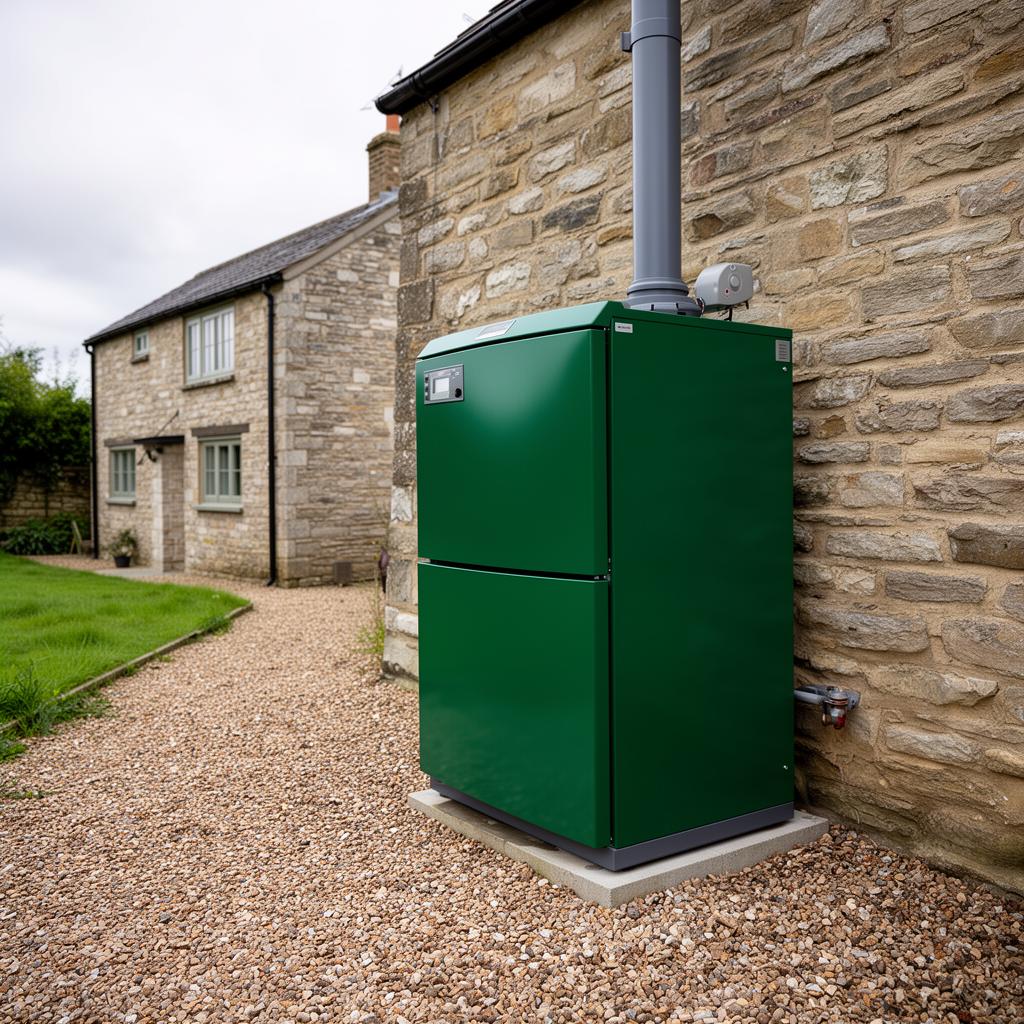
Why Cameley work is specified differently
The water supply in this part of the Chew Valley and surrounding area is hard, sitting between the very hard limestone water closer to Bath and the moderately hard supply further out. It's still enough to affect scale build-up over time, particularly in hot water cylinders and combi heat exchangers. We take that into account when specifying protection for a new system rather than assuming the same setup that works on a soft-water supply elsewhere in the country will perform the same way here. Our van runs the unclassified to reach you, 5 miles out from the Radstock workshop. Cameley is roughly 5 miles from our Radstock base via the unclassified. Typical property stock here: stone cottages. A meaningful share of properties around Cameley are off the gas grid, so oil boiler installs and tank swaps make up a fair part of what we do locally. Repair calls in Cameley usually get a same-week visit, with most common faults fixed on the first attempt.
What oil tank replacement includes here
- Bunded plastic and steel tanks supplied
- Base preparation and safe siting distances
- New supply line, filter and fire valve
- Old tank drained and removed
- Free written quote, no obligation
- Local aftercare from a 5-mile base
Where else we work near Cameley
Beyond Cameley we're frequently on jobs in Temple Cloud (BS39), Clutton (BS39), Hinton Blewett (BS39) and Bishop Sutton (BS39) — so spares, follow-ups and annual services are straightforward.
Why Cameley households use us
Oil boilers, oil tanks and pipework — fully certified for off-grid installs and replacements.
No verbal-only quotes. You'll get the boiler model, controls and warranty in writing before we book.
Based at 24 Bristol Rd, Radstock — every job is run by the team that quoted it.
362+ verified reviews from real customers across BA and BS postcodes.
Common queries, answered honestly
- Who actually carries out the work?
- A Gas Safe and, where relevant, OFTEC registered engineer from our own small team carries out the job — we don't sub the install out to a third party after quoting. You deal with the same people from survey through to commissioning and any aftercare calls.
- How often should a boiler actually be serviced?
- Once a year is the standard recommendation from every manufacturer, and most warranty terms make it a condition rather than a suggestion — miss a year and a claim can be refused even if the fault is unrelated. Landlords have a separate legal duty to have gas appliances checked annually regardless of warranty terms.
- What are your opening hours, and can you help out of hours?
- Our published hours are Monday to Friday, 8:30am to 5pm, and that's when the phones are answered and jobs are booked. We're honest that we don't run a round-the-clock emergency line, so if you're planning ahead, call during those hours on 07516 118198 and we'll get you booked in.
- How do you decide whether to repair or replace a boiler?
- We weigh the age of the boiler, whether parts are still made for it, how many faults it's had recently, and its running efficiency against a like-for-like or upgraded replacement. If a straightforward part fixes it and the boiler's otherwise sound, we'll say so rather than push a new install you don't need.
- Does my new boiler need to be notified to Building Control?
- Yes — boiler installation and replacement is notifiable work under Building Regulations. As Gas Safe/OFTEC registered installers we self-certify the work through our Competent Person Scheme, which means we notify it directly and you get a certificate without needing to involve the council separately.
- Will you come out to a village like Cameley?
- Cameley is part of our core patch (5 miles from base via the unclassified). Same-week site visits and quick callbacks are normal.
How to get this priced
Once we've seen the property, you'll get a written quote for oil tank replacement that sets out exactly what's included — the equipment, the work, and what happens if anything unexpected turns up once we're on site. That gives you something concrete to compare against any other quotes you're getting. We can usually pair the visit with other work in Temple Cloud to keep the trip efficient. Planning constraints are usually light here, so external work is checked first.
Cameley at a glance
- County
- Somerset
- Postcode district
- BS39
- Settlement type
- hamlet
- Nearest classified road
- unclassified
- Distance from our base
- 5 miles (Radstock, BA3)
- Typical building stock
- stone cottages
- Water hardness
- hard water
- Fuel availability
- off-grid oil and LPG common
- Customer mix
- rural owner-occupiers and smallholdings
- Nearby areas covered
- Temple Cloud, Clutton, Hinton Blewett, Bishop Sutton
Detail that matters in Cameley
Oil tank bunding and fire valve rules
Off-grid properties around Cameley rely on oil, and OFTEC's technical standards (OFS T100) set out when a tank needs a bund — a sealed secondary container holding at least 110% of the tank's capacity — based on how close it sits to a watercourse, drain, or boundary, and whether it's within a certain distance of a building. A fire valve fitted at the tank outlet, with its sensor mounted above the boiler's burner, will shut off oil flow automatically if a fire starts, and it's now expected on virtually every new or replaced installation. We check both bunding and fire-valve provision on every oil quote, because retrofitting a bund after a tank is delivered and sited is a second job, not a five-minute add-on.
- Bund holds 110% of tank capacity minimum
- Fire valve sensor mounted directly above the burner
- Distances to boundaries and drains checked against OFS T100
- Applies to replacement tanks, not just new installs
Pumped-oil versus gravity feed: does it matter?
Older oil systems sometimes still rely on gravity feed, where the tank sits higher than the burner and oil flows down to it under its own weight; a pumped system uses the burner's internal pump to draw oil up from a tank at any level, including below the boiler. Gravity feed limits where a tank can be sited and is more prone to airlocks if the line runs dry, while a pumped system is more flexible on tank position but needs the pipe run and lift height kept within the burner pump's rated capacity — usually no more than a few metres of lift and a set maximum run length. When we replace an oil boiler we check which type the existing tank and pipework support before assuming a straight swap, because a tank sited for gravity feed may need repositioning or a different pump to suit a modern burner.
What different boiler noises usually mean
A kettling or rumbling sound from a boiler is most often scale or sludge build-up on the heat exchanger causing localised boiling as water is trapped and overheated in restricted channels — the heating equivalent of a kettle furring up. A banging or knocking sound in pipework, sometimes called water hammer, is usually caused by a valve closing too quickly or trapped air rather than the boiler itself. A whining or humming sound tends to point to the circulating pump, either from wear or from air in the system reducing lubrication at the bearing. Diagnosing correctly from the noise alone isn't reliable enough to act on without checking system pressure, inhibitor condition and the pump directly, but the noise itself is a useful first indicator of which of those to check first.
Siting a boiler in an outbuilding or farm building
Rural properties around Cameley, particularly working farms and smallholdings, sometimes need a boiler sited in an unheated outbuilding rather than the main house, whether that's an oil boiler kept away from living space or a system serving an annexe. An external or outbuilding-sited boiler needs frost protection built in — either the boiler's own internal frost thermostat, which only protects the appliance itself, or a separate frost stat wired to bring on a pump or trace heating if the space temperature drops close to freezing. Pipework in an unheated building needs full insulation and, on exposed runs, trace heating tape rather than lagging alone. We specify frost protection based on the actual building's exposure, not a generic assumption, because an unheated stone barn and a modern insulated garage lose heat at very different rates.
Frost protection in outbuildings and unheated spaces
Pipework and cylinders sited in an unheated garage, outbuilding or loft on rural properties around Cameley are exposed to temperatures well below what the main house experiences overnight, and a single hard frost can split a pipe that's sat full of static water with nowhere to expand. A frost thermostat wired to bring on a small heat source, or to trigger a pump to keep water moving through vulnerable pipework, is the standard protection where lagging alone isn't sufficient — lagging slows heat loss but doesn't stop it given long enough exposure. We assess frost risk on any pipework routed through an unheated space rather than assuming standard lagging is automatically adequate, particularly where a property is left unoccupied for periods during winter.
Condensate soakaways where there's no convenient drain
Properties without a nearby internal waste connection or external gully for the boiler's condensate — common on rural plots around Cameley where the nearest drain run is a long way from the boiler's location — sometimes need a dedicated condensate soakaway instead. This is a small pit filled with granular material that the condensate, which is mildly acidic, can disperse into gradually rather than running to a drain at all. Sizing and siting it correctly matters: it needs to be far enough from foundations and sited where the local ground can actually absorb the modest but steady volume a boiler produces, particularly over a long heating season. Where ground conditions make a soakaway unreliable, running a longer insulated pipe to a proper drainage connection is usually the safer long-term choice even though it's more work to install.
Choosing between oil, LPG and electric off the gas grid
Properties around Cameley without a mains gas connection have a genuine choice between oil, bulk LPG and direct electric heating (or a heat pump), and the right answer depends on more than fuel price alone. Oil needs tank space, safe access for tanker delivery and the bunding/fire-valve provisions covered elsewhere, but gives strong, controllable heat output well suited to older, harder-to-heat stone properties. LPG suits households wanting gas-style controllability without oil's storage and burner maintenance, at a generally higher unit cost. A heat pump works best paired with good insulation and lower flow temperature emitters, and suits a property being upgraded rather than one where radiators and insulation are staying as they are. We look at the specific building's insulation, radiator sizing and available space before recommending a fuel switch rather than assuming one option suits every off-grid property.
What voids or protects a Worcester Bosch extended guarantee
Worcester Bosch's longer guarantee periods on qualifying installations are conditional on the boiler being installed and commissioned by an Accredited Installer, on an annual service being carried out (by any Gas Safe registered engineer, not necessarily the original installer) within the required window each year, and on system water quality being maintained to the standard set out in their published guidance — meaning a system flush at installation, correct inhibitor dosing, and in hard water areas a scale reducer or filter as specified. Missing a single annual service, or installing without the required water treatment, can reduce cover back to the manufacturer's standard guarantee period even if the boiler itself has had no faults. Keeping the Benchmark record and service history together is what lets a claim be assessed quickly if it's ever needed.
Other boiler services in Cameley
- Boiler Installation in CameleyNew combi, system and regular boiler installations for gas and oil homes — fixed prices, manufacturer warranties.
- Gas Boiler Installation in CameleyGas Safe registered installations and upgrades for mains gas homes across Bath, Radstock and Wells.
- Oil Boiler Installation in CameleyOFTEC-trained oil boiler specialist for rural homes off the gas grid — tank and boiler replacements.
- Boiler Servicing in CameleyAnnual boiler services to keep your warranty valid and your home safe, efficient and warm.
- Maintenance & Repair in CameleyDiagnostics, repairs and breakdown call-outs for gas and oil boilers across BA and BS postcodes.
- Landlord Gas Safety Certificates in CameleyAnnual CP12 landlord gas safety records issued on the day, for single lets, HMOs, holiday lets and whole portfolios.
- Oil Boiler Servicing in CameleyOFTEC registered annual servicing for oil boilers, including nozzle, electrode, filter and smoke test work on off grid homes.
- Oil Boiler Repairs in CameleyOil boiler breakdown repairs across rural Somerset, from lockouts and sooting to pump, photocell and control faults.
New Worcester boiler with a 10 year guarantee*
Free no-obligation quotes for installation, servicing & repairs across BA & BS postcodes.