
Combe Hay's Local Oil Boiler Repairs Specialist
Homeowners, landlords and smallholders tend to ask different questions about oil boiler repairs: homeowners want comfort and running costs sorted, landlords need compliant paperwork they can hand to tenants and agents, and rural owners often need to weigh oil against other fuels. We cover all three from 24 Bristol Road, Radstock BA3 3EE as a Gas Safe registered and OFTEC registered firm, so the advice is tailored to what you actually need the system to do. Our van runs the B3110 to reach you, 6 miles out from the Radstock workshop. Planning constraints are usually light here, so external work is checked first. In Combe Hay itself (BA2, Somerset) that usually means stone farmhouses and cottages, roughly 6 miles from the workshop.
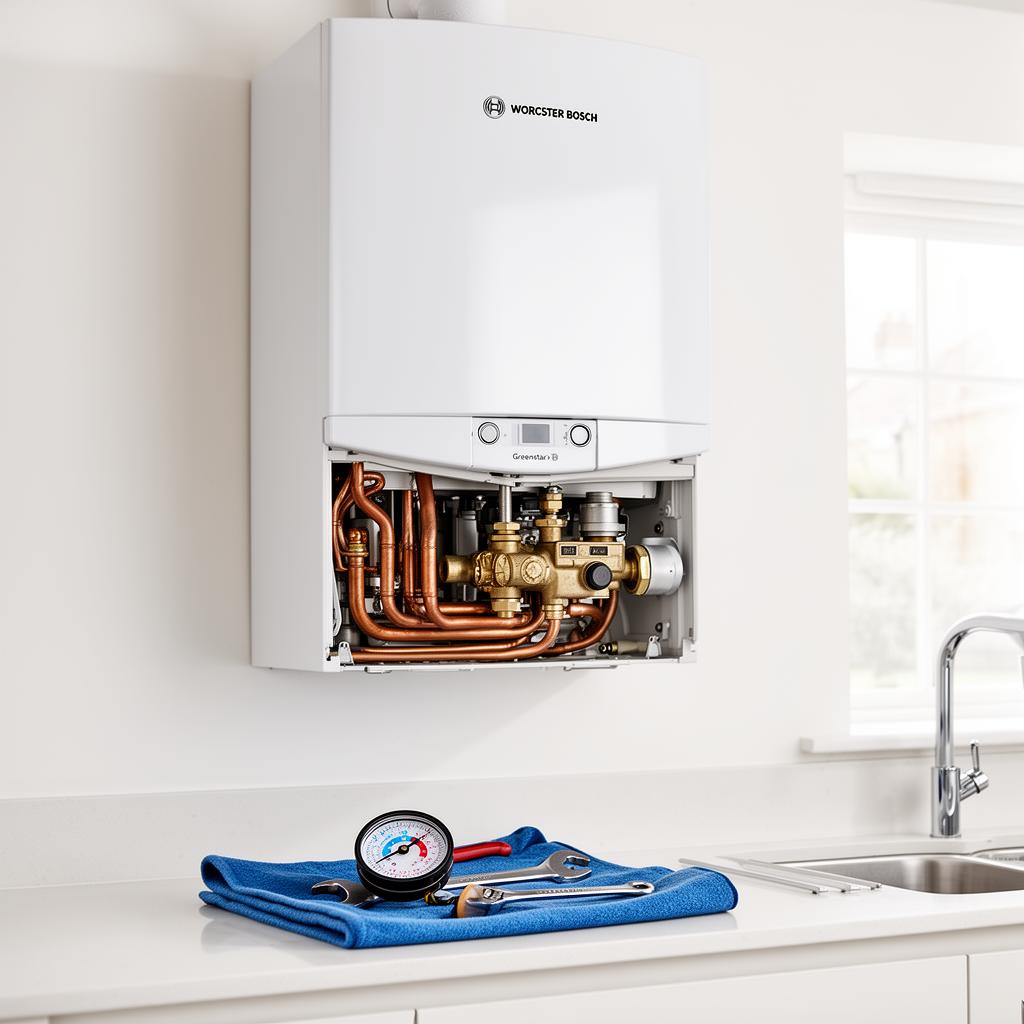
Within reach of the B3110
Beyond Combe Hay we're frequently on jobs in South Stoke (BA2), Englishcombe (BA2), Wellow (BA2) and Odd Down (BA2) — so spares, follow-ups and annual services are straightforward.
The work, step by step
- Boiler will not fire or keeps locking out
- Sooting, puffing and smoky flue faults
- Pump, photocell and control diagnostics
- Sludge and water in tank dealt with properly
- Free written quote, no obligation
- Local aftercare from a 6-mile base
Reading the property before pricing the work
Village lanes around here are sometimes narrow enough that arranging a specific arrival time matters more than it would on a wider suburban road, particularly if a new boiler, cylinder or radiators need to be carried some distance from where a van can park. We ask about this when scheduling the survey so the job itself isn't held up by something that could have been sorted in advance. Mains gas covers much of the area, with off-grid pockets, which changes the appliance shortlist. Planning constraints are usually light here, so external work is checked first. Combe Hay is roughly 6 miles from our Radstock base via the B3110. Typical property stock here: stone farmhouses and cottages. Combe Hay sits in the Somerset BA2 postcode and is part of our weekly run, so local response is quick. Repair calls in Combe Hay usually get a same-week visit, with most common faults fixed on the first attempt.
Qualifications behind the work
Qualifies your install for the full 10-year manufacturer guarantee* on supported models.
Oil boilers, oil tanks and pipework — fully certified for off-grid installs and replacements.
Reg. 549918 — every gas job notified to Building Control and a CP12 issued where required.
Based at 24 Bristol Rd, Radstock — every job is run by the team that quoted it.
Common queries, answered honestly
- Stone cottages seem to lose heat fast — does that change what boiler we need?
- Solid stone walls and older windows do increase heat loss compared to cavity-wall construction, so we size the boiler and radiators around a proper heat loss calculation for the property rather than just matching what's there already. Getting this right matters more in a cottage than a modern house, where an undersized system will never quite keep up.
- Who actually carries out the work?
- A Gas Safe and, where relevant, OFTEC registered engineer from our own small team carries out the job — we don't sub the install out to a third party after quoting. You deal with the same people from survey through to commissioning and any aftercare calls.
- Is it worth upgrading the heating controls when we replace the boiler?
- Where the existing controls are an old mechanical timer and single room thermostat, replacing them alongside the boiler with weather compensation or a modern programmable thermostat usually improves comfort and efficiency more than the boiler swap alone. It's not compulsory, but it's often the single best-value addition to a new install.
- My oil tank is old — does it need replacing alongside the boiler?
- Not automatically, but we check the tank's age, material, and condition as part of any oil boiler quote. Steel tanks corrode from the inside and plastic tanks degrade with UV exposure over time; if we find cracking, rust weeping, or a missing bund we'll flag it, because a failed tank is a pollution and insurance risk, not just a heating one.
- We've still got an old back boiler behind the fireplace — what's involved in removing it?
- Removing a back boiler means capping off the gas and water connections behind the fireplace, making good the opening or fitting a new fire/surround if you're keeping one, and rerouting pipework to the new combi or system boiler's position. It's more work than a like-for-like swap but a common upgrade on the older housing stock in this area.
- Will you come out to a village like Combe Hay?
- Combe Hay is part of our core patch (6 miles from base via the B3110). Same-week site visits and quick callbacks are normal.
Your next move in BA2
Getting more than one quote for oil boiler repairs is sensible, and we're happy to be one of them. Ask each tradesperson the same questions about what's included, what's excluded, and what registration they hold, so you're comparing genuinely equivalent quotes rather than a headline figure with hidden gaps. Photos of the existing setup speed up pricing for village properties like these. Planning constraints are usually light here, so external work is checked first. Terrain is valley floor, which matters for condensate runs and tank siting.
Coverage detail for BA2
- County
- Somerset
- Postcode district
- BA2
- Settlement type
- village
- Nearest classified road
- B3110
- Distance from our base
- 6 miles (Radstock, BA3)
- Typical building stock
- stone farmhouses and cottages
- Water hardness
- very hard limestone water
- Fuel availability
- mains gas with off-grid pockets
- Customer mix
- homes alongside small commercial and agricultural premises
- Nearby areas covered
- South Stoke, Englishcombe, Wellow, Odd Down
The parts of the job people rarely mention
Chasing pipework into lime plaster and stone walls
Solid stone or cob walls finished in lime plaster, common in the older parts of Combe Hay, behave very differently to modern plasterboard when a pipe run needs chasing in. Lime plaster is softer and more porous than gypsum, so cutting a neat, consistent chase without blowing the surface needs a slower hand and finer disc than a stud-wall job, and any repair has to be made good in a lime-based skim rather than modern filler, which can trap moisture behind it and cause the patch to fail. On solid stone we sometimes surface-mount pipework in painted conduit instead of chasing, particularly where the wall is a significant structural thickness and chasing would weaken it. Knowing which approach a wall needs before starting avoids expensive plaster damage.
What a proper heating quote should include
A quote worth relying on states the specific boiler or equipment model, the labour and materials it covers, whether a system flush and magnetic filter are included, what happens to old equipment removal and disposal, and what's excluded — an unexpected gas pipe upsizing or asbestos-containing material discovered during removal, for example, which can't always be known before work starts. It should also state who's completing the Gas Safe or OFTEC notification and Benchmark commissioning record, since that's the paperwork that protects both the manufacturer's guarantee and the property's compliance history when it's sold. A vague one-line quote makes comparing genuinely different offers difficult, because two prices that look similar can cover very different scopes of actual work.
- Specific make and model, not just "combi boiler"
- Flush and magnetic filter stated as included or excluded
- Old equipment removal and disposal covered
- Notification and Benchmark record responsibility stated
Why very hard limestone water shortens boiler life around Combe Hay
The limestone geology under Somerset gives Combe Hay very hard limestone water, which drops calcium carbonate out of solution as soon as it's heated. Inside a combi's plate heat exchanger the gaps between plates are only a millimetre or two wide, so scale narrows the waterways long before it's visible anywhere else in the system. The first symptom is usually a hot tap that runs warm rather than hot, or a boiler that fires more often for the same demand. Left unchecked, scale insulates the exchanger from the burner, forces flue gases hotter, and can crack the exchanger from thermal stress. A scale reducer fitted on the mains feed, sized to the property's flow rate, is cheaper to install once than to replace a heat exchanger twice.
Reaching properties off the main road network
Combe Hay is reached via the B3110, a B-road rather than a trunk route, which matters mainly for winter access and for confirming a delivery vehicle carrying a new oil tank or bulky equipment can realistically reach the property. We factor the actual route in when scheduling deliveries or larger installations, checking with the customer about any width, height or surface restrictions on the final approach rather than assuming a mapping app's route reflects what a loaded van can manage. It rarely changes the technical scope of a job, but it does affect how a visit is planned and timed, particularly for jobs needing a specific delivery slot to coincide with the installation date.
Oil tank de-sludging: why it's not optional
Oil sitting in a tank for years accumulates water from condensation and fine sediment that settles at the bottom, and over time this forms a sludge layer that can be drawn into the fuel line, particularly when the tank is nearly empty and the outlet pulls from lower in the tank than usual. Sludge blocks fine oil filters and burner nozzles, which shows up as burner lockouts or a boiler that won't fire cleanly rather than as an obvious tank problem. De-sludging drains and cleans the tank base without necessarily removing the whole tank, and it's worth doing when a tank is inherited with a property, before switching to a new boiler, or if lockouts recur despite the filter and nozzle being replaced. It's a preventative job that's cheaper done on schedule than after a burner failure it caused.
Condensate soakaways where there's no convenient drain
Properties without a nearby internal waste connection or external gully for the boiler's condensate — common on rural plots around Combe Hay where the nearest drain run is a long way from the boiler's location — sometimes need a dedicated condensate soakaway instead. This is a small pit filled with granular material that the condensate, which is mildly acidic, can disperse into gradually rather than running to a drain at all. Sizing and siting it correctly matters: it needs to be far enough from foundations and sited where the local ground can actually absorb the modest but steady volume a boiler produces, particularly over a long heating season. Where ground conditions make a soakaway unreliable, running a longer insulated pipe to a proper drainage connection is usually the safer long-term choice even though it's more work to install.
LPG as an alternative to oil off the gas grid
Properties around Combe Hay that sit off the mains gas network aren't limited to oil — bulk LPG, stored in an above-ground tank on a concrete base with the same OFTEC-style clearance and access rules as oil, runs standard gas-rated boilers with only a change of injector and pressure setting rather than a different boiler entirely. It suits households that want a gas hob and gas-style modulation rather than an oil burner's on/off firing pattern. The tank still needs delivery access for a tanker, which on some rural driveways is the deciding factor over oil. We check the access route for the largest realistic delivery vehicle before recommending LPG over oil, because a tank that can't be filled easily causes more disruption than the fuel choice was meant to solve.
Heating where a home sits alongside commercial premises
Properties around Combe Hay that combine living accommodation with an attached shop, workshop or other commercial space often need heating designed as genuinely separate zones with independent controls, since a shop's occupied hours and heating demand rarely match the flat or house above it. Where the two shared a single ageing system, splitting them onto separate zone valves — or, on a larger scale, separate boilers — stops one side subsidising or interfering with the other's heating schedule. Commercial space also sometimes falls under different servicing and safety-record obligations than the residential side, depending on how it's used, so it's worth establishing which parts of the building fall under which regime before assuming a single annual service covers everything.
Other boiler services in Combe Hay
- Boiler Installation in Combe HayNew combi, system and regular boiler installations for gas and oil homes — fixed prices, manufacturer warranties.
- Gas Boiler Installation in Combe HayGas Safe registered installations and upgrades for mains gas homes across Bath, Radstock and Wells.
- Oil Boiler Installation in Combe HayOFTEC-trained oil boiler specialist for rural homes off the gas grid — tank and boiler replacements.
- Boiler Servicing in Combe HayAnnual boiler services to keep your warranty valid and your home safe, efficient and warm.
- Maintenance & Repair in Combe HayDiagnostics, repairs and breakdown call-outs for gas and oil boilers across BA and BS postcodes.
- Landlord Gas Safety Certificates in Combe HayAnnual CP12 landlord gas safety records issued on the day, for single lets, HMOs, holiday lets and whole portfolios.
- Oil Boiler Servicing in Combe HayOFTEC registered annual servicing for oil boilers, including nozzle, electrode, filter and smoke test work on off grid homes.
- Oil Tank Replacement in Combe HayBunded oil tank replacement and relocation with base preparation, new supply line and OFTEC paperwork on completion.
New Worcester boiler with a 10 year guarantee*
Free no-obligation quotes for installation, servicing & repairs across BA & BS postcodes.