
Local Oil Boiler Repairs for Downside
Some properties make oil boiler repairs straightforward; others need a bit more thought about parking, access to the boiler cupboard, or how equipment gets in and out. We factor that into the visit rather than discovering it on the day. Working from 24 Bristol Road, Radstock BA3 3EE across the Radstock, Bath and Mendip area, we're Gas Safe registered and OFTEC registered, so both mains gas and oil-fired work is covered under one roof. Our van runs the unclassified to reach you, 5 miles out from the Radstock workshop.
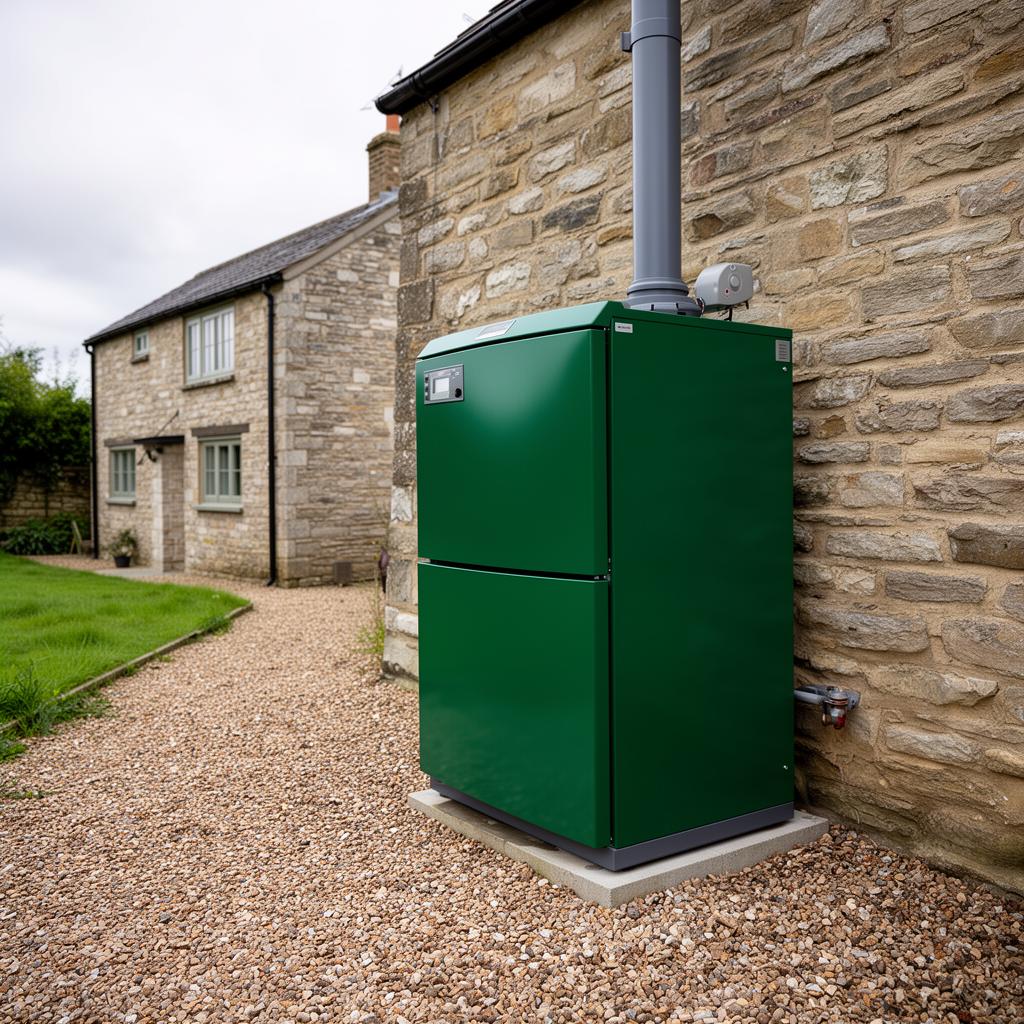
Reading the property before pricing the work
Water here runs off carboniferous limestone and Jurassic oolite, which makes it very hard by national standards. Hard water accelerates scale build-up inside heat exchangers, cylinders and pipework, which shortens the working life of components that aren't protected against it. On jobs in this area we factor scale protection into the specification rather than treating it as an optional extra, because the difference between a protected and unprotected system shows up within a few years, not decades. It's a genuine local variable, not generic sales advice, and it applies whether the property is on mains gas or oil. Terrain is level, which matters for condensate runs and tank siting. Downside is roughly 5 miles from our Radstock base via the unclassified. Typical property stock here: stone cottages. A meaningful share of properties around Downside are off the gas grid, so oil boiler installs and tank swaps make up a fair part of what we do locally. Repair calls in Downside usually get a same-week visit, with most common faults fixed on the first attempt.
Also covering the lanes around Downside
Beyond Downside we're frequently on jobs in Stratton-on-the-Fosse (BA3), Chilcompton (BA3), Oakhill (BA3) and Gurney Slade (BA3) — so spares, follow-ups and annual services are straightforward.
What oil boiler repairs includes here
- Boiler will not fire or keeps locking out
- Sooting, puffing and smoky flue faults
- Pump, photocell and control diagnostics
- Sludge and water in tank dealt with properly
- Free written quote, no obligation
- Local aftercare from a 5-mile base
Qualifications behind the work
Based at 24 Bristol Rd, Radstock — every job is run by the team that quoted it.
Oil boilers, oil tanks and pipework — fully certified for off-grid installs and replacements.
No verbal-only quotes. You'll get the boiler model, controls and warranty in writing before we book.
362+ verified reviews from real customers across BA and BS postcodes.
Downside questions we get asked
- We're rural and rely on oil — how far ahead should we book a boiler replacement?
- We'd suggest getting a survey and quote in place before your existing boiler fails outright, particularly heading into winter, since a straightforward oil boiler swap is a much calmer job to schedule than an emergency no-heat call. It also gives time to sort tank condition, access, and any parts ordering without pressure.
- What paperwork do I get once the job's finished?
- You'll get a Benchmark commissioning checklist for the boiler, a building notice or Building Control completion certificate for notifiable work, manufacturer warranty registration confirmation, and a Gas Safe (or OFTEC) record of the work. Keep these together — they're what a future buyer's solicitor or a warranty claim will ask for.
- How much longer does a full conversion take compared to a straight boiler swap?
- A straight like-for-like swap in the same location is typically a single working day. Converting boiler type (for example back boiler to combi, or oil to LPG), relocating the boiler, or adding a new cylinder usually needs one to two extra days for additional pipework, flue routing, and electrical work, which we'll scope out at survey.
- What actually happens on install day?
- The engineer isolates the gas or oil supply and water, removes the old boiler, fits and pressure-tests the new one, connects the flue and condensate, and commissions the system. For a straight swap this is usually one day; a conversion, relocation, or cylinder change can run into a second depending on the pipework involved.
- Does the hard water around Downside cause problems for boilers?
- The limestone geology around Downside gives very hard water, and scale build-up inside heat exchangers and pipework is one of the most common causes of boilers losing efficiency or breaking down early in this area. We routinely fit a scale reducer or filter on new installs here and would strongly recommend one on any hard-water property.
- What's the warranty on a new boiler installed in Downside?
- Up to 10 years on qualifying Worcester Bosch installs registered through us as Accredited Installers. Other manufacturers typically offer 5–7 years.
Where to go from here
Before booking any tradesperson for oil boiler repairs, it's worth checking their registration directly rather than taking a website's word for it. We're Gas Safe registered and OFTEC registered — you're welcome to verify that independently before you decide, and we'd encourage you to do the same with anyone else you're considering. We can usually pair the visit with other work in Stratton-on-the-Fosse to keep the trip efficient. Most of what we open up here is stone cottages, which dictates flue routes and pipe sizing.
Coverage detail for BA3
- County
- Somerset
- Postcode district
- BA3
- Settlement type
- hamlet
- Nearest classified road
- unclassified
- Distance from our base
- 5 miles (Radstock, BA3)
- Typical building stock
- stone cottages
- Water hardness
- very hard limestone water
- Fuel availability
- off-grid oil and LPG common
- Customer mix
- rural owner-occupiers and smallholdings
- Nearby areas covered
- Stratton-on-the-Fosse, Chilcompton, Oakhill, Gurney Slade
Things we check around Downside
Wood-burning stoves with a back boiler alongside a main boiler
Some older rural properties around Downside run a wood-burning stove with a back boiler feeding heat into the same central heating circuit as an oil or gas boiler, usually through a thermal store or a cylinder with two coils. Getting this combination to work safely means the stove's back boiler circuit has its own means of dissipating heat if the pump fails or a valve closes while the stove is still burning — a stove can't simply be switched off the way a boiler can if its heat has nowhere to go, so a gravity-fed safety circuit or heat leak radiator is normally required. It's a more involved design than a single-boiler system and needs planning at the point either appliance is replaced, not treated as an afterthought once the new boiler is already fitted.
Pumped-oil versus gravity feed: does it matter?
Older oil systems sometimes still rely on gravity feed, where the tank sits higher than the burner and oil flows down to it under its own weight; a pumped system uses the burner's internal pump to draw oil up from a tank at any level, including below the boiler. Gravity feed limits where a tank can be sited and is more prone to airlocks if the line runs dry, while a pumped system is more flexible on tank position but needs the pipe run and lift height kept within the burner pump's rated capacity — usually no more than a few metres of lift and a set maximum run length. When we replace an oil boiler we check which type the existing tank and pipework support before assuming a straight swap, because a tank sited for gravity feed may need repositioning or a different pump to suit a modern burner.
Electronic and physical scale reducers compared
In very hard limestone water areas like Downside, a scale reducer fitted on the boiler's cold feed protects the heat exchanger without the ongoing salt and drainage requirements of a full water softener. Physical scale reducers use a polyphosphate or template-assisted crystallisation cartridge that alters how calcium carbonate crystallises so it's less likely to adhere to hot surfaces; electronic and electromagnetic devices claim a similar effect without a cartridge to replace, though the evidence base for electronic types is weaker and more inconsistent than for physical media. Manufacturers including Worcester Bosch now specify a scale reducer or softener as a condition of extended guarantees in hard water areas, so the choice affects warranty validity as well as long-term performance, not just descale frequency.
LPG as an alternative to oil off the gas grid
Properties around Downside that sit off the mains gas network aren't limited to oil — bulk LPG, stored in an above-ground tank on a concrete base with the same OFTEC-style clearance and access rules as oil, runs standard gas-rated boilers with only a change of injector and pressure setting rather than a different boiler entirely. It suits households that want a gas hob and gas-style modulation rather than an oil burner's on/off firing pattern. The tank still needs delivery access for a tanker, which on some rural driveways is the deciding factor over oil. We check the access route for the largest realistic delivery vehicle before recommending LPG over oil, because a tank that can't be filled easily causes more disruption than the fuel choice was meant to solve.
Chimney liners for boilers using an existing flue
Where an older boiler used the property's original brick or stone chimney as its flue route, a replacement condensing boiler usually can't use the same masonry flue unlined, because the flue gases are cooler and wetter and will attack unprotected brickwork and mortar over time. A correctly specified stainless steel liner, sized to the boiler manufacturer's flue length and diameter tables, carries the flue gases safely and lets the existing chimney be reused rather than needing a new wall or roof penetration — often the only realistic option on a listed or solid-wall property in Downside where an external flue run isn't permitted. The liner has to be inspected and swept as part of ongoing servicing exactly as an open-fire flue would be, which is easy to overlook once it's hidden inside the chimney.
Reaching properties off the main road network
Downside is reached via the unclassified, an unclassified road rather than a numbered route, which matters mainly for winter access and for confirming a delivery vehicle carrying a new oil tank or bulky equipment can realistically reach the property. We factor the actual route in when scheduling deliveries or larger installations, checking with the customer about any width, height or surface restrictions on the final approach rather than assuming a mapping app's route reflects what a loaded van can manage. It rarely changes the technical scope of a job, but it does affect how a visit is planned and timed, particularly for jobs needing a specific delivery slot to coincide with the installation date.
Other boiler services in Downside
- Boiler Installation in DownsideNew combi, system and regular boiler installations for gas and oil homes — fixed prices, manufacturer warranties.
- Gas Boiler Installation in DownsideGas Safe registered installations and upgrades for mains gas homes across Bath, Radstock and Wells.
- Oil Boiler Installation in DownsideOFTEC-trained oil boiler specialist for rural homes off the gas grid — tank and boiler replacements.
- Boiler Servicing in DownsideAnnual boiler services to keep your warranty valid and your home safe, efficient and warm.
- Maintenance & Repair in DownsideDiagnostics, repairs and breakdown call-outs for gas and oil boilers across BA and BS postcodes.
- Landlord Gas Safety Certificates in DownsideAnnual CP12 landlord gas safety records issued on the day, for single lets, HMOs, holiday lets and whole portfolios.
- Oil Boiler Servicing in DownsideOFTEC registered annual servicing for oil boilers, including nozzle, electrode, filter and smoke test work on off grid homes.
- Oil Tank Replacement in DownsideBunded oil tank replacement and relocation with base preparation, new supply line and OFTEC paperwork on completion.
New Worcester boiler with a 10 year guarantee*
Free no-obligation quotes for installation, servicing & repairs across BA & BS postcodes.