
Oil Boiler Repairs — Pilton (BA4)
Oil Boiler Repairs rarely happens in isolation — it usually connects to hot water demand, radiator layout and how draughty or well-insulated the rest of the house is. We look at the system as a whole rather than just the box on the wall. Gas Safe registered, OFTEC registered and a Worcester Bosch Accredited Installer, working out of 24 Bristol Road, Radstock BA3 3EE, we'll flag anything upstream that affects how well the new setup performs. Access is lane access, so parking, spoil removal and delivery timing get planned in advance. Most of what we open up here is stone cottages and estate housing, which dictates flue routes and pipe sizing. In Pilton itself (BA4, Somerset) that usually means stone cottages and estate housing, roughly 8 miles from the workshop.
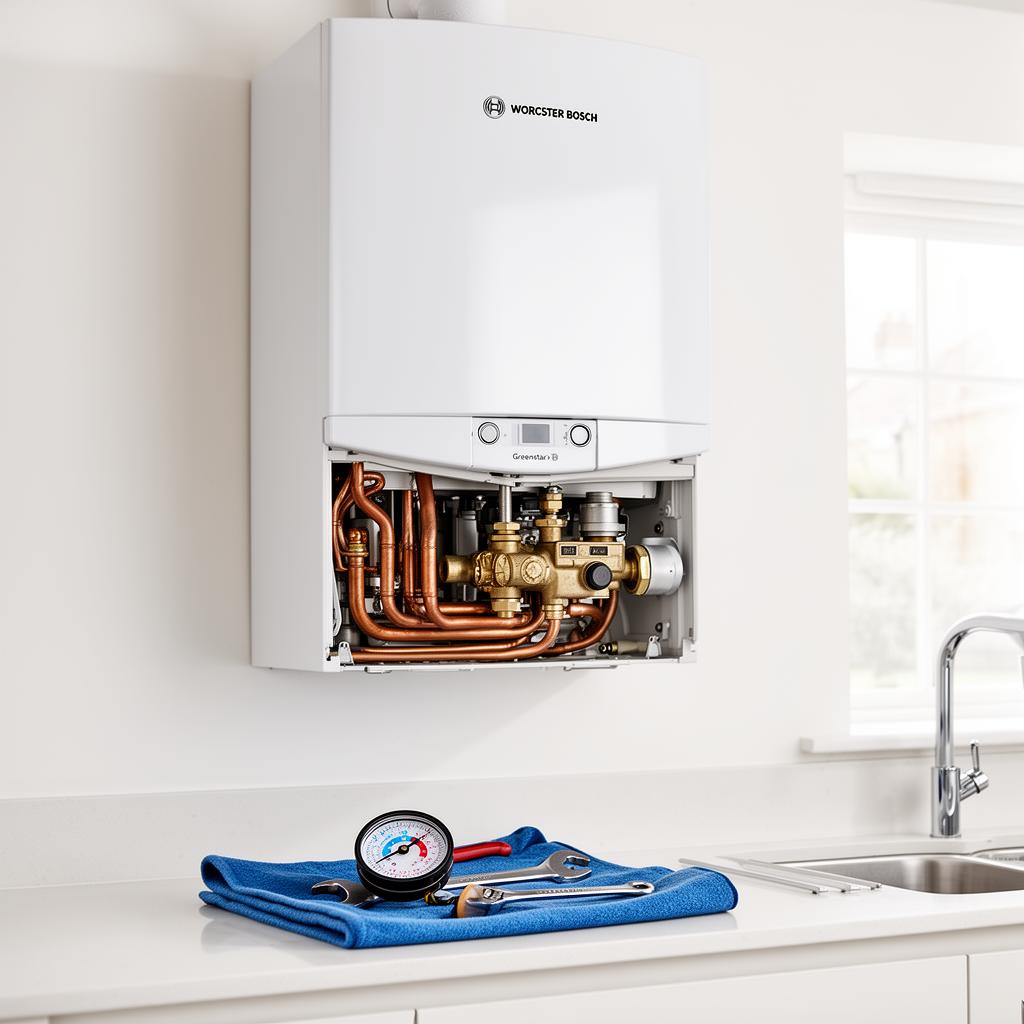
The work, step by step
- Boiler will not fire or keeps locking out
- Sooting, puffing and smoky flue faults
- Pump, photocell and control diagnostics
- Sludge and water in tank dealt with properly
- Free written quote, no obligation
- Local aftercare from a 8-mile base
Registrations and how work is signed off
Based at 24 Bristol Rd, Radstock — every job is run by the team that quoted it.
Qualifies your install for the full 10-year manufacturer guarantee* on supported models.
Reg. 549918 — every gas job notified to Building Control and a CP12 issued where required.
No verbal-only quotes. You'll get the boiler model, controls and warranty in writing before we book.
Pilton: stock, water and fuel supply
Village lanes around here are sometimes narrow enough that arranging a specific arrival time matters more than it would on a wider suburban road, particularly if a new boiler, cylinder or radiators need to be carried some distance from where a van can park. We ask about this when scheduling the survey so the job itself isn't held up by something that could have been sorted in advance. homes alongside small commercial and agricultural premises make up most enquiries from this postcode. Our van runs the A361 to reach you, 8 miles out from the Radstock workshop. Pilton is roughly 8 miles from our Radstock base via the A361. Typical property stock here: stone cottages and estate housing. A meaningful share of properties around Pilton are off the gas grid, so oil boiler installs and tank swaps make up a fair part of what we do locally. Repair calls in Pilton usually get a same-week visit, with most common faults fixed on the first attempt.
Also covering the lanes around Pilton
Beyond Pilton we're frequently on jobs in Shepton Mallet (BA4), Croscombe (BA5), Doulting (BA4) and Evercreech (BA4) — so spares, follow-ups and annual services are straightforward.
Oil Boiler Repairs FAQs for BA4
- What paperwork do I get once the job's finished?
- You'll get a Benchmark commissioning checklist for the boiler, a building notice or Building Control completion certificate for notifiable work, manufacturer warranty registration confirmation, and a Gas Safe (or OFTEC) record of the work. Keep these together — they're what a future buyer's solicitor or a warranty claim will ask for.
- Can you look over a quote I've already had from another company?
- Yes, this comes up often. Send or bring in the other written quote and we'll go through the spec — boiler size, controls, cylinder if included, and what's actually listed for parts and labour — and tell you plainly whether it looks right for the property, oversized, or missing something we'd expect to see.
- What actually happens on install day?
- The engineer isolates the gas or oil supply and water, removes the old boiler, fits and pressure-tests the new one, connects the flue and condensate, and commissions the system. For a straight swap this is usually one day; a conversion, relocation, or cylinder change can run into a second depending on the pipework involved.
- What is condensate and why does its routing matter?
- Condensate is the mildly acidic water produced by a modern condensing boiler as it extracts extra heat from the flue gases, and it needs a route to an internal drain or, less ideally, an external soakaway. In colder or more exposed locations an external condensate pipe can freeze and shut the boiler down, so internal routing is worth prioritising where the layout allows it.
- What's actually checked during an annual boiler service?
- A service includes a visual and functional check of the boiler's casing and controls, flue gas analysis to confirm safe and efficient combustion, checking the flame picture and pressure, inspecting seals and condensate, and testing safety devices. It's a safety check as much as a performance one, and it's what keeps most manufacturer warranties valid.
- How often should a boiler actually be serviced?
- Once a year is the standard recommendation from every manufacturer, and most warranty terms make it a condition rather than a suggestion — miss a year and a claim can be refused even if the fault is unrelated. Landlords have a separate legal duty to have gas appliances checked annually regardless of warranty terms.
Next step for Pilton
The next step for oil boiler repairs is a site visit, not a phone-only estimate. Seeing the property, the current system and the access lets us give you a figure that holds up once the work starts, rather than one that changes on the day. Call 07516 118198, Monday to Friday, 8:30am to 5pm, and we'll arrange a time that suits. Photos of the existing setup speed up pricing for village properties like these. Water here is moderately hard water, so scale protection is specified accordingly. Terrain is level, which matters for condensate runs and tank siting.
Area data we work from
- County
- Somerset
- Postcode district
- BA4
- Settlement type
- village
- Nearest classified road
- A361
- Distance from our base
- 8 miles (Radstock, BA3)
- Typical building stock
- stone cottages and estate housing
- Water hardness
- moderately hard water
- Fuel availability
- mains gas with off-grid pockets
- Customer mix
- homes alongside small commercial and agricultural premises
- Nearby areas covered
- Shepton Mallet, Croscombe, Doulting, Evercreech
Technical notes for this job type
Chimney liners for boilers using an existing flue
Where an older boiler used the property's original brick or stone chimney as its flue route, a replacement condensing boiler usually can't use the same masonry flue unlined, because the flue gases are cooler and wetter and will attack unprotected brickwork and mortar over time. A correctly specified stainless steel liner, sized to the boiler manufacturer's flue length and diameter tables, carries the flue gases safely and lets the existing chimney be reused rather than needing a new wall or roof penetration — often the only realistic option on a listed or solid-wall property in Pilton where an external flue run isn't permitted. The liner has to be inspected and swept as part of ongoing servicing exactly as an open-fire flue would be, which is easy to overlook once it's hidden inside the chimney.
Pilton's A361 corridor and what it means for scheduling
Properties along or near the A361 corridor around Pilton are generally straightforward to reach without the access constraints of side lanes or unclassified roads further off the main network, which helps with scheduling deliveries of boilers, cylinders or oil tanks to a fixed slot. It doesn't change the technical requirements of the job itself, but predictable access does mean less contingency time needs building into a visit, and it makes coordinating a delivery with an installation date more reliable than on a property with a difficult final approach. We still confirm any specific parking or loading restriction on the immediate street before a job, since a fast main road doesn't guarantee easy stopping right outside the property.
Single-pipe circuits in older stone cottages
A lot of the stone cottages and farmhouses around Pilton were plumbed decades ago on a single-pipe gravity circuit, where each radiator draws from and returns to the same loop rather than having its own flow and return. It works, but radiators furthest from the boiler receive water that's already cooled after giving up heat to the ones before it, so the far end of the house is always the coldest. Converting to a two-pipe layout means new pipe runs, which in a stone cottage often means chasing lime plaster or lifting flagstones — not a trivial job. Where a full rewire of the pipework isn't wanted, we sometimes improve balance instead by oversizing the radiators nearest the end of the run and fitting TRVs to hold back the ones nearest the boiler.
Low-loss headers on larger or multi-zone systems
On a system with several heating zones or a boiler oversized relative to any single zone's flow requirement, a low-loss header hydraulically separates the boiler's primary circuit from the secondary zone circuits, so each side can run its own pump and flow rate without one interfering with the other. Without it, a zone valve closing on a multi-zone system can starve the boiler of flow or force excessive pump pressure through the remaining open zones. It's most relevant on larger properties or ones with commercial premises attached, where several distinct heating circuits — perhaps a shop unit and a flat above — share one heat source. Getting the header sized to the boiler's actual flow rate, not just fitted as standard, is what makes it work rather than just adding another connection.
What different boiler noises usually mean
A kettling or rumbling sound from a boiler is most often scale or sludge build-up on the heat exchanger causing localised boiling as water is trapped and overheated in restricted channels — the heating equivalent of a kettle furring up. A banging or knocking sound in pipework, sometimes called water hammer, is usually caused by a valve closing too quickly or trapped air rather than the boiler itself. A whining or humming sound tends to point to the circulating pump, either from wear or from air in the system reducing lubrication at the bearing. Diagnosing correctly from the noise alone isn't reliable enough to act on without checking system pressure, inhibitor condition and the pump directly, but the noise itself is a useful first indicator of which of those to check first.
Wood-burning stoves with a back boiler alongside a main boiler
Some older rural properties around Pilton run a wood-burning stove with a back boiler feeding heat into the same central heating circuit as an oil or gas boiler, usually through a thermal store or a cylinder with two coils. Getting this combination to work safely means the stove's back boiler circuit has its own means of dissipating heat if the pump fails or a valve closes while the stove is still burning — a stove can't simply be switched off the way a boiler can if its heat has nowhere to go, so a gravity-fed safety circuit or heat leak radiator is normally required. It's a more involved design than a single-boiler system and needs planning at the point either appliance is replaced, not treated as an afterthought once the new boiler is already fitted.
LPG as an alternative to oil off the gas grid
Properties around Pilton that sit off the mains gas network aren't limited to oil — bulk LPG, stored in an above-ground tank on a concrete base with the same OFTEC-style clearance and access rules as oil, runs standard gas-rated boilers with only a change of injector and pressure setting rather than a different boiler entirely. It suits households that want a gas hob and gas-style modulation rather than an oil burner's on/off firing pattern. The tank still needs delivery access for a tanker, which on some rural driveways is the deciding factor over oil. We check the access route for the largest realistic delivery vehicle before recommending LPG over oil, because a tank that can't be filled easily causes more disruption than the fuel choice was meant to solve.
Other boiler services in Pilton
- Boiler Installation in PiltonNew combi, system and regular boiler installations for gas and oil homes — fixed prices, manufacturer warranties.
- Gas Boiler Installation in PiltonGas Safe registered installations and upgrades for mains gas homes across Bath, Radstock and Wells.
- Oil Boiler Installation in PiltonOFTEC-trained oil boiler specialist for rural homes off the gas grid — tank and boiler replacements.
- Boiler Servicing in PiltonAnnual boiler services to keep your warranty valid and your home safe, efficient and warm.
- Maintenance & Repair in PiltonDiagnostics, repairs and breakdown call-outs for gas and oil boilers across BA and BS postcodes.
- Landlord Gas Safety Certificates in PiltonAnnual CP12 landlord gas safety records issued on the day, for single lets, HMOs, holiday lets and whole portfolios.
- Oil Boiler Servicing in PiltonOFTEC registered annual servicing for oil boilers, including nozzle, electrode, filter and smoke test work on off grid homes.
- Oil Tank Replacement in PiltonBunded oil tank replacement and relocation with base preparation, new supply line and OFTEC paperwork on completion.
New Worcester boiler with a 10 year guarantee*
Free no-obligation quotes for installation, servicing & repairs across BA & BS postcodes.