
Pilton's Local Oil Tank Replacement Specialist
Some properties make oil tank replacement straightforward; others need a bit more thought about parking, access to the boiler cupboard, or how equipment gets in and out. We factor that into the visit rather than discovering it on the day. Working from 24 Bristol Road, Radstock BA3 3EE across the Radstock, Bath and Mendip area, we're Gas Safe registered and OFTEC registered, so both mains gas and oil-fired work is covered under one roof. Water here is moderately hard water, so scale protection is specified accordingly. Typical era of build is mixed-cottage, which affects existing pipework and system cleanliness. In Pilton itself (BA4, Somerset) that usually means stone cottages and estate housing, roughly 8 miles from the workshop.
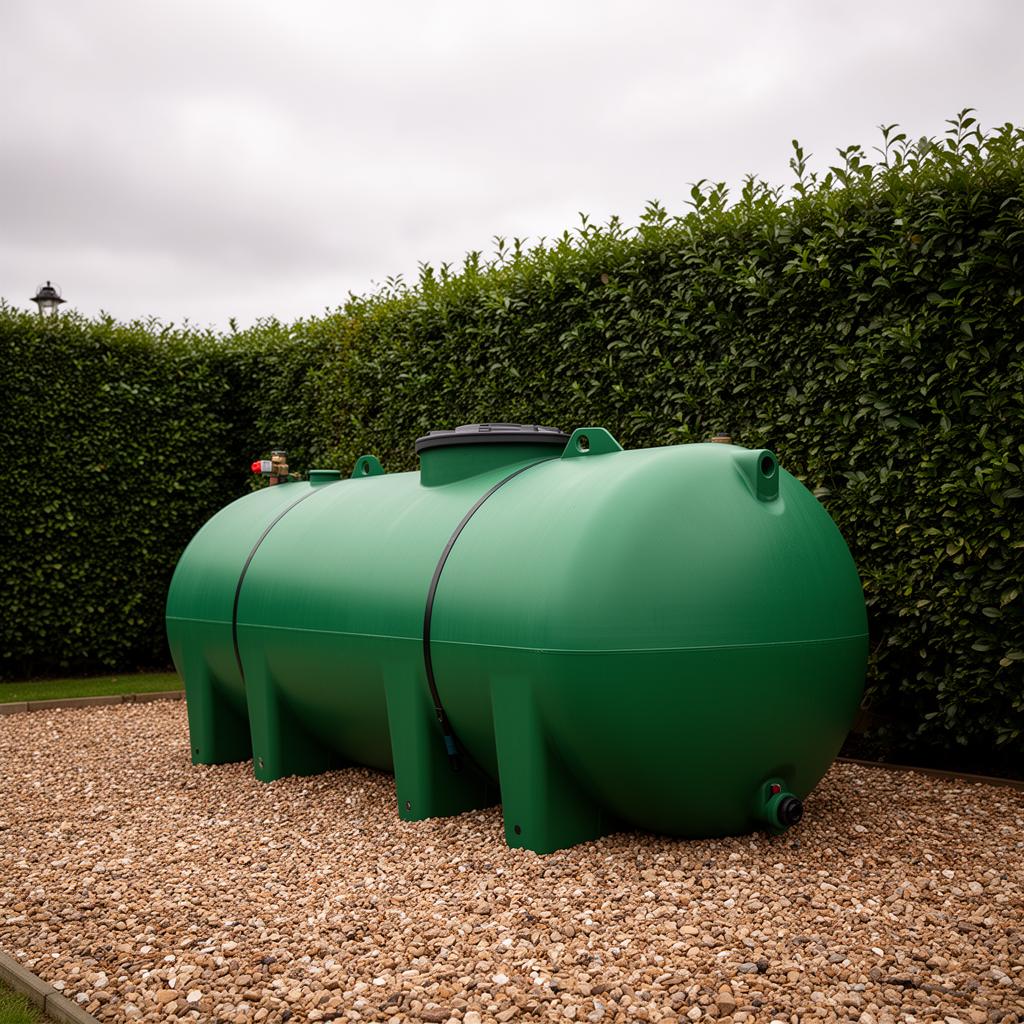
What the buildings in Pilton change about the job
Stone cottages and farmhouses around here were mostly built long before central heating existed, so pipework and boiler locations have usually been retrofitted at some point, sometimes more than once. Thick stone walls, uneven floor levels and low ceilings can all affect where a boiler or cylinder can practically go, and older stonework doesn't always take fixings the way modern block or brick does. We work around those constraints on site rather than assuming a straightforward install. homes alongside small commercial and agricultural premises make up most enquiries from this postcode. Typical era of build is mixed-cottage, which affects existing pipework and system cleanliness. Pilton is roughly 8 miles from our Radstock base via the A361. Typical property stock here: stone cottages and estate housing. A meaningful share of properties around Pilton are off the gas grid, so oil boiler installs and tank swaps make up a fair part of what we do locally. Repair calls in Pilton usually get a same-week visit, with most common faults fixed on the first attempt.
Also covering the lanes around Pilton
Beyond Pilton we're frequently on jobs in Shepton Mallet (BA4), Croscombe (BA5), Doulting (BA4) and Evercreech (BA4) — so spares, follow-ups and annual services are straightforward.
The work, step by step
- Bunded plastic and steel tanks supplied
- Base preparation and safe siting distances
- New supply line, filter and fire valve
- Old tank drained and removed
- Free written quote, no obligation
- Local aftercare from a 8-mile base
Why Pilton households use us
Oil boilers, oil tanks and pipework — fully certified for off-grid installs and replacements.
Based at 24 Bristol Rd, Radstock — every job is run by the team that quoted it.
Qualifies your install for the full 10-year manufacturer guarantee* on supported models.
362+ verified reviews from real customers across BA and BS postcodes.
Common queries, answered honestly
- Who actually carries out the work?
- A Gas Safe and, where relevant, OFTEC registered engineer from our own small team carries out the job — we don't sub the install out to a third party after quoting. You deal with the same people from survey through to commissioning and any aftercare calls.
- How much longer does a full conversion take compared to a straight boiler swap?
- A straight like-for-like swap in the same location is typically a single working day. Converting boiler type (for example back boiler to combi, or oil to LPG), relocating the boiler, or adding a new cylinder usually needs one to two extra days for additional pipework, flue routing, and electrical work, which we'll scope out at survey.
- Does my new boiler need to be notified to Building Control?
- Yes — boiler installation and replacement is notifiable work under Building Regulations. As Gas Safe/OFTEC registered installers we self-certify the work through our Competent Person Scheme, which means we notify it directly and you get a certificate without needing to involve the council separately.
- What paperwork do I get once the job's finished?
- You'll get a Benchmark commissioning checklist for the boiler, a building notice or Building Control completion certificate for notifiable work, manufacturer warranty registration confirmation, and a Gas Safe (or OFTEC) record of the work. Keep these together — they're what a future buyer's solicitor or a warranty claim will ask for.
- What's the difference between a boiler service and general maintenance?
- A service is the annual manufacturer-required safety and efficiency check that keeps the warranty valid. Maintenance covers everything else — bleeding radiators, checking system pressure, sorting minor faults, and periodic flushing or filter checks — that keeps the system running well between those annual services rather than replacing them.
- Will you come out to a village like Pilton?
- Pilton is part of our core patch (8 miles from base via the A361). Same-week site visits and quick callbacks are normal.
Booking work in Pilton
Expect three things from oil tank replacement with us: a proper look at the property before any figure is given, a written quote that spells out what's included, and work carried out by a Gas Safe and OFTEC registered engineer who stands behind it. Photos of the existing setup speed up pricing for village properties like these. Planning constraints are usually light here, so external work is checked first. Typical era of build is mixed-cottage, which affects existing pipework and system cleanliness.
Coverage detail for BA4
- County
- Somerset
- Postcode district
- BA4
- Settlement type
- village
- Nearest classified road
- A361
- Distance from our base
- 8 miles (Radstock, BA3)
- Typical building stock
- stone cottages and estate housing
- Water hardness
- moderately hard water
- Fuel availability
- mains gas with off-grid pockets
- Customer mix
- homes alongside small commercial and agricultural premises
- Nearby areas covered
- Shepton Mallet, Croscombe, Doulting, Evercreech
Technical notes for this job type
Pumped-oil versus gravity feed: does it matter?
Older oil systems sometimes still rely on gravity feed, where the tank sits higher than the burner and oil flows down to it under its own weight; a pumped system uses the burner's internal pump to draw oil up from a tank at any level, including below the boiler. Gravity feed limits where a tank can be sited and is more prone to airlocks if the line runs dry, while a pumped system is more flexible on tank position but needs the pipe run and lift height kept within the burner pump's rated capacity — usually no more than a few metres of lift and a set maximum run length. When we replace an oil boiler we check which type the existing tank and pipework support before assuming a straight swap, because a tank sited for gravity feed may need repositioning or a different pump to suit a modern burner.
Chasing pipework into lime plaster and stone walls
Solid stone or cob walls finished in lime plaster, common in the older parts of Pilton, behave very differently to modern plasterboard when a pipe run needs chasing in. Lime plaster is softer and more porous than gypsum, so cutting a neat, consistent chase without blowing the surface needs a slower hand and finer disc than a stud-wall job, and any repair has to be made good in a lime-based skim rather than modern filler, which can trap moisture behind it and cause the patch to fail. On solid stone we sometimes surface-mount pipework in painted conduit instead of chasing, particularly where the wall is a significant structural thickness and chasing would weaken it. Knowing which approach a wall needs before starting avoids expensive plaster damage.
Nozzle replacement and baffle cleaning on oil burners
An oil burner's nozzle atomises fuel into a fine spray for combustion, and it wears from constant fuel flow at pressure, gradually changing the spray pattern away from the burner manufacturer's specification even before it visibly fails. A worn nozzle burns less cleanly, producing more soot that coats the heat exchanger's baffles, and a sooted heat exchanger loses efficiency in the same way scale does on a gas boiler's plates. Standard practice on an annual oil service is to replace the nozzle as a matter of course, rather than wait for a fault, and to remove and clean the baffles so the heat exchanger surfaces are exposed to combustion heat properly again. Skipping nozzle replacement to save a service visit's minor parts cost is a false economy against the fuel wasted by a poorly atomising burner.
What different boiler noises usually mean
A kettling or rumbling sound from a boiler is most often scale or sludge build-up on the heat exchanger causing localised boiling as water is trapped and overheated in restricted channels — the heating equivalent of a kettle furring up. A banging or knocking sound in pipework, sometimes called water hammer, is usually caused by a valve closing too quickly or trapped air rather than the boiler itself. A whining or humming sound tends to point to the circulating pump, either from wear or from air in the system reducing lubrication at the bearing. Diagnosing correctly from the noise alone isn't reliable enough to act on without checking system pressure, inhibitor condition and the pump directly, but the noise itself is a useful first indicator of which of those to check first.
LPG as an alternative to oil off the gas grid
Properties around Pilton that sit off the mains gas network aren't limited to oil — bulk LPG, stored in an above-ground tank on a concrete base with the same OFTEC-style clearance and access rules as oil, runs standard gas-rated boilers with only a change of injector and pressure setting rather than a different boiler entirely. It suits households that want a gas hob and gas-style modulation rather than an oil burner's on/off firing pattern. The tank still needs delivery access for a tanker, which on some rural driveways is the deciding factor over oil. We check the access route for the largest realistic delivery vehicle before recommending LPG over oil, because a tank that can't be filled easily causes more disruption than the fuel choice was meant to solve.
Working across Somerset: what being local changes
Being based at 24 Bristol Road, Radstock, 8 miles from Pilton via the A361, means a callout doesn't involve a long cross-county drive, and it also means familiarity with the recurring patterns in the local building stock — stone cottages and estate housing — rather than encountering that construction type for the first time on-site. Local knowledge doesn't replace a proper site survey, but it does mean fewer surprises: knowing in advance that a particular postcode area typically has hard water, older single-pipe circuits, or restricted parking means the quote reflects the likely reality of the job before the first visit. We're Gas Safe and OFTEC registered and work across Somerset on that basis, not by claiming coverage we don't actually deliver on.
Other boiler services in Pilton
- Boiler Installation in PiltonNew combi, system and regular boiler installations for gas and oil homes — fixed prices, manufacturer warranties.
- Gas Boiler Installation in PiltonGas Safe registered installations and upgrades for mains gas homes across Bath, Radstock and Wells.
- Oil Boiler Installation in PiltonOFTEC-trained oil boiler specialist for rural homes off the gas grid — tank and boiler replacements.
- Boiler Servicing in PiltonAnnual boiler services to keep your warranty valid and your home safe, efficient and warm.
- Maintenance & Repair in PiltonDiagnostics, repairs and breakdown call-outs for gas and oil boilers across BA and BS postcodes.
- Landlord Gas Safety Certificates in PiltonAnnual CP12 landlord gas safety records issued on the day, for single lets, HMOs, holiday lets and whole portfolios.
- Oil Boiler Servicing in PiltonOFTEC registered annual servicing for oil boilers, including nozzle, electrode, filter and smoke test work on off grid homes.
- Oil Boiler Repairs in PiltonOil boiler breakdown repairs across rural Somerset, from lockouts and sooting to pump, photocell and control faults.
New Worcester boiler with a 10 year guarantee*
Free no-obligation quotes for installation, servicing & repairs across BA & BS postcodes.