
Oil Tank Replacement in Shepton Mallet
Homeowners, landlords and smallholders tend to ask different questions about oil tank replacement: homeowners want comfort and running costs sorted, landlords need compliant paperwork they can hand to tenants and agents, and rural owners often need to weigh oil against other fuels. We cover all three from 24 Bristol Road, Radstock BA3 3EE as a Gas Safe registered and OFTEC registered firm, so the advice is tailored to what you actually need the system to do. Nearest neighbours on our round are Croscombe, Pilton, Doulting. Typical era of build is georgian, which affects existing pipework and system cleanliness. In Shepton Mallet itself (BA4, Somerset) that usually means georgian terraces and modern estates, roughly 7 miles from the workshop.
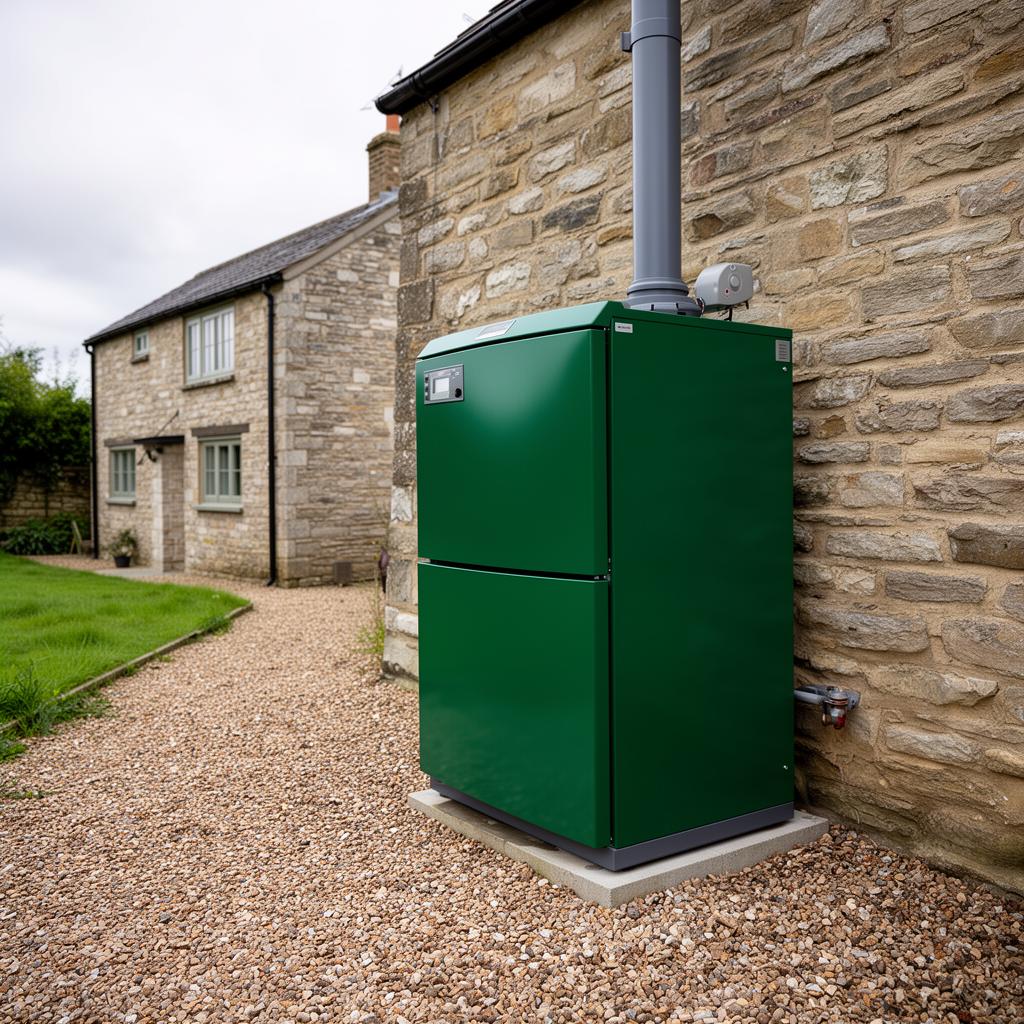
How we run oil tank replacement on site
- Bunded plastic and steel tanks supplied
- Base preparation and safe siting distances
- New supply line, filter and fire valve
- Old tank drained and removed
- Free written quote, no obligation
- Local aftercare from a 7-mile base
Qualifications behind the work
Reg. 549918 — every gas job notified to Building Control and a CP12 issued where required.
362+ verified reviews from real customers across BA and BS postcodes.
Oil boilers, oil tanks and pipework — fully certified for off-grid installs and replacements.
No verbal-only quotes. You'll get the boiler model, controls and warranty in writing before we book.
Within reach of the A37
Beyond Shepton Mallet we're frequently on jobs in Croscombe (BA5), Pilton (BA4), Doulting (BA4) and Evercreech (BA4) — so spares, follow-ups and annual services are straightforward.
Reading the property before pricing the work
Most properties in this settlement sit on the mains gas network, which keeps the fuel choice straightforward and generally opens up the widest range of boiler options. That doesn't remove every complication — flue routing, existing pipework diameter and how the property currently distributes heat still need checking — but it does mean the conversation usually starts from a simpler baseline than in the off-grid villages further out. We're Gas Safe registered for exactly this kind of work. Nearest neighbours on our round are Croscombe, Pilton, Doulting. Planning constraints are usually light here, so external work is checked first. Shepton Mallet is roughly 7 miles from our Radstock base via the A37. Typical property stock here: Georgian terraces and modern estates. Mains gas covers most of Shepton Mallet, so the usual choice is between a modern combi or a system boiler with a cylinder — we'll size it correctly for the home, not just swap like-for-like. Repair calls in Shepton Mallet usually get a same-week visit, with most common faults fixed on the first attempt.
Common queries, answered honestly
- The property has multiple gas appliances across shared rooms — does that complicate the safety check?
- Every gas appliance and flue in the property needs checking as part of the annual CP12, whether that's one boiler and a cooker or several appliances across a shared house. We schedule this as one visit covering the whole property so you get a single certificate rather than piecing several together.
- What is condensate and why does its routing matter?
- Condensate is the mildly acidic water produced by a modern condensing boiler as it extracts extra heat from the flue gases, and it needs a route to an internal drain or, less ideally, an external soakaway. In colder or more exposed locations an external condensate pipe can freeze and shut the boiler down, so internal routing is worth prioritising where the layout allows it.
- We're on mains gas — is a boiler swap a fairly simple job?
- Where the new boiler goes in the same place with the same flue route, a mains gas swap is usually the most straightforward job we do — often completed within a working day. It gets more involved if you're relocating the boiler, changing from a heat-only or system boiler to a combi, or the existing pipework needs upgrading to suit.
- How do you decide whether to repair or replace a boiler?
- We weigh the age of the boiler, whether parts are still made for it, how many faults it's had recently, and its running efficiency against a like-for-like or upgraded replacement. If a straightforward part fixes it and the boiler's otherwise sound, we'll say so rather than push a new install you don't need.
- Our houses are close together — are there rules about where a flue can go?
- Yes, flue terminal positions are governed by set minimum distances from windows, doors, boundaries, and other flues, including a neighbour's opening windows. On terraced and closely built streets this sometimes limits where a boiler can go or means routing the flue differently to an old back boiler's position — we check this at survey, not after ordering.
- What's an unvented cylinder and does it need special installation rules?
- An unvented cylinder stores mains-pressure hot water without a cold water tank in the loft, giving strong pressure at every outlet. Building Regulations require it to be fitted and commissioned by someone holding a specific unvented cylinder qualification (which we hold), including fitting the correct safety valves, because an incorrectly installed unvented cylinder is a pressure vessel hazard.
Where to go from here
Not every enquiry about oil tank replacement needs a full replacement — sometimes a repair, a service, or a smaller fix solves the problem. We'll tell you which applies once we've had a proper look, rather than recommending the largest job by default. Send the appliance make, model and any fault code and you get a straight answer, not a sales script. Planning constraints are usually light here, so external work is checked first. Nearest neighbours on our round are Croscombe, Pilton, Doulting.
Shepton Mallet coverage and distances
- County
- Somerset
- Postcode district
- BA4
- Settlement type
- town
- Nearest classified road
- A37
- Distance from our base
- 7 miles (Radstock, BA3)
- Typical building stock
- Georgian terraces and modern estates
- Water hardness
- moderately hard water
- Fuel availability
- mains gas across most of the area
- Customer mix
- a mix of owner-occupied and rented homes
- Nearby areas covered
- Croscombe, Pilton, Doulting, Evercreech
Practical considerations across BA4
What different boiler noises usually mean
A kettling or rumbling sound from a boiler is most often scale or sludge build-up on the heat exchanger causing localised boiling as water is trapped and overheated in restricted channels — the heating equivalent of a kettle furring up. A banging or knocking sound in pipework, sometimes called water hammer, is usually caused by a valve closing too quickly or trapped air rather than the boiler itself. A whining or humming sound tends to point to the circulating pump, either from wear or from air in the system reducing lubrication at the bearing. Diagnosing correctly from the noise alone isn't reliable enough to act on without checking system pressure, inhibitor condition and the pump directly, but the noise itself is a useful first indicator of which of those to check first.
Access and parking constraints before we start work
Shepton Mallet's narrow terraced frontages affect how a job is planned before any pipework is touched. A boiler, cylinder or radiators have to be carried in, and on some streets that means checking parking permit zones or loading restrictions in advance rather than on the day; on farm tracks it means confirming a van can actually reach the building in wet weather, since a track that's fine in summer can be impassable after heavy rain. Old equipment being removed — an oil tank, an old cylinder, a cast iron boiler — needs the same access route in reverse, and weight matters as much as width. We ask about access and parking at the quoting stage specifically so it doesn't become a delay on the installation day.
What voids or protects a Worcester Bosch extended guarantee
Worcester Bosch's longer guarantee periods on qualifying installations are conditional on the boiler being installed and commissioned by an Accredited Installer, on an annual service being carried out (by any Gas Safe registered engineer, not necessarily the original installer) within the required window each year, and on system water quality being maintained to the standard set out in their published guidance — meaning a system flush at installation, correct inhibitor dosing, and in hard water areas a scale reducer or filter as specified. Missing a single annual service, or installing without the required water treatment, can reduce cover back to the manufacturer's standard guarantee period even if the boiler itself has had no faults. Keeping the Benchmark record and service history together is what lets a claim be assessed quickly if it's ever needed.
Working across Somerset: what being local changes
Being based at 24 Bristol Road, Radstock, 7 miles from Shepton Mallet via the A37, means a callout doesn't involve a long cross-county drive, and it also means familiarity with the recurring patterns in the local building stock — georgian terraces and modern estates — rather than encountering that construction type for the first time on-site. Local knowledge doesn't replace a proper site survey, but it does mean fewer surprises: knowing in advance that a particular postcode area typically has hard water, older single-pipe circuits, or restricted parking means the quote reflects the likely reality of the job before the first visit. We're Gas Safe and OFTEC registered and work across Somerset on that basis, not by claiming coverage we don't actually deliver on.
Plume management kits for restricted flue positions
Where the ideal, shortest flue route would discharge too close to a boundary, a window, or onto a neighbouring property — a common constraint on tight plots in Shepton Mallet — a plume management kit extends the flue's discharge point away from the boiler's own wall penetration, directing the visible water vapour plume and flue gases to a compliant location instead. It adds ductwork and sometimes a small additional fan to overcome the extra resistance, and it has to be specified against the specific boiler's approved kit range rather than improvised, since flue certification only covers tested combinations. It's a legitimate way to fit a boiler on a plot where the compliant flue route and the sensible boiler location aren't the same wall, without compromising on clearances to solve it.
Oil tank de-sludging: why it's not optional
Oil sitting in a tank for years accumulates water from condensation and fine sediment that settles at the bottom, and over time this forms a sludge layer that can be drawn into the fuel line, particularly when the tank is nearly empty and the outlet pulls from lower in the tank than usual. Sludge blocks fine oil filters and burner nozzles, which shows up as burner lockouts or a boiler that won't fire cleanly rather than as an obvious tank problem. De-sludging drains and cleans the tank base without necessarily removing the whole tank, and it's worth doing when a tank is inherited with a property, before switching to a new boiler, or if lockouts recur despite the filter and nozzle being replaced. It's a preventative job that's cheaper done on schedule than after a burner failure it caused.
How a condensing boiler recovers extra heat
A condensing boiler passes flue gases through a secondary heat exchanger before they leave the flue, extracting additional heat by condensing water vapour in the exhaust back into liquid, which is expelled as the mildly acidic condensate water down the drain. This is why every condensing boiler needs a condensate drainage route as part of its installation, unlike older non-condensing boilers, which simply vented hot dry gas straight out. The efficiency benefit only fully materialises when the boiler is actually condensing regularly, which needs a return water temperature low enough — generally below 55°C — for water vapour to condense in the first place. A condensing boiler run permanently at a high flow temperature can spend much of its time not actually condensing, which is one of the main reasons flow temperature settings matter as much as the boiler model chosen.
Shepton Mallet's A37 corridor and what it means for scheduling
Properties along or near the A37 corridor around Shepton Mallet are generally straightforward to reach without the access constraints of side lanes or unclassified roads further off the main network, which helps with scheduling deliveries of boilers, cylinders or oil tanks to a fixed slot. It doesn't change the technical requirements of the job itself, but predictable access does mean less contingency time needs building into a visit, and it makes coordinating a delivery with an installation date more reliable than on a property with a difficult final approach. We still confirm any specific parking or loading restriction on the immediate street before a job, since a fast main road doesn't guarantee easy stopping right outside the property.
Chimney liners for boilers using an existing flue
Where an older boiler used the property's original brick or stone chimney as its flue route, a replacement condensing boiler usually can't use the same masonry flue unlined, because the flue gases are cooler and wetter and will attack unprotected brickwork and mortar over time. A correctly specified stainless steel liner, sized to the boiler manufacturer's flue length and diameter tables, carries the flue gases safely and lets the existing chimney be reused rather than needing a new wall or roof penetration — often the only realistic option on a listed or solid-wall property in Shepton Mallet where an external flue run isn't permitted. The liner has to be inspected and swept as part of ongoing servicing exactly as an open-fire flue would be, which is easy to overlook once it's hidden inside the chimney.
Other boiler services in Shepton Mallet
- Boiler Installation in Shepton MalletNew combi, system and regular boiler installations for gas and oil homes — fixed prices, manufacturer warranties.
- Gas Boiler Installation in Shepton MalletGas Safe registered installations and upgrades for mains gas homes across Bath, Radstock and Wells.
- Oil Boiler Installation in Shepton MalletOFTEC-trained oil boiler specialist for rural homes off the gas grid — tank and boiler replacements.
- Boiler Servicing in Shepton MalletAnnual boiler services to keep your warranty valid and your home safe, efficient and warm.
- Maintenance & Repair in Shepton MalletDiagnostics, repairs and breakdown call-outs for gas and oil boilers across BA and BS postcodes.
- Landlord Gas Safety Certificates in Shepton MalletAnnual CP12 landlord gas safety records issued on the day, for single lets, HMOs, holiday lets and whole portfolios.
- Oil Boiler Servicing in Shepton MalletOFTEC registered annual servicing for oil boilers, including nozzle, electrode, filter and smoke test work on off grid homes.
- Oil Boiler Repairs in Shepton MalletOil boiler breakdown repairs across rural Somerset, from lockouts and sooting to pump, photocell and control faults.
New Worcester boiler with a 10 year guarantee*
Free no-obligation quotes for installation, servicing & repairs across BA & BS postcodes.