
Bath Oil Boiler Servicing
Homeowners, landlords and smallholders tend to ask different questions about oil boiler servicing: homeowners want comfort and running costs sorted, landlords need compliant paperwork they can hand to tenants and agents, and rural owners often need to weigh oil against other fuels. We cover all three from 24 Bristol Road, Radstock BA3 3EE as a Gas Safe registered and OFTEC registered firm, so the advice is tailored to what you actually need the system to do. Water here is very hard limestone water, so scale protection is specified accordingly. Nearest neighbours on our round are Lansdown, Larkhall, Combe Down. In Bath itself (BA1, Somerset) that usually means georgian townhouses, victorian terraces, modern flats, roughly 8 miles from the workshop.
Neighbouring Somerset areas we serve
Beyond Bath we're frequently on jobs in Lansdown (BA1), Larkhall (BA1), Combe Down (BA2) and Bathampton (BA2) — so spares, follow-ups and annual services are straightforward.
The work, step by step
- OFTEC registered oil specialist
- Nozzle, electrode and fuel filter renewed
- Smoke test and pump pressure set correctly
- Oil tank and supply line inspected
- Free written quote, no obligation
- Local aftercare from a 8-mile base
What the buildings in Bath change about the job
Areas with a high proportion of student and rented housing tend to put heavy, intermittent demand on a heating system — periods of heavy use in term time, longer gaps over holidays — which affects both wear and the running pattern a system needs to handle well. Landlords in these areas also usually need compliance documentation sorted promptly for letting agents. We factor both the usage pattern and the paperwork into how we approach these properties. a high proportion of rented and let properties make up most enquiries from this postcode. Most of what we open up here is georgian townhouses, victorian terraces, modern flats, which dictates flue routes and pipe sizing. Bath is roughly 8 miles from our Radstock base via the A36. Typical property stock here: Georgian townhouses, Victorian terraces, modern flats. Mains gas covers most of Bath, so the usual choice is between a modern combi or a system boiler with a cylinder — we'll size it correctly for the home, not just swap like-for-like. Repair calls in Bath usually get a same-week visit, with most common faults fixed on the first attempt.
Qualifications behind the work
Qualifies your install for the full 10-year manufacturer guarantee* on supported models.
No verbal-only quotes. You'll get the boiler model, controls and warranty in writing before we book.
Oil boilers, oil tanks and pipework — fully certified for off-grid installs and replacements.
362+ verified reviews from real customers across BA and BS postcodes.
Common queries, answered honestly
- Do you cover Bath?
- Yes. Bath is 8 miles from our workshop at 24 Bristol Road, Radstock BA3 3EE, reached via the A36, and it's a regular part of our working area. We're Gas Safe and OFTEC registered, so we cover both mains gas and oil work out here without treating it as a special trip.
- Do we need planning permission for a new boiler flue on a listed or conservation-area property?
- If the property is listed, Listed Building Consent can be needed for anything altering its appearance, including a new external flue terminal, even where the work itself would normally be permitted development. In conservation areas like parts of Bath's setting, flue position and visibility from the street can also come under scrutiny. We flag this at survey rather than after ordering the boiler.
- Our property's let to students — what's our legal obligation on boiler servicing?
- As with any tenancy, every gas appliance needs an annual safety check from a Gas Safe registered engineer producing a CP12, and it has to be provided to tenants before or at the start of the tenancy and renewed every year. With student turnover often mid-year, keeping the record current alongside changeover dates is worth diarising.
- What actually happens on install day?
- The engineer isolates the gas or oil supply and water, removes the old boiler, fits and pressure-tests the new one, connects the flue and condensate, and commissions the system. For a straight swap this is usually one day; a conversion, relocation, or cylinder change can run into a second depending on the pipework involved.
- What are your opening hours, and can you help out of hours?
- Our published hours are Monday to Friday, 8:30am to 5pm, and that's when the phones are answered and jobs are booked. We're honest that we don't run a round-the-clock emergency line, so if you're planning ahead, call during those hours on 07516 118198 and we'll get you booked in.
- What's the warranty on a new boiler installed in Bath?
- Up to 10 years on qualifying Worcester Bosch installs registered through us as Accredited Installers. Other manufacturers typically offer 5–7 years.
Booking work in Bath
Once we've seen the property, you'll get a written quote for oil boiler servicing that sets out exactly what's included — the equipment, the work, and what happens if anything unexpected turns up once we're on site. That gives you something concrete to compare against any other quotes you're getting. A written quote follows the survey — no pressure, and no charge for the Bath visit. Conservation and listed constraints apply to parts of the area, so external work is checked first. Most of what we open up here is georgian townhouses, victorian terraces, modern flats, which dictates flue routes and pipe sizing.
Area data we work from
- County
- Somerset
- Postcode district
- BA1
- Settlement type
- city
- Nearest classified road
- A36
- Distance from our base
- 8 miles (Radstock, BA3)
- Typical building stock
- Georgian townhouses, Victorian terraces, modern flats
- Water hardness
- very hard limestone water
- Fuel availability
- mains gas across most of the area
- Customer mix
- a high proportion of rented and let properties
- Nearby areas covered
- Lansdown, Larkhall, Combe Down, Bathampton
Technical notes for this job type
Radiator sizing after lowering the flow temperature
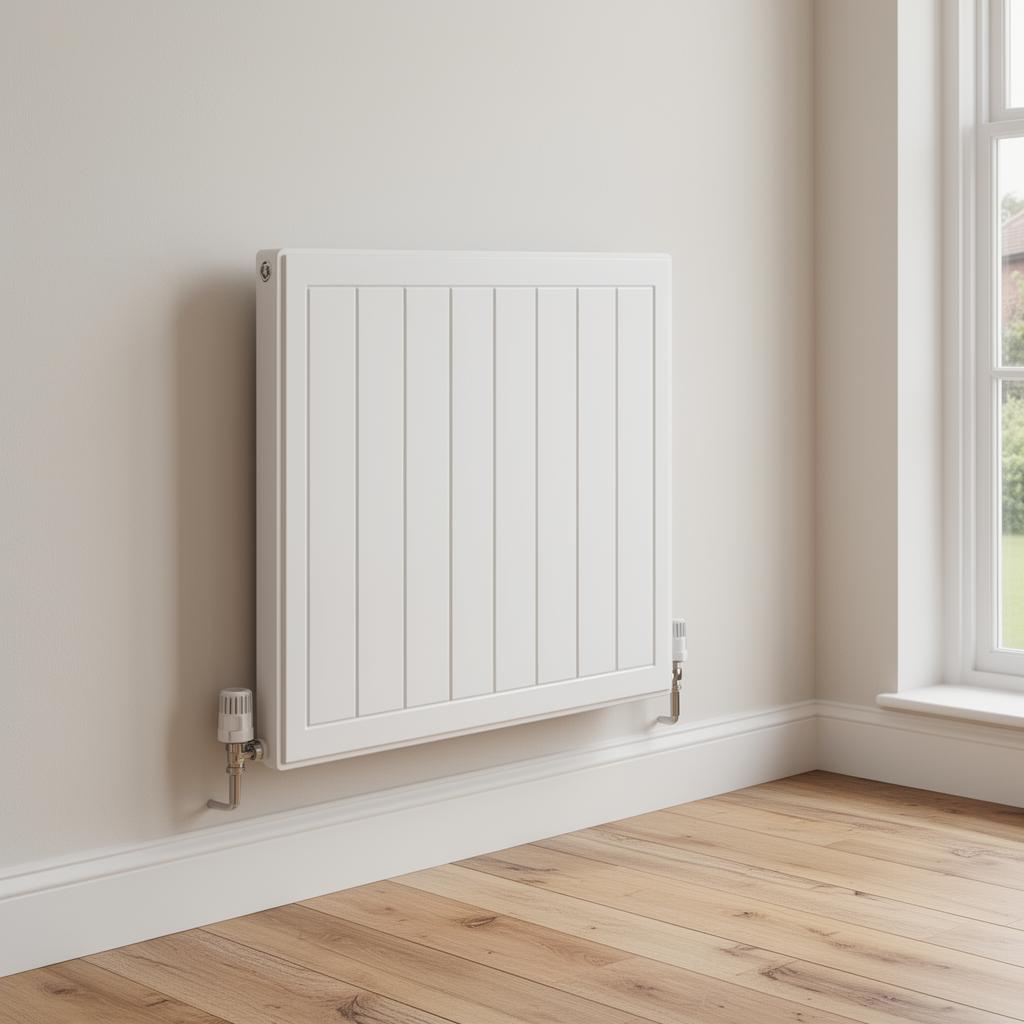
Running a boiler at a lower flow temperature — typically 55°C or below rather than the old default of 70-80°C — improves condensing efficiency measurably, but it also reduces the heat output of every radiator in the house, because a radiator's output falls roughly with the square of the temperature difference to the room. Radiators sized correctly for a 75°C flow can end up unable to heat the room properly at 55°C unless they're upsized or supplemented. We check each radiator against the lower design flow temperature before recommending it, and where a room falls short we look at whether a larger single panel, a double panel, or an additional radiator on that circuit closes the gap, rather than pushing the flow temperature back up and giving away the efficiency gain.
Oil tank de-sludging: why it's not optional
Oil sitting in a tank for years accumulates water from condensation and fine sediment that settles at the bottom, and over time this forms a sludge layer that can be drawn into the fuel line, particularly when the tank is nearly empty and the outlet pulls from lower in the tank than usual. Sludge blocks fine oil filters and burner nozzles, which shows up as burner lockouts or a boiler that won't fire cleanly rather than as an obvious tank problem. De-sludging drains and cleans the tank base without necessarily removing the whole tank, and it's worth doing when a tank is inherited with a property, before switching to a new boiler, or if lockouts recur despite the filter and nozzle being replaced. It's a preventative job that's cheaper done on schedule than after a burner failure it caused.
What different boiler noises usually mean
A kettling or rumbling sound from a boiler is most often scale or sludge build-up on the heat exchanger causing localised boiling as water is trapped and overheated in restricted channels — the heating equivalent of a kettle furring up. A banging or knocking sound in pipework, sometimes called water hammer, is usually caused by a valve closing too quickly or trapped air rather than the boiler itself. A whining or humming sound tends to point to the circulating pump, either from wear or from air in the system reducing lubrication at the bearing. Diagnosing correctly from the noise alone isn't reliable enough to act on without checking system pressure, inhibitor condition and the pump directly, but the noise itself is a useful first indicator of which of those to check first.
Chimney liners for boilers using an existing flue
Where an older boiler used the property's original brick or stone chimney as its flue route, a replacement condensing boiler usually can't use the same masonry flue unlined, because the flue gases are cooler and wetter and will attack unprotected brickwork and mortar over time. A correctly specified stainless steel liner, sized to the boiler manufacturer's flue length and diameter tables, carries the flue gases safely and lets the existing chimney be reused rather than needing a new wall or roof penetration — often the only realistic option on a listed or solid-wall property in Bath where an external flue run isn't permitted. The liner has to be inspected and swept as part of ongoing servicing exactly as an open-fire flue would be, which is easy to overlook once it's hidden inside the chimney.
What a proper heating quote should include
A quote worth relying on states the specific boiler or equipment model, the labour and materials it covers, whether a system flush and magnetic filter are included, what happens to old equipment removal and disposal, and what's excluded — an unexpected gas pipe upsizing or asbestos-containing material discovered during removal, for example, which can't always be known before work starts. It should also state who's completing the Gas Safe or OFTEC notification and Benchmark commissioning record, since that's the paperwork that protects both the manufacturer's guarantee and the property's compliance history when it's sold. A vague one-line quote makes comparing genuinely different offers difficult, because two prices that look similar can cover very different scopes of actual work.
- Specific make and model, not just "combi boiler"
- Flush and magnetic filter stated as included or excluded
- Old equipment removal and disposal covered
- Notification and Benchmark record responsibility stated
Electronic and physical scale reducers compared
In very hard limestone water areas like Bath, a scale reducer fitted on the boiler's cold feed protects the heat exchanger without the ongoing salt and drainage requirements of a full water softener. Physical scale reducers use a polyphosphate or template-assisted crystallisation cartridge that alters how calcium carbonate crystallises so it's less likely to adhere to hot surfaces; electronic and electromagnetic devices claim a similar effect without a cartridge to replace, though the evidence base for electronic types is weaker and more inconsistent than for physical media. Manufacturers including Worcester Bosch now specify a scale reducer or softener as a condition of extended guarantees in hard water areas, so the choice affects warranty validity as well as long-term performance, not just descale frequency.
Other boiler services in Bath
- Boiler Installation in BathNew combi, system and regular boiler installations for gas and oil homes — fixed prices, manufacturer warranties.
- Gas Boiler Installation in BathGas Safe registered installations and upgrades for mains gas homes across Bath, Radstock and Wells.
- Oil Boiler Installation in BathOFTEC-trained oil boiler specialist for rural homes off the gas grid — tank and boiler replacements.
- Boiler Servicing in BathAnnual boiler services to keep your warranty valid and your home safe, efficient and warm.
- Maintenance & Repair in BathDiagnostics, repairs and breakdown call-outs for gas and oil boilers across BA and BS postcodes.
- Landlord Gas Safety Certificates in BathAnnual CP12 landlord gas safety records issued on the day, for single lets, HMOs, holiday lets and whole portfolios.
- Oil Boiler Repairs in BathOil boiler breakdown repairs across rural Somerset, from lockouts and sooting to pump, photocell and control faults.
- Oil Tank Replacement in BathBunded oil tank replacement and relocation with base preparation, new supply line and OFTEC paperwork on completion.
New Worcester boiler with a 10 year guarantee*
Free no-obligation quotes for installation, servicing & repairs across BA & BS postcodes.