
Holt Oil Boiler Servicing
Before quoting for oil boiler servicing, we start with what's actually there: the existing pipework, the flue route, the water pressure and the age of what you've already got. Guesswork on a heating system leads to call-backs and wasted money, so a proper look at the property comes first. We're Gas Safe registered and OFTEC registered, based at 24 Bristol Road, Radstock BA3 3EE, and we size and specify jobs on what we find on site, not on assumptions. Mains gas covers much of the area, with off-grid pockets, which changes the appliance shortlist. Most of what we open up here is stone cottages and modern estates, which dictates flue routes and pipe sizing. In Holt itself (BA14, Wiltshire) that usually means stone cottages and modern estates, roughly 11 miles from the workshop.
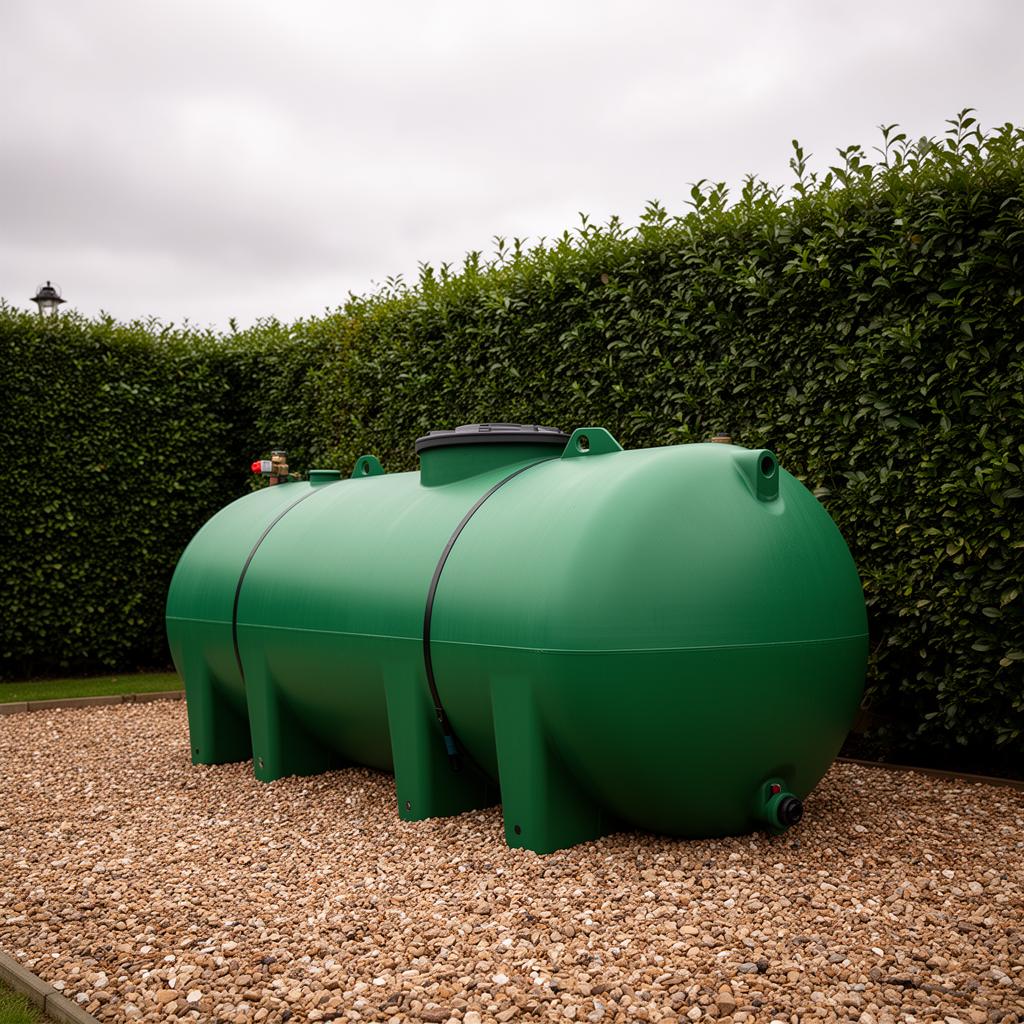
Holt: stock, water and fuel supply
This area has a genuine mix of mains gas and oil-fired properties, sometimes on the same street, depending on when the gas network reached that particular row of houses. It's worth confirming which fuel your property is actually on and whether a fuel switch is realistic before assuming either option is off the table. Being registered for both Gas Safe and OFTEC work means we can look at the honest options for your specific property rather than steering you toward whichever fuel we happen to be set up for. Planning constraints are usually light here, so external work is checked first. Mains gas covers much of the area, with off-grid pockets, which changes the appliance shortlist. Holt is roughly 11 miles from our Radstock base via the B3107. Typical property stock here: stone cottages and modern estates. A meaningful share of properties around Holt are off the gas grid, so oil boiler installs and tank swaps make up a fair part of what we do locally. Repair calls in Holt usually get a same-week visit, with most common faults fixed on the first attempt.
The work, step by step
- OFTEC registered oil specialist
- Nozzle, electrode and fuel filter renewed
- Smoke test and pump pressure set correctly
- Oil tank and supply line inspected
- Free written quote, no obligation
- Local aftercare from a 11-mile base
Within reach of the B3107
Beyond Holt we're frequently on jobs in Bradford on Avon (BA15), Staverton (BA14), Trowbridge (BA14) and Broughton Gifford (BA14) — so spares, follow-ups and annual services are straightforward.
Registrations and how work is signed off
Based at 24 Bristol Rd, Radstock — every job is run by the team that quoted it.
Reg. 549918 — every gas job notified to Building Control and a CP12 issued where required.
Qualifies your install for the full 10-year manufacturer guarantee* on supported models.
362+ verified reviews from real customers across BA and BS postcodes.
Holt questions we get asked
- Do you cover Holt?
- Yes. Holt is 11 miles from our workshop at 24 Bristol Road, Radstock BA3 3EE, reached via the B3107, and it's a regular part of our working area. We're Gas Safe and OFTEC registered, so we cover both mains gas and oil work out here without treating it as a special trip.
- Being 11 miles out, does that add much time to booking a job in?
- Distance from our Radstock base doesn't change how the job's priced or scheduled — we build travel into the working day rather than tacking on a surcharge. It can mean a very early or later start slot to fit the return journey around other bookings, which we'll confirm when we schedule.
- What are your opening hours, and can you help out of hours?
- Our published hours are Monday to Friday, 8:30am to 5pm, and that's when the phones are answered and jobs are booked. We're honest that we don't run a round-the-clock emergency line, so if you're planning ahead, call during those hours on 07516 118198 and we'll get you booked in.
- What's the difference between a boiler service and general maintenance?
- A service is the annual manufacturer-required safety and efficiency check that keeps the warranty valid. Maintenance covers everything else — bleeding radiators, checking system pressure, sorting minor faults, and periodic flushing or filter checks — that keeps the system running well between those annual services rather than replacing them.
- What does "commissioning" a boiler actually involve?
- Commissioning is setting the boiler up correctly for the property rather than just switching it on: checking gas or oil pressure and flow rates, setting flow temperatures, testing safety devices, balancing the system, and completing the manufacturer's Benchmark checklist. Skipping this properly is one of the most common reasons warranty claims get refused later.
- Will you come out to a village like Holt?
- Holt is part of our core patch (11 miles from base via the B3107). Same-week site visits and quick callbacks are normal.
How to get this priced
We handle oil boiler servicing directly from survey through to commissioning and handover, rather than passing the job between different subcontractors. That continuity means one point of contact throughout, and one engineer who knows the property if you need us again afterwards. Photos of the existing setup speed up pricing for village properties like these. Our van runs the B3107 to reach you, 11 miles out from the Radstock workshop. homes alongside small commercial and agricultural premises make up most enquiries from this postcode.
Holt coverage and distances
- County
- Wiltshire
- Postcode district
- BA14
- Settlement type
- village
- Nearest classified road
- B3107
- Distance from our base
- 11 miles (Radstock, BA3)
- Typical building stock
- stone cottages and modern estates
- Water hardness
- moderately hard water
- Fuel availability
- mains gas with off-grid pockets
- Customer mix
- homes alongside small commercial and agricultural premises
- Nearby areas covered
- Bradford on Avon, Staverton, Trowbridge, Broughton Gifford
The parts of the job people rarely mention
Oil tank de-sludging: why it's not optional
Oil sitting in a tank for years accumulates water from condensation and fine sediment that settles at the bottom, and over time this forms a sludge layer that can be drawn into the fuel line, particularly when the tank is nearly empty and the outlet pulls from lower in the tank than usual. Sludge blocks fine oil filters and burner nozzles, which shows up as burner lockouts or a boiler that won't fire cleanly rather than as an obvious tank problem. De-sludging drains and cleans the tank base without necessarily removing the whole tank, and it's worth doing when a tank is inherited with a property, before switching to a new boiler, or if lockouts recur despite the filter and nozzle being replaced. It's a preventative job that's cheaper done on schedule than after a burner failure it caused.
Common boiler fault codes and what usually causes them
Most modern boilers display a fault code on the control panel when they lock out, and while the exact code differs between manufacturers, the underlying causes cluster into a small number of categories: low system pressure (often from a small leak or after bleeding radiators), ignition failure (a worn electrode, gas supply issue, or blocked condensate causing a safety shutdown), or a failed sensor reporting an implausible temperature reading. A condensate blockage or freeze specifically tends to show a distinct code from a genuine ignition fault, which is why checking the external condensate pipe for ice before calling out an engineer in a cold snap can sometimes resolve the issue without a visit at all. We ask for the exact fault code and any recent history — a bled radiator, a cold snap, a recent service — before attending, since it often narrows down the likely cause before we arrive.
Pumped-oil versus gravity feed: does it matter?
Older oil systems sometimes still rely on gravity feed, where the tank sits higher than the burner and oil flows down to it under its own weight; a pumped system uses the burner's internal pump to draw oil up from a tank at any level, including below the boiler. Gravity feed limits where a tank can be sited and is more prone to airlocks if the line runs dry, while a pumped system is more flexible on tank position but needs the pipe run and lift height kept within the burner pump's rated capacity — usually no more than a few metres of lift and a set maximum run length. When we replace an oil boiler we check which type the existing tank and pipework support before assuming a straight swap, because a tank sited for gravity feed may need repositioning or a different pump to suit a modern burner.
How a condensing boiler recovers extra heat
A condensing boiler passes flue gases through a secondary heat exchanger before they leave the flue, extracting additional heat by condensing water vapour in the exhaust back into liquid, which is expelled as the mildly acidic condensate water down the drain. This is why every condensing boiler needs a condensate drainage route as part of its installation, unlike older non-condensing boilers, which simply vented hot dry gas straight out. The efficiency benefit only fully materialises when the boiler is actually condensing regularly, which needs a return water temperature low enough — generally below 55°C — for water vapour to condense in the first place. A condensing boiler run permanently at a high flow temperature can spend much of its time not actually condensing, which is one of the main reasons flow temperature settings matter as much as the boiler model chosen.
Nozzle replacement and baffle cleaning on oil burners
An oil burner's nozzle atomises fuel into a fine spray for combustion, and it wears from constant fuel flow at pressure, gradually changing the spray pattern away from the burner manufacturer's specification even before it visibly fails. A worn nozzle burns less cleanly, producing more soot that coats the heat exchanger's baffles, and a sooted heat exchanger loses efficiency in the same way scale does on a gas boiler's plates. Standard practice on an annual oil service is to replace the nozzle as a matter of course, rather than wait for a fault, and to remove and clean the baffles so the heat exchanger surfaces are exposed to combustion heat properly again. Skipping nozzle replacement to save a service visit's minor parts cost is a false economy against the fuel wasted by a poorly atomising burner.
Planning a visit out to Holt
At 11 miles from Radstock via the B3107, a job in Holt is planned as a full visit rather than a quick call-back, which is why we ask more detail up front — model numbers, symptoms, access notes — so the first visit is more likely to be the one that resolves the issue rather than the one that diagnoses it. For multi-stage work such as a full boiler and system upgrade, we sequence the survey, any preparatory work and the installation to minimise separate trips where the job allows it. It doesn't affect the standard of work or the paperwork completed on-site, but it's a reasonable practical difference from a job five minutes from the workshop, and we're upfront about it when scheduling.
Other boiler services in Holt
- Boiler Installation in HoltNew combi, system and regular boiler installations for gas and oil homes — fixed prices, manufacturer warranties.
- Gas Boiler Installation in HoltGas Safe registered installations and upgrades for mains gas homes across Bath, Radstock and Wells.
- Oil Boiler Installation in HoltOFTEC-trained oil boiler specialist for rural homes off the gas grid — tank and boiler replacements.
- Boiler Servicing in HoltAnnual boiler services to keep your warranty valid and your home safe, efficient and warm.
- Maintenance & Repair in HoltDiagnostics, repairs and breakdown call-outs for gas and oil boilers across BA and BS postcodes.
- Landlord Gas Safety Certificates in HoltAnnual CP12 landlord gas safety records issued on the day, for single lets, HMOs, holiday lets and whole portfolios.
- Oil Boiler Repairs in HoltOil boiler breakdown repairs across rural Somerset, from lockouts and sooting to pump, photocell and control faults.
- Oil Tank Replacement in HoltBunded oil tank replacement and relocation with base preparation, new supply line and OFTEC paperwork on completion.
New Worcester boiler with a 10 year guarantee*
Free no-obligation quotes for installation, servicing & repairs across BA & BS postcodes.