
Oil Tank Replacement in Holt
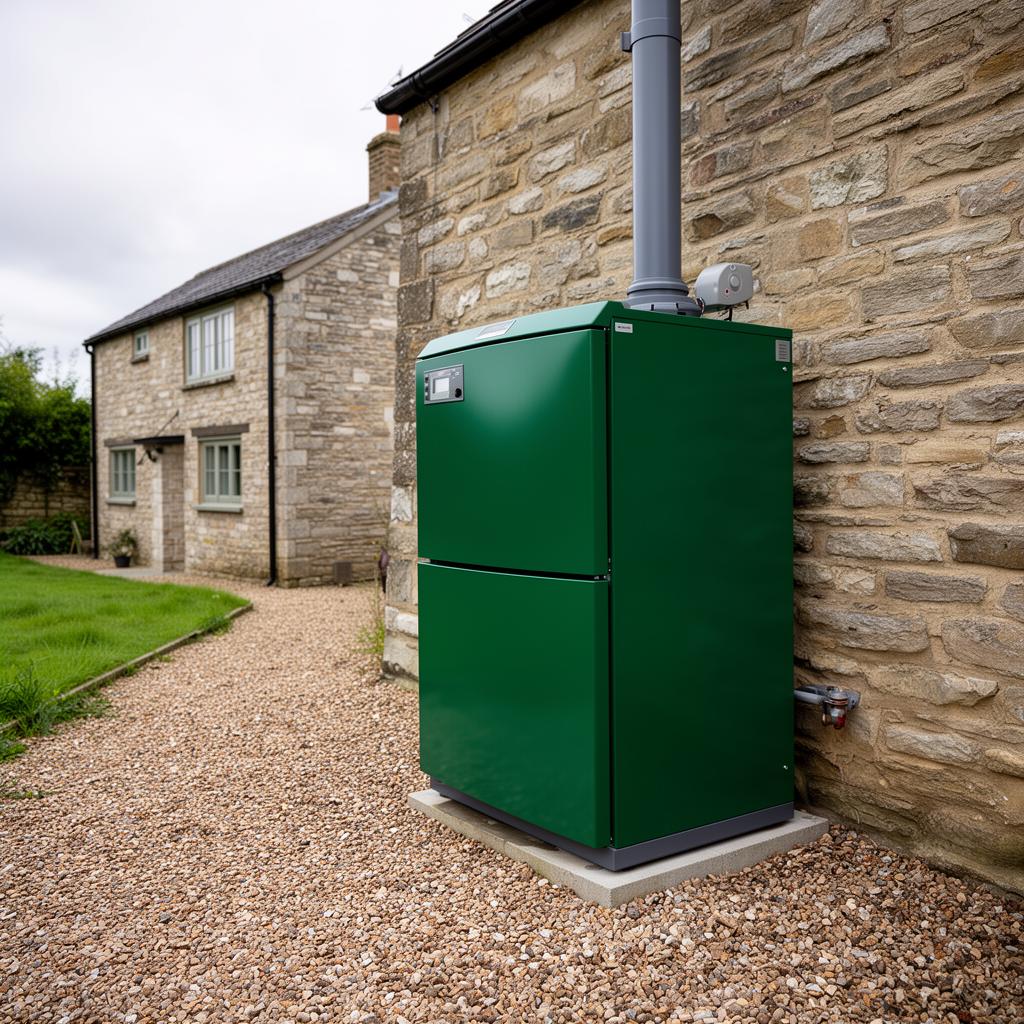
Oil Tank Replacement covers a range of jobs, from straightforward like-for-like swaps to full system redesigns with new pipework, controls and hot water storage. The right approach depends on boiler location, flue length, pump speed, radiator sizing and how the property loses heat. As a Gas Safe and OFTEC registered firm and a Worcester Bosch Accredited Installer working out of Radstock, we specify each install against the building rather than fitting a standard package regardless of fit. Access is lane access, so parking, spoil removal and delivery timing get planned in advance. Water here is moderately hard water, so scale protection is specified accordingly. In Holt itself (BA14, Wiltshire) that usually means stone cottages and modern estates, roughly 11 miles from the workshop.
Where else we work near Holt
Beyond Holt we're frequently on jobs in Bradford on Avon (BA15), Staverton (BA14), Trowbridge (BA14) and Broughton Gifford (BA14) — so spares, follow-ups and annual services are straightforward.
Proof, paperwork and accountability
Reg. 549918 — every gas job notified to Building Control and a CP12 issued where required.
362+ verified reviews from real customers across BA and BS postcodes.
Based at 24 Bristol Rd, Radstock — every job is run by the team that quoted it.
No verbal-only quotes. You'll get the boiler model, controls and warranty in writing before we book.
Included as standard in Holt
- Bunded plastic and steel tanks supplied
- Base preparation and safe siting distances
- New supply line, filter and fire valve
- Old tank drained and removed
- Free written quote, no obligation
- Local aftercare from a 11-mile base
How Wiltshire building stock shapes the spec
Stone cottages and farmhouses around here were mostly built long before central heating existed, so pipework and boiler locations have usually been retrofitted at some point, sometimes more than once. Thick stone walls, uneven floor levels and low ceilings can all affect where a boiler or cylinder can practically go, and older stonework doesn't always take fixings the way modern block or brick does. We work around those constraints on site rather than assuming a straightforward install. homes alongside small commercial and agricultural premises make up most enquiries from this postcode. Access is lane access, so parking, spoil removal and delivery timing get planned in advance. Holt is roughly 11 miles from our Radstock base via the B3107. Typical property stock here: stone cottages and modern estates. A meaningful share of properties around Holt are off the gas grid, so oil boiler installs and tank swaps make up a fair part of what we do locally. Repair calls in Holt usually get a same-week visit, with most common faults fixed on the first attempt.
Holt questions we get asked
- Who actually carries out the work?
- A Gas Safe and, where relevant, OFTEC registered engineer from our own small team carries out the job — we don't sub the install out to a third party after quoting. You deal with the same people from survey through to commissioning and any aftercare calls.
- How often should a boiler actually be serviced?
- Once a year is the standard recommendation from every manufacturer, and most warranty terms make it a condition rather than a suggestion — miss a year and a claim can be refused even if the fault is unrelated. Landlords have a separate legal duty to have gas appliances checked annually regardless of warranty terms.
- We have a boiler in an outbuilding or garage — is frost protection an issue up here?
- Boilers sited in unheated garages or outbuildings, which is common on the more exposed and higher ground around Holt, are more exposed to freezing pipework and condensate lines than one in a heated kitchen. We fit frost thermostats and, where possible, insulate or trace-heat exposed pipework as standard on installs in these locations.
- My oil tank is old — does it need replacing alongside the boiler?
- Not automatically, but we check the tank's age, material, and condition as part of any oil boiler quote. Steel tanks corrode from the inside and plastic tanks degrade with UV exposure over time; if we find cracking, rust weeping, or a missing bund we'll flag it, because a failed tank is a pollution and insurance risk, not just a heating one.
- We're a home attached to or near a small business premises — do you cover that kind of property?
- Where the heating system is a standard domestic boiler serving living accommodation, it's within our normal scope even if it sits next to or above a shop or workshop, which is a common layout around Holt. Fully commercial systems and appliances are a different scope, so we'd confirm exactly what's being asked at enquiry stage.
- What's the difference between a boiler service and general maintenance?
- A service is the annual manufacturer-required safety and efficiency check that keeps the warranty valid. Maintenance covers everything else — bleeding radiators, checking system pressure, sorting minor faults, and periodic flushing or filter checks — that keeps the system running well between those annual services rather than replacing them.
Where to go from here
Worcester Bosch Accredited Installer status means we've met the manufacturer's own standards for training and installation quality, which is part of why we can offer the extended guarantee on qualifying installs. It's worth asking any installer whether they hold equivalent accreditation, not just whether they can fit the boiler. Photos of the existing setup speed up pricing for village properties like these. Most of what we open up here is stone cottages and modern estates, which dictates flue routes and pipe sizing. Planning constraints are usually light here, so external work is checked first.
Holt at a glance
- County
- Wiltshire
- Postcode district
- BA14
- Settlement type
- village
- Nearest classified road
- B3107
- Distance from our base
- 11 miles (Radstock, BA3)
- Typical building stock
- stone cottages and modern estates
- Water hardness
- moderately hard water
- Fuel availability
- mains gas with off-grid pockets
- Customer mix
- homes alongside small commercial and agricultural premises
- Nearby areas covered
- Bradford on Avon, Staverton, Trowbridge, Broughton Gifford
Technical notes for this job type
Signs a boiler repair is no longer the right call
A boiler that's failing repeatedly, needing a different part replaced every service, or over roughly ten to fifteen years old is approaching the point where continued repair costs more over time than replacement, particularly once a heat exchanger — the most expensive single part — starts to show signs of failure through leaks or reduced output. Efficiency is the other half of the calculation: an older non-condensing boiler running at 70-80% efficiency against a modern condensing combi at over 90% means a meaningful chunk of every unit of fuel burned in the old boiler is simply lost up the flue. We give a straight answer on repair versus replace based on the fault found and the boiler's age and condition, rather than defaulting to whichever is more profitable to us on the day.
Chimney liners for boilers using an existing flue
Where an older boiler used the property's original brick or stone chimney as its flue route, a replacement condensing boiler usually can't use the same masonry flue unlined, because the flue gases are cooler and wetter and will attack unprotected brickwork and mortar over time. A correctly specified stainless steel liner, sized to the boiler manufacturer's flue length and diameter tables, carries the flue gases safely and lets the existing chimney be reused rather than needing a new wall or roof penetration — often the only realistic option on a listed or solid-wall property in Holt where an external flue run isn't permitted. The liner has to be inspected and swept as part of ongoing servicing exactly as an open-fire flue would be, which is easy to overlook once it's hidden inside the chimney.
Condensate pipe freezing on exposed elevations
Properties on the higher ground around Holt catch more wind chill than the valley floor, and an external condensate pipe on a north or east-facing wall is the most common cause of a boiler lockout in a cold snap. The pipe carries mildly acidic waste water from the flue; if it's routed externally in 21.5mm pipe rather than run internally and lagged, or dropped into an internal soil stack, it freezes solid and the boiler senses a blockage and shuts down for safety. Building Regulations guidance favours an internal run with a trapped connection to the waste system wherever the layout allows it. Where an external run is unavoidable we use 32mm insulated pipe with a minimal fall, which resists freezing far better than the standard diameter.
Planning a visit out to Holt
At 11 miles from Radstock via the B3107, a job in Holt is planned as a full visit rather than a quick call-back, which is why we ask more detail up front — model numbers, symptoms, access notes — so the first visit is more likely to be the one that resolves the issue rather than the one that diagnoses it. For multi-stage work such as a full boiler and system upgrade, we sequence the survey, any preparatory work and the installation to minimise separate trips where the job allows it. It doesn't affect the standard of work or the paperwork completed on-site, but it's a reasonable practical difference from a job five minutes from the workshop, and we're upfront about it when scheduling.
How a condensing boiler recovers extra heat
A condensing boiler passes flue gases through a secondary heat exchanger before they leave the flue, extracting additional heat by condensing water vapour in the exhaust back into liquid, which is expelled as the mildly acidic condensate water down the drain. This is why every condensing boiler needs a condensate drainage route as part of its installation, unlike older non-condensing boilers, which simply vented hot dry gas straight out. The efficiency benefit only fully materialises when the boiler is actually condensing regularly, which needs a return water temperature low enough — generally below 55°C — for water vapour to condense in the first place. A condensing boiler run permanently at a high flow temperature can spend much of its time not actually condensing, which is one of the main reasons flow temperature settings matter as much as the boiler model chosen.
Extra wind exposure on hilltop properties and what it means for heating
Elevated sites around Holt lose heat faster through infiltration in windy weather than a sheltered valley property of identical construction, because wind pressure drives more cold air through gaps around doors, windows and loft hatches. This shows up as a heating system working harder to maintain the same internal temperature on a windy but not especially cold day than a still, colder one — a pattern that can look like an underperforming boiler when the real cause is draught infiltration. It also affects flue performance: an exposed terminal position can experience more downdraught, which is one reason correct terminal siting and, where needed, terminal guards matter more on hilltop sites than sheltered ones. We factor exposure into heat loss assumptions on elevated properties rather than using a flat regional design temperature.
Low-loss headers on larger or multi-zone systems
On a system with several heating zones or a boiler oversized relative to any single zone's flow requirement, a low-loss header hydraulically separates the boiler's primary circuit from the secondary zone circuits, so each side can run its own pump and flow rate without one interfering with the other. Without it, a zone valve closing on a multi-zone system can starve the boiler of flow or force excessive pump pressure through the remaining open zones. It's most relevant on larger properties or ones with commercial premises attached, where several distinct heating circuits — perhaps a shop unit and a flat above — share one heat source. Getting the header sized to the boiler's actual flow rate, not just fitted as standard, is what makes it work rather than just adding another connection.
Condensate soakaways where there's no convenient drain
Properties without a nearby internal waste connection or external gully for the boiler's condensate — common on rural plots around Holt where the nearest drain run is a long way from the boiler's location — sometimes need a dedicated condensate soakaway instead. This is a small pit filled with granular material that the condensate, which is mildly acidic, can disperse into gradually rather than running to a drain at all. Sizing and siting it correctly matters: it needs to be far enough from foundations and sited where the local ground can actually absorb the modest but steady volume a boiler produces, particularly over a long heating season. Where ground conditions make a soakaway unreliable, running a longer insulated pipe to a proper drainage connection is usually the safer long-term choice even though it's more work to install.
Working across Wiltshire: what being local changes
Being based at 24 Bristol Road, Radstock, 11 miles from Holt via the B3107, means a callout doesn't involve a long cross-county drive, and it also means familiarity with the recurring patterns in the local building stock — stone cottages and modern estates — rather than encountering that construction type for the first time on-site. Local knowledge doesn't replace a proper site survey, but it does mean fewer surprises: knowing in advance that a particular postcode area typically has hard water, older single-pipe circuits, or restricted parking means the quote reflects the likely reality of the job before the first visit. We're Gas Safe and OFTEC registered and work across Wiltshire on that basis, not by claiming coverage we don't actually deliver on.
Other boiler services in Holt
- Boiler Installation in HoltNew combi, system and regular boiler installations for gas and oil homes — fixed prices, manufacturer warranties.
- Gas Boiler Installation in HoltGas Safe registered installations and upgrades for mains gas homes across Bath, Radstock and Wells.
- Oil Boiler Installation in HoltOFTEC-trained oil boiler specialist for rural homes off the gas grid — tank and boiler replacements.
- Boiler Servicing in HoltAnnual boiler services to keep your warranty valid and your home safe, efficient and warm.
- Maintenance & Repair in HoltDiagnostics, repairs and breakdown call-outs for gas and oil boilers across BA and BS postcodes.
- Landlord Gas Safety Certificates in HoltAnnual CP12 landlord gas safety records issued on the day, for single lets, HMOs, holiday lets and whole portfolios.
- Oil Boiler Servicing in HoltOFTEC registered annual servicing for oil boilers, including nozzle, electrode, filter and smoke test work on off grid homes.
- Oil Boiler Repairs in HoltOil boiler breakdown repairs across rural Somerset, from lockouts and sooting to pump, photocell and control faults.
New Worcester boiler with a 10 year guarantee*
Free no-obligation quotes for installation, servicing & repairs across BA & BS postcodes.