
Oil Tank Replacement in Bradford on Avon
Getting quotes for oil tank replacement can feel like a gamble when you don't know the trade. You want someone who turns up when they say they will, explains what they're doing, and leaves you with a system you understand. That's the standard we work to from 24 Bristol Road, Radstock BA3 3EE. We're Gas Safe registered, OFTEC registered and a Worcester Bosch Accredited Installer, so the paperwork and the workmanship both hold up to scrutiny. Typical era of build is victorian, which affects existing pipework and system cleanliness. Our van runs the A363 to reach you, 9 miles out from the Radstock workshop. In Bradford on Avon itself (BA15, Wiltshire) that usually means stone terraces and weavers' cottages, roughly 9 miles from the workshop.
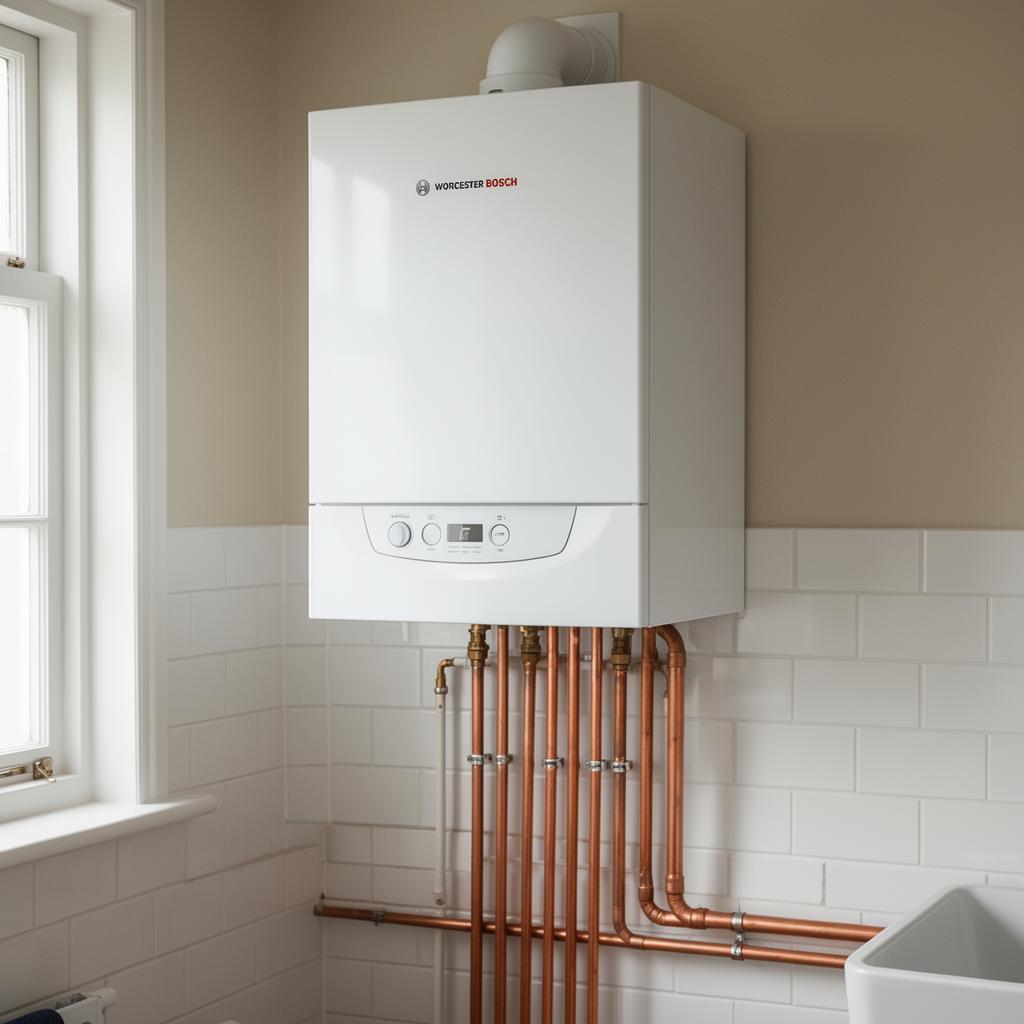
The work, step by step
- Bunded plastic and steel tanks supplied
- Base preparation and safe siting distances
- New supply line, filter and fire valve
- Old tank drained and removed
- Free written quote, no obligation
- Local aftercare from a 9-mile base
Qualifications behind the work
Reg. 549918 — every gas job notified to Building Control and a CP12 issued where required.
362+ verified reviews from real customers across BA and BS postcodes.
Qualifies your install for the full 10-year manufacturer guarantee* on supported models.
No verbal-only quotes. You'll get the boiler model, controls and warranty in writing before we book.
Local conditions we plan around in BA15
Victorian terraces and villas in this area typically have solid or part-solid walls, original chimney breasts that sometimes still house older flue routes, and pipework that's been extended and altered over more than a century of use. That history means it's worth checking existing pipe runs properly rather than assuming they're sized correctly for a modern boiler. We see enough of this housing stock locally to know where problems commonly hide, from undersized microbore pipework to poorly routed condensate drains. Typical era of build is victorian, which affects existing pipework and system cleanliness. Our van runs the A363 to reach you, 9 miles out from the Radstock workshop. Bradford on Avon is roughly 9 miles from our Radstock base via the A363. Typical property stock here: stone terraces and weavers' cottages. Mains gas covers most of Bradford on Avon, so the usual choice is between a modern combi or a system boiler with a cylinder — we'll size it correctly for the home, not just swap like-for-like. Repair calls in Bradford on Avon usually get a same-week visit, with most common faults fixed on the first attempt.
Also covering the lanes around Bradford on Avon
Beyond Bradford on Avon we're frequently on jobs in Winsley (BA15), Westwood (BA15), Limpley Stoke (BA2) and Holt (BA14) — so spares, follow-ups and annual services are straightforward.
Oil Tank Replacement FAQs for BA15
- What actually happens on install day?
- The engineer isolates the gas or oil supply and water, removes the old boiler, fits and pressure-tests the new one, connects the flue and condensate, and commissions the system. For a straight swap this is usually one day; a conversion, relocation, or cylinder change can run into a second depending on the pipework involved.
- We've still got an old back boiler behind the fireplace — what's involved in removing it?
- Removing a back boiler means capping off the gas and water connections behind the fireplace, making good the opening or fitting a new fire/surround if you're keeping one, and rerouting pipework to the new combi or system boiler's position. It's more work than a like-for-like swap but a common upgrade on the older housing stock in this area.
- Who actually carries out the work?
- A Gas Safe and, where relevant, OFTEC registered engineer from our own small team carries out the job — we don't sub the install out to a third party after quoting. You deal with the same people from survey through to commissioning and any aftercare calls.
- Our Victorian terrace still has an old system boiler and separate cylinder — should we switch to a combi?
- It depends on your hot water demand and pipework. A combi suits a property with one bathroom and modest simultaneous demand, while a system boiler with a cylinder copes better with two bathrooms running at once. Many Victorian terraces we work on keep the cylinder simply because the existing pipework and cupboard space make that the more practical upgrade.
- What's the difference between a boiler service and general maintenance?
- A service is the annual manufacturer-required safety and efficiency check that keeps the warranty valid. Maintenance covers everything else — bleeding radiators, checking system pressure, sorting minor faults, and periodic flushing or filter checks — that keeps the system running well between those annual services rather than replacing them.
- Will the new boiler work properly with our existing radiators?
- Not always without checking. Modern condensing boilers run most efficiently at lower flow temperatures, and radiators originally sized for an old, hotter-running boiler can end up struggling to heat a room adequately at those lower temperatures. We check radiator sizing against a heat loss calculation and flag any that are undersized for the room before installing.
Booking work in Bradford on Avon
Getting more than one quote for oil tank replacement is sensible, and we're happy to be one of them. Ask each tradesperson the same questions about what's included, what's excluded, and what registration they hold, so you're comparing genuinely equivalent quotes rather than a headline figure with hidden gaps. A written quote follows the survey — no pressure, and no charge for the Bradford on Avon visit. Mains gas is available across most streets, which changes the appliance shortlist. Most of what we open up here is stone terraces and weavers' cottages, which dictates flue routes and pipe sizing.
The factual picture in Bradford on Avon
- County
- Wiltshire
- Postcode district
- BA15
- Settlement type
- town
- Nearest classified road
- A363
- Distance from our base
- 9 miles (Radstock, BA3)
- Typical building stock
- stone terraces and weavers' cottages
- Water hardness
- moderately hard water
- Fuel availability
- mains gas across most of the area
- Customer mix
- a mix of owner-occupied and rented homes
- Nearby areas covered
- Winsley, Westwood, Limpley Stoke, Holt
Detail that matters in Bradford on Avon
Pumped-oil versus gravity feed: does it matter?
Older oil systems sometimes still rely on gravity feed, where the tank sits higher than the burner and oil flows down to it under its own weight; a pumped system uses the burner's internal pump to draw oil up from a tank at any level, including below the boiler. Gravity feed limits where a tank can be sited and is more prone to airlocks if the line runs dry, while a pumped system is more flexible on tank position but needs the pipe run and lift height kept within the burner pump's rated capacity — usually no more than a few metres of lift and a set maximum run length. When we replace an oil boiler we check which type the existing tank and pipework support before assuming a straight swap, because a tank sited for gravity feed may need repositioning or a different pump to suit a modern burner.
Heating challenges specific to Victorian terraces
Victorian terraces around Bradford on Avon typically have solid brick external walls with no cavity to insulate, higher ceilings than modern housing, and original suspended timber ground floors that can be draughty if the underfloor void isn't sealed properly — all of which push heat loss calculations higher than floor area alone suggests. Radiators original to these houses, or fitted decades ago to replace them, are frequently undersized for a lower modern flow temperature even if they coped adequately at the older, higher flow temperature the system used to run at. Chimney breasts, where retained, offer a route for a flue or liner as covered elsewhere, but where they've been removed, alternative flue routes need more careful planning on a terrace's narrow rear elevation. We treat Victorian terrace heat loss calculations as their own case rather than applying modern housing assumptions.
Signs a boiler repair is no longer the right call
A boiler that's failing repeatedly, needing a different part replaced every service, or over roughly ten to fifteen years old is approaching the point where continued repair costs more over time than replacement, particularly once a heat exchanger — the most expensive single part — starts to show signs of failure through leaks or reduced output. Efficiency is the other half of the calculation: an older non-condensing boiler running at 70-80% efficiency against a modern condensing combi at over 90% means a meaningful chunk of every unit of fuel burned in the old boiler is simply lost up the flue. We give a straight answer on repair versus replace based on the fault found and the boiler's age and condition, rather than defaulting to whichever is more profitable to us on the day.
Valley-floor properties: flood risk and boiler positioning
Properties on lower ground near watercourses around Bradford on Avon carry a higher flood risk than the surrounding hills, and that's a genuine factor in deciding where a replacement boiler or cylinder is sited, particularly in a floor-standing oil boiler's case. Raising a floor-standing appliance onto a plinth, or relocating a boiler from a ground-floor utility room to a wall-mounted position higher up, reduces the chance of it being damaged in a flood event that a hillside property simply doesn't need to plan for. Electrical connections and any floor-level wiring also benefit from being kept above likely flood water levels where practical. We raise this with customers on lower-lying sites at the planning stage rather than only after a flood has already caused damage.
Oil tank de-sludging: why it's not optional
Oil sitting in a tank for years accumulates water from condensation and fine sediment that settles at the bottom, and over time this forms a sludge layer that can be drawn into the fuel line, particularly when the tank is nearly empty and the outlet pulls from lower in the tank than usual. Sludge blocks fine oil filters and burner nozzles, which shows up as burner lockouts or a boiler that won't fire cleanly rather than as an obvious tank problem. De-sludging drains and cleans the tank base without necessarily removing the whole tank, and it's worth doing when a tank is inherited with a property, before switching to a new boiler, or if lockouts recur despite the filter and nozzle being replaced. It's a preventative job that's cheaper done on schedule than after a burner failure it caused.
What different boiler noises usually mean
A kettling or rumbling sound from a boiler is most often scale or sludge build-up on the heat exchanger causing localised boiling as water is trapped and overheated in restricted channels — the heating equivalent of a kettle furring up. A banging or knocking sound in pipework, sometimes called water hammer, is usually caused by a valve closing too quickly or trapped air rather than the boiler itself. A whining or humming sound tends to point to the circulating pump, either from wear or from air in the system reducing lubrication at the bearing. Diagnosing correctly from the noise alone isn't reliable enough to act on without checking system pressure, inhibitor condition and the pump directly, but the noise itself is a useful first indicator of which of those to check first.
Chimney liners for boilers using an existing flue
Where an older boiler used the property's original brick or stone chimney as its flue route, a replacement condensing boiler usually can't use the same masonry flue unlined, because the flue gases are cooler and wetter and will attack unprotected brickwork and mortar over time. A correctly specified stainless steel liner, sized to the boiler manufacturer's flue length and diameter tables, carries the flue gases safely and lets the existing chimney be reused rather than needing a new wall or roof penetration — often the only realistic option on a listed or solid-wall property in Bradford on Avon where an external flue run isn't permitted. The liner has to be inspected and swept as part of ongoing servicing exactly as an open-fire flue would be, which is easy to overlook once it's hidden inside the chimney.
Other boiler services in Bradford on Avon
- Boiler Installation in Bradford on AvonNew combi, system and regular boiler installations for gas and oil homes — fixed prices, manufacturer warranties.
- Gas Boiler Installation in Bradford on AvonGas Safe registered installations and upgrades for mains gas homes across Bath, Radstock and Wells.
- Oil Boiler Installation in Bradford on AvonOFTEC-trained oil boiler specialist for rural homes off the gas grid — tank and boiler replacements.
- Boiler Servicing in Bradford on AvonAnnual boiler services to keep your warranty valid and your home safe, efficient and warm.
- Maintenance & Repair in Bradford on AvonDiagnostics, repairs and breakdown call-outs for gas and oil boilers across BA and BS postcodes.
- Landlord Gas Safety Certificates in Bradford on AvonAnnual CP12 landlord gas safety records issued on the day, for single lets, HMOs, holiday lets and whole portfolios.
- Oil Boiler Servicing in Bradford on AvonOFTEC registered annual servicing for oil boilers, including nozzle, electrode, filter and smoke test work on off grid homes.
- Oil Boiler Repairs in Bradford on AvonOil boiler breakdown repairs across rural Somerset, from lockouts and sooting to pump, photocell and control faults.
New Worcester boiler with a 10 year guarantee*
Free no-obligation quotes for installation, servicing & repairs across BA & BS postcodes.