
Lansdown Oil Tank Replacement
Some properties make oil tank replacement straightforward; others need a bit more thought about parking, access to the boiler cupboard, or how equipment gets in and out. We factor that into the visit rather than discovering it on the day. Working from 24 Bristol Road, Radstock BA3 3EE across the Radstock, Bath and Mendip area, we're Gas Safe registered and OFTEC registered, so both mains gas and oil-fired work is covered under one roof. Most of what we open up here is large detached victorian and edwardian villas, which dictates flue routes and pipe sizing. Typical era of build is victorian, which affects existing pipework and system cleanliness. In Lansdown itself (BA1, Somerset) that usually means large detached victorian and edwardian villas, roughly 9 miles from the workshop.
Why Lansdown work is specified differently
Water here runs off carboniferous limestone and Jurassic oolite, which makes it very hard by national standards. Hard water accelerates scale build-up inside heat exchangers, cylinders and pipework, which shortens the working life of components that aren't protected against it. On jobs in this area we factor scale protection into the specification rather than treating it as an optional extra, because the difference between a protected and unprotected system shows up within a few years, not decades. It's a genuine local variable, not generic sales advice, and it applies whether the property is on mains gas or oil. Mains gas covers much of the area, with off-grid pockets, which changes the appliance shortlist. a high proportion of rented and let properties make up most enquiries from this postcode. Lansdown is roughly 9 miles from our Radstock base via the A431. Typical property stock here: large detached Victorian and Edwardian villas. Lansdown sits in the Somerset BA1 postcode and is part of our weekly run, so local response is quick. Repair calls in Lansdown usually get a same-week visit, with most common faults fixed on the first attempt.
Within reach of the A431
Beyond Lansdown we're frequently on jobs in Bath (BA1), Weston (Bath) (BA1), Larkhall (BA1) and Batheaston (BA1) — so spares, follow-ups and annual services are straightforward.
Proof, paperwork and accountability
Based at 24 Bristol Rd, Radstock — every job is run by the team that quoted it.
No verbal-only quotes. You'll get the boiler model, controls and warranty in writing before we book.
Oil boilers, oil tanks and pipework — fully certified for off-grid installs and replacements.
Reg. 549918 — every gas job notified to Building Control and a CP12 issued where required.
Scope of work, itemised
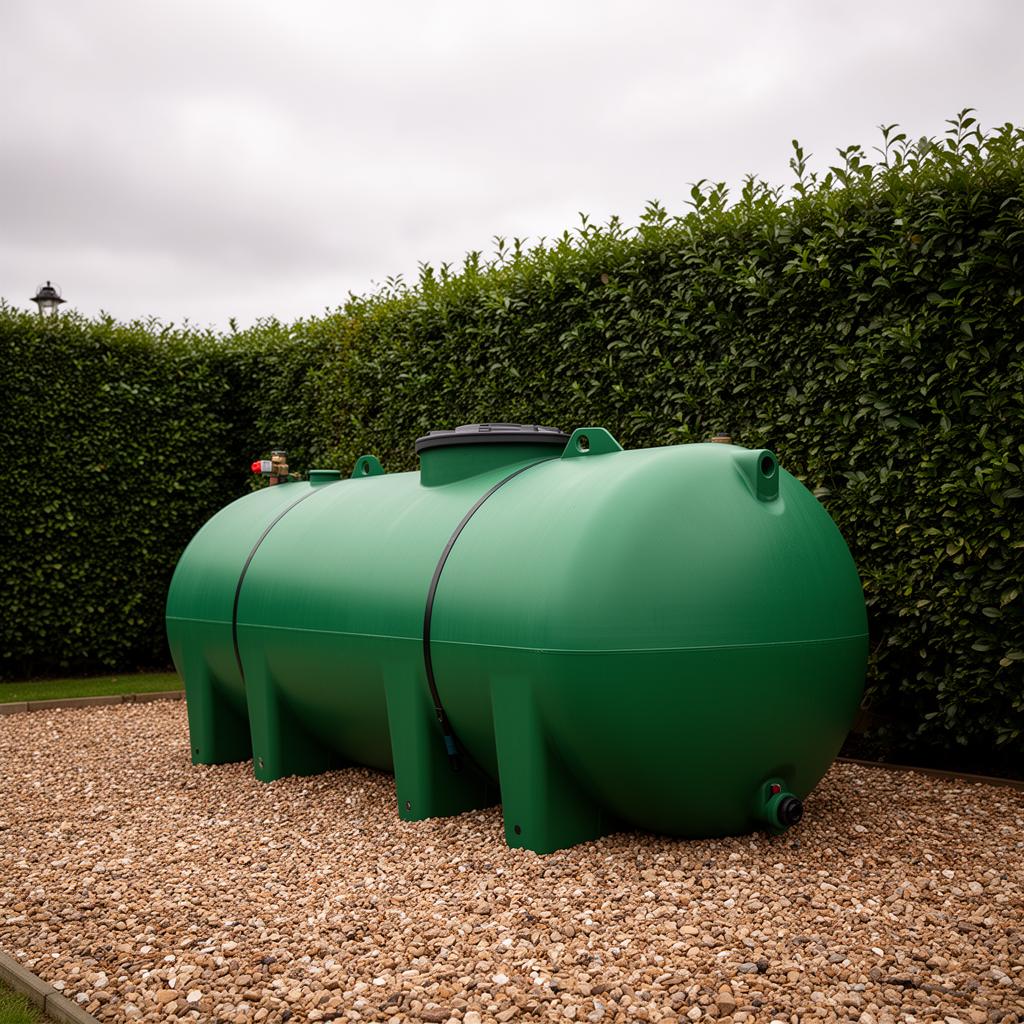
- Bunded plastic and steel tanks supplied
- Base preparation and safe siting distances
- New supply line, filter and fire valve
- Old tank drained and removed
- Free written quote, no obligation
- Local aftercare from a 9-mile base
Lansdown questions we get asked
- What are your opening hours, and can you help out of hours?
- Our published hours are Monday to Friday, 8:30am to 5pm, and that's when the phones are answered and jobs are booked. We're honest that we don't run a round-the-clock emergency line, so if you're planning ahead, call during those hours on 07516 118198 and we'll get you booked in.
- Is it worth upgrading the heating controls when we replace the boiler?
- Where the existing controls are an old mechanical timer and single room thermostat, replacing them alongside the boiler with weather compensation or a modern programmable thermostat usually improves comfort and efficiency more than the boiler swap alone. It's not compulsory, but it's often the single best-value addition to a new install.
- Do you cover Lansdown?
- Yes. Lansdown is 9 miles from our workshop at 24 Bristol Road, Radstock BA3 3EE, reached via the A431, and it's a regular part of our working area. We're Gas Safe and OFTEC registered, so we cover both mains gas and oil work out here without treating it as a special trip.
- What is condensate and why does its routing matter?
- Condensate is the mildly acidic water produced by a modern condensing boiler as it extracts extra heat from the flue gases, and it needs a route to an internal drain or, less ideally, an external soakaway. In colder or more exposed locations an external condensate pipe can freeze and shut the boiler down, so internal routing is worth prioritising where the layout allows it.
- What's the difference between a power flush and a chemical flush?
- A chemical flush circulates a cleaning agent through the existing system to loosen light debris, while a power flush uses a pump to force water at higher velocity and reversed direction through radiators and pipework to shift heavier sludge. We usually recommend the more thorough power flush before connecting a new boiler to an older system.
- Is there mains gas across Lansdown?
- Most of Lansdown is on mains gas, though pockets towards Bath and Weston (Bath) can be off-grid. We'll confirm what's at the property as part of the survey.
How to get this priced
Part of what a written quote for oil tank replacement gives you is clarity on scope: exactly which pipework, controls and components are included, and which aren't. That clarity is what prevents disputes later, and it's standard practice on every job we quote for. We can usually pair the visit with other work in Bath to keep the trip efficient. Most of what we open up here is large detached victorian and edwardian villas, which dictates flue routes and pipe sizing. Typical era of build is victorian, which affects existing pipework and system cleanliness.
Lansdown coverage and distances
- County
- Somerset
- Postcode district
- BA1
- Settlement type
- suburb
- Nearest classified road
- A431
- Distance from our base
- 9 miles (Radstock, BA3)
- Typical building stock
- large detached Victorian and Edwardian villas
- Water hardness
- very hard limestone water
- Fuel availability
- mains gas with off-grid pockets
- Customer mix
- a high proportion of rented and let properties
- Nearby areas covered
- Bath, Weston (Bath), Larkhall, Batheaston
The parts of the job people rarely mention
Routing a flue through a listed or conservation-area property
Lansdown falls within an area where listed building consent or conservation area rules can affect where a boiler flue is allowed to terminate — a plume on a principal elevation facing the street is often unacceptable even where it would technically clear manufacturer distances. Getting consent, where it's needed, has to happen before the flue is cut through a wall, not retrospectively. In practice this usually means routing the flue to a rear or side elevation even if that means a longer pipe run and an extra bend, or using a horizontal flue kit through a lower window reveal wall rather than the roof. We check with the relevant conservation officer's published guidance before quoting a flue route on a listed or Article 4 property rather than assuming the shortest run will be approved.
Heating challenges specific to Victorian terraces
Victorian terraces around Lansdown typically have solid brick external walls with no cavity to insulate, higher ceilings than modern housing, and original suspended timber ground floors that can be draughty if the underfloor void isn't sealed properly — all of which push heat loss calculations higher than floor area alone suggests. Radiators original to these houses, or fitted decades ago to replace them, are frequently undersized for a lower modern flow temperature even if they coped adequately at the older, higher flow temperature the system used to run at. Chimney breasts, where retained, offer a route for a flue or liner as covered elsewhere, but where they've been removed, alternative flue routes need more careful planning on a terrace's narrow rear elevation. We treat Victorian terrace heat loss calculations as their own case rather than applying modern housing assumptions.
Why very hard limestone water shortens boiler life around Lansdown
The limestone geology under Somerset gives Lansdown very hard limestone water, which drops calcium carbonate out of solution as soon as it's heated. Inside a combi's plate heat exchanger the gaps between plates are only a millimetre or two wide, so scale narrows the waterways long before it's visible anywhere else in the system. The first symptom is usually a hot tap that runs warm rather than hot, or a boiler that fires more often for the same demand. Left unchecked, scale insulates the exchanger from the burner, forces flue gases hotter, and can crack the exchanger from thermal stress. A scale reducer fitted on the mains feed, sized to the property's flow rate, is cheaper to install once than to replace a heat exchanger twice.
Electronic and physical scale reducers compared
In very hard limestone water areas like Lansdown, a scale reducer fitted on the boiler's cold feed protects the heat exchanger without the ongoing salt and drainage requirements of a full water softener. Physical scale reducers use a polyphosphate or template-assisted crystallisation cartridge that alters how calcium carbonate crystallises so it's less likely to adhere to hot surfaces; electronic and electromagnetic devices claim a similar effect without a cartridge to replace, though the evidence base for electronic types is weaker and more inconsistent than for physical media. Manufacturers including Worcester Bosch now specify a scale reducer or softener as a condition of extended guarantees in hard water areas, so the choice affects warranty validity as well as long-term performance, not just descale frequency.
Access and parking constraints before we start work
Lansdown's restricted on-street parking affect how a job is planned before any pipework is touched. A boiler, cylinder or radiators have to be carried in, and on some streets that means checking parking permit zones or loading restrictions in advance rather than on the day; on farm tracks it means confirming a van can actually reach the building in wet weather, since a track that's fine in summer can be impassable after heavy rain. Old equipment being removed — an oil tank, an old cylinder, a cast iron boiler — needs the same access route in reverse, and weight matters as much as width. We ask about access and parking at the quoting stage specifically so it doesn't become a delay on the installation day.
Do you need listed building consent for a new flue?
Whether a new boiler flue on a listed building in or around Lansdown needs formal listed building consent depends on whether the work affects the building's special architectural or historic character — cutting through an original stone wall or a decorative elevation is far more likely to need consent than routing through a later, non-original extension. Consent has to be granted before the work starts; carrying it out first and applying afterwards is a criminal offence under the Planning (Listed Buildings and Conservation Areas) Act, not just a paperwork formality to tidy up later. We recommend checking with the local planning authority's conservation team at the quoting stage on any listed property, because the answer varies by building and by exactly which wall is proposed, and getting it wrong can mean expensive remedial work to satisfy the authority afterwards.
Signs a boiler repair is no longer the right call
A boiler that's failing repeatedly, needing a different part replaced every service, or over roughly ten to fifteen years old is approaching the point where continued repair costs more over time than replacement, particularly once a heat exchanger — the most expensive single part — starts to show signs of failure through leaks or reduced output. Efficiency is the other half of the calculation: an older non-condensing boiler running at 70-80% efficiency against a modern condensing combi at over 90% means a meaningful chunk of every unit of fuel burned in the old boiler is simply lost up the flue. We give a straight answer on repair versus replace based on the fault found and the boiler's age and condition, rather than defaulting to whichever is more profitable to us on the day.
Common boiler fault codes and what usually causes them
Most modern boilers display a fault code on the control panel when they lock out, and while the exact code differs between manufacturers, the underlying causes cluster into a small number of categories: low system pressure (often from a small leak or after bleeding radiators), ignition failure (a worn electrode, gas supply issue, or blocked condensate causing a safety shutdown), or a failed sensor reporting an implausible temperature reading. A condensate blockage or freeze specifically tends to show a distinct code from a genuine ignition fault, which is why checking the external condensate pipe for ice before calling out an engineer in a cold snap can sometimes resolve the issue without a visit at all. We ask for the exact fault code and any recent history — a bled radiator, a cold snap, a recent service — before attending, since it often narrows down the likely cause before we arrive.
Other boiler services in Lansdown
- Boiler Installation in LansdownNew combi, system and regular boiler installations for gas and oil homes — fixed prices, manufacturer warranties.
- Gas Boiler Installation in LansdownGas Safe registered installations and upgrades for mains gas homes across Bath, Radstock and Wells.
- Oil Boiler Installation in LansdownOFTEC-trained oil boiler specialist for rural homes off the gas grid — tank and boiler replacements.
- Boiler Servicing in LansdownAnnual boiler services to keep your warranty valid and your home safe, efficient and warm.
- Maintenance & Repair in LansdownDiagnostics, repairs and breakdown call-outs for gas and oil boilers across BA and BS postcodes.
- Landlord Gas Safety Certificates in LansdownAnnual CP12 landlord gas safety records issued on the day, for single lets, HMOs, holiday lets and whole portfolios.
- Oil Boiler Servicing in LansdownOFTEC registered annual servicing for oil boilers, including nozzle, electrode, filter and smoke test work on off grid homes.
- Oil Boiler Repairs in LansdownOil boiler breakdown repairs across rural Somerset, from lockouts and sooting to pump, photocell and control faults.
New Worcester boiler with a 10 year guarantee*
Free no-obligation quotes for installation, servicing & repairs across BA & BS postcodes.