
Mells's Local Oil Boiler Servicing Specialist
When you're comparing tradespeople for oil boiler servicing, it's worth checking registration before price: Gas Safe for mains gas work, OFTEC for oil, and manufacturer accreditation if a specific guarantee matters to you. We hold all three — Gas Safe, OFTEC and Worcester Bosch Accredited Installer status — and work from 24 Bristol Road, Radstock BA3 3EE, so you can check us against whatever criteria you're using to shortlist. Mains gas covers much of the area, with off-grid pockets, which changes the appliance shortlist. Typical era of build is mixed-cottage, which affects existing pipework and system cleanliness. In Mells itself (BA3, Somerset) that usually means stone cottages and listed buildings, roughly 4 miles from the workshop.
Also covering the lanes around Mells
Beyond Mells we're frequently on jobs in Leigh upon Mendip (BA3), Buckland Dinham (BA11), Kilmersdon (BA3) and Stratton-on-the-Fosse (BA3) — so spares, follow-ups and annual services are straightforward.
Why Mells households use us
Qualifies your install for the full 10-year manufacturer guarantee* on supported models.
362+ verified reviews from real customers across BA and BS postcodes.
Based at 24 Bristol Rd, Radstock — every job is run by the team that quoted it.
No verbal-only quotes. You'll get the boiler model, controls and warranty in writing before we book.
How Somerset building stock shapes the spec
Water here runs off carboniferous limestone and Jurassic oolite, which makes it very hard by national standards. Hard water accelerates scale build-up inside heat exchangers, cylinders and pipework, which shortens the working life of components that aren't protected against it. On jobs in this area we factor scale protection into the specification rather than treating it as an optional extra, because the difference between a protected and unprotected system shows up within a few years, not decades. It's a genuine local variable, not generic sales advice, and it applies whether the property is on mains gas or oil. Access is lane access, so parking, spoil removal and delivery timing get planned in advance. Typical era of build is mixed-cottage, which affects existing pipework and system cleanliness. Mells is roughly 4 miles from our Radstock base via the unclassified. Typical property stock here: stone cottages and listed buildings. Mells sits in the Somerset BA3 postcode and is part of our weekly run, so local response is quick. Repair calls in Mells usually get a same-week visit, with most common faults fixed on the first attempt.
The work, step by step
- OFTEC registered oil specialist
- Nozzle, electrode and fuel filter renewed
- Smoke test and pump pressure set correctly
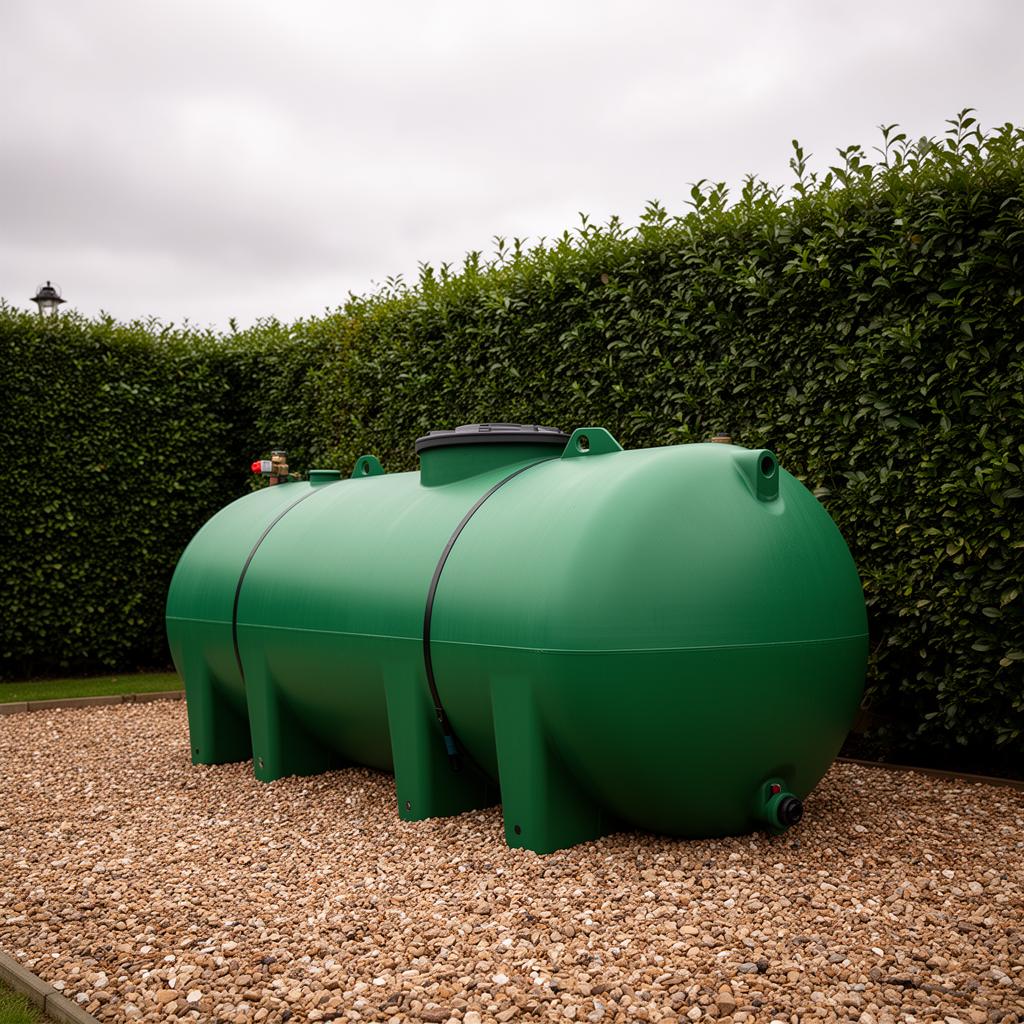
- Oil tank and supply line inspected
- Free written quote, no obligation
- Local aftercare from a 4-mile base
Questions before you book
- What are your opening hours, and can you help out of hours?
- Our published hours are Monday to Friday, 8:30am to 5pm, and that's when the phones are answered and jobs are booked. We're honest that we don't run a round-the-clock emergency line, so if you're planning ahead, call during those hours on 07516 118198 and we'll get you booked in.
- How does LPG heating differ from mains gas day to day?
- An LPG boiler works the same way as a mains gas one day to day, but the gas is stored in a tank or cylinders on site and topped up by a supplier rather than piped in continuously. That means keeping an eye on tank levels and arranging deliveries, but appliance choice, controls, and servicing requirements are otherwise very similar.
- Since Mells is so close to your base, can you offer more flexible slot timing?
- Being close by does help us fit shorter jobs — like a service or a minor repair — into gaps between other bookings more easily than a longer round trip would allow. For a full installation the timescale is the same either way, since the work itself takes the same amount of time regardless of the drive.
- What's actually checked during an annual boiler service?
- A service includes a visual and functional check of the boiler's casing and controls, flue gas analysis to confirm safe and efficient combustion, checking the flame picture and pressure, inspecting seals and condensate, and testing safety devices. It's a safety check as much as a performance one, and it's what keeps most manufacturer warranties valid.
- Do you cover Mells?
- Yes. Mells is 4 miles from our workshop at 24 Bristol Road, Radstock BA3 3EE, reached via the unclassified, and it's a regular part of our working area. We're Gas Safe and OFTEC registered, so we cover both mains gas and oil work out here without treating it as a special trip.
- Will you come out to a village like Mells?
- Mells is part of our core patch (4 miles from base via the unclassified). Same-week site visits and quick callbacks are normal.
Your next move in BA3
Once we've seen the property, you'll get a written quote for oil boiler servicing that sets out exactly what's included — the equipment, the work, and what happens if anything unexpected turns up once we're on site. That gives you something concrete to compare against any other quotes you're getting. Photos of the existing setup speed up pricing for village properties like these. Typical era of build is mixed-cottage, which affects existing pipework and system cleanliness. homes alongside small commercial and agricultural premises make up most enquiries from this postcode.
The factual picture in Mells
- County
- Somerset
- Postcode district
- BA3
- Settlement type
- village
- Nearest classified road
- unclassified
- Distance from our base
- 4 miles (Radstock, BA3)
- Typical building stock
- stone cottages and listed buildings
- Water hardness
- very hard limestone water
- Fuel availability
- mains gas with off-grid pockets
- Customer mix
- homes alongside small commercial and agricultural premises
- Nearby areas covered
- Leigh upon Mendip, Buckland Dinham, Kilmersdon, Stratton-on-the-Fosse
Practical considerations across BA3
Routing a flue through a listed or conservation-area property
Mells falls within an area where listed building consent or conservation area rules can affect where a boiler flue is allowed to terminate — a plume on a principal elevation facing the street is often unacceptable even where it would technically clear manufacturer distances. Getting consent, where it's needed, has to happen before the flue is cut through a wall, not retrospectively. In practice this usually means routing the flue to a rear or side elevation even if that means a longer pipe run and an extra bend, or using a horizontal flue kit through a lower window reveal wall rather than the roof. We check with the relevant conservation officer's published guidance before quoting a flue route on a listed or Article 4 property rather than assuming the shortest run will be approved.
Common boiler fault codes and what usually causes them
Most modern boilers display a fault code on the control panel when they lock out, and while the exact code differs between manufacturers, the underlying causes cluster into a small number of categories: low system pressure (often from a small leak or after bleeding radiators), ignition failure (a worn electrode, gas supply issue, or blocked condensate causing a safety shutdown), or a failed sensor reporting an implausible temperature reading. A condensate blockage or freeze specifically tends to show a distinct code from a genuine ignition fault, which is why checking the external condensate pipe for ice before calling out an engineer in a cold snap can sometimes resolve the issue without a visit at all. We ask for the exact fault code and any recent history — a bled radiator, a cold snap, a recent service — before attending, since it often narrows down the likely cause before we arrive.
LPG as an alternative to oil off the gas grid
Properties around Mells that sit off the mains gas network aren't limited to oil — bulk LPG, stored in an above-ground tank on a concrete base with the same OFTEC-style clearance and access rules as oil, runs standard gas-rated boilers with only a change of injector and pressure setting rather than a different boiler entirely. It suits households that want a gas hob and gas-style modulation rather than an oil burner's on/off firing pattern. The tank still needs delivery access for a tanker, which on some rural driveways is the deciding factor over oil. We check the access route for the largest realistic delivery vehicle before recommending LPG over oil, because a tank that can't be filled easily causes more disruption than the fuel choice was meant to solve.
Signs a boiler repair is no longer the right call
A boiler that's failing repeatedly, needing a different part replaced every service, or over roughly ten to fifteen years old is approaching the point where continued repair costs more over time than replacement, particularly once a heat exchanger — the most expensive single part — starts to show signs of failure through leaks or reduced output. Efficiency is the other half of the calculation: an older non-condensing boiler running at 70-80% efficiency against a modern condensing combi at over 90% means a meaningful chunk of every unit of fuel burned in the old boiler is simply lost up the flue. We give a straight answer on repair versus replace based on the fault found and the boiler's age and condition, rather than defaulting to whichever is more profitable to us on the day.
Why very hard limestone water shortens boiler life around Mells
The limestone geology under Somerset gives Mells very hard limestone water, which drops calcium carbonate out of solution as soon as it's heated. Inside a combi's plate heat exchanger the gaps between plates are only a millimetre or two wide, so scale narrows the waterways long before it's visible anywhere else in the system. The first symptom is usually a hot tap that runs warm rather than hot, or a boiler that fires more often for the same demand. Left unchecked, scale insulates the exchanger from the burner, forces flue gases hotter, and can crack the exchanger from thermal stress. A scale reducer fitted on the mains feed, sized to the property's flow rate, is cheaper to install once than to replace a heat exchanger twice.
Pumped-oil versus gravity feed: does it matter?
Older oil systems sometimes still rely on gravity feed, where the tank sits higher than the burner and oil flows down to it under its own weight; a pumped system uses the burner's internal pump to draw oil up from a tank at any level, including below the boiler. Gravity feed limits where a tank can be sited and is more prone to airlocks if the line runs dry, while a pumped system is more flexible on tank position but needs the pipe run and lift height kept within the burner pump's rated capacity — usually no more than a few metres of lift and a set maximum run length. When we replace an oil boiler we check which type the existing tank and pipework support before assuming a straight swap, because a tank sited for gravity feed may need repositioning or a different pump to suit a modern burner.
Other boiler services in Mells
- Boiler Installation in MellsNew combi, system and regular boiler installations for gas and oil homes — fixed prices, manufacturer warranties.
- Gas Boiler Installation in MellsGas Safe registered installations and upgrades for mains gas homes across Bath, Radstock and Wells.
- Oil Boiler Installation in MellsOFTEC-trained oil boiler specialist for rural homes off the gas grid — tank and boiler replacements.
- Boiler Servicing in MellsAnnual boiler services to keep your warranty valid and your home safe, efficient and warm.
- Maintenance & Repair in MellsDiagnostics, repairs and breakdown call-outs for gas and oil boilers across BA and BS postcodes.
- Landlord Gas Safety Certificates in MellsAnnual CP12 landlord gas safety records issued on the day, for single lets, HMOs, holiday lets and whole portfolios.
- Oil Boiler Repairs in MellsOil boiler breakdown repairs across rural Somerset, from lockouts and sooting to pump, photocell and control faults.
- Oil Tank Replacement in MellsBunded oil tank replacement and relocation with base preparation, new supply line and OFTEC paperwork on completion.
New Worcester boiler with a 10 year guarantee*
Free no-obligation quotes for installation, servicing & repairs across BA & BS postcodes.