
Oil Boiler Servicing in Weston (Bath)
If you've already had one quote for oil boiler servicing and it doesn't quite add up, or another engineer has recommended something you're not sure about, a second opinion costs you a conversation and nothing more. We're Gas Safe registered, OFTEC registered and a Worcester Bosch Accredited Installer, working from 24 Bristol Road, Radstock BA3 3EE, and we'll tell you plainly if we think a different approach fits your property better. Terrain is level, which matters for condensate runs and tank siting. Access is open suburban, so parking, spoil removal and delivery timing get planned in advance. In Weston (Bath) itself (BA1, Somerset) that usually means 1930s semis and post-war estates, roughly 9 miles from the workshop.
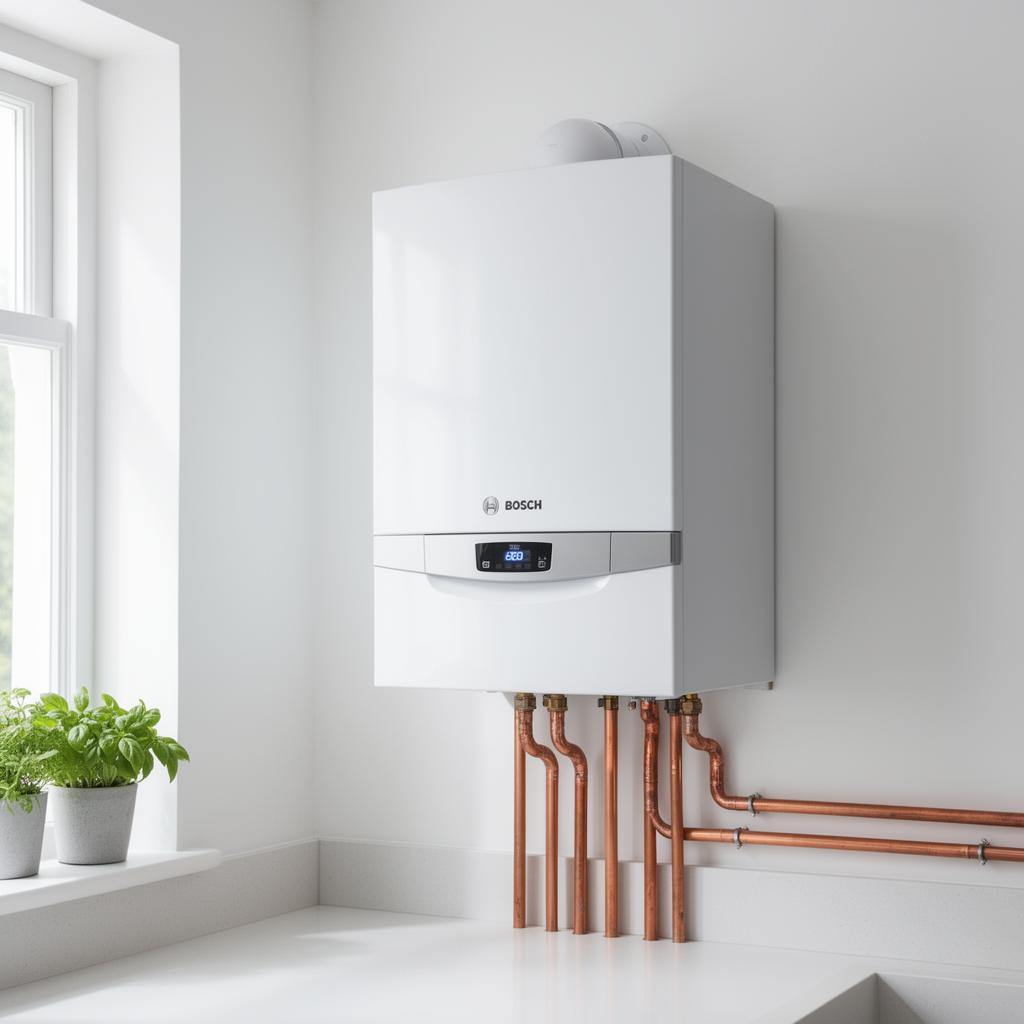
How we run oil boiler servicing on site
- OFTEC registered oil specialist
- Nozzle, electrode and fuel filter renewed
- Smoke test and pump pressure set correctly
- Oil tank and supply line inspected
- Free written quote, no obligation
- Local aftercare from a 9-mile base
What backs up a Weston (Bath) quote
Reg. 549918 — every gas job notified to Building Control and a CP12 issued where required.
Qualifies your install for the full 10-year manufacturer guarantee* on supported models.
362+ verified reviews from real customers across BA and BS postcodes.
Oil boilers, oil tanks and pipework — fully certified for off-grid installs and replacements.
What the buildings in Weston (Bath) change about the job
Water here runs off carboniferous limestone and Jurassic oolite, which makes it very hard by national standards. Hard water accelerates scale build-up inside heat exchangers, cylinders and pipework, which shortens the working life of components that aren't protected against it. On jobs in this area we factor scale protection into the specification rather than treating it as an optional extra, because the difference between a protected and unprotected system shows up within a few years, not decades. It's a genuine local variable, not generic sales advice, and it applies whether the property is on mains gas or oil. Access is open suburban, so parking, spoil removal and delivery timing get planned in advance. a high proportion of rented and let properties make up most enquiries from this postcode. Weston (Bath) is roughly 9 miles from our Radstock base via the A431. Typical property stock here: 1930s semis and post-war estates. Weston (Bath) sits in the Somerset BA1 postcode and is part of our weekly run, so local response is quick. Repair calls in Weston (Bath) usually get a same-week visit, with most common faults fixed on the first attempt.
Neighbouring Somerset areas we serve
Beyond Weston (Bath) we're frequently on jobs in Bath (BA1), Lansdown (BA1), Twerton (BA2) and Oldfield Park (BA2) — so spares, follow-ups and annual services are straightforward.
Straight answers for Weston (Bath) homeowners
- What support do I get after the install is finished?
- Once commissioning's complete we talk you through the controls, leave the paperwork, and register the manufacturer warranty on your behalf. If anything doesn't feel right in the first few weeks — a fault code, an odd noise, a control setting you're unsure of — call us during office hours and we'll talk it through or come back out.
- Can you look over a quote I've already had from another company?
- Yes, this comes up often. Send or bring in the other written quote and we'll go through the spec — boiler size, controls, cylinder if included, and what's actually listed for parts and labour — and tell you plainly whether it looks right for the property, oversized, or missing something we'd expect to see.
- Who actually carries out the work?
- A Gas Safe and, where relevant, OFTEC registered engineer from our own small team carries out the job — we don't sub the install out to a third party after quoting. You deal with the same people from survey through to commissioning and any aftercare calls.
- How do we decide between a combi boiler and a boiler-plus-cylinder system?
- It comes down to hot water demand and available space. A combi heats water on demand with no cylinder to fill, which suits smaller households and single-bathroom homes, while a system or regular boiler with a cylinder stores hot water and copes far better where two bathrooms or a bath and shower run at the same time.
- Is oil more expensive to run than mains gas?
- Oil and gas prices both move with the wholesale market and neither is fixed, so a blanket answer isn't honest. What we can say is that a modern condensing oil boiler, correctly sized and commissioned, will run considerably more efficiently than an old non-condensing model — that efficiency gap usually matters more than the fuel choice itself.
- Is a boiler install a noisy, disruptive job?
- There's unavoidable noise — drilling for the flue, pipework, sometimes moving a cylinder — but a straightforward swap is usually done within a working day with the mess kept to the immediate work area. We dust-sheet the route in and out and clear away pipe offcuts and old parts before we leave.
Your next move in BA1
If you're still deciding whether oil boiler servicing is the right move for your property, a site visit and honest conversation costs you nothing but time. We'll tell you if we think repair is a better option than replacement, or if the job is more or less involved than you expected. Gas work is signed off Gas Safe; oil work is signed off OFTEC. Terrain is level, which matters for condensate runs and tank siting. Typical era of build is interwar, which affects existing pipework and system cleanliness.
The factual picture in Weston (Bath)
- County
- Somerset
- Postcode district
- BA1
- Settlement type
- suburb
- Nearest classified road
- A431
- Distance from our base
- 9 miles (Radstock, BA3)
- Typical building stock
- 1930s semis and post-war estates
- Water hardness
- very hard limestone water
- Fuel availability
- mains gas with off-grid pockets
- Customer mix
- a high proportion of rented and let properties
- Nearby areas covered
- Bath, Lansdown, Twerton, Oldfield Park
Practical considerations across BA1
Why very hard limestone water shortens boiler life around Weston (Bath)
The limestone geology under Somerset gives Weston (Bath) very hard limestone water, which drops calcium carbonate out of solution as soon as it's heated. Inside a combi's plate heat exchanger the gaps between plates are only a millimetre or two wide, so scale narrows the waterways long before it's visible anywhere else in the system. The first symptom is usually a hot tap that runs warm rather than hot, or a boiler that fires more often for the same demand. Left unchecked, scale insulates the exchanger from the burner, forces flue gases hotter, and can crack the exchanger from thermal stress. A scale reducer fitted on the mains feed, sized to the property's flow rate, is cheaper to install once than to replace a heat exchanger twice.
Heating systems in shared student and let properties
Properties let to multiple students or sharers around Weston (Bath) see heavier and less consistent hot water demand than a single-family household — several showers in quick succession most mornings rather than staggered use through the day — which makes cylinder or combi sizing based on family occupancy figures unreliable. HMO licensing conditions, where they apply, can also set specific requirements around heating provision and appliance safety beyond the standard landlord gas safety record. Controls matter too: a programmable thermostat that tenants can't easily override into leaving heating running constantly, or a system that's simple enough not to generate repeated call-outs over misunderstanding the controls, saves both fuel costs and avoidable landlord admin. We size and specify let properties against realistic occupancy patterns rather than a single-family default.
Choosing a boiler location that satisfies both planning and practicality in Weston (Bath)
On a property within a conservation area, AONB or World Heritage designation, the boiler's physical location is often decided as much by the acceptable flue route as by where the homeowner would naturally put it — a kitchen wall facing the street may need ruling out even before considering pipe run length, simply because the flue outlet would be visible from a protected streetscape. Working back from an acceptable flue position to find a viable boiler location sometimes means a longer pipework run through the property than would otherwise be chosen, adding to the job's cost and complexity. We assess planning constraints on the flue before finalising the boiler's proposed location, rather than picking the location first and discovering the flue route is unacceptable afterwards.
Do you need listed building consent for a new flue?
Whether a new boiler flue on a listed building in or around Weston (Bath) needs formal listed building consent depends on whether the work affects the building's special architectural or historic character — cutting through an original stone wall or a decorative elevation is far more likely to need consent than routing through a later, non-original extension. Consent has to be granted before the work starts; carrying it out first and applying afterwards is a criminal offence under the Planning (Listed Buildings and Conservation Areas) Act, not just a paperwork formality to tidy up later. We recommend checking with the local planning authority's conservation team at the quoting stage on any listed property, because the answer varies by building and by exactly which wall is proposed, and getting it wrong can mean expensive remedial work to satisfy the authority afterwards.
How a condensing boiler recovers extra heat
A condensing boiler passes flue gases through a secondary heat exchanger before they leave the flue, extracting additional heat by condensing water vapour in the exhaust back into liquid, which is expelled as the mildly acidic condensate water down the drain. This is why every condensing boiler needs a condensate drainage route as part of its installation, unlike older non-condensing boilers, which simply vented hot dry gas straight out. The efficiency benefit only fully materialises when the boiler is actually condensing regularly, which needs a return water temperature low enough — generally below 55°C — for water vapour to condense in the first place. A condensing boiler run permanently at a high flow temperature can spend much of its time not actually condensing, which is one of the main reasons flow temperature settings matter as much as the boiler model chosen.
What different boiler noises usually mean
A kettling or rumbling sound from a boiler is most often scale or sludge build-up on the heat exchanger causing localised boiling as water is trapped and overheated in restricted channels — the heating equivalent of a kettle furring up. A banging or knocking sound in pipework, sometimes called water hammer, is usually caused by a valve closing too quickly or trapped air rather than the boiler itself. A whining or humming sound tends to point to the circulating pump, either from wear or from air in the system reducing lubrication at the bearing. Diagnosing correctly from the noise alone isn't reliable enough to act on without checking system pressure, inhibitor condition and the pump directly, but the noise itself is a useful first indicator of which of those to check first.
Oil tank de-sludging: why it's not optional
Oil sitting in a tank for years accumulates water from condensation and fine sediment that settles at the bottom, and over time this forms a sludge layer that can be drawn into the fuel line, particularly when the tank is nearly empty and the outlet pulls from lower in the tank than usual. Sludge blocks fine oil filters and burner nozzles, which shows up as burner lockouts or a boiler that won't fire cleanly rather than as an obvious tank problem. De-sludging drains and cleans the tank base without necessarily removing the whole tank, and it's worth doing when a tank is inherited with a property, before switching to a new boiler, or if lockouts recur despite the filter and nozzle being replaced. It's a preventative job that's cheaper done on schedule than after a burner failure it caused.
Signs a boiler repair is no longer the right call
A boiler that's failing repeatedly, needing a different part replaced every service, or over roughly ten to fifteen years old is approaching the point where continued repair costs more over time than replacement, particularly once a heat exchanger — the most expensive single part — starts to show signs of failure through leaks or reduced output. Efficiency is the other half of the calculation: an older non-condensing boiler running at 70-80% efficiency against a modern condensing combi at over 90% means a meaningful chunk of every unit of fuel burned in the old boiler is simply lost up the flue. We give a straight answer on repair versus replace based on the fault found and the boiler's age and condition, rather than defaulting to whichever is more profitable to us on the day.
Radiator sizing after lowering the flow temperature
Running a boiler at a lower flow temperature — typically 55°C or below rather than the old default of 70-80°C — improves condensing efficiency measurably, but it also reduces the heat output of every radiator in the house, because a radiator's output falls roughly with the square of the temperature difference to the room. Radiators sized correctly for a 75°C flow can end up unable to heat the room properly at 55°C unless they're upsized or supplemented. We check each radiator against the lower design flow temperature before recommending it, and where a room falls short we look at whether a larger single panel, a double panel, or an additional radiator on that circuit closes the gap, rather than pushing the flow temperature back up and giving away the efficiency gain.
Other boiler services in Weston (Bath)
- Boiler Installation in Weston (Bath)New combi, system and regular boiler installations for gas and oil homes — fixed prices, manufacturer warranties.
- Gas Boiler Installation in Weston (Bath)Gas Safe registered installations and upgrades for mains gas homes across Bath, Radstock and Wells.
- Oil Boiler Installation in Weston (Bath)OFTEC-trained oil boiler specialist for rural homes off the gas grid — tank and boiler replacements.
- Boiler Servicing in Weston (Bath)Annual boiler services to keep your warranty valid and your home safe, efficient and warm.
- Maintenance & Repair in Weston (Bath)Diagnostics, repairs and breakdown call-outs for gas and oil boilers across BA and BS postcodes.
- Landlord Gas Safety Certificates in Weston (Bath)Annual CP12 landlord gas safety records issued on the day, for single lets, HMOs, holiday lets and whole portfolios.
- Oil Boiler Repairs in Weston (Bath)Oil boiler breakdown repairs across rural Somerset, from lockouts and sooting to pump, photocell and control faults.
- Oil Tank Replacement in Weston (Bath)Bunded oil tank replacement and relocation with base preparation, new supply line and OFTEC paperwork on completion.
New Worcester boiler with a 10 year guarantee*
Free no-obligation quotes for installation, servicing & repairs across BA & BS postcodes.