
Faulkland Oil Tank Replacement
Before quoting for oil tank replacement, we start with what's actually there: the existing pipework, the flue route, the water pressure and the age of what you've already got. Guesswork on a heating system leads to call-backs and wasted money, so a proper look at the property comes first. We're Gas Safe registered and OFTEC registered, based at 24 Bristol Road, Radstock BA3 3EE, and we size and specify jobs on what we find on site, not on assumptions. Access is lane access, so parking, spoil removal and delivery timing get planned in advance. Mains gas covers much of the area, with off-grid pockets, which changes the appliance shortlist. In Faulkland itself (BA3, Somerset) that usually means stone cottages and farms, roughly 3 miles from the workshop.
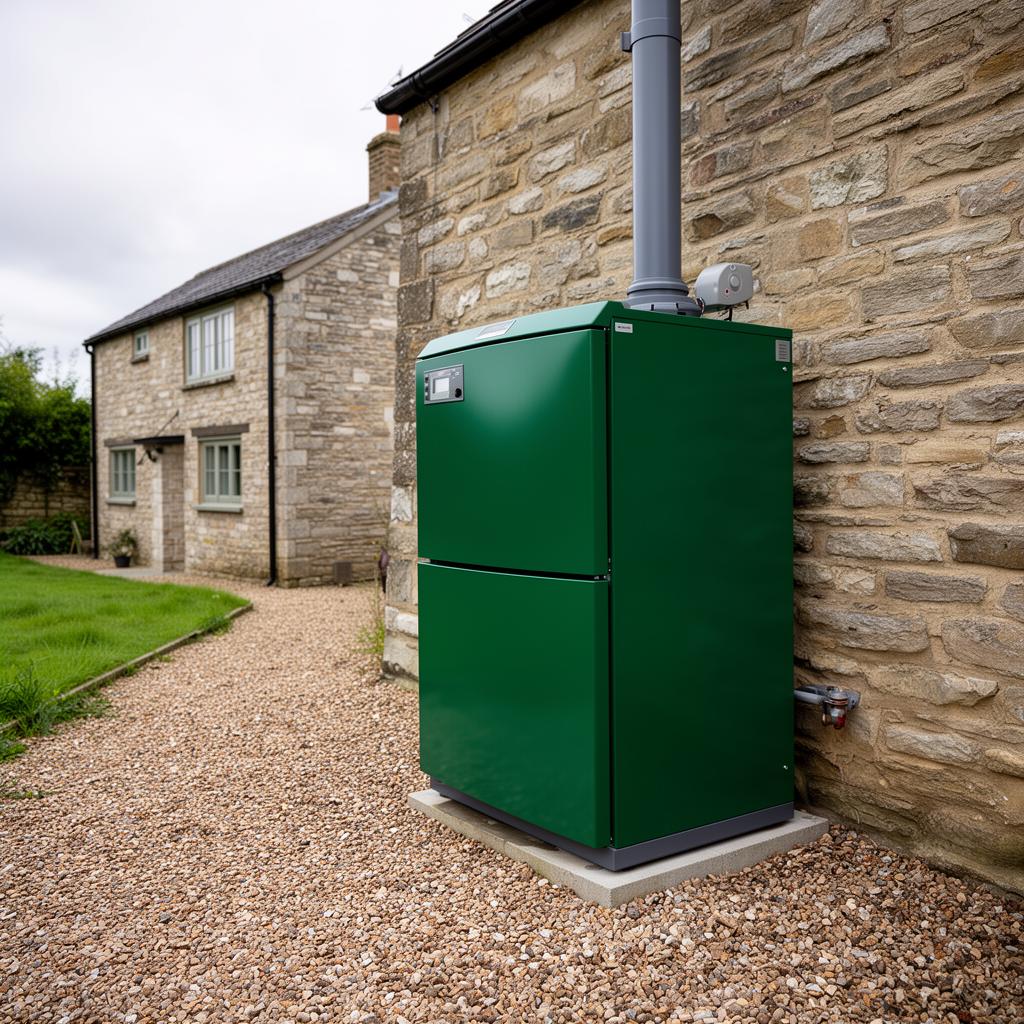
Faulkland: stock, water and fuel supply
This area has a genuine mix of mains gas and oil-fired properties, sometimes on the same street, depending on when the gas network reached that particular row of houses. It's worth confirming which fuel your property is actually on and whether a fuel switch is realistic before assuming either option is off the table. Being registered for both Gas Safe and OFTEC work means we can look at the honest options for your specific property rather than steering you toward whichever fuel we happen to be set up for. Typical era of build is mixed-cottage, which affects existing pipework and system cleanliness. homes alongside small commercial and agricultural premises make up most enquiries from this postcode. Faulkland is roughly 3 miles from our Radstock base via the A366. Typical property stock here: stone cottages and farms. Faulkland sits in the Somerset BA3 postcode and is part of our weekly run, so local response is quick. Repair calls in Faulkland usually get a same-week visit, with most common faults fixed on the first attempt.
How we run oil tank replacement on site
- Bunded plastic and steel tanks supplied
- Base preparation and safe siting distances
- New supply line, filter and fire valve
- Old tank drained and removed
- Free written quote, no obligation
- Local aftercare from a 3-mile base
Neighbouring Somerset areas we serve
Beyond Faulkland we're frequently on jobs in Hemington (BA3), Norton St Philip (BA2), Shoscombe (BA2) and Kilmersdon (BA3) — so spares, follow-ups and annual services are straightforward.
Why Faulkland households use us
Qualifies your install for the full 10-year manufacturer guarantee* on supported models.
Reg. 549918 — every gas job notified to Building Control and a CP12 issued where required.
Based at 24 Bristol Rd, Radstock — every job is run by the team that quoted it.
362+ verified reviews from real customers across BA and BS postcodes.
Common queries, answered honestly
- Does my new boiler need to be notified to Building Control?
- Yes — boiler installation and replacement is notifiable work under Building Regulations. As Gas Safe/OFTEC registered installers we self-certify the work through our Competent Person Scheme, which means we notify it directly and you get a certificate without needing to involve the council separately.
- Is a boiler install a noisy, disruptive job?
- There's unavoidable noise — drilling for the flue, pipework, sometimes moving a cylinder — but a straightforward swap is usually done within a working day with the mess kept to the immediate work area. We dust-sheet the route in and out and clear away pipe offcuts and old parts before we leave.
- Will the new boiler work properly with our existing radiators?
- Not always without checking. Modern condensing boilers run most efficiently at lower flow temperatures, and radiators originally sized for an old, hotter-running boiler can end up struggling to heat a room adequately at those lower temperatures. We check radiator sizing against a heat loss calculation and flag any that are undersized for the room before installing.
- What's an unvented cylinder and does it need special installation rules?
- An unvented cylinder stores mains-pressure hot water without a cold water tank in the loft, giving strong pressure at every outlet. Building Regulations require it to be fitted and commissioned by someone holding a specific unvented cylinder qualification (which we hold), including fitting the correct safety valves, because an incorrectly installed unvented cylinder is a pressure vessel hazard.
- What is condensate and why does its routing matter?
- Condensate is the mildly acidic water produced by a modern condensing boiler as it extracts extra heat from the flue gases, and it needs a route to an internal drain or, less ideally, an external soakaway. In colder or more exposed locations an external condensate pipe can freeze and shut the boiler down, so internal routing is worth prioritising where the layout allows it.
- Will you come out to a village like Faulkland?
- Faulkland is part of our core patch (3 miles from base via the A366). Same-week site visits and quick callbacks are normal.
Where to go from here
Expect three things from oil tank replacement with us: a proper look at the property before any figure is given, a written quote that spells out what's included, and work carried out by a Gas Safe and OFTEC registered engineer who stands behind it. Send the appliance make, model and any fault code and you get a straight answer, not a sales script. Planning constraints are usually light here, so external work is checked first. Terrain is level, which matters for condensate runs and tank siting.
Coverage detail for BA3
- County
- Somerset
- Postcode district
- BA3
- Settlement type
- village
- Nearest classified road
- A366
- Distance from our base
- 3 miles (Radstock, BA3)
- Typical building stock
- stone cottages and farms
- Water hardness
- very hard limestone water
- Fuel availability
- mains gas with off-grid pockets
- Customer mix
- homes alongside small commercial and agricultural premises
- Nearby areas covered
- Hemington, Norton St Philip, Shoscombe, Kilmersdon
Detail that matters in Faulkland
Wood-burning stoves with a back boiler alongside a main boiler
Some older rural properties around Faulkland run a wood-burning stove with a back boiler feeding heat into the same central heating circuit as an oil or gas boiler, usually through a thermal store or a cylinder with two coils. Getting this combination to work safely means the stove's back boiler circuit has its own means of dissipating heat if the pump fails or a valve closes while the stove is still burning — a stove can't simply be switched off the way a boiler can if its heat has nowhere to go, so a gravity-fed safety circuit or heat leak radiator is normally required. It's a more involved design than a single-boiler system and needs planning at the point either appliance is replaced, not treated as an afterthought once the new boiler is already fitted.
Why very hard limestone water shortens boiler life around Faulkland
The limestone geology under Somerset gives Faulkland very hard limestone water, which drops calcium carbonate out of solution as soon as it's heated. Inside a combi's plate heat exchanger the gaps between plates are only a millimetre or two wide, so scale narrows the waterways long before it's visible anywhere else in the system. The first symptom is usually a hot tap that runs warm rather than hot, or a boiler that fires more often for the same demand. Left unchecked, scale insulates the exchanger from the burner, forces flue gases hotter, and can crack the exchanger from thermal stress. A scale reducer fitted on the mains feed, sized to the property's flow rate, is cheaper to install once than to replace a heat exchanger twice.
Working across Somerset: what being local changes
Being based at 24 Bristol Road, Radstock, 3 miles from Faulkland via the A366, means a callout doesn't involve a long cross-county drive, and it also means familiarity with the recurring patterns in the local building stock — stone cottages and farms — rather than encountering that construction type for the first time on-site. Local knowledge doesn't replace a proper site survey, but it does mean fewer surprises: knowing in advance that a particular postcode area typically has hard water, older single-pipe circuits, or restricted parking means the quote reflects the likely reality of the job before the first visit. We're Gas Safe and OFTEC registered and work across Somerset on that basis, not by claiming coverage we don't actually deliver on.
Pumped-oil versus gravity feed: does it matter?
Older oil systems sometimes still rely on gravity feed, where the tank sits higher than the burner and oil flows down to it under its own weight; a pumped system uses the burner's internal pump to draw oil up from a tank at any level, including below the boiler. Gravity feed limits where a tank can be sited and is more prone to airlocks if the line runs dry, while a pumped system is more flexible on tank position but needs the pipe run and lift height kept within the burner pump's rated capacity — usually no more than a few metres of lift and a set maximum run length. When we replace an oil boiler we check which type the existing tank and pipework support before assuming a straight swap, because a tank sited for gravity feed may need repositioning or a different pump to suit a modern burner.
Heating where a home sits alongside commercial premises
Properties around Faulkland that combine living accommodation with an attached shop, workshop or other commercial space often need heating designed as genuinely separate zones with independent controls, since a shop's occupied hours and heating demand rarely match the flat or house above it. Where the two shared a single ageing system, splitting them onto separate zone valves — or, on a larger scale, separate boilers — stops one side subsidising or interfering with the other's heating schedule. Commercial space also sometimes falls under different servicing and safety-record obligations than the residential side, depending on how it's used, so it's worth establishing which parts of the building fall under which regime before assuming a single annual service covers everything.
Oil tank de-sludging: why it's not optional
Oil sitting in a tank for years accumulates water from condensation and fine sediment that settles at the bottom, and over time this forms a sludge layer that can be drawn into the fuel line, particularly when the tank is nearly empty and the outlet pulls from lower in the tank than usual. Sludge blocks fine oil filters and burner nozzles, which shows up as burner lockouts or a boiler that won't fire cleanly rather than as an obvious tank problem. De-sludging drains and cleans the tank base without necessarily removing the whole tank, and it's worth doing when a tank is inherited with a property, before switching to a new boiler, or if lockouts recur despite the filter and nozzle being replaced. It's a preventative job that's cheaper done on schedule than after a burner failure it caused.
Single-pipe circuits in older stone cottages
A lot of the stone cottages and farmhouses around Faulkland were plumbed decades ago on a single-pipe gravity circuit, where each radiator draws from and returns to the same loop rather than having its own flow and return. It works, but radiators furthest from the boiler receive water that's already cooled after giving up heat to the ones before it, so the far end of the house is always the coldest. Converting to a two-pipe layout means new pipe runs, which in a stone cottage often means chasing lime plaster or lifting flagstones — not a trivial job. Where a full rewire of the pipework isn't wanted, we sometimes improve balance instead by oversizing the radiators nearest the end of the run and fitting TRVs to hold back the ones nearest the boiler.
Being minutes away in Faulkland
Faulkland sits close enough to our Radstock base, just 3 miles via the A366, that a diagnostic visit or a return trip for a part doesn't add the delay it would on a job further afield. That's practically useful on jobs where a fault only shows itself once a boiler's been running for a while, or where a part needs collecting after an initial diagnosis rather than being carried on the off-chance. It doesn't change how the job itself is done — the same Gas Safe and OFTEC standards and the same commissioning paperwork apply regardless of distance — but it does mean less waiting between visits on multi-stage jobs like a full system upgrade that needs a survey, a flush, and an installation visit in sequence.
Other boiler services in Faulkland
- Boiler Installation in FaulklandNew combi, system and regular boiler installations for gas and oil homes — fixed prices, manufacturer warranties.
- Gas Boiler Installation in FaulklandGas Safe registered installations and upgrades for mains gas homes across Bath, Radstock and Wells.
- Oil Boiler Installation in FaulklandOFTEC-trained oil boiler specialist for rural homes off the gas grid — tank and boiler replacements.
- Boiler Servicing in FaulklandAnnual boiler services to keep your warranty valid and your home safe, efficient and warm.
- Maintenance & Repair in FaulklandDiagnostics, repairs and breakdown call-outs for gas and oil boilers across BA and BS postcodes.
- Landlord Gas Safety Certificates in FaulklandAnnual CP12 landlord gas safety records issued on the day, for single lets, HMOs, holiday lets and whole portfolios.
- Oil Boiler Servicing in FaulklandOFTEC registered annual servicing for oil boilers, including nozzle, electrode, filter and smoke test work on off grid homes.
- Oil Boiler Repairs in FaulklandOil boiler breakdown repairs across rural Somerset, from lockouts and sooting to pump, photocell and control faults.
New Worcester boiler with a 10 year guarantee*
Free no-obligation quotes for installation, servicing & repairs across BA & BS postcodes.