
Boiler replacement in a 1930s semi
Interwar semis are the most common house type we replace boilers in. They usually have unfilled or partially filled cavities, generous bay windows and heating pipework that has been extended piecemeal over decades.
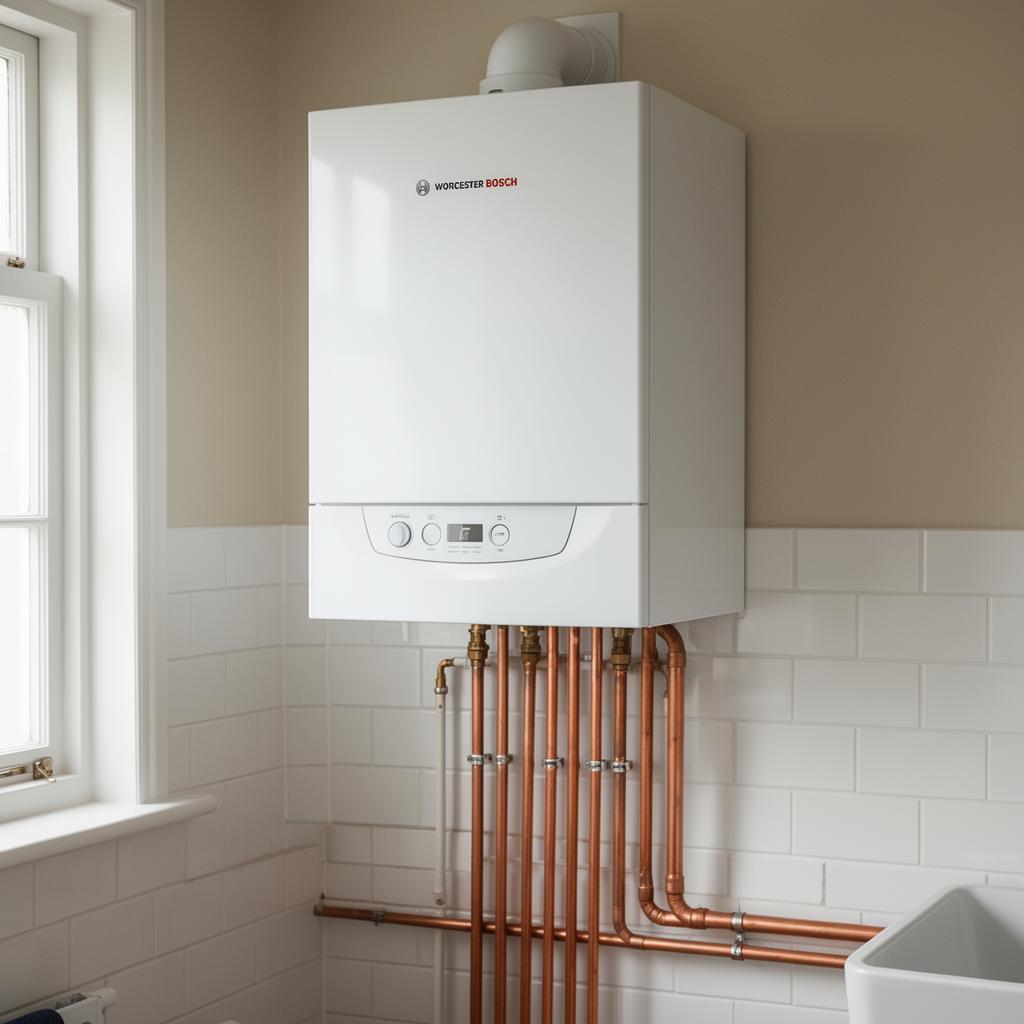
The recurring issues
Bay windows are a significant local heat loss, so the front room often needs more emitter than its floor area suggests. Original microbore or mixed pipework restricts flow and holds sludge. And the airing cupboard cylinder is frequently the deciding factor between a combi conversion and keeping a system boiler.
What we check before quoting
- Existing pipe sizes and whether microbore limits the new specification
- Bay window and solid-floor losses in the front reception room
- Cylinder condition and whether the airing cupboard space is wanted back
- Mains water flow rate to confirm combi viability
Frequently asked
- Should I convert to a combi?
- If mains flow is good and you have one bathroom, it frees the cupboard and simplifies the system. With two bathrooms or weak mains, keep the cylinder.
- Is microbore a problem?
- Not automatically, but it restricts output and clogs more readily. We test flow before deciding whether it needs replacing.
- Do you fill cavity walls?
- No — that's insulation work, not heating. We'll point out where it would reduce the required boiler size, though.
Survey the pipework, not just the boiler
In houses of this age the distribution system determines the outcome as much as the appliance does. That's why our survey looks at both.
Related solutions
Core services
Further reading
New Worcester boiler with a 10 year guarantee*
Free no-obligation quotes for installation, servicing & repairs across BA & BS postcodes.