
Microbore vs 15mm pipework in older central heating
Microbore pipework, typically 6mm or 8mm, was fitted widely in the 1970s and 1980s to reduce material and labour costs, feeding radiators from a manifold rather than pipe-to-pipe. Standard 15mm pipe carries more flow and is far less prone to blockage from circulating debris.
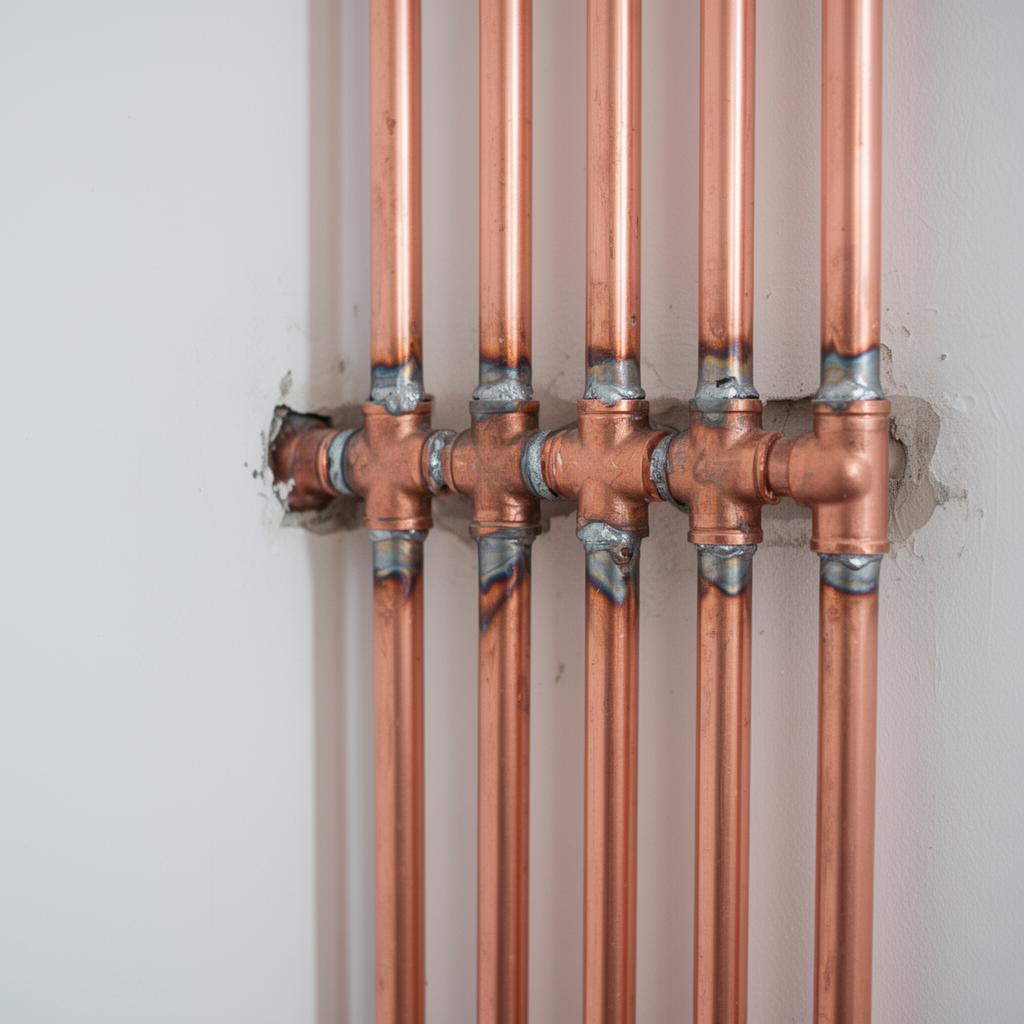
Practical notes on microbore and 15mm pipework
- Microbore is typically 6mm or 8mm, far narrower than 15mm
- Narrow bore is more prone to sludge blockage over time
- Modern boilers usually need more flow than microbore comfortably supports
- Manifolds distribute microbore feeds to individual radiators
- Upgrading to 15mm is often recommended at boiler replacement
Scope of work
- Domestic boiler installation
- Boiler servicing
- Boiler maintenance and repair
Understanding microbore and 15mm pipework before you spend money
Microbore's narrow bore restricts flow to individual radiators and silts up far more readily than 15mm, which is one reason older microbore systems can suffer from radiators that never fully heat despite a healthy boiler. Modern high-efficiency boilers generally need better flow than microbore comfortably provides, so a full or partial upgrade to 15mm is often recommended as part of a boiler replacement on these systems.
Where we deal with this
Get microbore and 15mm pipework looked at properly
Our advice: Microbore is not automatically a problem, but it deserves a proper flow assessment before a new high-efficiency boiler is fitted.
Include the appliance make and model in your enquiry so the correct technical information can be checked.
Questions we get asked
- Do I have to replace all the microbore pipe?
- Not always — sometimes only the main flow and return need upgrading, with microbore kept for radiator tails.
- Does microbore cause cold radiators?
- It is a common contributing factor, especially combined with sludge, but not the only possible cause.
Related help pages
- Servicing comparisonAnnual service plan vs pay-as-you-go servicing
- Heating technologyBoiler vs air source heat pump: a factual comparison
- Brand comparisonWorcester Bosch vs Ideal boilers
- Boiler technologyCondensing vs non-condensing boilers explained
- Main rangeMain Eco Compact: an entry-level combi from a Baxi group brand
- Efficiency controlsWeather compensation: adjusting flow temperature to the outdoor climate
Services that cover this
New Worcester boiler with a 10 year guarantee*
Free no-obligation quotes for installation, servicing & repairs across BA & BS postcodes.